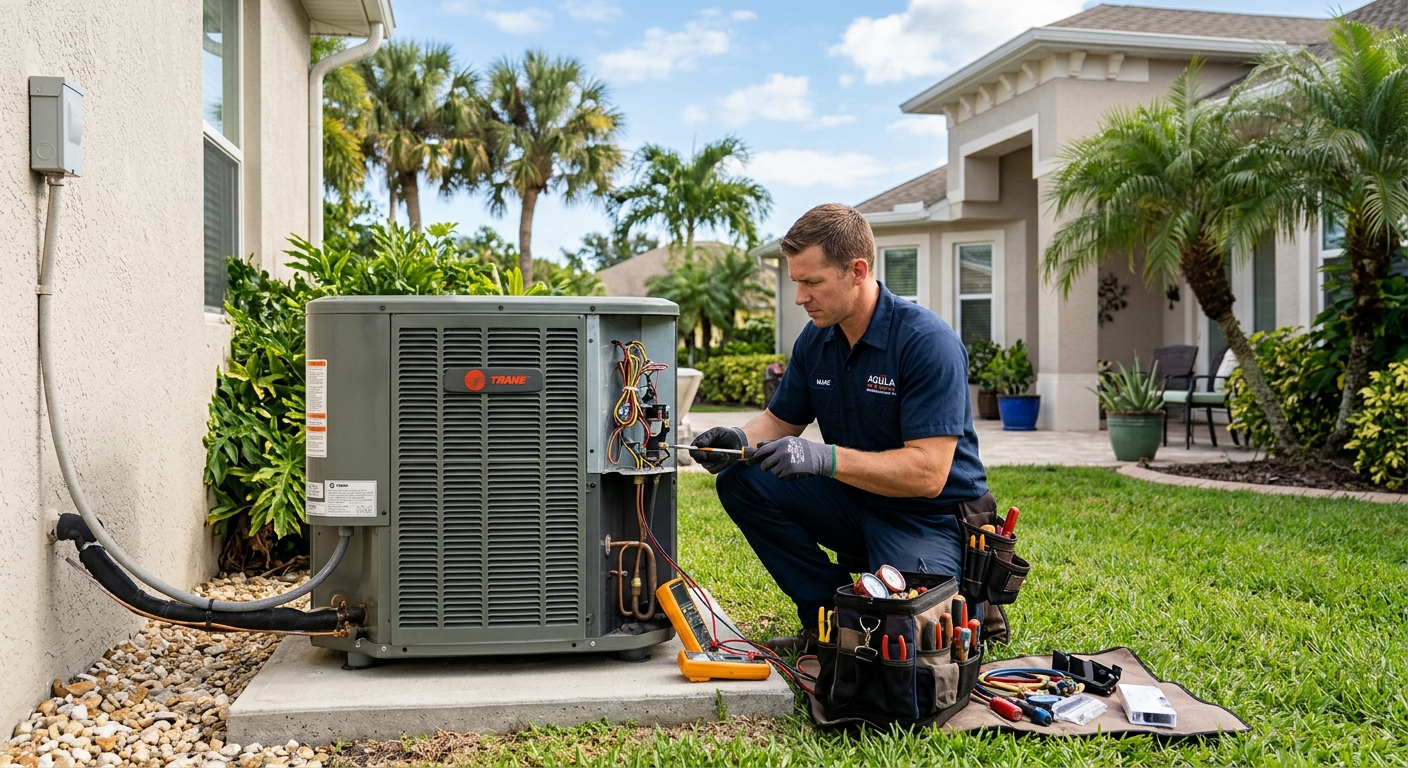
AC Blowing Warm Air in Cocoa? What to Do Next
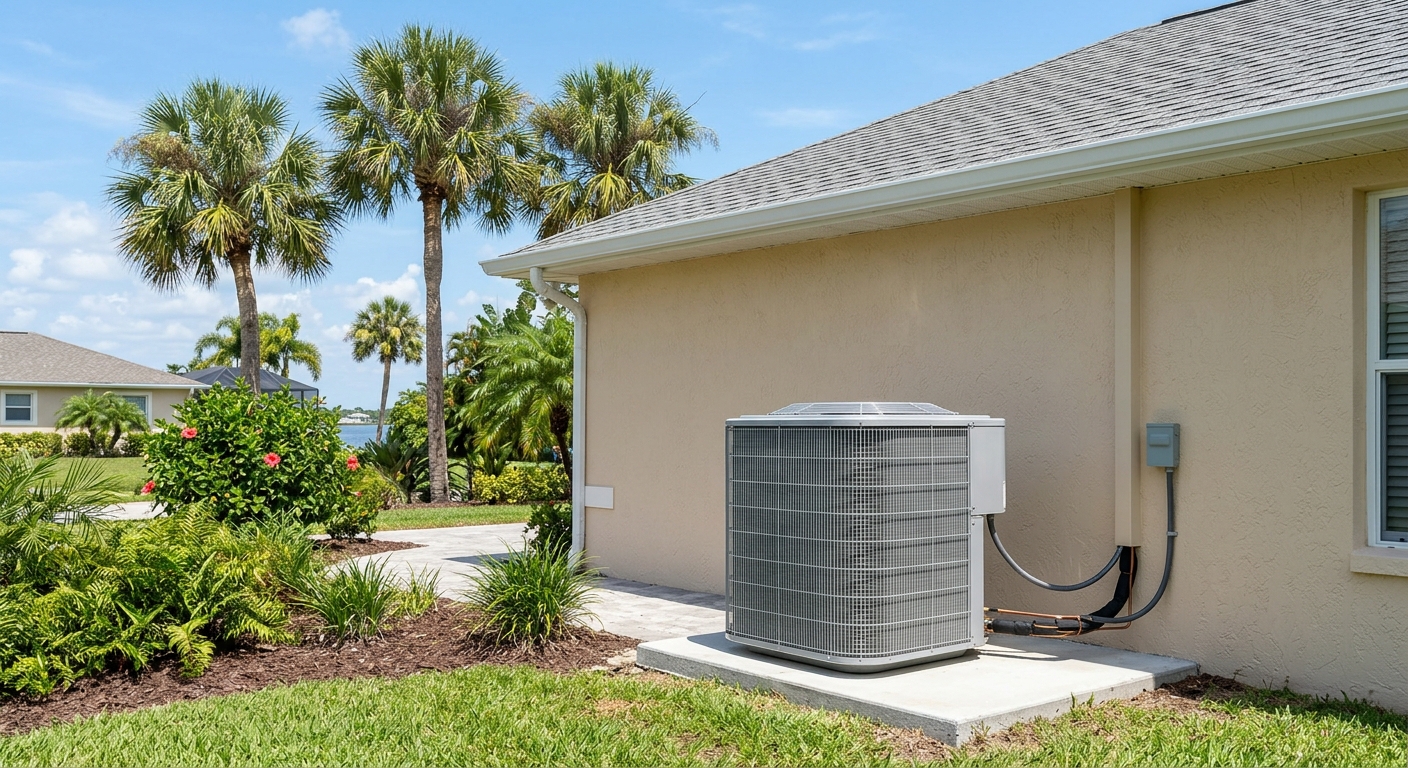
AC blowing warm air in Cocoa? Run these 5 safe checks in 10 minutes, learn when to stop and call, and why Brevard County's salt air and humidity make this problem more common.
You walk in from the Cocoa heat, expecting relief, and the house feels like a closed car. The thermostat says 74. The air coming out of the vent says otherwise. The fan is running, so the system sounds alive, which makes the warm air more confusing, not less.
If your AC is blowing warm air in Cocoa, stay calm and work in order. Plenty of causes are cheap and fixable in minutes: a thermostat set wrong, a clogged filter, a tripped breaker. Others are not, and the worst move is to keep running a struggling system for three days hoping it sorts itself out.
This guide gives you a short list of safe checks you can finish in about 10 minutes, the clear signs that mean you should stop and call, and some honest context on why Brevard County homes run into this more than most.
First, is it really blowing warm air? Quick signs to confirm
Confirm the problem before you troubleshoot anything. Humid Florida air plays tricks on your hand. Air that is only slightly cooler than the room can feel warm and sticky when the house is already muggy.
Hold your hand 2 to 3 inches from a supply vent in the room closest to the indoor unit. Cool air should feel distinctly cold, not neutral. A cheap kitchen or meat thermometer taped near the vent works better than your skin. A healthy system typically delivers air noticeably cooler than the air returning to it. If your return air is 78 and your supply air is 74, you have a real problem.
Check more than one vent. If only one room is warm while the rest are fine, you are probably looking at a duct, damper, or airflow issue in that room, not a dead AC. If every vent is warm, the cooling process itself has stopped.
Also listen. Is the outdoor unit running? Walk outside and look at the fan on top of the condenser. If the indoor fan blows but the outdoor fan is still, that points to a different set of causes than a unit that is spinning but not cooling.
Write down what you find. A technician will ask three things: all vents or one, outdoor fan on or off, and how long it has been this way. Those answers save real diagnostic time.
Five safe checks to do before you call
These five checks need a screwdriver at most. None involve opening electrical panels on the equipment or touching refrigerant lines. Do them in this order.
1. Check the thermostat. Confirm it is set to COOL, not HEAT or FAN ONLY, and that the set temperature is below the current room temperature. Set the fan to AUTO, not ON. A fan stuck on ON pushes air through the ducts even when the compressor is idle, and that air can feel warm. Replace the batteries if the display is dim or blank.
2. Check the air filter. Pull it out and hold it up to a light. If you can't see light through it, replace it. A clogged filter chokes airflow and can lead to a frozen coil, which then produces warm air. In Florida, where systems run most of the year, many homes need a filter change every one to three months.
3. Check the breakers. Find your panel and look for any breaker for the air handler or the outdoor unit that sits in the middle or OFF position. Flip it fully off, then back on once. If it trips again, stop. Do not keep resetting it.
4. Check the outdoor unit. With the power off at the disconnect box, look for leaves, grass clippings, or a bag wrapped against the coil fins. Clear loose debris by hand or with a gentle garden hose spray from the outside. Never use a pressure washer. It bends the fins.
5. Check the vents and returns. Make sure supply registers are open and no furniture or rugs cover the return grille. Closed vents throughout the house raise pressure in the ducts and strain the system.
After any of these fixes, give the system 15 to 20 minutes to recover before judging the result. If you restart it and the air is still warm, you have gone as far as is safe.
If you see ice or water: turn the AC off and stop there
Ice is the one finding that changes the plan. If you spot frost on the copper line outside near the unit, ice on the indoor coil, or a block of ice around the refrigerant line in the attic or closet, turn the AC off at the thermostat. Then, if the equipment is otherwise running normally, set the fan to ON (not the cooling mode) for an hour or two to help the ice melt.
Do not chip ice off with a screwdriver. The coil is thin metal tubing, and a puncture turns a repair into a replacement conversation.
Ice means something upstream went wrong. A dirty filter or blocked return is the cheap cause. Low refrigerant, a failing blower motor, or a dirty coil are the more expensive ones. You cannot tell which from the floor, and running the AC while frozen can send liquid back toward the compressor, the most costly part of the system.
Water needs the same caution. A little condensation near the indoor unit is normal in humid weather. Standing water in the drain pan, water pooling on the floor, or a wet ceiling below an attic air handler is not. A clogged condensate drain line is common in Brevard homes, and many systems have a float switch that shuts the AC off when the pan fills. That shutoff can look exactly like a broken AC.
If you see water, turn the system off and put a towel or bucket under any drip. Don't try to dig out the drain line with a wire. Photograph what you see.
Why Florida heat, humidity, and salt air make warm air more common
Brevard County is hard on air conditioners, and the reasons are specific. Cocoa, Merritt Island, and Titusville sit close to the Atlantic and the Indian River Lagoon. Salt-laden air settles on the outdoor condenser coil, and salt corrodes aluminum fins and copper tubing over time. A coil that is slowly corroding loses its ability to shed heat, and a unit that can't shed heat can't cool.
Then there is runtime. Many homes up north run the AC a few months a year. Space Coast systems often run from March through November, sometimes year-round. More hours means more wear on capacitors, contactors, and fan motors, the small parts that fail and leave you with a running blower but no cooling.
Humidity adds a second load. Your AC removes moisture as well as heat, and all that water has to drain somewhere. In a damp climate, drain lines grow algae and slime faster, which is why clogged condensate lines show up so often here.
In this climate, a yearly tune-up is not an upsell. It is the cheapest way to catch a weak capacitor or a dirty coil before it becomes a warm-air emergency.
Stop and call a technician if you notice any of these
- A breaker that trips again right after you reset it.
- Burning or electrical smells, buzzing, humming without the fan starting, or a loud grinding or squealing from either unit.
- Ice that returns after you thaw the system and replace the filter.
- An oily residue on the refrigerant lines or fittings, or a hissing sound near the indoor coil or outdoor unit.
- The outdoor unit not running at all while the indoor fan blows, especially after the breaker and thermostat checks.
- Water leaking from the indoor unit after you cleared the visible drain area, or any water near electrical components.
- Anyone in the house who is elderly, very young, or medically fragile, when indoor temperatures are climbing.
You do not have to prove you've tried everything. If you hit a stop sign, you are allowed to stop.
What to expect when you call Aquila Air & Heating in Cocoa
Aquila Air & Heating is a locally owned HVAC company in Cocoa, owned by Todd Keller, a lifelong Cocoa resident. The company handles residential and light-commercial AC repair, installation, heat pumps, heating, indoor air quality, and maintenance plans, with 24/7 emergency service.
Here is how the call works. Phone 321-292-1189 or use the contact form on the Aquila site. Tell them what you found: warm air at all vents or one, whether the outdoor fan is running, whether you saw ice or water, and which of the five checks you completed.
On pricing, Aquila advertises upfront pricing approved before work begins and no overtime charges. The company lists current offers including 10% off for veterans, senior citizens, first responders, and teachers.
Keep your photos, notes, and the make and model from the unit's data plate handy. Five minutes of preparation shortens the whole visit.
Quick answers to common questions
Should I keep running the AC while I wait for a technician? If the air is merely warm and there is no ice, water, burning smell, or strange noise, running it briefly is usually harmless. If there is ice or any of the stop signs above, turn it off.
Can a dirty filter really cause warm air? Yes. A clogged filter restricts airflow across the indoor coil. The coil gets too cold, freezes, and then stops cooling effectively.
Is it safe to add refrigerant myself? No. Refrigerant handling requires certification, and low refrigerant means there is a leak somewhere.
How long should I wait after fixing something? Give the system 15 to 20 minutes to run before deciding whether the fix worked.
What if it's only warm in one room? That usually points to ducts, dampers, or a closed vent, not the AC unit itself.
Conclusion
Warm air from your vents feels like an emergency, but the right response is a sequence, not a panic. Run the five checks, respect the stop signs, and do not keep resetting breakers or chipping at ice.
If your AC is blowing warm air in Cocoa right now, call Aquila Air & Heating at 321-292-1189 and tell them what you found: which vents, whether the outdoor fan runs, any ice or water. They offer 24/7 emergency service and state upfront pricing approved before work begins, with no after-hours or holiday fees.