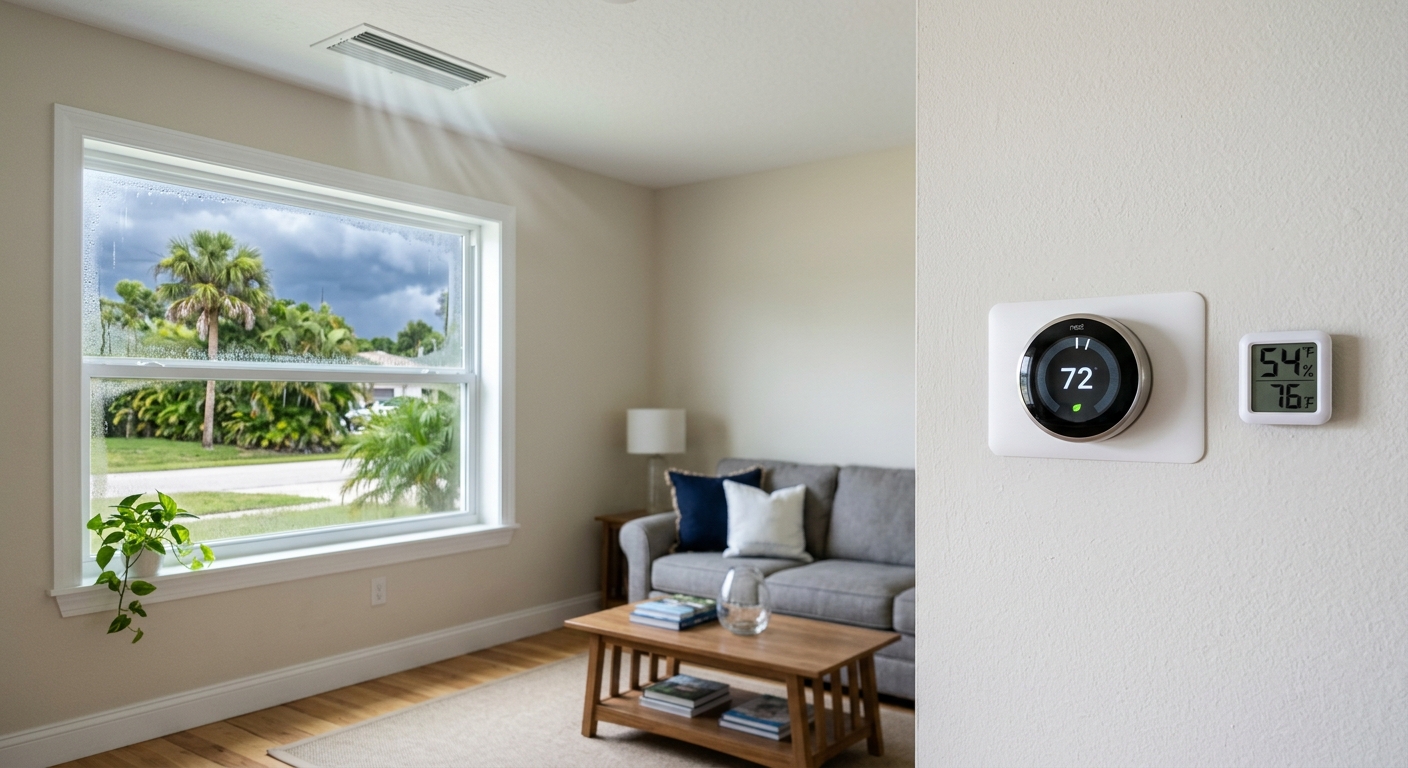
Can Your AC Remove Too Little Humidity?
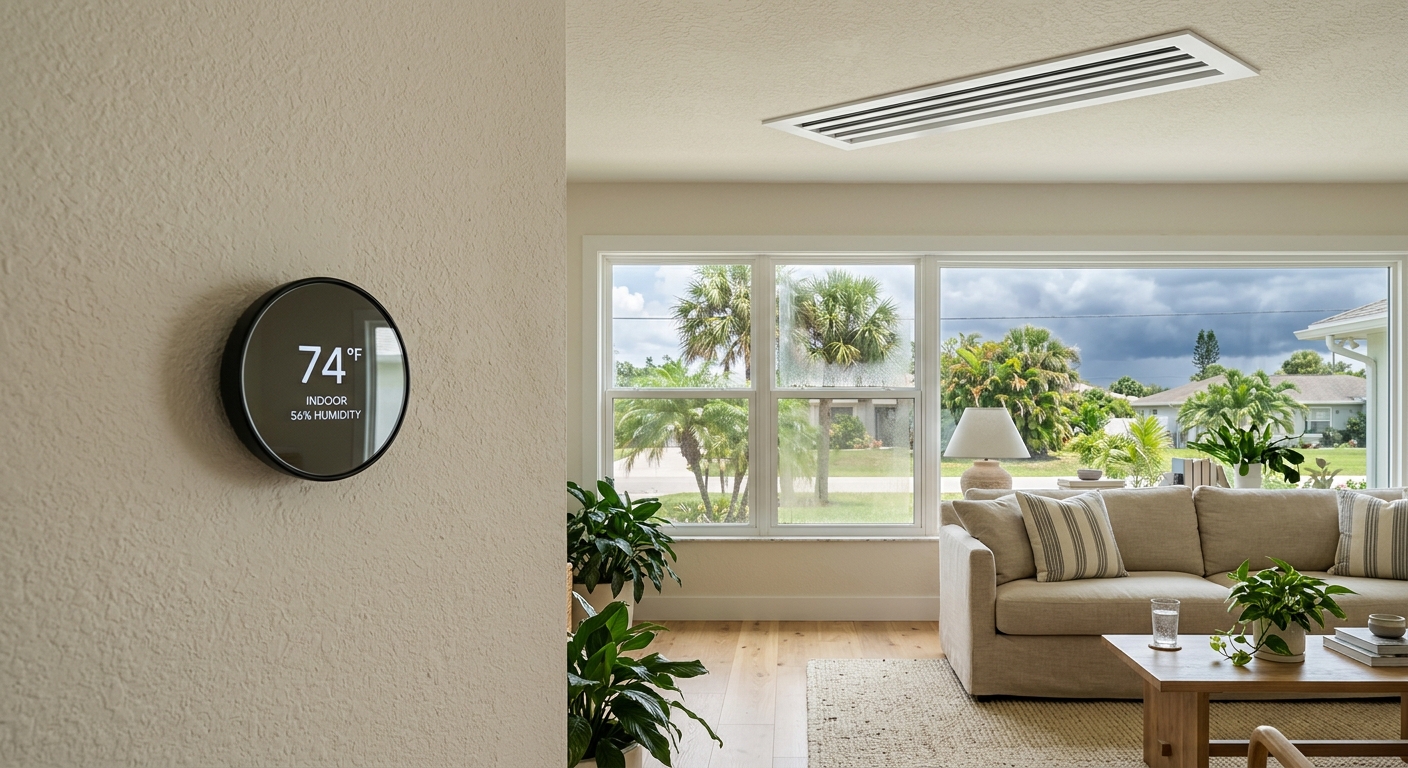
A cool but clammy Brevard County home may indicate short cycling, airflow problems, moisture intrusion, or an AC system that is not dehumidifying properly.
If your AC is not removing humidity, the system may cool your home without running long enough to pull sufficient moisture from the air. Oversized equipment, airflow problems, thermostat settings, duct leakage, mechanical faults, and Florida's heavy outdoor moisture can all contribute. The right solution depends on whether the problem comes from the AC itself or moisture entering the home.
How does an air conditioner remove humidity?
An air conditioner does not remove humidity through a separate drying cycle. As warm indoor air passes over the cold evaporator coil, the air temperature drops below its dew point and water vapor condenses on the coil. That water flows into a drain pan and leaves through the condensate drain line.
This process takes time. A system that runs in steady, appropriately sized cycles generally removes more moisture than one that quickly satisfies the thermostat and shuts off. That is why a home can reach 74°F or 76°F and still feel sticky: temperature and relative humidity are related, but they are not the same measurement.
Brevard County makes this especially noticeable. Warm coastal air, afternoon storms, wet ground, frequent door opening, and air leakage can add moisture faster than an AC system removes it. Homes near the Indian River Lagoon or Atlantic coast may also experience persistent humid conditions even when it is not exceptionally hot.
How can you tell whether your AC is removing too little humidity?
A small digital hygrometer can help you separate a true humidity issue from a general comfort complaint. Place it in a central living area away from supply vents, exterior doors, kitchens, and bathrooms. Give it time to stabilize, and compare readings over several days rather than reacting to one brief spike after cooking or showering.
Many Florida homeowners are comfortable around 45% to 55% relative humidity, although the appropriate target can vary with the building, outdoor conditions, and occupant needs. Sustained readings above 60% deserve attention, particularly if they occur throughout the home. For a more complete discussion, see The Best Indoor Humidity Level for Florida Homes.
Common signs of inadequate moisture removal include:
- Rooms that feel cool but clammy
- A musty odor that returns after cleaning
- Condensation on windows, supply registers, or other cool surfaces
- Closets, bedrooms, or closed rooms that feel more humid than the rest of the home
- Frequent short AC cycles
- Indoor humidity that remains above 60% for extended periods
- Visible spotting or moisture damage that needs prompt investigation
Condensation and musty odors can have causes beyond the HVAC system. Plumbing leaks, roof leaks, wet building materials, and poorly vented bathrooms should not be overlooked.
Why is your AC cooling the house but not lowering humidity?
Could the AC system be oversized?
An oversized air conditioner can lower the thermostat temperature very quickly. Although rapid cooling may sound beneficial, short cycles may end before the evaporator coil has enough time to remove much moisture. Oversizing can also produce uneven temperatures, more frequent starts, and comfort swings.
Equipment size should be based on a load calculation, not simply the home's square footage or the size of the old unit. Window area, insulation, air leakage, orientation, occupancy, and duct conditions all affect the actual cooling load.
Is the thermostat fan set to ON?
During humid weather, set the thermostat fan to AUTO unless an HVAC professional has recommended another setup for your specific system. In the ON position, the blower may continue moving air across a wet evaporator coil after the compressor stops. Some of the remaining moisture can evaporate back into the air instead of draining away.
Variable-speed systems and advanced controls may manage blower operation differently, so follow the equipment manufacturer's settings or a technician's recommendations.
Could restricted or incorrect airflow reduce dehumidification?
Airflow that is outside the system's intended range can affect coil temperature, comfort, efficiency, and moisture removal. A heavily clogged filter, dirty evaporator coil, blocked return, failing blower component, incorrect fan speed, or duct restriction may contribute. Extremely low airflow can also allow the coil to freeze, which is a service issue rather than an effective way to remove more humidity.
Replace a dirty filter with the type and size recommended for your equipment, and keep return grilles unobstructed. Do not close multiple supply registers in an attempt to force more cooling into other rooms; that can disrupt system airflow.
Could low refrigerant or another mechanical fault be involved?
Low refrigerant charge, metering device problems, sensor errors, a dirty coil, or compressor performance issues can reduce cooling and dehumidification. Refrigerant does not get used up during normal operation, so a low charge can indicate a leak that should be found and addressed. Refrigerant diagnosis and repairs require trained service personnel and should not be treated as a DIY task.
Is humid air entering through ducts or the building?
Duct leaks on the return side can draw hot, humid air from an attic, garage-adjacent cavity, or other unconditioned area. Supply leaks can depressurize parts of the home and encourage outdoor air to enter through gaps. Leaky doors, attic penetrations, recessed fixtures, damaged weatherstripping, and open fireplace dampers can add moisture as well.
In Brevard County, bathroom exhaust fans that terminate in an attic can create another moisture problem. Exhaust should discharge outdoors through an appropriate termination, not into an attic or enclosed building cavity.
Can mild Florida weather make the house more humid?
Yes. During rainy days and shoulder-season weather, outdoor humidity can be high while the cooling load is relatively low. The thermostat may not call for enough AC runtime to manage the moisture entering the home. Lowering the thermostat several degrees is usually an inefficient workaround and can make surfaces colder without correcting the source.
A technician may recommend control adjustments, variable-capacity equipment, targeted air sealing, or a whole-home dehumidifier after evaluating the house. A dehumidifier should be selected and installed based on the moisture load and drainage requirements, not used to conceal duct leakage or a malfunctioning AC.
What can you safely check before calling an HVAC technician?
Start with simple observations that do not require opening equipment panels:
- Confirm the thermostat is in COOL mode and the fan is set to AUTO.
- Record indoor temperature and humidity at several times of day.
- Inspect the filter and replace it if dirty, using the correct dimensions and recommended rating.
- Make sure return grilles and supply registers are open and unobstructed.
- Use bathroom exhaust fans during showers and for a short period afterward.
- Run the kitchen exhaust fan when boiling water or producing substantial steam.
- Check exterior doors and accessible windows for damaged weatherstripping.
- Look for active plumbing leaks, roof stains, wet flooring, or damp cabinet interiors.
- Note whether the AC starts and stops every few minutes or runs for longer, steadier cycles.
Do not pour chemicals into the air handler, adjust refrigerant components, or change blower settings without appropriate training. If water is overflowing from the drain pan or the float switch repeatedly shuts the system down, stop and arrange service to prevent water damage.
When should you call a professional about high indoor humidity?
Call an HVAC professional when humidity remains above 60% despite normal cooling operation and sensible thermostat settings, or when the problem affects multiple rooms for several days. Service is also appropriate if you notice ice on refrigerant lines, weak airflow, unusually short cycles, water around the air handler, repeated drain backups, unexplained energy increases, or an AC that struggles to reach the set temperature.
A useful assessment may include checking temperature and humidity, measuring system airflow, inspecting the evaporator coil and condensate system, testing refrigerant performance, reviewing thermostat configuration, evaluating cycle behavior, and examining accessible ductwork. If moisture appears to come from the building envelope rather than the equipment, the technician may recommend additional evaluation by an insulation, roofing, plumbing, or building-performance specialist.
Visible mold growth or extensive water damage may require qualified remediation or restoration help in addition to HVAC service. Replacing equipment alone will not correct an active roof leak, plumbing leak, or other ongoing source of water.
Would indoor air quality equipment solve the problem?
Some products can improve filtration, ventilation, or moisture control, but they perform different jobs. A higher-efficiency filter does not function as a dehumidifier, and an air cleaner will not repair a leaking return duct. A whole-home dehumidifier can be useful when moisture loads remain high during periods of low AC demand, but the system must be sized, drained, and controlled correctly.
The best approach is to identify the source first and then match the solution to the problem. Learn more about available Indoor Air Quality options, including strategies that may complement—not replace—a properly operating air conditioner.
How can Aquila Air & Heating help with a humid Brevard County home?
Aquila Air & Heating can evaluate whether your comfort problem is related to equipment operation, airflow, thermostat setup, drainage, duct conditions, or the amount of moisture entering your home. Our team serves homeowners across Brevard County and understands how Space Coast heat, salt air, storms, and long humid seasons affect residential HVAC performance.
If your home feels clammy even while the AC is running, contact Aquila Air & Heating to schedule an evaluation. If replacement is ultimately appropriate, you can also review our Lifetime Warranty information and ask which systems qualify, along with the applicable terms and requirements.