AC Repair in Palm Bay, FL: Common Summer Problems
Palm Bay summers put AC systems under heavy strain. Learn the common causes of warm air, frozen coils, water leaks, short cycling, and sudden breakdowns.
The most common summer AC problems in Palm Bay include clogged drain lines, dirty filters, frozen evaporator coils, failed capacitors, refrigerant leaks, and outdoor units that cannot release heat efficiently. Homeowners can safely check the thermostat, filter, circuit breaker, vents, and outdoor unit, but recurring shutdowns, ice, electrical odors, or refrigerant problems require professional AC repair in Palm Bay.
Acting quickly can help prevent water damage, compressor strain, and longer periods without cooling. During a hot, humid Brevard County summer, even a minor airflow or drainage problem can become more noticeable as the system runs for extended periods.
Why do Palm Bay air conditioners struggle during summer?
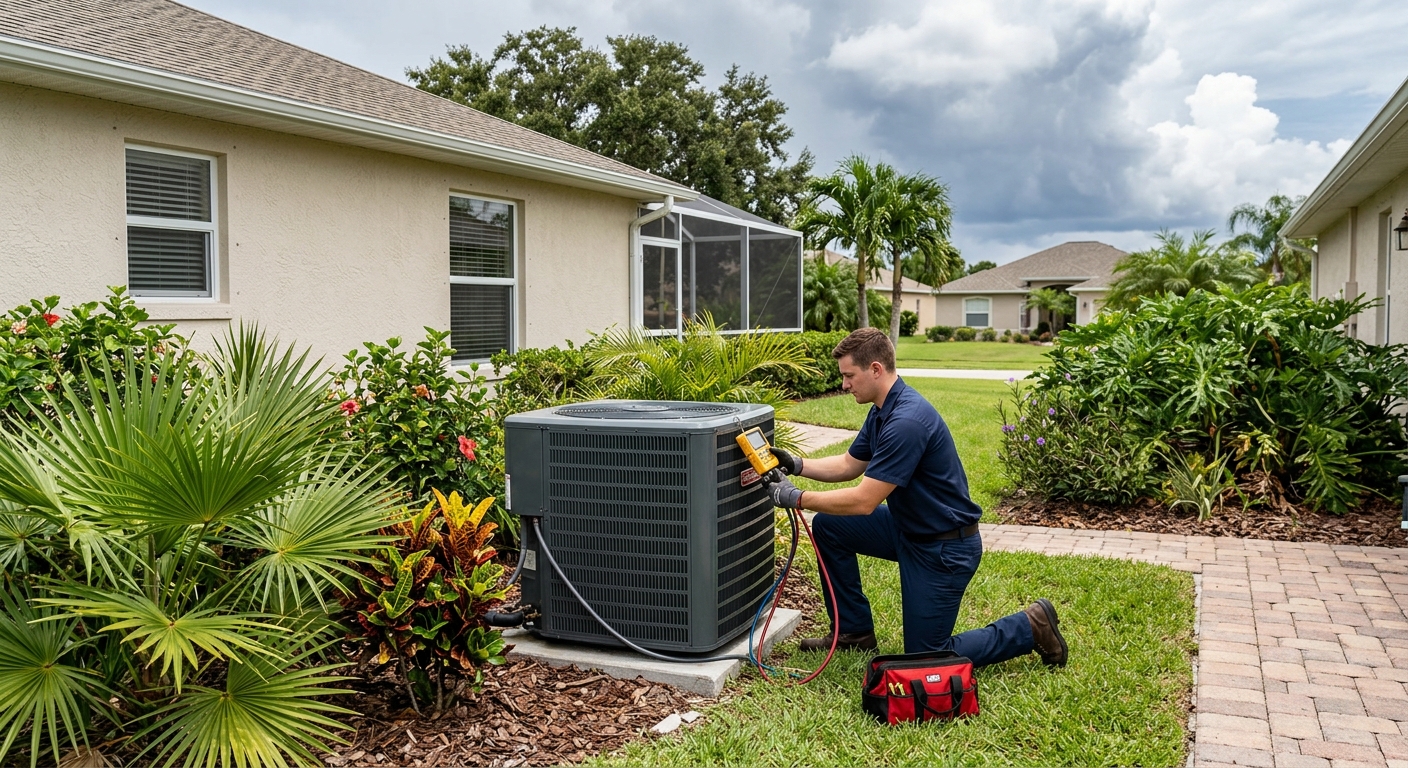
Palm Bay’s combination of high temperatures, persistent humidity, frequent thunderstorms, and long cooling seasons creates demanding conditions for residential HVAC systems. An air conditioner must remove both heat and moisture from indoor air, so humid weather can increase runtime even when the thermostat setting has not changed.
Longer cycles are not automatically a sign of failure. However, a system that runs continuously without reaching the set temperature, repeatedly turns on and off, or produces unusually warm or weak airflow may need attention. Dust, yard debris, clogged drainage components, aging electrical parts, duct leakage, or an incorrectly sized system can all contribute.
Why is my AC blowing warm air?
Start by confirming that the thermostat is set to cooling and that the fan setting is on “Auto.” If the fan is set to “On,” it may continue circulating room-temperature air between cooling cycles, which can make the vents feel warm.
A dirty filter can also reduce airflow across the indoor coil. Other possible causes include a tripped breaker serving the outdoor unit, a failed capacitor, a contactor problem, a dirty outdoor coil, a refrigerant leak, or compressor trouble. Our guide to an AC blowing warm air explains these causes in greater detail.
If the indoor fan operates but the outdoor unit does not, check the breaker once. Do not repeatedly reset a breaker that trips again; repeated tripping can indicate an electrical or mechanical fault that needs diagnosis.
Why is ice forming on my AC unit?
Ice on the refrigerant lines or indoor evaporator coil usually means the coil has become too cold. Restricted airflow from a clogged filter, blocked return, dirty coil, or blower problem can cause freezing. Low refrigerant caused by a leak is another possibility.
Turn cooling off if you see ice. You may set the thermostat fan to “On” to help thaw the coil, provided there is no electrical odor, water near electrical components, or other safety concern. Do not chip or scrape the ice because that can damage the coil or refrigerant tubing.
Replacing a visibly dirty filter may correct a simple airflow issue, but the system should be inspected if it freezes again. Adding refrigerant without finding the reason it is low does not resolve a leak.
Why is water leaking around my indoor AC unit?
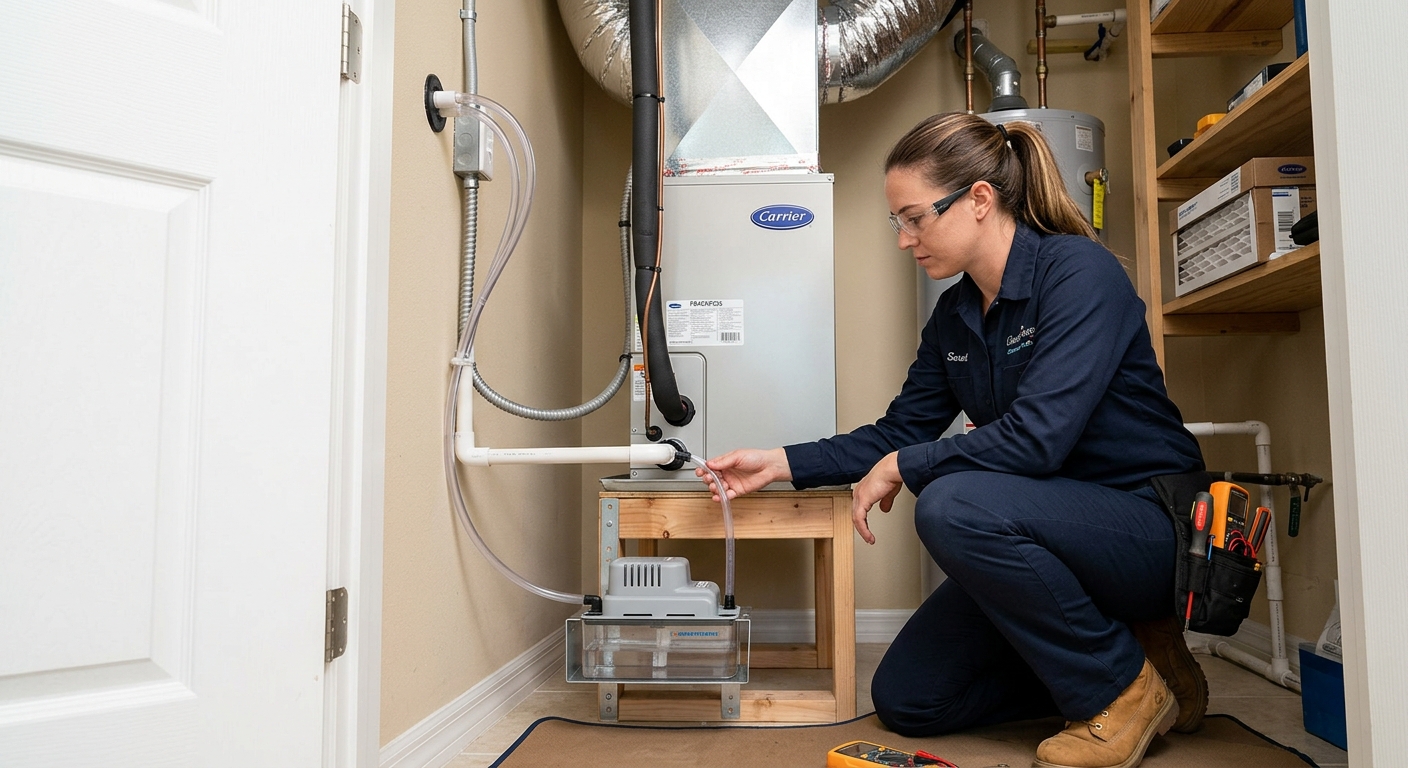
Air conditioners produce condensation as they remove moisture from Palm Bay’s humid air. That water should flow through the condensate drain, but algae, dust, and biological buildup can obstruct the line. A damaged drain pan, disconnected drain pipe, frozen coil, or improperly operating condensate pump can also cause water to escape.
Turn the system off if water is spreading toward ceilings, flooring, walls, or electrical equipment. If the drain outlet is accessible, you can look for obvious blockage or standing water, but avoid pouring harsh chemicals into the line because they may damage components or create unsafe fumes.
Water around the air handler is not something to ignore. Besides property damage, unresolved moisture can contribute to odors and unwanted microbial growth around wet materials.
Why does my AC turn on and off every few minutes?
Frequent starts and stops are known as short cycling. Possible causes include a dirty filter, thermostat placement or wiring problems, a clogged coil, an overheating component, a failing capacitor, low refrigerant, or an oversized cooling system.
Short cycling can reduce comfort and humidity control because the system may not run long enough to remove sufficient moisture. It also places repeated starting demand on electrical and mechanical components. Check the filter and thermostat settings, but schedule service if the pattern continues.
Why is my outdoor AC unit making a buzzing or humming sound?
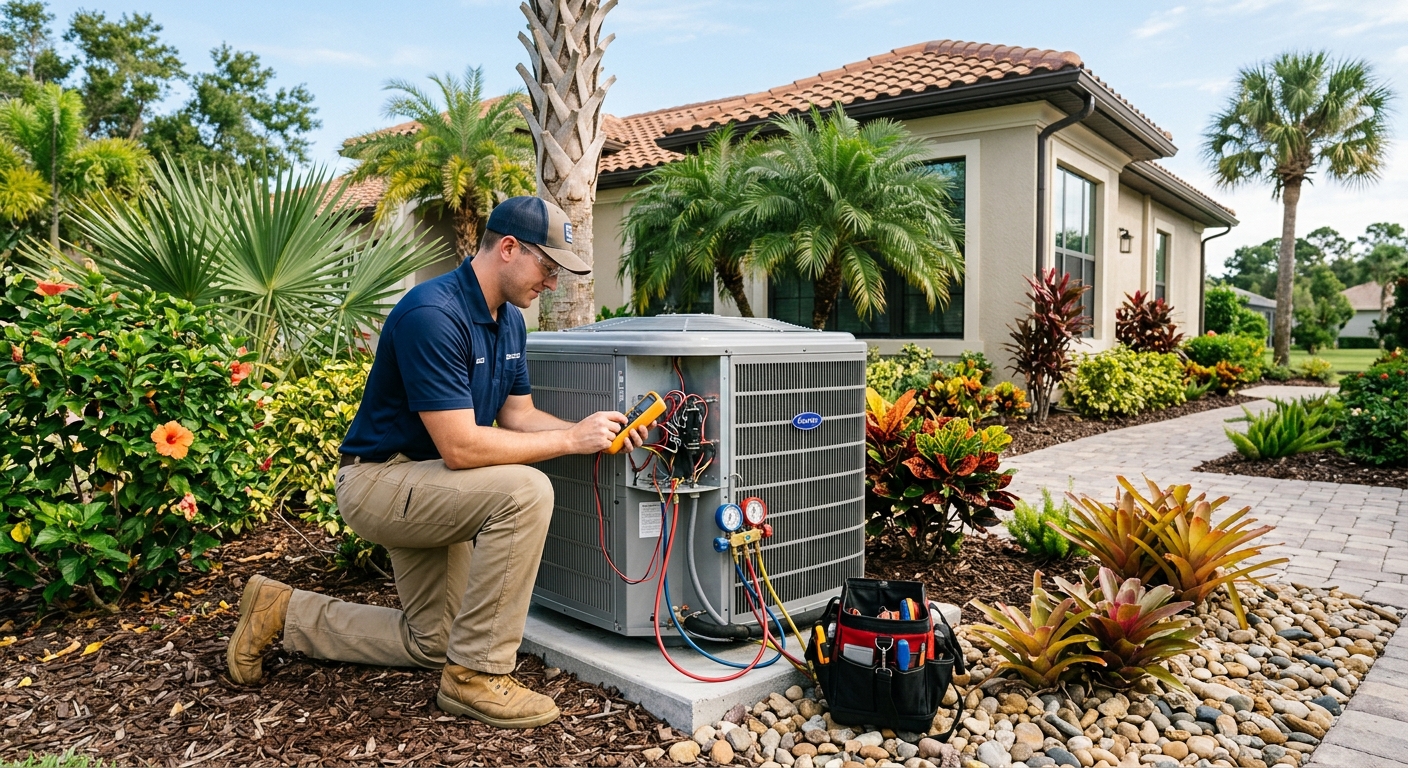
A mild operating hum can be normal, but loud buzzing, repeated clicking, rattling, grinding, or screeching deserves attention. A buzzing outdoor unit that is not starting may have a weak capacitor, contactor problem, loose electrical connection, or failing motor. Debris or a loose panel can create rattling, while grinding may indicate motor or bearing damage.
Do not reach through the outdoor unit’s grille or attempt to push-start the fan. Capacitors can retain an electrical charge even after power is disconnected. Shut the system off and call a technician if the sound is loud, new, or accompanied by a burning smell or repeated breaker trips.
Can dirty coils cause poor cooling in Palm Bay?
Yes. The outdoor condenser coil releases heat collected from inside the home. Grass clippings, leaves, lint, soil, and vegetation can restrict airflow around it. Coastal air and humid conditions may also contribute to corrosion over time, although exposure varies by property location and equipment installation.
Keep shrubs and stored items away from the unit, and remove loose debris from the surrounding area after mowing or storms. Do not bend the delicate coil fins or direct high-pressure water at the cabinet. A technician can clean heavily impacted coils and check for corrosion or damage.
Could leaky ductwork be causing hot rooms?
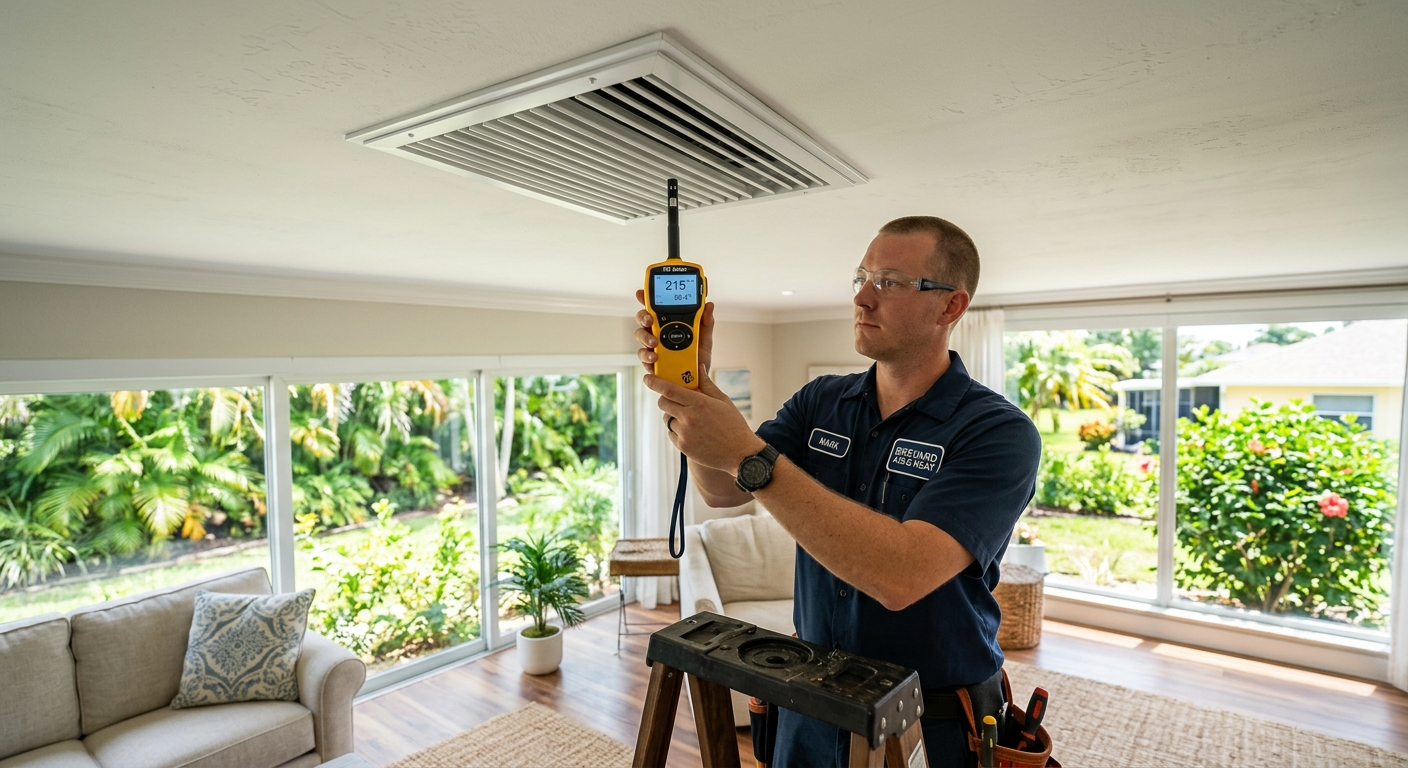
Duct leaks, disconnected sections, crushed flexible ducts, and inadequate insulation can allow cooled air to escape into an attic or other unconditioned space. In Palm Bay homes, a hot attic can significantly increase the effect of duct leakage. Typical signs include one or more rooms staying warm, weak airflow, visible duct damage, excess dust, or unusually long cooling cycles.
Closing vents in uncomfortable rooms is rarely a good solution because it can alter system airflow. A professional can measure airflow and inspect accessible ductwork. If the ducts are damaged or leaking, targeted air duct repair may improve comfort and reduce wasted cooling.
What should I check before calling for AC repair?
A few safe checks can help identify a simple issue and provide useful information to the technician:
- Confirm that the thermostat is set to “Cool” and the temperature is below the current room temperature.
- Set the fan to “Auto” unless you are intentionally thawing a frozen coil.
- Inspect the air filter and replace it if it is visibly dirty, using the size and type recommended for the system.
- Make sure supply vents and return grilles are open and not blocked by furniture, rugs, or curtains.
- Check the HVAC breakers once. Call for service if a breaker immediately trips again.
- Look for ice, standing water, damaged wiring, or unusual noises without removing equipment panels.
- Clear leaves and loose yard debris from around the outdoor unit while keeping hands away from the fan.
- Note when the problem started and whether it affects the entire home or only certain rooms.
Avoid opening refrigerant circuits, replacing capacitors, bypassing safety switches, or handling internal electrical components. Those tasks require appropriate training, tools, and safety procedures.
When is an AC problem an emergency?
Seek prompt help when the system has stopped cooling during dangerous heat, especially if children, older adults, pets, or people with medical conditions are in the home. Turn the equipment off and request service if you smell burning, see smoke or sparks, hear severe grinding, find water near electrical components, or experience a breaker that will not remain reset.
A completely failed system is not the only urgent situation. Active water leakage, rapidly spreading ceiling stains, or severe ice buildup can cause additional damage if operation continues. Aquila’s emergency AC repair service is available for cooling problems that should not wait for a routine appointment.
How can Palm Bay homeowners prevent summer AC breakdowns?
Check the filter regularly during heavy cooling months. Replacement frequency depends on the filter, household occupancy, pets, renovation dust, and system usage, so visual inspection is more useful than relying on one schedule for every home.
Keep the outdoor unit clear, avoid blocking indoor vents, and watch for early warning signs such as longer cycles, rising indoor humidity, new sounds, musty odors, or water near the air handler. A thermostat setting that is realistic for the weather can also reduce unnecessary strain; extremely low settings do not make a standard system cool faster.
Professional maintenance can identify weakening electrical components, drainage restrictions, airflow problems, dirty coils, and other developing issues. Maintenance cannot guarantee that a part will never fail, but it can help reveal correctable conditions before peak summer demand.
Need AC repair in Palm Bay, FL?
If basic checks do not restore cooling—or if you find ice, leaking water, electrical symptoms, or repeated short cycling—contact Aquila Air & Heating. Our family-run team serves Palm Bay and communities throughout Brevard County, diagnosing the cause of the problem before recommending an appropriate repair.
Describe the symptoms, equipment location, and any troubleshooting steps you have already taken when scheduling service. That information can help the technician prepare for your visit and work toward restoring reliable cooling as efficiently as possible.