
Better Indoor Air Quality for Allergy Sufferers in Brevard County
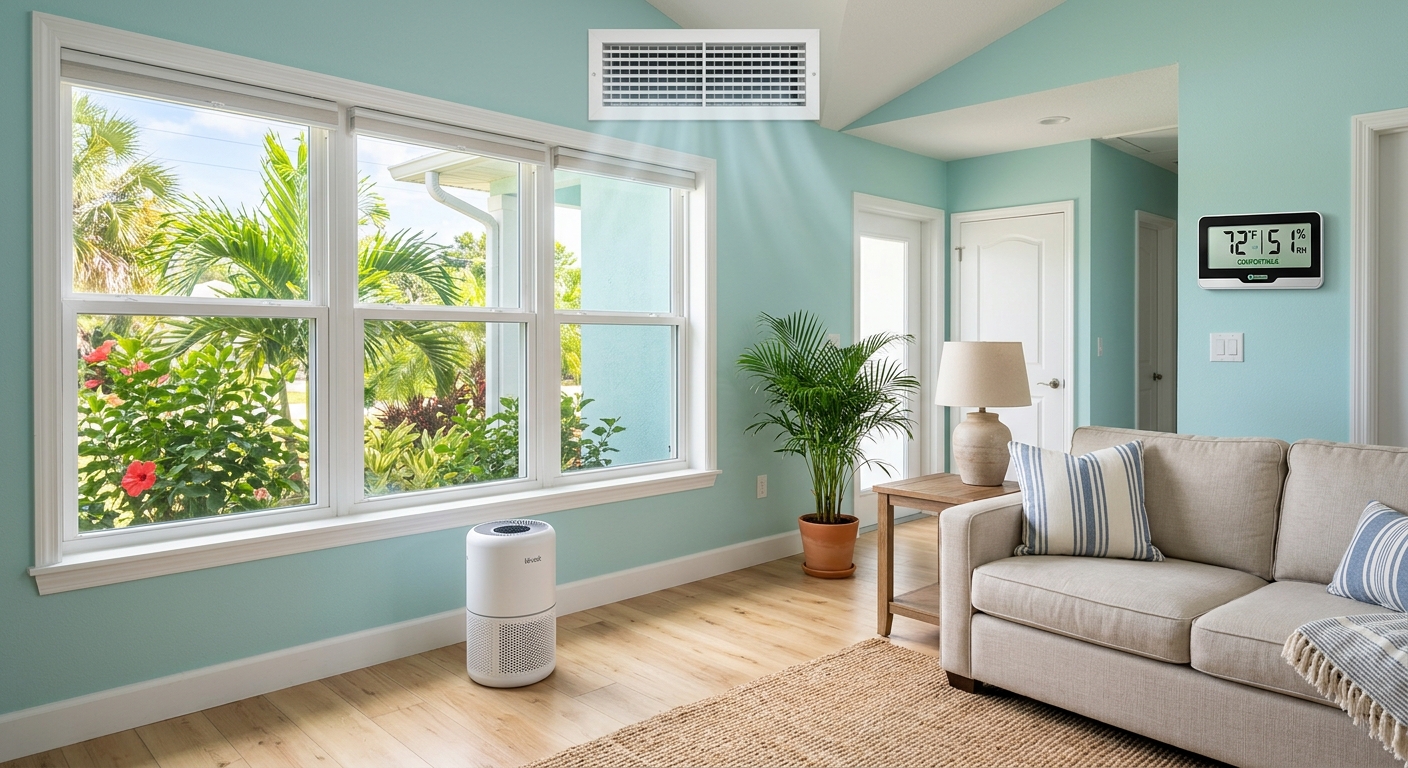
Learn how Brevard County homeowners can reduce pollen, dust, dander, mold spores and other allergy triggers through practical indoor air quality improvements.
Better indoor air quality can reduce exposure to pollen, dust mites, pet dander, mold spores and other particles that may aggravate allergy symptoms. In Brevard County, the most effective approach combines proper HVAC filtration, controlled indoor humidity, regular cleaning and correction of moisture or ventilation problems.
No single filter or air cleaner can remove every allergen, but several practical improvements can make a home more comfortable. If you are researching indoor air quality allergies in Brevard County, begin by identifying the likely triggers in your home rather than buying a product based only on advertising claims.
Why can allergies feel worse inside a Brevard County home?
Central Florida's warm climate allows plants to release pollen during much of the year. Outdoor particles enter through doors, windows, clothing, pets and small gaps in the building envelope. Once inside, pollen can collect in carpet, bedding, upholstered furniture and HVAC return grilles.
Brevard County's coastal humidity also affects indoor conditions. Dust mites thrive in humid environments, while persistent moisture can support mold growth on suitable materials. Homes near the beach may experience salt-laden air and frequent door openings, while homes near construction, unpaved areas or busy roads may receive more outdoor dust.
An air conditioner helps remove moisture as it cools, but operation alone does not guarantee healthy humidity. Oversized equipment, short cooling cycles, clogged drains, duct leakage and thermostat settings can all affect moisture control. Occupant activities such as showering, cooking and drying laundry indoors also contribute humidity.
Which indoor allergens should homeowners look for first?
The most common triggers are not always visible. A practical home assessment should consider where particles or moisture are entering, where they accumulate and whether the HVAC system is distributing them.
- Pollen carried indoors on shoes, clothing, pets or outdoor air
- Dust and dust mite debris in bedding, carpet and upholstered furniture
- Pet dander and dried saliva particles
- Mold spores associated with leaks, condensation or elevated humidity
- Particles from cooking, candles, fireplaces, tobacco smoke and renovation work
- Cleaning chemicals, fragrances and other airborne irritants that can produce allergy-like symptoms
Allergies and respiratory symptoms can have many causes. HVAC improvements may reduce airborne exposure, but they are not medical treatment. Persistent wheezing, shortness of breath or severe symptoms should be discussed with a qualified healthcare professional.
What HVAC filter is best for allergy sufferers?
Choose the most efficient filter your HVAC system can handle without restricting airflow. A filter's MERV rating describes its ability to capture particles in specific size ranges. Filters around MERV 8 capture common household debris, while MERV 11 to MERV 13 filters can capture a greater share of smaller particles when the system is designed for them.
A higher rating is not automatically better for every system. A dense filter installed in an undersized return, narrow filter slot or system with an airflow problem can increase static pressure. That may reduce comfort, impair dehumidification, increase energy use or contribute to equipment trouble. An HVAC professional can measure system pressure and recommend an appropriate filter rather than relying on rating alone.
How often should an HVAC filter be changed?
Inspect it monthly, especially during long cooling seasons. Many filters need replacement every one to three months, but the correct interval depends on filter size, household occupancy, pets, renovation dust and system runtime. A large media filter may last longer than a one-inch filter, although it should still be checked regularly.
Replace the filter when it is visibly loaded rather than waiting for a fixed date. Confirm the airflow arrow points toward the air handler, and make sure the filter fits securely so air cannot bypass its edges.
What indoor humidity level helps control allergens?
A relative humidity range of roughly 30% to 50% is commonly recommended for homes. In Brevard County, staying near the upper end or below it can be challenging during rainy weather, shoulder seasons and periods when the air conditioner does not run for long.
Humidity that remains above 60% deserves attention, particularly if you also notice condensation, musty odors or damp surfaces. Start with an inexpensive digital hygrometer and compare readings in several rooms. Bathroom exhaust fans should vent outdoors, kitchen moisture should be exhausted when practical, and plumbing or roof leaks should be repaired promptly.
If your readings stay high even while the cooling system operates, review the possible causes in Why Is My House Humid With the AC Running?. A technician may need to check equipment sizing, cooling cycles, refrigerant performance, condensate drainage, duct leakage and thermostat configuration. In some homes, a properly selected whole-home dehumidifier may be appropriate, but moisture sources and HVAC faults should be addressed first.
Can an air purifier make a meaningful difference?
A portable HEPA air cleaner can reduce airborne particles in the room where it operates. Select a unit sized for the room, place it where airflow is not blocked and run it consistently at the highest tolerable fan speed. Bedrooms are often a useful priority because people spend many consecutive hours there.
Whole-home media air cleaners can provide better filtration than some standard filter arrangements, but performance depends on correct sizing, installation and airflow. They work while the HVAC fan is moving air, so fan settings and energy use should be considered.
Do UV lights remove pollen and dust?
Ultraviolet HVAC lights are not particle filters. When properly designed and installed, UV-C equipment may help control microbial growth on wet HVAC surfaces such as an evaporator coil or drain pan. It does not capture pollen, pet dander or ordinary dust, and results depend on light intensity, exposure time and placement.
Be cautious with devices marketed using broad health claims. Avoid ozone-generating air cleaners in occupied spaces because ozone is a lung irritant. Homeowners who want to compare filtration, ventilation, humidity control and UV options can review Aquila Air & Heating's Indoor Air Quality services.
Should allergy sufferers run the HVAC fan continuously?
Continuous fan operation can increase filtration because more air passes through the filter. However, it is not the right choice for every Florida home. After a cooling cycle ends, a continuously operating blower may re-evaporate moisture remaining on the indoor coil, potentially raising indoor humidity on some systems.
An automatic fan setting is often the safer starting point in a humid climate. Systems with variable-speed controls or dedicated dehumidification settings may offer other options. If you want longer filtration runtime, ask a technician to evaluate humidity, fan programming and airflow before making continuous operation a permanent strategy.
How can everyday cleaning reduce indoor allergy triggers?
Source control keeps allergens from becoming airborne in the first place. HVAC filtration is more effective when it is paired with consistent household habits.
- Wash bedding weekly in accordance with fabric care instructions.
- Use a vacuum with sealed filtration or a HEPA filter, especially on carpet and upholstery.
- Damp-dust hard surfaces instead of using a dry cloth that redistributes particles.
- Remove shoes at the door and change clothing after yardwork or high-pollen activities.
- Brush and bathe pets as recommended by a veterinarian, and keep them out of the allergy sufferer's bedroom when possible.
- Keep exterior doors and windows closed when pollen counts are high or outdoor humidity is elevated.
- Use bathroom exhaust fans during showers and for approximately 20 minutes afterward.
- Clean visible debris from return grilles without pushing material into the duct system.
Avoid adding unnecessary fragrances to cover odors. Persistent odors are clues that a moisture, drainage, combustion or ventilation issue may need to be found and corrected.
Does duct cleaning help with allergies?
Duct cleaning should be based on conditions, not treated as an automatic annual service. It may be worth evaluating when ducts contain substantial debris, have been contaminated during renovation, show evidence of pests or have verified microbial growth. Dust visible on a return grille alone does not prove the entire duct system requires cleaning.
Before paying for cleaning, look for the source of contamination. Leaky return ducts in an attic or garage can draw particles into the system. Damaged or poorly sealed ductwork may continue introducing dust after cleaning unless it is repaired. Wet or mold-contaminated insulation may require a different corrective approach than ordinary surface dust.
When should you call an indoor air quality professional?
Professional evaluation is appropriate when simple filter and cleaning changes do not solve the problem or when there are signs of an HVAC or moisture defect. Call for help if you notice:
- Indoor relative humidity that regularly remains above 60%
- Musty odors that return after cleaning
- Visible moisture, recurring condensation or suspected mold growth
- Rooms that become dusty soon after cleaning
- Weak airflow, unusually long or short cooling cycles, or frequent filter collapse
- Symptoms that consistently worsen when the HVAC system starts
- Evidence of damaged, disconnected or leaking attic ductwork
- A need to confirm whether the system can support a higher-efficiency filter
A useful indoor air quality visit should begin with questions about symptoms, pets, moisture, recent renovations and where problems occur. Depending on the concern, the technician may inspect filtration, coils, drain components, ducts, ventilation, equipment sizing indicators and humidity performance. Be wary of anyone who promises that one device will eliminate all allergens or diagnose a medical condition.
How can Aquila Air & Heating help Brevard County homeowners?
Aquila Air & Heating is a family-run HVAC company serving Brevard County and the Space Coast. Our team can evaluate airflow, filtration, humidity control and HVAC conditions, then explain which improvements are likely to help and which may be unnecessary.
If equipment replacement becomes appropriate, homeowners can also learn about Aquila's Lifetime Warranty and review the applicable terms before making a decision. Warranty information is separate from indoor air quality guidance, and the right recommendation should always be based on the home's actual comfort, moisture and equipment needs.
For recurring dust, high humidity, musty odors or questions about allergy-focused filtration, contact Aquila Air & Heating to schedule an indoor air quality or HVAC evaluation in Brevard County.