Do I Need a Whole-Home Dehumidifier in Florida?
Find out whether your Brevard County home needs a whole-home dehumidifier and how to control Florida humidity without masking an HVAC or moisture problem.
A whole-home dehumidifier may be worthwhile if your Brevard County home regularly stays above about 55% to 60% relative humidity despite a properly operating air conditioner. Before installing one, have persistent moisture, HVAC performance, duct leakage, drainage and outdoor-air infiltration evaluated so the equipment addresses the actual problem.
Many Florida homes do not need a separate dehumidifier when the air conditioner is correctly sized, maintained and operated. However, a ducted unit can provide valuable moisture control during rainy weather, mild shoulder-season days and other times when the home feels damp even though it does not need much cooling.
What are the signs that my Florida home is too humid?
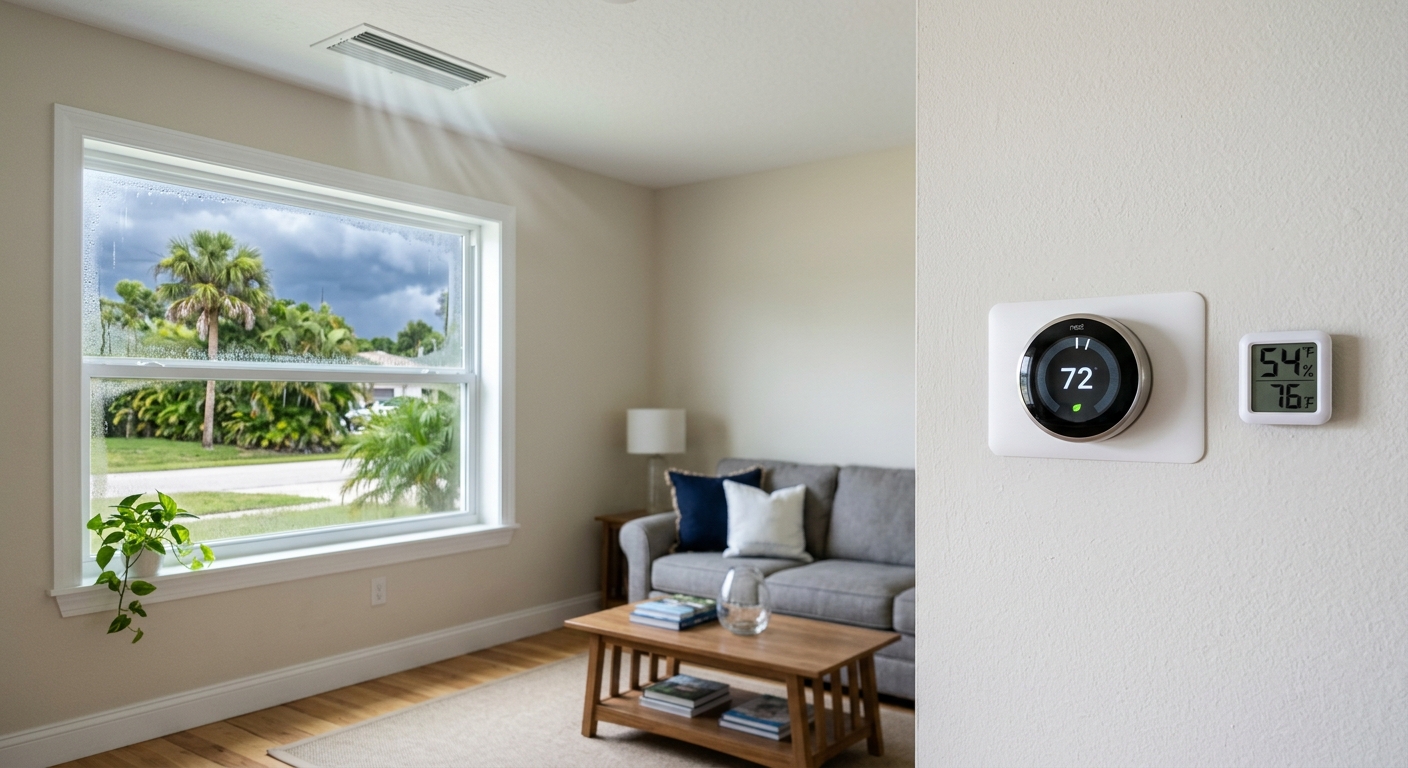
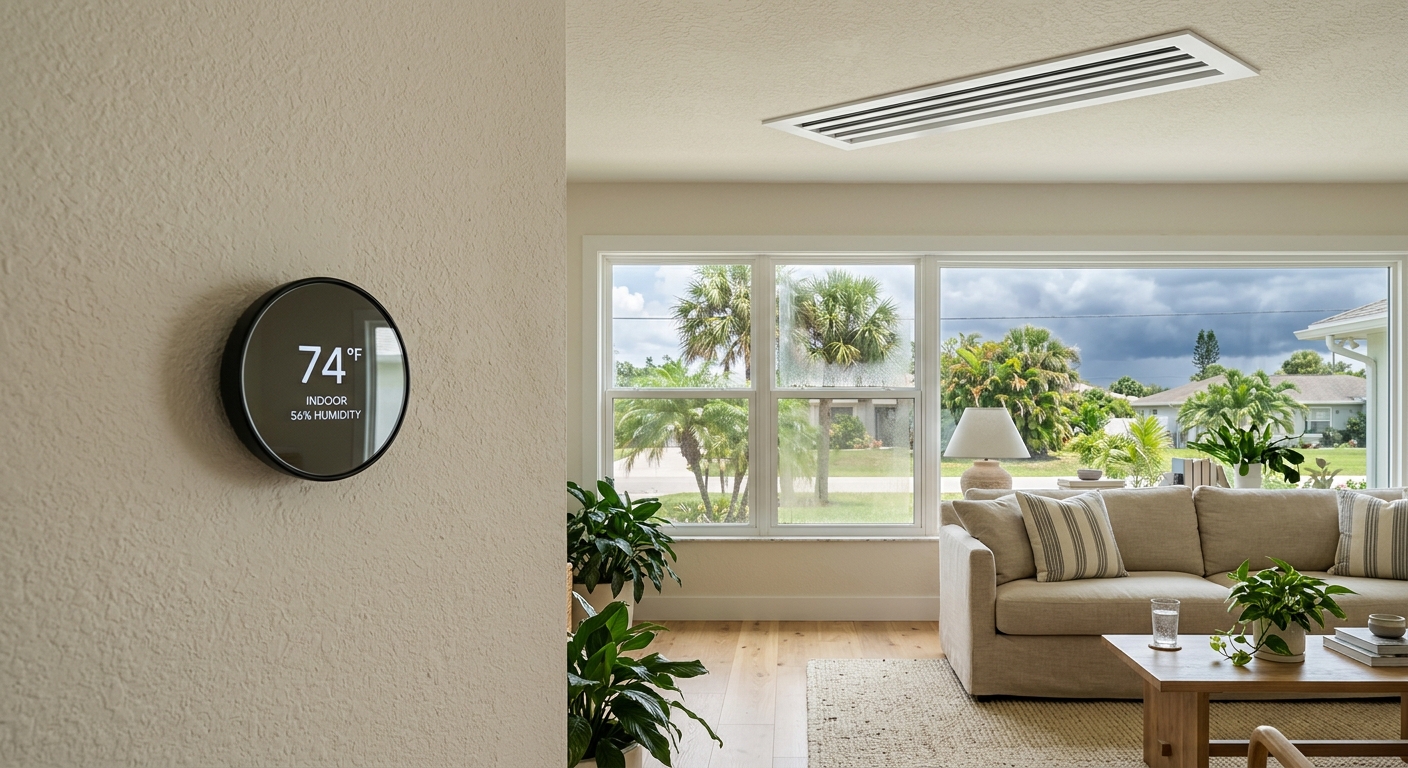
Indoor humidity cannot be judged by temperature alone. A home can be 74 degrees and still feel clammy when there is too much moisture in the air. Start with an accurate digital hygrometer placed away from supply vents, exterior doors, kitchens and bathrooms, then check readings at different times for at least several days.
Possible signs of excessive indoor humidity include:
- Relative humidity that repeatedly exceeds 55% to 60%
- A sticky or clammy feeling at a normal thermostat setting
- Condensation on supply registers, windows or cold surfaces
- Musty odors in closets, bedrooms or other low-airflow areas
- Mildew or recurring surface growth
- Wood doors, cabinets or flooring that swell or become difficult to operate
- Long air-conditioning cycles without comfortable moisture levels
- A need to lower the thermostat primarily to feel less humid
A single high reading after showering or cooking does not automatically indicate a whole-house problem. Look for a pattern. If humidity remains elevated for long periods, investigate promptly rather than trying to cover musty odors with fragrances.
Why is indoor humidity such a common problem in Brevard County?
Brevard County experiences warm temperatures, frequent rain and moisture-laden outdoor air for much of the year. Sea breezes and coastal conditions affect beachside communities, while mainland homes in Melbourne, Palm Bay, Cocoa and Titusville face the same broader challenge: outdoor air often contains more moisture than homeowners want indoors.
Moisture enters when doors open, through gaps in the building envelope, from attached garages and through uncontrolled duct or return-air leaks. Everyday activities such as cooking, showering and drying laundry add more. Roof leaks, plumbing leaks and water entering around windows can create localized moisture that no dehumidifier should be expected to fix.
Florida's mild but humid spring and fall weather creates another issue. Your home may not gain enough heat to run the air conditioner for long, even though outdoor moisture remains high. Because an air conditioner removes moisture mainly while cooling, short or infrequent cycles can leave the indoor air damp.
Should my air conditioner control humidity by itself?
Usually, a well-designed central air-conditioning system should handle a large share of the home's moisture load. As warm indoor air passes over the cold evaporator coil, water vapor condenses and drains away. The amount removed depends on system design, airflow, run time, equipment condition and the moisture entering the house.
Have the air-conditioning system checked before assuming you need additional equipment. Common contributors to poor humidity control include:
- An oversized air conditioner that cools the home too quickly and shuts off before removing enough moisture
- Incorrect blower speed or airflow across the indoor coil
- A dirty coil, clogged filter or other maintenance problem
- A blocked, damaged or poorly pitched condensate drain
- Leaky return ducts drawing humid attic, garage or outdoor air into the system
- A thermostat fan set to ON instead of AUTO, which may return moisture from a wet coil to the home after the compressor stops
- Poorly controlled mechanical ventilation or exhaust systems
Do not reduce airflow or alter equipment settings yourself. Airflow that is too low can cause coil freezing, comfort problems and equipment damage. An HVAC professional should measure system performance and make changes according to the manufacturer's specifications.
When does a whole-home dehumidifier make sense?
A whole-home unit is most useful when excess humidity persists after identifiable HVAC, drainage and building issues have been corrected. It may also be appropriate when a home's moisture load is unusually high or when occupants want tighter humidity control independent of the cooling demand.
Consider a professional evaluation if:
- Indoor relative humidity often remains above 55% to 60% for extended periods
- The house is cool but still feels damp during rainy or mild weather
- You have verified that the air conditioner is properly sized and operating correctly
- Your home receives planned outdoor ventilation that adds a significant moisture load
- Closets or interior rooms repeatedly develop musty odors despite adequate cleaning and airflow
- A portable dehumidifier helps but cannot serve the entire home conveniently
- You are renovating a tightly sealed home and need a coordinated moisture-control plan
If you are searching for a whole home dehumidifier Florida solution, avoid choosing equipment solely by advertised capacity. Florida homes vary in square footage, ceiling height, air leakage, duct location, occupancy and ventilation. Proper selection requires more than matching a unit to floor area.
How does a whole-home dehumidifier work?
Most whole-home dehumidifiers draw humid air through a dedicated return or the HVAC duct system. The unit cools the air so moisture condenses, drains the collected water through a dedicated line and then sends drier air back into the home. A humidistat or compatible control turns the unit on based on measured relative humidity.
Unlike a portable unit, a properly designed ducted system can treat multiple rooms without requiring homeowners to empty a bucket. It still needs a correctly installed drain, accessible filter, appropriate electrical service and space for maintenance. Depending on the home, the best design may use dedicated ductwork, connect to the central system or combine both approaches.
Installation details matter. Poor duct configuration can create unwanted pressure, airflow or temperature effects. The drain must also be protected against backups and routed according to applicable requirements, particularly in Florida homes where condensate systems work hard.
What indoor humidity level should I target in Florida?
A practical target for many Brevard County homes is approximately 45% to 55% relative humidity. Conditions and personal comfort differ, but keeping indoor humidity below 60% is a sensible general goal because prolonged higher levels can support microbial growth and dust-mite activity.
A lower setting is not always better. Trying to maintain an unnecessarily low percentage can increase equipment runtime and energy use. It may also fail to address a hidden leak or infiltration problem. Monitor more than one room and compare readings over time before changing settings.
For additional no-cost and low-cost strategies, read How Can I Lower Humidity in My House in Florida?.
Can I reduce humidity without adding another appliance?
Yes. Complete basic moisture-control steps before investing in new equipment:
- Set the thermostat fan to AUTO unless an HVAC professional recommends another strategy for your system
- Use bathroom exhaust fans during showers and continue running them briefly afterward
- Operate a vented kitchen exhaust fan while cooking
- Keep exterior doors and windows closed when outdoor air is humid
- Replace HVAC filters as needed and schedule routine system maintenance
- Inspect visible condensate drains and report slow drainage or overflow
- Repair roof, plumbing and window leaks instead of relying on dehumidification
- Seal verified duct and envelope leaks using appropriate materials and methods
- Avoid setting the thermostat extremely low just to remove moisture
Humidity is only one part of a healthy indoor environment. Filtration, ventilation, source control and equipment maintenance should work together. Aquila's Indoor Air Quality services can help homeowners evaluate these factors as a connected system rather than treating one symptom in isolation.
Will a whole-home dehumidifier lower my electric bill?
Not necessarily. A dehumidifier uses electricity, so it should not be presented as an automatic energy-saving device. Drier air may allow some people to feel comfortable at a higher thermostat setting, and dedicated humidity control may avoid excessive air-conditioning used only for moisture removal. Actual energy use depends on equipment efficiency, runtime, settings, home leakage and occupant preferences.
The best goal is controlled humidity with sensible operation, not simply adding equipment. Correcting duct leaks, thermostat settings or an oversized replacement-system design can sometimes provide better long-term value than installing a dehumidifier by itself.
When should I call an HVAC professional?
Schedule an evaluation when humidity remains high for several days, condensation repeatedly appears, musty odors return, the air conditioner short-cycles or you are considering ducted equipment. A technician can inspect the cooling system, measure airflow and operating conditions, review ductwork, check drainage and discuss how outdoor air enters the home.
Call promptly if you find active water leakage, an overflowing drain pan, wet drywall or rapidly spreading visible growth. Plumbing, roofing, water-restoration or environmental professionals may also be needed because an HVAC system cannot correct every moisture source.
Aquila Air & Heating serves homeowners throughout Brevard County and can determine whether maintenance, repairs, airflow corrections or a whole-home dehumidifier best fits the property. Contact our family-run team for a humidity and comfort evaluation, and ask about eligible systems offered with our Lifetime Warranty; coverage depends on the written terms and qualifying equipment.
Frequently asked questions about whole-home dehumidifiers
Do all Florida homes need a whole-home dehumidifier?
No. Many homes maintain acceptable humidity with a properly sized and maintained air conditioner, controlled ventilation and a reasonably sealed building envelope. A dehumidifier is most appropriate when persistent moisture remains after underlying problems have been evaluated.
Can I run a whole-home dehumidifier and air conditioner together?
Yes, when the system is designed and controlled correctly. The devices may operate together during high cooling and moisture loads, while the dehumidifier can operate independently when humidity is high but the home does not need much cooling.
Is a portable dehumidifier enough for a Brevard County home?
A portable unit can help one room or serve as a short-term diagnostic tool, but it may not control humidity evenly throughout a house. It also needs regular drainage or bucket emptying. Persistent whole-house moisture usually warrants an HVAC and building assessment.
Does living near the ocean mean I automatically need one?
No. Coastal air can increase the moisture load, but construction, air leakage, ventilation, occupancy and HVAC performance determine indoor conditions. Use measured indoor humidity and a professional assessment rather than distance from the ocean alone.
Can a dehumidifier solve mold or water damage?
No. It may help control airborne moisture, but it does not repair leaks, remove damaged materials or remediate existing microbial growth. Stop the water source first and consult qualified restoration or environmental professionals when conditions warrant.