Heat Pump Efficiency in Florida: A Brevard County Homeowner’s Guide
Learn how Florida’s heat, humidity, ductwork and coastal conditions affect heat pump efficiency—and what Brevard County homeowners can do about it.
Heat pumps can be highly efficient in Florida because they cool homes and handle our relatively mild heating season with one system. In Brevard County, actual efficiency depends on correct sizing, humidity control, duct condition, equipment ratings and regular maintenance. Homeowners usually get the best results by using steady thermostat settings, replacing filters and having performance problems diagnosed before they increase energy use.
Why are heat pumps well suited to Florida’s climate?
A heat pump transfers heat rather than creating it through combustion. In cooling mode, it moves heat from inside the home to the outdoors, much like a central air conditioner. When heating is needed, a reversing valve allows the system to extract available heat from outdoor air and move it inside.
That process is especially useful along the Space Coast, where winters are generally mild and cooling accounts for much of the system’s annual workload. A heat pump can provide efficient heating through many cool-weather conditions without relying primarily on electric resistance heat. Homeowners considering equipment service or replacement can learn more about Aquila’s heat pump services in Brevard County.
Florida’s climate also creates challenges that ratings alone do not capture. Long cooling seasons, high humidity, hot attic spaces, airborne salt near the coast and heavy afternoon demand can all affect comfort, operating cost and equipment life. For anyone researching heat pump efficiency Florida conditions should be evaluated alongside the equipment’s published rating.
Which efficiency ratings matter for a Florida heat pump?
What does SEER2 tell you?
SEER2, or Seasonal Energy Efficiency Ratio 2, estimates cooling efficiency across a range of laboratory conditions. A higher SEER2 rating indicates that the system can provide more seasonal cooling for each unit of electricity under the test procedure. Because Brevard County has a long cooling season, SEER2 is an important comparison point when evaluating new systems.
It is not a prediction of your exact electric bill. Home size, insulation, thermostat settings, duct leakage, indoor heat gain, weather and utility rates all affect real-world consumption. The rating also applies to a tested combination of indoor and outdoor equipment, so matched components and proper installation matter.
Why should Florida homeowners consider EER2?
EER2 measures cooling efficiency at a specific set of conditions rather than across an entire season. It can be useful when comparing how systems perform under a sustained cooling load. That matters in Brevard County during hot summer afternoons, when a heat pump may operate for extended periods.
Does HSPF2 matter in Brevard County?
HSPF2 describes seasonal heating efficiency. Heating demand is lower here than in northern climates, but the rating still helps compare winter performance. More important for many Florida homeowners is how effectively the system avoids unnecessary use of auxiliary electric heat, which consumes considerably more electricity than normal heat-pump operation.
How does humidity affect heat pump efficiency and comfort?
Cooling is only part of a heat pump’s job in Florida. The system must also remove moisture from indoor air. A home can reach the thermostat setting and still feel clammy if the equipment runs in short bursts, airflow is incorrect, ducts pull in humid attic air or the system lacks adequate moisture-removal capacity.
Many homeowners are comfortable with indoor relative humidity around 45% to 55%, although the appropriate result depends on personal comfort, building conditions and outdoor weather. Consistent readings above 60% deserve attention because persistent moisture can contribute to odors, condensation and microbial growth.
Variable-speed and multi-stage systems may improve moisture removal by operating for longer periods at lower capacity, but equipment type alone does not guarantee humidity control. Correct sizing, airflow, refrigerant charge, thermostat configuration and duct integrity must work together.
Can an oversized heat pump use more energy?
Yes. Bigger is not automatically better, especially in a humid climate. An oversized system may cool the air quickly and shut off before running long enough to remove sufficient moisture. Frequent starts and stops can also reduce comfort and place additional stress on components.
An undersized system presents a different problem. It may struggle to maintain the thermostat setting during peak conditions, although long run times on the hottest days do not automatically prove that the unit is too small. Modern variable-capacity equipment is often designed to run for long periods at low output.
Replacement sizing should be based on a room-by-room or whole-home load calculation rather than the capacity of the old unit alone. The calculation should consider square footage, windows, insulation, orientation, air leakage, occupancy and duct conditions. Aquila’s heat pump installation process can help Brevard County homeowners evaluate capacity and efficiency options for their actual home.
What can homeowners do to improve heat pump efficiency?
Use a steady, realistic thermostat setting
Choose the warmest cooling setting that remains comfortable rather than relying on one universal number. Large temperature setbacks can require extended recovery during the hottest part of the day. In winter, dramatically raising the setting may also activate auxiliary heat on some systems.
A programmable or smart thermostat can help manage schedules, but it must be compatible with the heat pump and configured correctly. Avoid changing installer settings unless you understand their effect on staging, auxiliary heat and humidity control.
Replace or clean the filter when needed
A clogged filter restricts airflow and can reduce comfort, increase operating time or contribute to coil icing. Check the filter monthly and replace or clean it according to the filter manufacturer’s instructions and actual household conditions. Homes with pets, renovation dust or frequent door opening may need more frequent attention.
Do not assume that a thicker or more restrictive filter is always better. The filter must be suitable for the system’s return-air design. An HVAC professional can measure static pressure if airflow is a concern.
Keep the outdoor unit clear
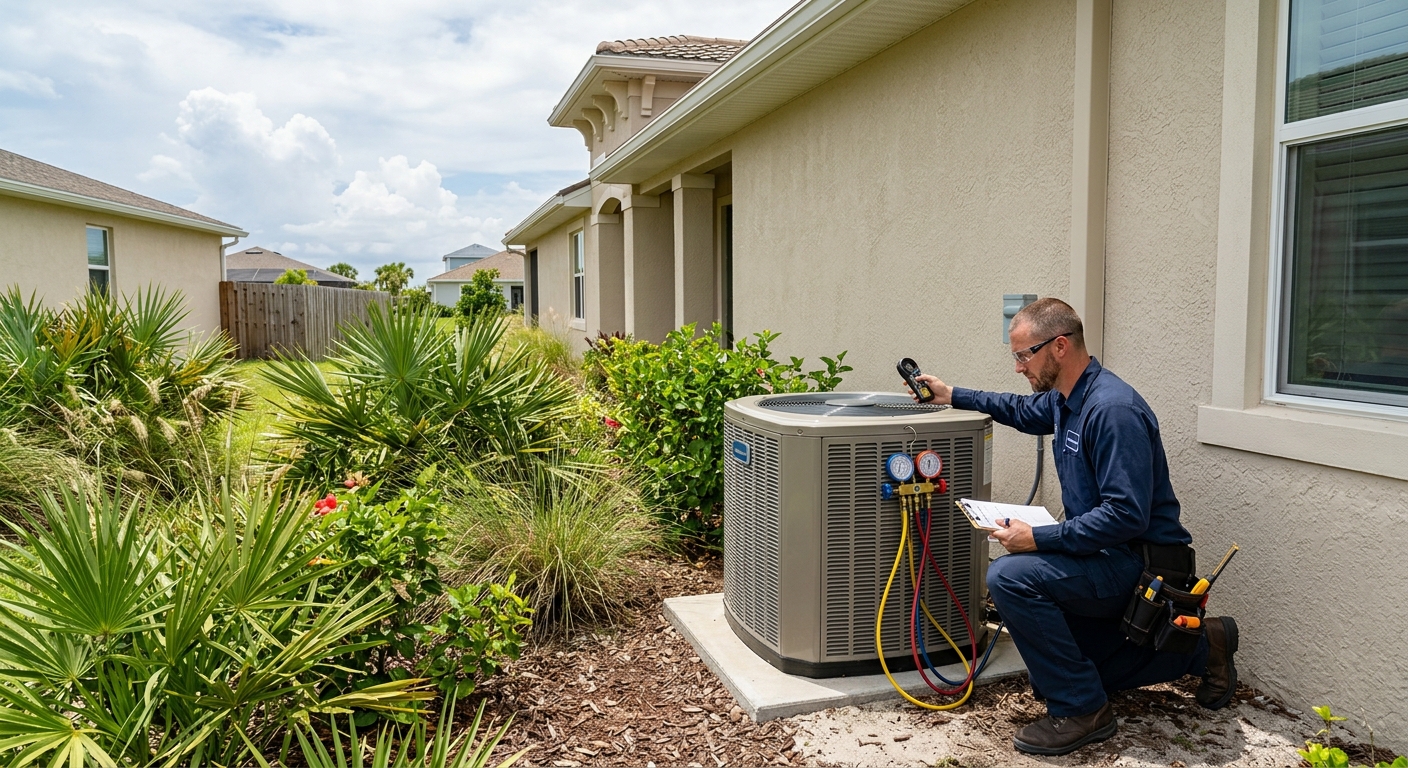
Remove leaves, grass clippings and other debris around the outdoor unit while keeping hands and tools away from electrical and moving components. Shrubs should not block airflow or service access. Never use a pressure washer on the coil because it can bend fins or damage the equipment.
Beachside homes in Satellite Beach, Indian Harbour Beach, Cocoa Beach and Cape Canaveral may experience more salt exposure than inland properties. Gentle professional cleaning and periodic inspection can help identify corrosion before it causes a failure.
Address duct leakage and damaged insulation
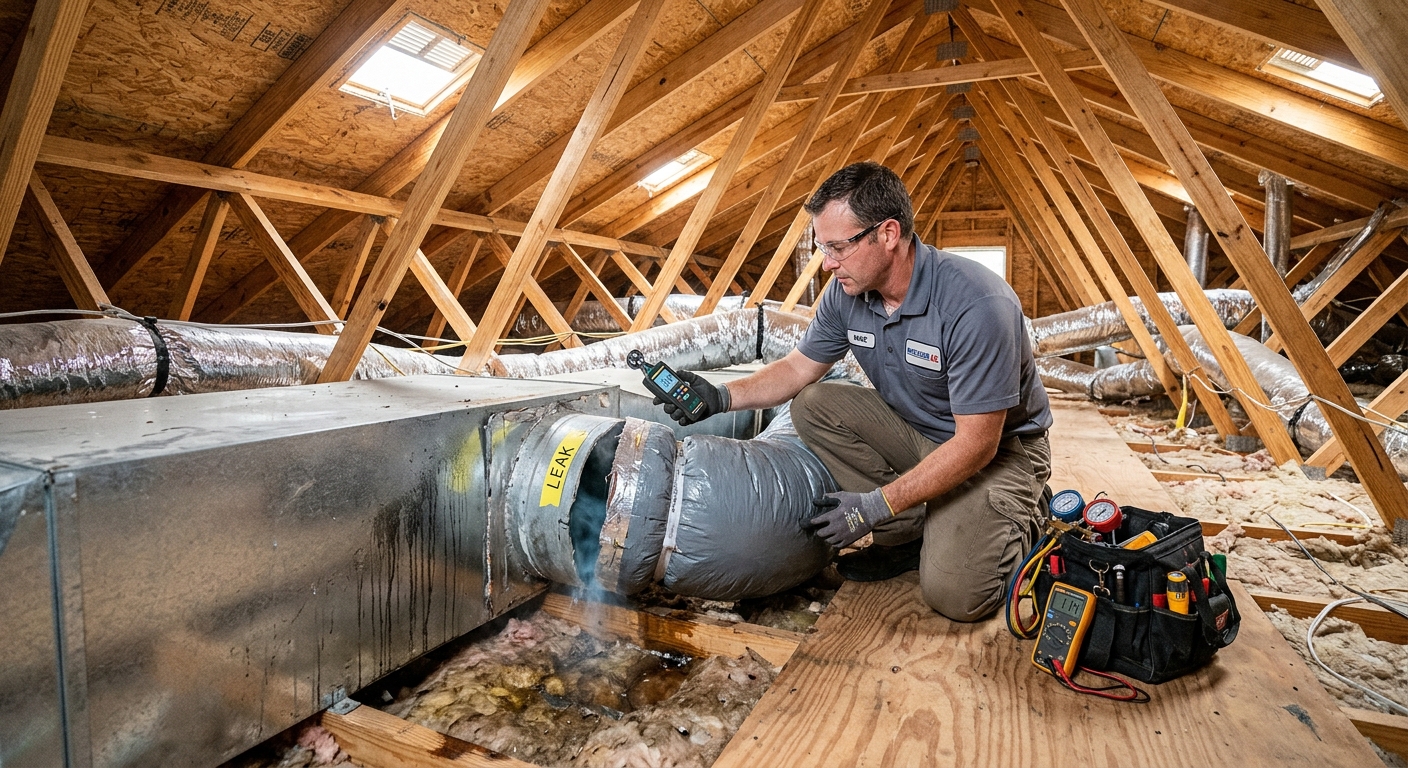
Ducts located in a hot attic or garage can lose a meaningful amount of conditioned air when connections leak or insulation is damaged. Return leaks may also pull hot, humid or dusty air into the system. Warning signs include unusually warm rooms, excessive dust, weak airflow and sweating around vents or air handlers.
Sealing accessible gaps with ordinary cloth duct tape is not a durable solution. Proper diagnosis may involve airflow measurements, static-pressure testing and duct-leakage testing. Learn more about duct leaks and energy loss in Florida homes.
Schedule preventive maintenance
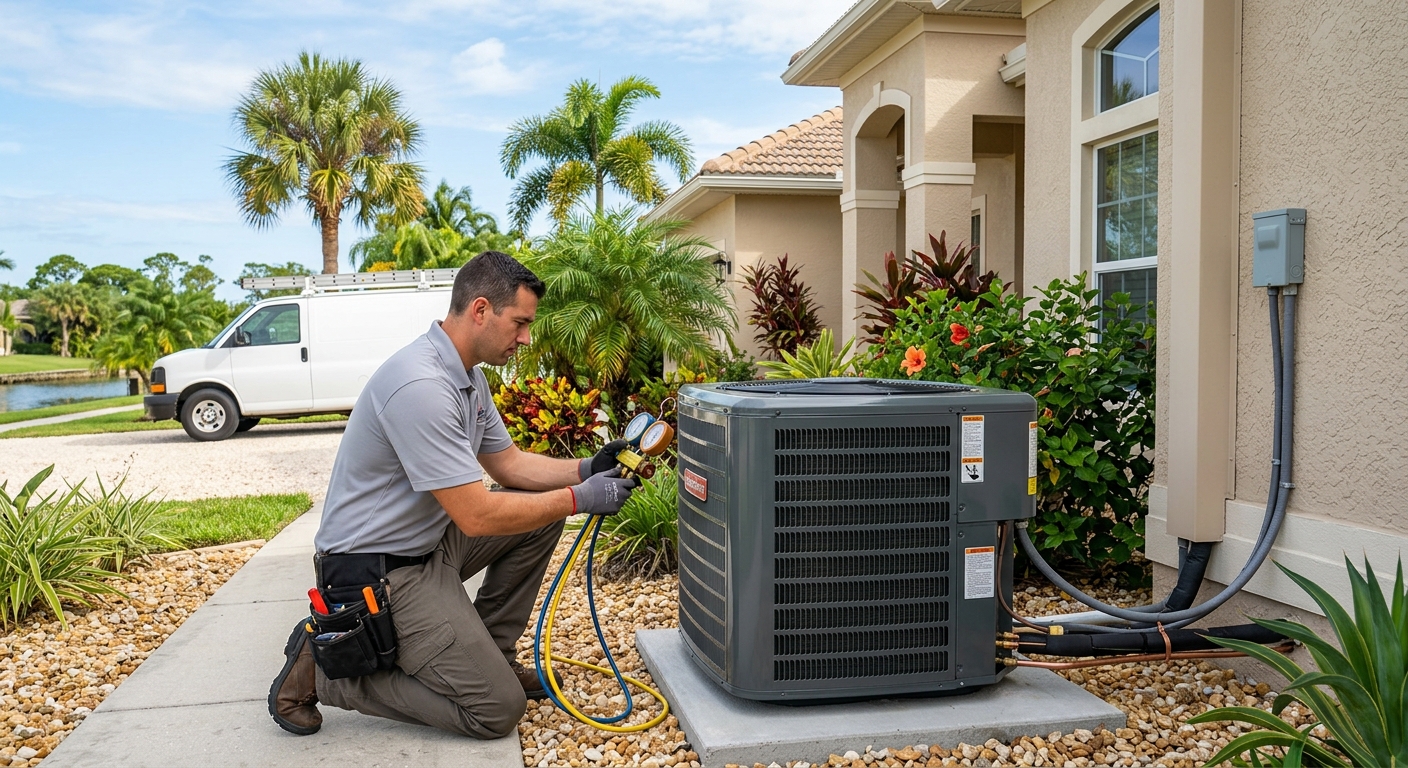
Professional maintenance should include more than a quick visual inspection. Depending on the system and its condition, a technician may evaluate electrical components, temperature change, refrigerant performance, blower cleanliness, airflow, the condensate drain and thermostat operation.
Condensate drainage deserves particular attention in Brevard County’s humid climate. A blocked drain may shut the system down or cause water damage. Because drain configurations vary, ask a technician which homeowner maintenance steps are safe for your equipment.
When is a higher-efficiency replacement worth considering?
A replacement may make sense when an older heat pump needs frequent repairs, has a major failed component, cannot control humidity or produces energy bills that cannot be explained by weather or rate changes. The best choice is not necessarily the model with the highest available rating. Installation quality, capacity, duct compatibility, humidity performance, noise and long-term service support also matter.
Ask for estimated operating comparisons based on your home and usage rather than a guaranteed savings percentage. It is also wise to review available utility or manufacturer incentives at the time of purchase because programs and eligibility requirements can change.
If the current system is otherwise sound, repair may be more economical. Aquila provides heat pump repair and diagnostic service for problems such as poor cooling, unusual noises, short cycling, icing and unexpected auxiliary-heat operation.
When should you call an HVAC professional?
Contact a qualified technician if the heat pump runs but cannot maintain a normal indoor temperature, humidity remains high, airflow drops suddenly or energy use rises without an obvious change in weather or thermostat habits. You should also schedule service for refrigerant-line ice, repeated breaker trips, burning odors, water near the air handler, loud mechanical sounds or an outdoor unit that does not operate.
Turn the system off and seek prompt help if you smell burning or see smoke. Electrical panels, refrigerant circuits and internal equipment components are not appropriate do-it-yourself repair areas. Repeatedly resetting a breaker can create a safety risk and may worsen equipment damage.
For gradual efficiency concerns, gather recent electric bills, note thermostat settings and record when the problem occurs. This information can help a technician distinguish between equipment trouble, duct loss, building heat gain and normal operation during unusually severe weather.
How can Aquila help improve heat pump performance?
Aquila Air & Heating is a family-run company serving homeowners throughout Brevard County, including Melbourne, Palm Bay, Rockledge, Cocoa, Titusville and the beachside communities. Our team can evaluate system condition, airflow, sizing, ductwork and humidity performance, then explain whether maintenance, repair or replacement is the practical next step.
Aquila is Florida's First HVAC Company Offering a Lifetime Warranty. Coverage depends on the applicable equipment, installation and written warranty terms, so homeowners should review eligibility and requirements on Aquila’s Lifetime Warranty information page. Contact Aquila Air & Heating to schedule a heat pump evaluation tailored to your Brevard County home.