How Does Humidity Affect Your Air Conditioning?
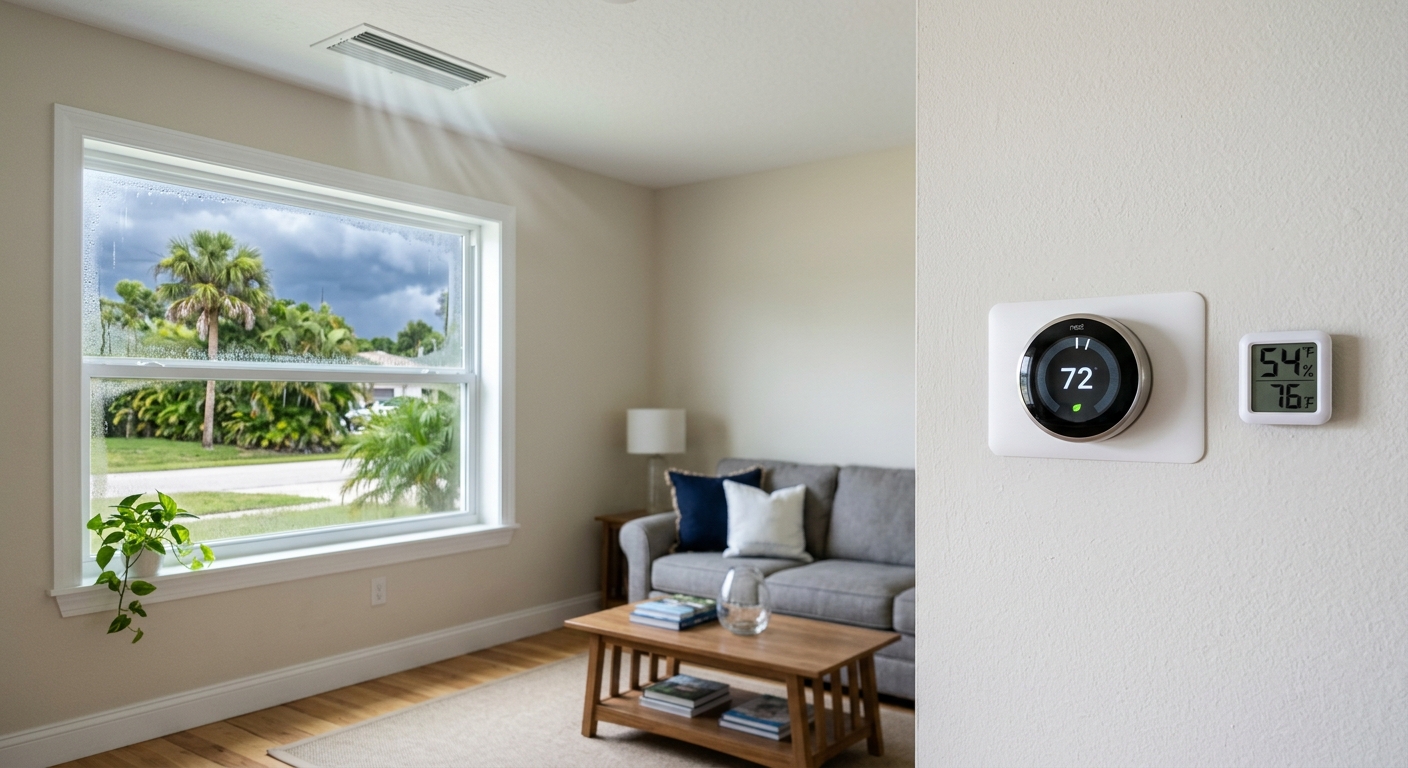
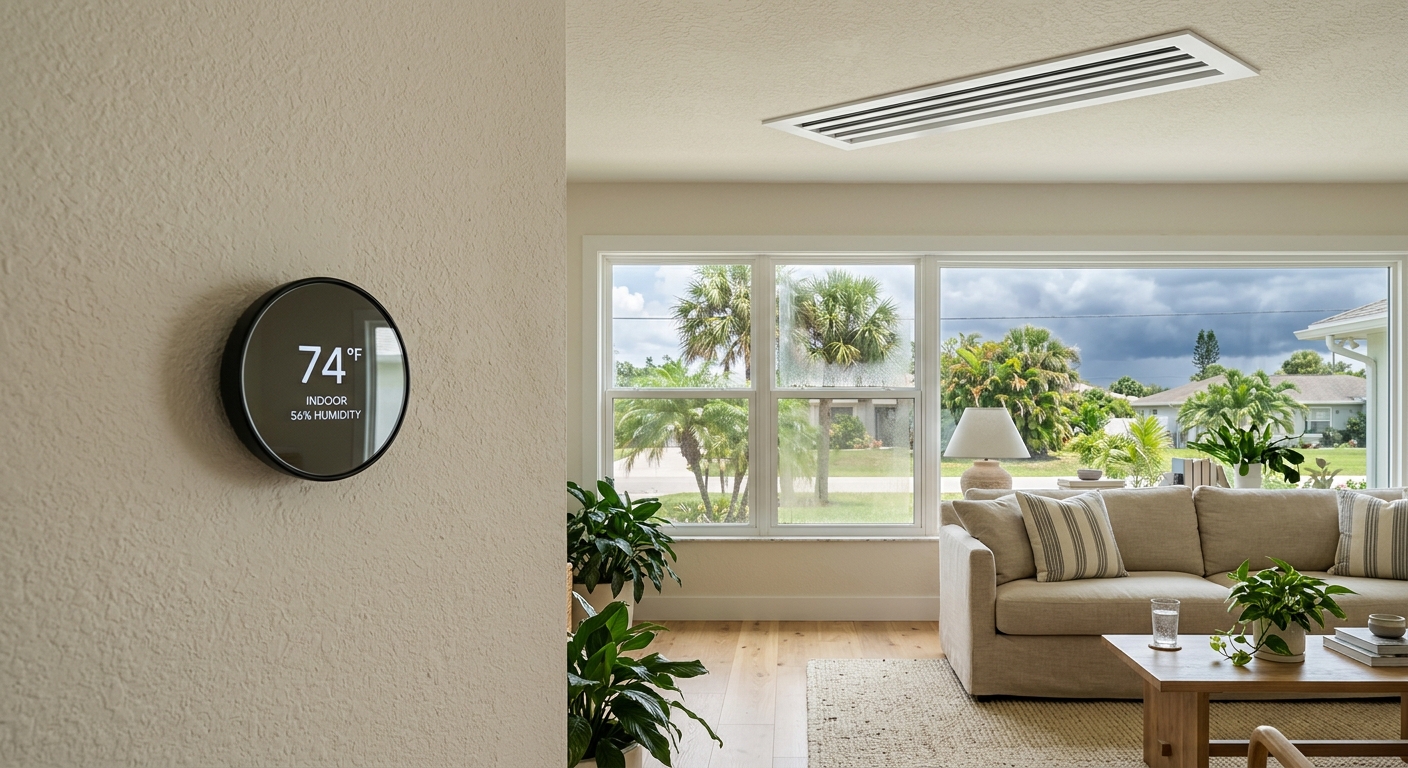
High humidity can make your Brevard County home feel warmer, force your AC to work harder and contribute to moisture problems even at a comfortable temperature.
High humidity makes your home feel warmer because perspiration cannot evaporate from your skin as efficiently, so your air conditioner must manage both heat and moisture to keep you comfortable. If indoor humidity remains high, the AC may run longer, use more energy and leave rooms feeling clammy even when the thermostat shows a normal temperature. Proper equipment sizing, airflow, drainage and operating habits all affect how well an AC system removes moisture.
Why does Brevard County humidity make my home feel hotter?
Brevard County is surrounded by moisture sources, including the Atlantic Ocean, the Indian River Lagoon and numerous rivers, lakes and wetlands. Warm outdoor air can hold a large amount of water vapor, especially during Florida’s rainy season. Every time a door opens or outdoor air leaks through gaps in the building, some of that moisture enters the home.
Humidity changes how your body experiences temperature. When indoor air is dry enough, perspiration evaporates and helps cool your skin. When the air already contains a high amount of moisture, evaporation slows down. A home at 75 degrees may therefore feel comfortable at moderate humidity but sticky and warm when humidity is elevated.
This is why lowering the thermostat is not always the best solution. A colder temperature may provide temporary relief without correcting the source of the moisture. In some homes, aggressive thermostat changes can also create longer periods of cooling followed by uncomfortable temperature swings.
How does an air conditioner remove humidity?
An air conditioner performs two related jobs: it lowers the air temperature and removes moisture. As warm indoor air passes across the cold evaporator coil, water vapor condenses into liquid. That water falls into a drain pan and leaves the home through the condensate drain line.
This moisture-removal process is sometimes called latent cooling, while lowering the air temperature is called sensible cooling. A properly selected and operating system balances both. Humidity and air conditioning problems often develop when the equipment lowers the temperature faster than it can remove enough moisture.
Several conditions influence dehumidification:
- How long the system runs during each cooling cycle
- The temperature and cleanliness of the evaporator coil
- Airflow across the coil
- The size and performance characteristics of the equipment
- Duct leakage and outdoor-air infiltration
- Thermostat settings and blower operation
- Condensate drainage
Moisture dripping from the outdoor end of a condensate line on a humid day is usually a normal sign that the system is removing water. Water around the indoor air handler, however, is not normal and should be addressed promptly.
What indoor humidity level should I aim for in Florida?
Many Florida homeowners find an indoor relative humidity range around 45% to 55% comfortable. Conditions vary by household, building construction and medical needs, but sustained readings above 60% deserve attention because they can support mold growth, musty odors and dust mite activity.
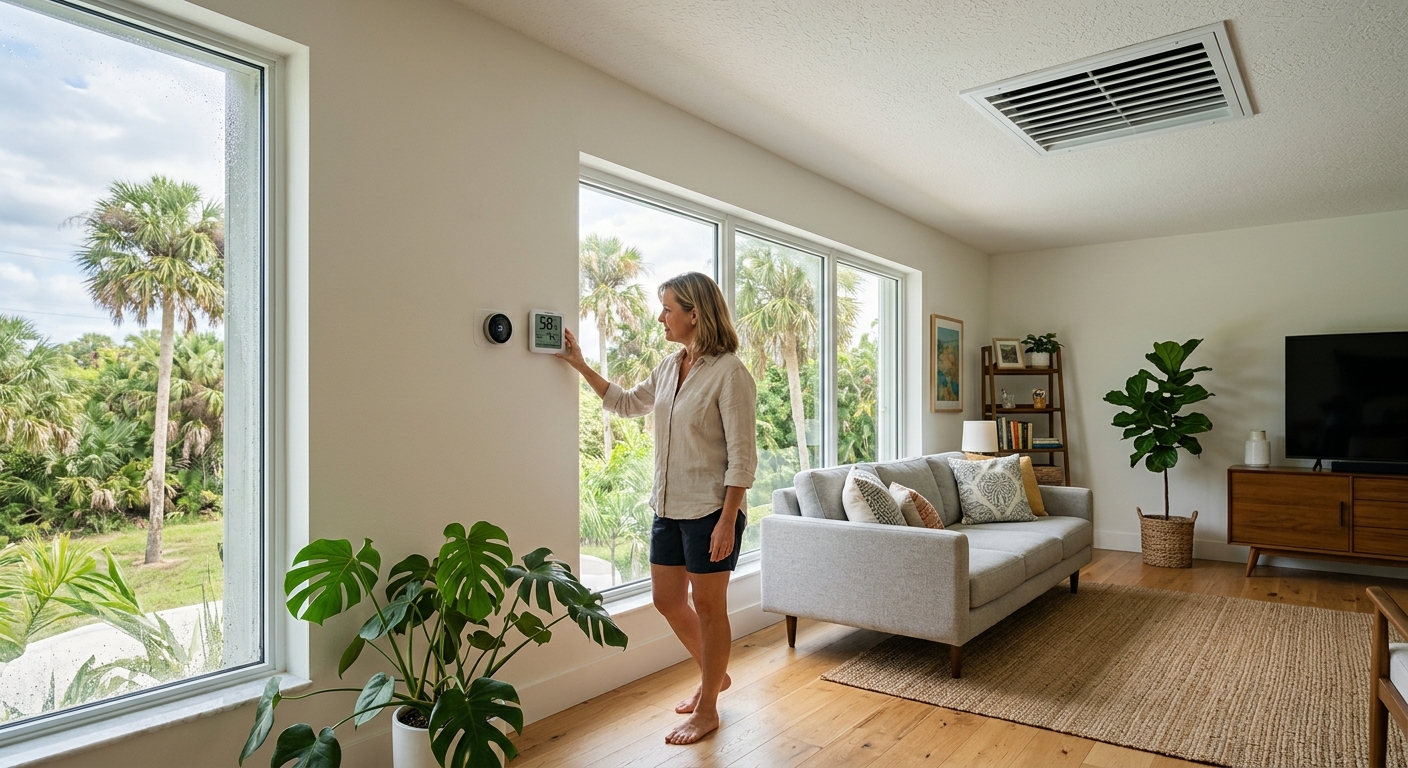
Use a digital hygrometer to measure humidity instead of relying only on how a room feels. Place it away from supply vents, exterior doors, kitchens and bathrooms, where short-term moisture or airflow can distort the reading. Check several rooms at different times of day for a more useful picture.
A brief rise after showering, cooking or opening doors during a summer storm is not necessarily an AC failure. The more important warning sign is humidity that stays high for hours, repeatedly climbs overnight or remains elevated while the air conditioner is cooling normally.
Why is my house humid even though the AC is running?
Could my air conditioner be oversized?
An oversized system can cool a home very quickly and then shut off. These short cycles may not keep the evaporator coil cold long enough to remove sufficient moisture. Oversizing can be especially noticeable during mild but humid weather, when the home needs moisture removal without much temperature reduction.
System capacity should be based on a detailed load calculation rather than simply replacing old equipment with the same tonnage. Square footage alone does not account for windows, insulation, air leakage, orientation, occupancy and other factors that affect a Brevard County home’s cooling load.
Can airflow problems raise humidity?
Yes. A dirty filter, blocked return, dirty evaporator coil, incorrect blower setting or duct problem can interfere with heat transfer and moisture removal. Too much or too little airflow may both create performance problems, so blower adjustments should be based on equipment specifications and measurements rather than guesswork.
Replace or clean the filter according to the manufacturer’s directions, and keep furniture and rugs away from return grilles. If airflow remains weak, rooms cool unevenly or ice appears on refrigerant tubing, turn the system off and arrange professional service. Running a system with a frozen coil can lead to additional damage and water leakage when the ice melts.
Do leaky ducts bring humid air inside?
Duct leakage is a common concern in Florida homes, particularly when ducts run through a hot attic or garage. Leaks on the return side can pull humid, dusty air into the system. Supply leaks can waste conditioned air and create pressure differences that encourage outdoor air to enter through gaps elsewhere in the house.
Signs can include unusually dusty rooms, uneven temperatures, high energy use or humidity that is worse when the system runs. A professional duct inspection or pressure test can help distinguish duct leakage from equipment and building-envelope problems.
Can the thermostat fan setting cause moisture problems?
During cooling season, set the thermostat fan to AUTO in most homes. The blower then stops between cooling cycles. If the fan is set to ON, it may move air across a wet evaporator coil after the compressor shuts off, allowing some moisture to evaporate back into the home.
Some variable-speed systems use specialized blower strategies, so follow the equipment manufacturer’s instructions. If you are unsure how your thermostat and air handler are configured, an HVAC technician can verify the correct settings.
Could outside air be entering my home?
Frequent door opening, poorly sealed windows, attic bypasses, bathroom exhaust issues and unsealed wall penetrations can introduce humid outdoor air. Coastal winds and afternoon thunderstorms can make infiltration particularly noticeable in communities from Titusville and Cocoa to Melbourne, Palm Bay and the beachside areas.
Seal obvious gaps with materials appropriate for the location, use kitchen and bathroom exhaust fans that vent outdoors and keep windows closed while the AC is operating. Do not block intentional ventilation openings or alter a mechanical ventilation system without professional guidance. Florida homes still need safe, controlled ventilation.
What can I do to help my AC control humidity?
Start with simple steps that do not require equipment changes:
- Set the thermostat fan to AUTO unless your system’s instructions state otherwise.
- Use a hygrometer to track humidity trends in more than one room.
- Replace dirty filters with the correct size and approved filter type.
- Keep supply and return grilles open and unobstructed.
- Run bathroom exhaust fans during showers and for a short period afterward.
- Use a vented range hood when boiling water or cooking moisture-heavy foods.
- Keep exterior doors and windows closed during humid weather.
- Check for plumbing leaks, damp cabinets and water around the air handler.
- Keep the outdoor condensate outlet clear of soil, mulch and vegetation.
Avoid repeatedly lowering the thermostat in an attempt to dry the house. If the system already reaches the selected temperature, a colder setting may mask the problem rather than identify its cause. It can also make surfaces colder, increasing the risk of condensation where humid air reaches those surfaces.
Would a whole-home dehumidifier help?
A whole-home dehumidifier may be useful when indoor humidity remains elevated even though the AC is properly sized and operating correctly. It can also help during mild, rainy weather when there is not enough heat for the air conditioner to run long cooling cycles.
It is not a substitute for repairing duct leaks, drainage problems, plumbing leaks or an improperly performing AC system. A contractor should first assess moisture sources, equipment operation and ventilation. Our guide, Do I Need a Whole-Home Dehumidifier in Florida?, explains when dedicated moisture control may make sense.
Humidity is also only one part of a healthy indoor environment. Filtration, ventilation, source control and equipment cleanliness can affect comfort and airborne pollutants. Learn more about Aquila’s Indoor Air Quality services and solutions.
When should I call an HVAC professional?
Schedule an inspection when indoor relative humidity regularly remains above 60%, musty odors persist, the AC runs constantly or the home feels clammy at the thermostat setting you normally use. You should also call if you notice short cycling, weak airflow, frozen refrigerant lines, unusual noises or rising cooling costs without an obvious explanation.
Request prompt service if water is collecting around the air handler, dripping through a ceiling or overflowing from a drain pan. Shut the system off if continued operation could cause water damage. A technician can inspect the drain, coil, blower, refrigerant circuit, thermostat, ductwork and system sizing rather than treating humidity as an isolated symptom.
Visible mold covering a large area, recurring water intrusion or suspected hidden contamination may require help from a qualified mold assessor or remediation professional in addition to HVAC service. The moisture source must be corrected or the problem is likely to return.
Get help with humidity and air conditioning in Brevard County
Aquila Air & Heating can evaluate how your cooling equipment, ductwork, controls and home conditions are interacting. Our team serves homeowners across Brevard County and can recommend repairs or improvements based on measured conditions rather than guesswork.
Contact Aquila Air & Heating if your home stays sticky, develops musty odors or cannot maintain consistent comfort. Homeowners considering new equipment can also review our Lifetime Warranty page for current eligibility, terms and program details.
Frequently asked questions
Does high humidity make an air conditioner use more electricity?
It can. High humidity increases the moisture load the system must remove, and the home may feel warmer at the same temperature. Longer cycles, lower thermostat settings or unresolved equipment problems can increase energy use, although the exact impact depends on the house and system.
Why does my Brevard County home feel most humid at night?
Outdoor relative humidity often rises as temperatures fall, while the home’s cooling demand may decrease. Shorter AC cycles can remove less moisture, and return-duct leaks or outdoor-air infiltration may become more noticeable. Tracking temperature and humidity overnight can help a technician identify the pattern.
Should I leave my AC fan running continuously to reduce humidity?
Usually not. In most Florida homes, the AUTO setting is better during cooling season because continuous airflow can re-evaporate moisture left on the coil. Follow the manufacturer’s guidance for specialized variable-speed or ventilation systems.
Is condensation on my air vents normal?
Occasional light condensation may occur when cold vents meet very humid air, but recurring droplets are a warning sign. Possible causes include high indoor humidity, air leakage around the boot, missing insulation or an airflow issue. Have persistent condensation checked before it damages drywall or encourages microbial growth.
Can opening windows help lower indoor humidity?
Not during typical warm, humid Brevard County weather. Opening windows usually allows more moisture inside. It may help only when outdoor dew point and humidity conditions are genuinely lower than indoors, which is more common during cooler, drier weather.