How Can I Lower Humidity in My House in Florida?
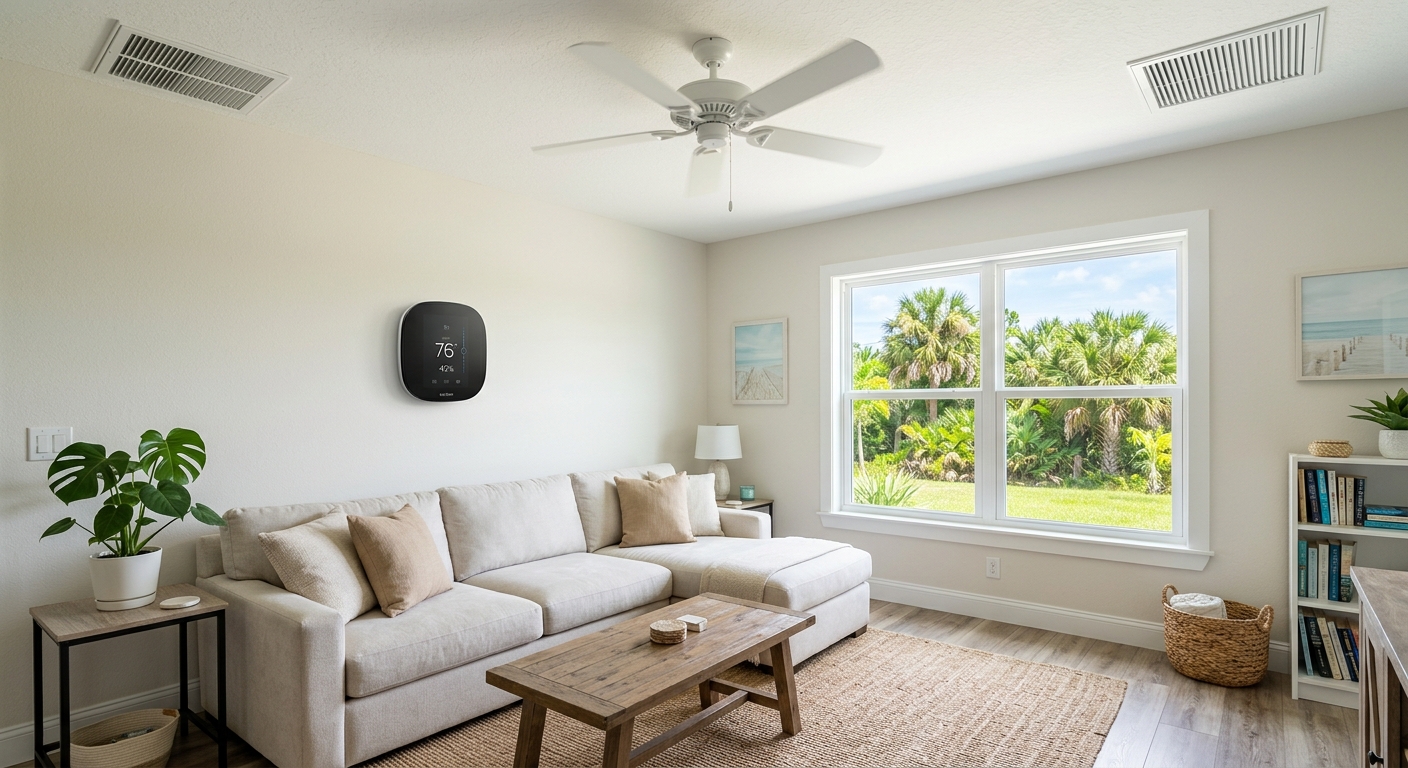
Practical ways to control indoor humidity in a Brevard County home, from thermostat and fan settings to AC repairs and whole-home dehumidification.
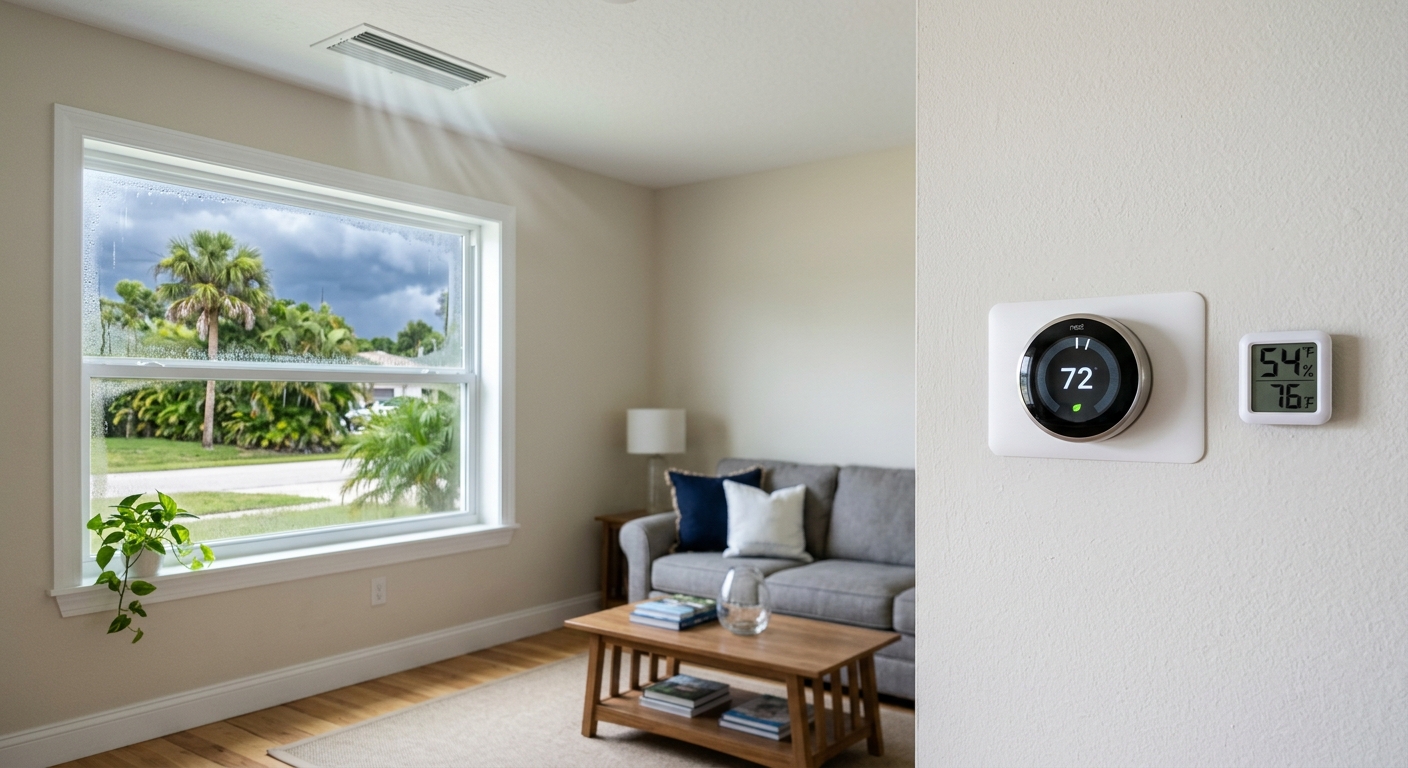
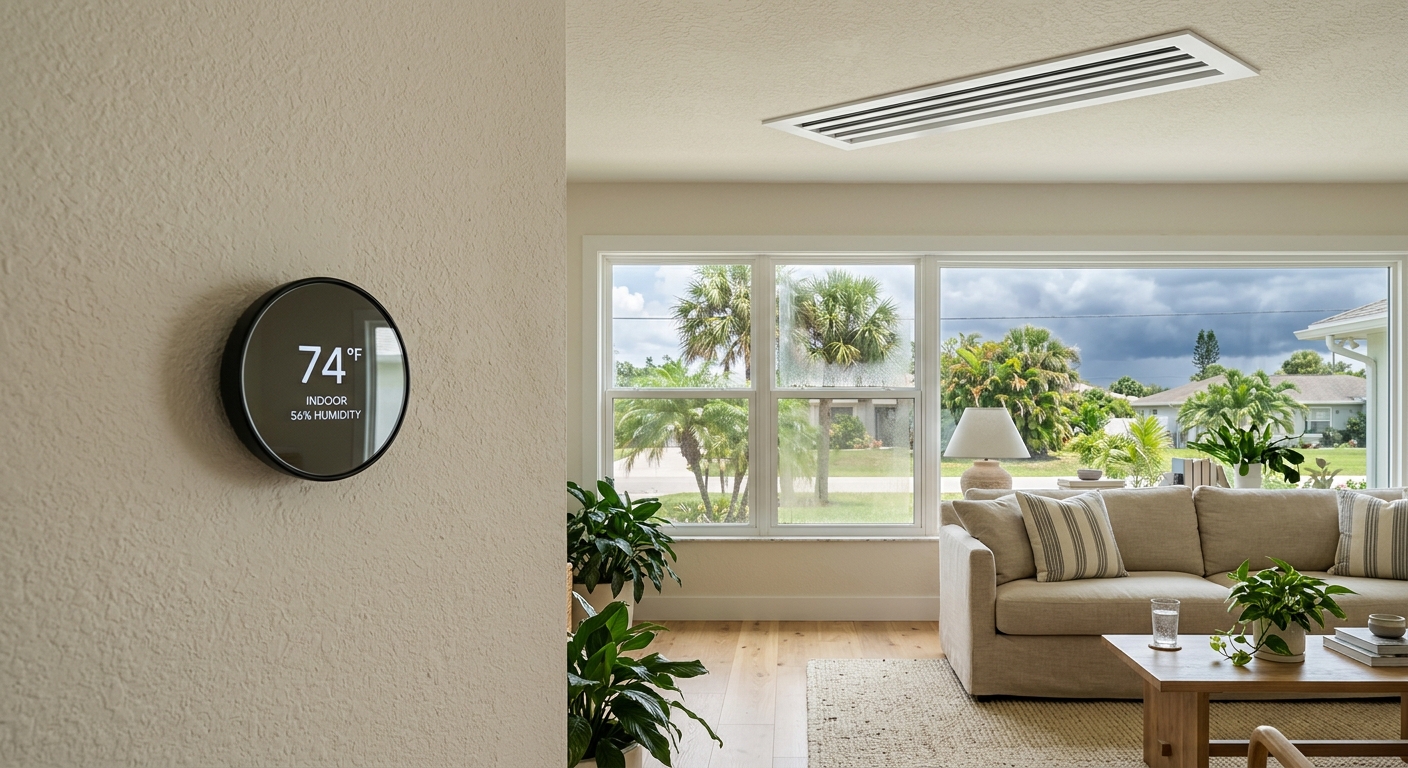
To lower humidity in house environments in Florida, keep the HVAC fan set to AUTO, reduce outdoor-air leaks, use exhaust fans, address water intrusion, and make sure your air conditioner runs long enough to remove moisture. Most Brevard County homes are comfortable around 45% to 55% relative humidity, while sustained readings above 60% deserve attention because they can contribute to condensation, musty odors, and microbial growth.
Why is indoor humidity so difficult to control in Brevard County?
Brevard County is surrounded by moisture from the Atlantic Ocean, Indian River Lagoon, Banana River, and other waterways. Warm outdoor air can carry substantial water vapor, especially during summer afternoons, rainy periods, and overnight hours. Every time humid air enters through an open door, leaky window, attic bypass, duct leak, or unsealed wall penetration, your cooling system must remove both heat and moisture.
Daily activities add to that moisture load. Cooking, showering, drying clothes indoors, and even breathing release water vapor. Moisture can also enter from plumbing leaks, roof problems, damp crawl spaces, or rain intrusion around windows and doors.
An air conditioner removes humidity when warm indoor air passes over its cold evaporator coil. Water condenses on the coil and drains outside. However, effective moisture removal depends on correct equipment sizing, airflow, refrigerant conditions, drainage, thermostat settings, and sufficiently long cooling cycles.
What indoor humidity level should I aim for in Florida?
A practical target for many Florida homes is approximately 45% to 55% relative humidity. Conditions below 60% are generally preferable for comfort and moisture management, although the ideal setting varies with temperature, construction, occupancy, and health needs.
Use a digital hygrometer to measure humidity rather than relying only on how the house feels. Place it away from supply vents, exterior doors, kitchens, and bathrooms, which can distort readings. Checking more than one room can reveal whether the problem affects the whole home or only a particular area.
Humidity naturally changes during the day. A brief increase after a shower or when a door is open is not usually alarming. A reading that remains above 60% for hours, repeatedly reaches the upper 60s, or is accompanied by condensation or musty odors calls for investigation.
Which thermostat and AC settings reduce humidity?
Should the HVAC fan be set to AUTO or ON?
Set the thermostat fan to AUTO in most Brevard County homes. In AUTO mode, the blower generally stops after each cooling cycle. This allows moisture collected on the evaporator coil to drain away.
When the fan runs continuously in ON mode, it can blow some moisture remaining on the coil back into the home after the compressor stops. Continuous fan operation also uses more electricity. Some variable-speed systems have specialized ventilation or dehumidification controls, so ask an HVAC professional before changing advanced settings.
Will lowering the thermostat remove more moisture?
Lowering the temperature may increase AC runtime and temporarily remove more moisture, but it is not an efficient solution to an underlying humidity problem. Excessive cooling can make the house feel cold and clammy, increase energy use, and create condensation risk on cold surfaces.
Choose a consistent, comfortable temperature instead of making large thermostat changes. If humidity stays high at a normal cooling setting, the system or building should be evaluated rather than relying on overcooling.
Should I use a thermostat with humidity control?
A thermostat or control system that measures relative humidity can help compatible equipment prioritize moisture removal. Some systems can reduce blower speed or extend dehumidification under specific conditions. Compatibility and setup matter, so these controls should be selected and configured for the actual HVAC equipment.
What can I do today to lower indoor humidity?
- Run bathroom exhaust fans during showers and for about 15 to 20 minutes afterward. Confirm that each fan vents outdoors, not into the attic.
- Use the kitchen exhaust hood while boiling water or cooking, especially if the hood is ducted outdoors.
- Keep windows and exterior doors closed when outdoor dew points are high. Opening the house on a humid Space Coast morning can add more moisture than the AC can quickly remove.
- Dry wet towels, bathmats, and beach gear promptly. Avoid leaving damp items in bedrooms, bathrooms, or closets.
- Make sure the clothes dryer vents outdoors and that its duct is connected, clean, and not crushed.
- Check for dripping pipes, toilet leaks, damp cabinets, roof stains, and water around windows or sliding doors.
- Keep interior doors and supply registers open unless an HVAC professional designed the system differently. Restricted airflow can cause comfort and pressure problems.
- Replace dirty HVAC filters with the correct size and type. Do not assume that a higher-resistance filter is better for every system.
- Keep the outdoor condensate drain termination clear of mulch, algae, insects, and debris.
These steps reduce the moisture entering the house and help the cooling system operate as intended. For a broader review of filtration, ventilation, purification, and moisture concerns, visit Aquila Air & Heating's Indoor Air Quality page.
Could my air conditioner be causing the humidity problem?
The AC may still cool the house while doing a poor job of removing moisture. A common warning sign is a home that quickly reaches the thermostat setting but continues to feel sticky. The cause may be short cycling, excessive airflow, an oversized system, a dirty evaporator coil, incorrect refrigerant conditions, duct leakage, or a control problem.
Oversized equipment deserves special attention. A unit with too much cooling capacity can lower the air temperature quickly and shut off before enough air has passed over the cold coil to remove moisture. Bigger is not automatically better in Florida. Replacement systems should be selected using a room-by-room or whole-home load calculation rather than square footage alone.
Duct leaks can create a similar problem. A return leak in a hot attic may pull humid, dusty air into the system, while supply leakage can depressurize the house and encourage outdoor air to enter through gaps. Brevard County homes with ducts in attics or garages can be especially vulnerable to this issue.
If your cooling equipment is operating but the home remains uncomfortable, see Why Does My House Feel Humid With the AC Running? for a closer look at system-related causes.
Will a portable dehumidifier solve the problem?
A portable dehumidifier can help in a single enclosed area, such as a bedroom, laundry room, or storage space. Choose a unit for the room size, keep doors and windows closed, clean its filter, and arrange continuous drainage where practical. Remember that portable units release heat into the room while operating.
A portable unit should not substitute for repairing a roof leak, plumbing problem, wet building material, or malfunctioning AC. If several rooms are humid, moving one small dehumidifier from room to room is unlikely to provide consistent control.
When does a whole-home dehumidifier make sense?
A whole-home dehumidifier may be useful when humidity remains high despite a properly operating and correctly sized cooling system. It can be particularly valuable during mild but damp weather, when the house needs moisture removal without much cooling, or in tightly managed homes with substantial latent moisture loads.
These systems are integrated with ductwork or installed as a dedicated configuration. Proper sizing, drainage, duct design, controls, and maintenance are essential. An installer should first determine whether repairs, air sealing, airflow correction, or equipment adjustments could solve the problem more economically.
Can air sealing help with Florida humidity?
Yes. Sealing uncontrolled outdoor-air leaks can reduce the amount of moisture the AC must remove. Common leakage points include plumbing and electrical penetrations, attic hatches, recessed fixtures, worn door seals, and gaps around windows.
Air sealing should be approached as a whole-house project rather than simply making the building as tight as possible. Combustion safety, bathroom and kitchen exhaust, dryer venting, and planned fresh-air ventilation must be considered. Some newer homes use mechanical ventilation that intentionally brings in outdoor air; if that system is incorrectly balanced or controlled, it can raise indoor humidity.
What signs mean I should call an HVAC professional?
Schedule a professional evaluation when humidity remains above 60% despite reasonable thermostat settings and moisture-control habits. You should also call if the AC runs only for very short periods, runs constantly without maintaining comfort, produces weak airflow, freezes, leaks water, or leaves some rooms much more humid than others.
Other warning signs include musty odors from vents, visible growth, sweating supply registers, repeated condensate drain backups, damp insulation, and sudden increases in energy use. Active water intrusion, extensive visible microbial growth, or wet building materials may also require a plumber, roofer, water-remediation specialist, or qualified indoor environmental professional.
A thorough HVAC visit may include checking the evaporator coil, condensate drain, temperature change, static pressure, blower settings, refrigerant performance, duct leakage indicators, thermostat operation, equipment capacity, and actual indoor humidity. This diagnosis is more useful than replacing parts without identifying the moisture source.
How can Aquila Air & Heating help?
Aquila Air & Heating serves homeowners throughout Brevard County and the Space Coast. Our team can evaluate whether high humidity is related to equipment performance, airflow, controls, ductwork, drainage, system sizing, or the need for dedicated dehumidification.
If replacement is appropriate, ask about available system options and the terms of Aquila's Lifetime Warranty. Aquila is Florida's First HVAC Company Offering a Lifetime Warranty. Warranty eligibility, coverage, maintenance requirements, and exclusions should always be reviewed in the applicable written terms.
Contact Aquila Air & Heating if your home feels clammy, develops musty odors, or stays above 60% humidity. We can identify the likely cause and recommend practical steps suited to your home rather than relying on a one-size-fits-all solution.
Frequently asked questions about lowering humidity in a Florida home
Is 60% indoor humidity too high in Brevard County?
A short rise to 60% after cooking, showering, or opening a door may be normal. If humidity remains at or above 60% for extended periods, inspect for excess moisture, AC performance problems, air leaks, or water intrusion.
Why is my house more humid at night?
Outdoor relative humidity often rises overnight as temperatures fall. The AC may also run less when the cooling load drops, reducing moisture removal. Outdoor-air leakage, ventilation settings, or an oversized system can make the nighttime increase more noticeable.
Can opening windows lower humidity in Florida?
Usually not during humid Space Coast weather. Open windows help only when the outdoor air contains less moisture than the indoor air, which depends more on dew point than relative humidity alone. During muggy or rainy conditions, open windows generally increase the indoor moisture load.
Does running a ceiling fan reduce humidity?
No. A ceiling fan improves comfort by moving air across your skin, but it does not remove water vapor. Fans can help a room feel less stuffy while the AC or dehumidifier performs the actual moisture removal.
How long should an air conditioner run to remove humidity?
There is no universal cycle length because runtime varies with weather, insulation, equipment type, and thermostat settings. Repeated cycles lasting only a few minutes during warm, humid weather may indicate oversizing or another problem and should be evaluated professionally.