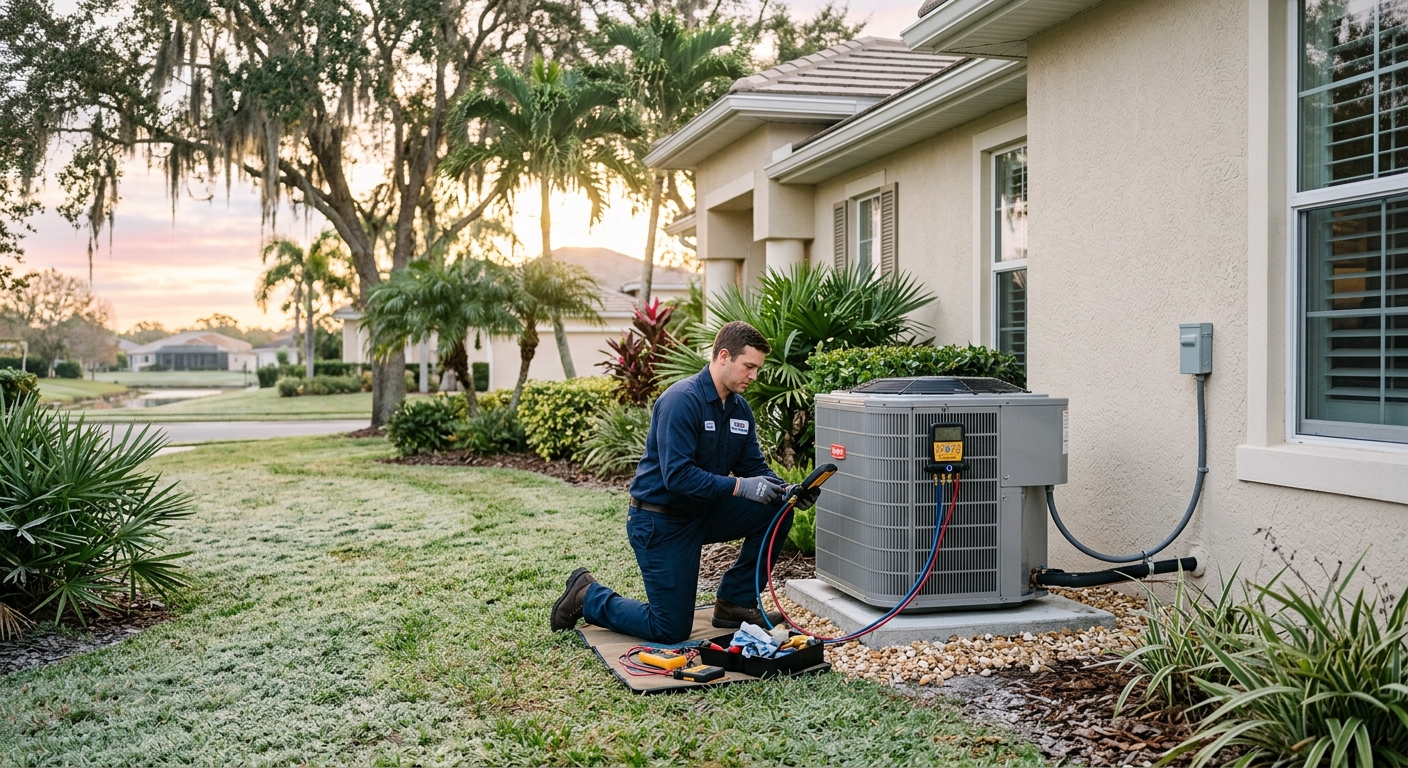
What Is a Manual J Load Calculation and Why It Matters in Florida
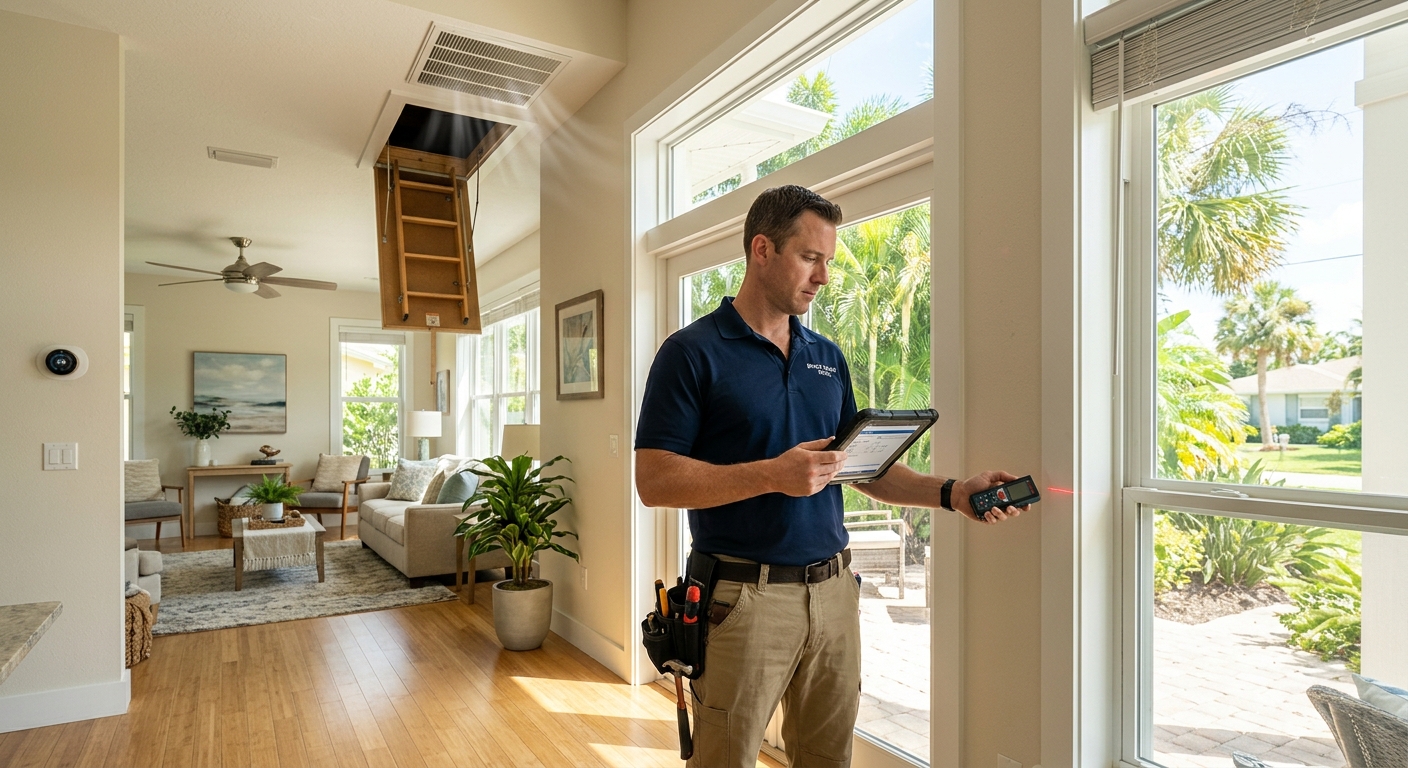
A Manual J load calculation determines how much cooling and heating a Brevard County home needs based on its construction, climate, and room-by-room loads.
A manual j load calculation is a standardized method for determining how much heating and cooling a home needs. In Florida, it is especially important because proper AC sizing affects indoor humidity, comfort, energy use, and equipment performance—not just how quickly the temperature drops.
Rather than relying only on square footage, a qualified HVAC professional evaluates the home's windows, insulation, orientation, air leakage, ductwork, occupancy, and local outdoor design conditions. The result helps the contractor select equipment that can handle a Brevard County summer without being unnecessarily oversized.
What does a Manual J load calculation measure?
Manual J is a residential load calculation procedure developed by the Air Conditioning Contractors of America. It estimates the amount of heat a home gains during cooling season and loses during heating season. The results are generally expressed in British thermal units per hour, or BTUs per hour.
The calculation separates the cooling requirement into two important categories:
- Sensible load: Heat that raises the indoor air temperature, including heat from sunlight, outdoor air, appliances, lighting, and occupants.
- Latent load: Moisture that the air conditioner must remove to maintain comfortable indoor humidity.
That distinction matters on the Space Coast. Brevard County's warm, humid climate can create a substantial latent load, particularly in homes with air leaks, leaky return ducts, frequent door openings, or ventilation that introduces outdoor air. A system selected only to satisfy the sensible load may cool the air without providing appropriate moisture removal.
Why is square footage alone not enough to size an air conditioner?
Rules of thumb such as choosing one ton of cooling for a certain number of square feet overlook major differences between homes. Two 2,000-square-foot houses can have very different cooling requirements.
For example, one home may have shaded impact windows, a light-colored roof, well-sealed ducts, and strong attic insulation. Another may have older single-pane windows, west-facing glass, dark roofing, air leakage, and ducts running through a hot attic. Even if their floor plans are identical, their heat gain and moisture loads may not be.
A professional calculation should evaluate relevant factors such as:
- Conditioned floor area and ceiling height
- Wall, ceiling, floor, and attic insulation
- Window and exterior-door size, type, shading, and direction
- Roof color, construction, and attic conditions
- Home orientation and solar exposure
- Estimated air leakage and ventilation
- Duct location, insulation, leakage, and configuration
- Typical number of occupants
- Heat produced by appliances and lighting
- Local indoor and outdoor design temperatures
When planning an air conditioning installation in Brevard County, homeowners should ask whether the recommended capacity is based on a documented load calculation rather than a square-footage shortcut.
Why can an oversized AC system be a problem in Florida?
A larger air conditioner is not automatically better. An oversized unit may lower the thermostat temperature quickly and then shut off before completing a long enough cooling cycle to remove sufficient moisture from the air.
This short cycling can contribute to:
- Rooms that feel cool but damp or clammy
- Indoor humidity that remains higher than expected
- Uneven temperatures throughout the home
- More frequent starts and stops
- Additional wear on certain components
- Higher operating costs than properly matched equipment
- More noticeable temperature swings
Oversizing can also make comfort complaints difficult to solve. Lowering the thermostat may reduce temperature, but it does not necessarily address the underlying moisture problem. Humidity performance depends on correct sizing, equipment selection, airflow, controls, duct conditions, and the building envelope working together.
What happens if the AC system is undersized?
An undersized air conditioner may run for extended periods and still struggle to maintain the desired indoor temperature during normal design conditions. Some longer run time is expected and can support dehumidification, but a system that cannot meet the calculated load may leave the home consistently uncomfortable.
Possible signs include rooms that remain warm, difficulty recovering after thermostat adjustments, and nearly continuous operation without reaching the set temperature. However, these symptoms do not always prove that the equipment is too small. Dirty coils, clogged filters, low airflow, duct leakage, refrigerant problems, weak insulation, or an inaccurate thermostat can create similar results.
An HVAC professional should inspect the existing system and home before recommending a higher-capacity replacement.
How does Brevard County's climate affect a load calculation?
A Manual J calculation uses local weather data rather than sizing equipment around the hottest temperature ever recorded. Design conditions are intended to represent demanding but typical seasonal conditions. This prevents rare extremes from automatically driving an oversized equipment choice.
Brevard County homes also face several local considerations:
- High outdoor humidity: Moisture removal must be considered alongside temperature control.
- Strong solar exposure: East- and west-facing windows can create significant room-specific heat gain.
- Hot attic spaces: Ducts installed outside the conditioned area can gain heat, especially when insulation or sealing is poor.
- Coastal air leakage: Wind exposure and gaps around penetrations, windows, or doors can increase infiltration.
- Florida rooms and additions: Enclosed patios, converted garages, and additions can change the load substantially.
- Older and newer construction: Block walls, frame walls, window upgrades, roof changes, and insulation levels all affect the result.
A room-by-room calculation is particularly useful because solar exposure changes throughout the day. A west-facing bedroom may need more cooling in the late afternoon than a similarly sized room on the north side of the house.
Is Manual J the same as selecting the new HVAC equipment?
No. Manual J determines the home's estimated heating and cooling loads. Equipment selection is a separate step, commonly associated with ACCA Manual S.
Contractors use the load results together with manufacturer performance data to select suitable equipment. This is important because an air conditioner's published nominal tonnage does not tell the whole story. Actual sensible and latent capacity can change with outdoor temperature, indoor conditions, blower airflow, and the specific indoor and outdoor unit combination.
Duct design is another separate but related task. ACCA Manual D is used for residential duct system design. Correctly sized equipment may still perform poorly if ducts are undersized, restrictive, damaged, poorly balanced, or leaking into an attic.
Do heat pumps also need a Manual J calculation?
Yes. A heat pump provides both cooling and heating, so the contractor needs to understand the home's requirements in both seasons. Cooling and humidity control usually receive significant attention in Central Florida, but the heating calculation still matters during colder weather.
The contractor should compare the calculated loads with certified performance data for the proposed system. Homeowners considering a replacement can learn more about professional heat pump installation and how equipment selection fits into the overall project.
When should a new load calculation be performed?
A new calculation is most valuable when replacing HVAC equipment or when the building has changed since the current system was installed. It should not be assumed that the existing unit was sized correctly.
Ask for a new Manual J evaluation when:
- Installing central air conditioning in a new home
- Replacing an aging or failed HVAC system
- Adding conditioned living space
- Converting a garage, porch, or patio
- Replacing many windows or exterior doors
- Making major insulation or air-sealing improvements
- Changing the roof, attic assembly, or duct layout
- Correcting persistent humidity or uneven-temperature problems
- Considering a different type of system
For a single addition or a room that is difficult to serve with existing ducts, a load calculation can also help determine whether a ductless system is appropriate. Aquila's guide to whether mini-splits are worth it in Florida explains practical advantages and tradeoffs for local homes.
What information should the contractor collect?
A reliable Manual J is based on actual home characteristics, not optimistic assumptions or generic defaults. The contractor may inspect the property, take measurements, review plans, document window specifications, evaluate insulation, and note where the ducts are located.
Homeowners can help by providing renovation records, window or insulation invoices, building plans, and details about rooms that are consistently uncomfortable. If a feature cannot be confirmed, the contractor should use a reasonable, supportable assumption and explain how it affects the estimate.
Be cautious if an equipment recommendation is made after only checking the old unit's model number or viewing the home's square footage online. The previous system's size may offer context, but it does not establish the correct replacement capacity.
Can Manual J solve every comfort or humidity problem?
No. It is a sizing tool, not a complete diagnosis. Comfort also depends on duct design, supply and return placement, equipment setup, blower airflow, thermostat controls, filtration, ventilation, envelope leakage, and installation quality.
For example, a calculation may show that the total system capacity is appropriate while one bedroom still overheats because it lacks adequate supply airflow or a return-air path. Likewise, high humidity may be connected to return-duct leaks that pull attic air into the system.
The best installation process uses Manual J as part of a broader design and commissioning approach. After installation, the contractor should confirm airflow, drainage, thermostat operation, and system performance according to the equipment manufacturer's requirements.
What should homeowners ask before accepting an HVAC proposal?
Before choosing equipment, ask the contractor:
- Will you perform a room-by-room Manual J load calculation?
- Which local weather and indoor design conditions will you use?
- How are window specifications, insulation, and duct losses being verified?
- What are the calculated sensible and latent cooling loads?
- How was the proposed equipment matched to those results?
- Does the duct system support the required airflow?
- Are any home improvements assumed in the calculation?
- How will system airflow and operation be checked after installation?
Do not focus exclusively on tonnage or the lowest initial price. A thoughtful HVAC installation should consider the building, equipment, ducts, controls, and homeowner comfort goals as one connected system.
When should you call a professional?
Contact a licensed HVAC contractor before replacing equipment, changing system capacity, conditioning an addition, or trying to solve ongoing humidity and room-balance problems. Manual J software requires accurate measurements and informed inputs, so an online calculator is not a substitute for an onsite professional assessment used for final equipment selection.
Aquila Air & Heating serves homeowners throughout Brevard County and the Space Coast. Contact our family-run team to discuss a load calculation and receive an installation recommendation based on your home's actual construction and comfort needs. Aquila is Florida's First HVAC Company Offering a Lifetime Warranty; warranty terms and eligibility should always be reviewed for the specific system and proposal.