Protecting Your AC Condenser in Cocoa Beach's Coastal Climate
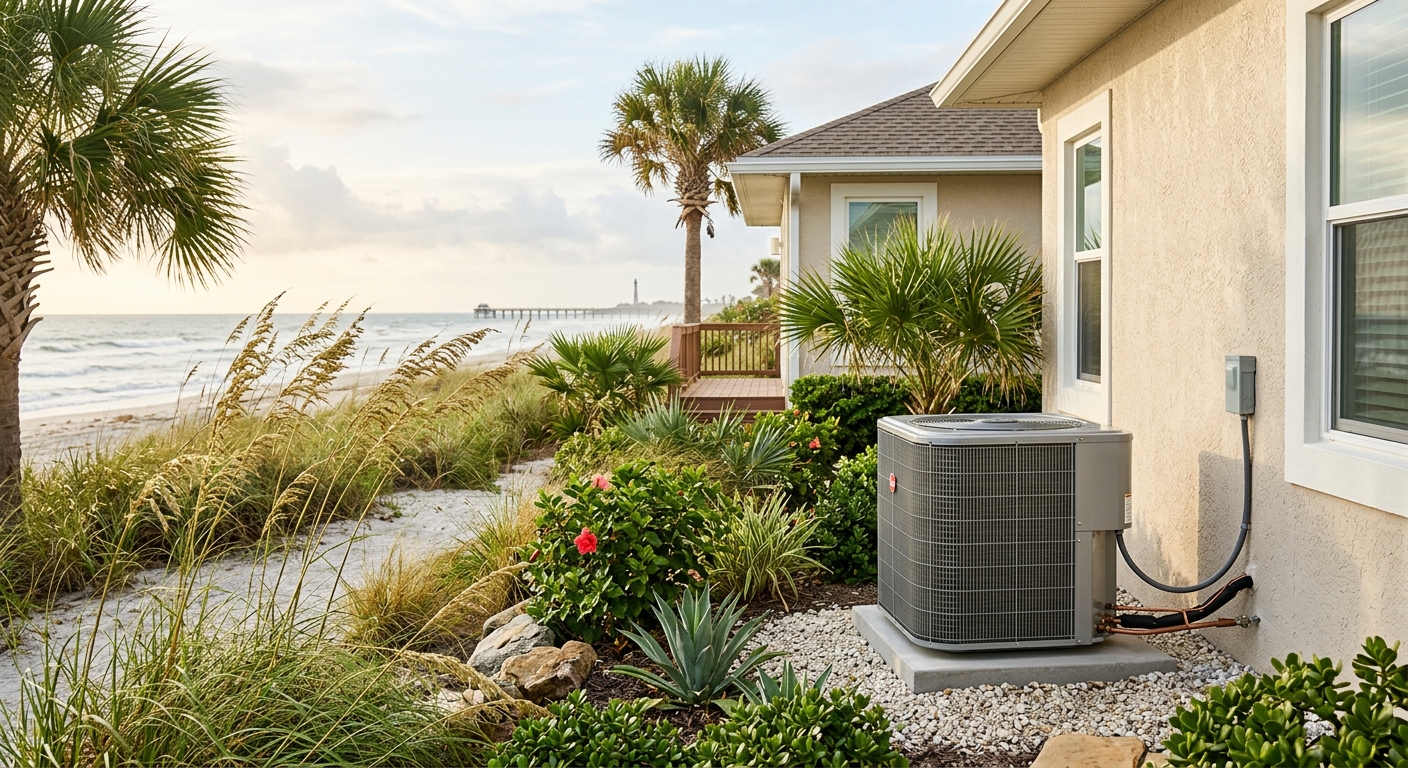
Practical steps Cocoa Beach homeowners can take to reduce salt buildup, protect condenser airflow, spot corrosion, and know when professional AC service is needed.
Protecting an outdoor AC condenser in Cocoa Beach starts with controlling salt buildup, preserving airflow, and catching corrosion before it damages the coil or electrical components. For AC condenser salt air Cocoa Beach concerns, homeowners should visually inspect the unit regularly, use only manufacturer-approved cleaning methods, and arrange professional coastal maintenance based on the property's exposure.
How does Cocoa Beach salt air damage an AC condenser?
An AC condenser releases heat from your home to the outdoors. Its coil contains closely spaced metal fins that maximize heat transfer, but those thin surfaces are also exposed to airborne salt, humidity, windblown sand, lawn chemicals, and storm debris.
Salt attracts moisture and can speed up corrosion on aluminum, copper, steel, fasteners, electrical connections, and cabinet panels. The risk generally increases near the Atlantic Ocean, but salt can travel inland on strong onshore winds. Condensers near the Banana River can also face persistent humidity and brackish-air exposure.
Corrosion is not the only concern. Salt, dirt, grass clippings, and vegetation can coat the coil and restrict airflow. A dirty or obstructed condenser may have to run longer to remove the same amount of heat, adding stress to the compressor and fan motor. Coastal exposure does not mean a unit will fail immediately, but neglect can allow small problems to become expensive ones.
How often should a coastal AC condenser be inspected?
Homeowners should look at the outdoor unit about once a month during periods of frequent use and after severe weather, nearby construction, landscaping, or prolonged onshore winds. A visual check does not require opening the cabinet. Look for debris, blocked airflow, bent fins, visible corrosion, unusual sounds, or vegetation growing against the unit.
Professional maintenance is commonly scheduled once or twice per year in Florida, but a beachfront property may need more frequent attention than a sheltered home several miles inland. Exposure varies by distance from the ocean, building orientation, wind patterns, landscaping, and whether the condenser sits in an enclosed area where salt remains on surfaces.
A technician providing AC maintenance in Cocoa Beach can evaluate the property's actual conditions and recommend an appropriate schedule instead of applying one interval to every coastal home.
What can homeowners safely do to reduce salt buildup?
Begin with the equipment manual. Condenser designs and approved cleaning procedures differ, and following the manufacturer's instructions helps avoid damaged fins, electrical hazards, and warranty issues.
Use this basic exterior-care routine
- Set the thermostat to off and shut off power at the outdoor disconnect before working near the unit. Do not remove access panels or touch internal components; capacitors can retain an electrical charge.
- Pick up leaves, palm fronds, mulch, and other loose debris around the cabinet.
- Trim plants to maintain the clearance specified by the manufacturer. The top discharge area must also remain open.
- If the manufacturer permits homeowner rinsing, use a garden hose with gentle fresh water on the exterior coil surface. Avoid directing water into the electrical compartment.
- Allow the area to drain and visually confirm that nothing is obstructing the fan before restoring power.
Fresh water can help remove loose salt before it remains on metal surfaces, but more pressure is not better. Pressure washers and concentrated hose nozzles can flatten delicate fins. Severely matted dirt may require access from inside the cabinet, specialized cleaners, or fin straightening, which should be handled by an HVAC technician.
Keep irrigation and lawn products away
Adjust sprinklers so they do not repeatedly spray the condenser. Irrigation water can leave mineral deposits, while fertilizers, herbicides, and pool chemicals may accelerate corrosion. When landscaping crews work nearby, ask them not to blow grass clippings into the coil or strike the refrigerant lines with equipment.
Which condenser protection mistakes should Cocoa Beach homeowners avoid?
Do not wrap or cover an operating condenser. The unit needs substantial airflow to reject heat, and an enclosure that traps discharged air can reduce performance. Decorative screens and dense shrubs can cause the same problem if installed too close.
Avoid household cleaners, bleach, acidic products, and unapproved coil chemicals. Some products can attack metals, damage factory coatings, or leave residue that collects more debris. Aftermarket protective coatings should also be evaluated carefully because improper application may interfere with heat transfer or equipment warranty requirements.
Painting over corrosion is not a complete repair. Paint may improve the appearance of an exterior panel, but it does not correct weakened coil fins, deteriorated electrical connections, or a refrigerant leak. Likewise, spraying lubricant into the fan motor or electrical section can cause damage and should not be part of homeowner maintenance.
What does professional coastal AC maintenance include?
A qualified technician can inspect areas that are unsafe or difficult for a homeowner to access. The exact service depends on the system, but a coastal maintenance visit may include checking the condenser coil, cabinet, base, fan assembly, contactor, wiring, disconnect, refrigerant lines, insulation, condensate system, temperature performance, and overall operation.
The technician can distinguish cosmetic surface oxidation from corrosion that affects performance or reliability. Professional cleaning methods can also remove embedded debris without folding fins or soaking sensitive electrical components. If corrosion is concentrated around terminals or connections, early correction may prevent overheating or an unexpected shutdown.
Maintenance cannot reverse metal that has already deteriorated, and it cannot guarantee that a coastal system will never corrode. Its value is in keeping heat-transfer surfaces clean, identifying developing problems, and giving the homeowner time to plan repairs or replacement.
What warning signs mean the condenser needs professional attention?
Call an HVAC professional if you notice cooling problems, electrical symptoms, visible physical damage, or substantial corrosion. Shut the system off if it is making harsh mechanical noises, repeatedly tripping a breaker, or appears unsafe.
- White, chalky oxidation spreading across coil fins or cabinet surfaces
- Green or blue corrosion around copper tubing or joints
- Rust that is flaking, perforated, or affecting the base and mounting points
- Oily residue on the coil or refrigerant lines, which can be associated with a refrigerant leak
- A fan that struggles to start, runs unevenly, or produces grinding sounds
- Warm air, reduced cooling, unusually long cycles, or rising electricity use
- A burning odor, scorched wiring, buzzing, or repeated breaker trips
- Coil fins crushed by pressure washing, hail, windblown debris, or impact
Do not try to seal a refrigerant leak, repair wiring, replace a capacitor, or open the refrigerant circuit yourself. Aquila's AC repair service can diagnose whether the problem is dirt, airflow restriction, an electrical failure, refrigerant loss, or corrosion-related damage.
Can installation choices improve condenser life near the ocean?
Thoughtful equipment selection and placement can reduce exposure, although no outdoor unit is immune to Cocoa Beach's climate. When installing a system, ask whether the manufacturer offers equipment or factory-applied coil protection intended for coastal environments. Compare efficiency, serviceability, replacement-part availability, and written warranty terms rather than choosing equipment based only on a coating label.
The condenser must be placed where it has the required airflow and service clearance. A location may offer some shelter from direct ocean wind, but moving a unit into a tight alcove can trap heat and salt-laden moisture. The installation must also account for local wind requirements, approved anchoring, drainage, flood exposure, elevation, refrigerant-line protection, and applicable building codes.
During an AC installation consultation, a contractor can assess these site-specific tradeoffs. Homeowners replacing severely corroded equipment should also ask the technician whether placement, irrigation, landscaping, or drainage contributed to the previous unit's condition.
How should the condenser be handled before and after a coastal storm?
Before a tropical storm or hurricane, clear loose objects that could strike the condenser. Do not place a tarp over a unit that might operate, and do not add homemade straps or fasteners that could damage the cabinet, coil, or refrigerant lines. Follow official evacuation and electrical safety instructions.
After the storm, inspect the area from a safe distance. Do not restart equipment that is flooded, displaced, struck by debris, surrounded by damaged wiring, or connected to a compromised electrical system. Even if the unit looks normal, unusual noise or vibration after a storm should be evaluated. Our guide to preparing HVAC equipment for hurricane season on the Space Coast provides additional planning steps.
How can Aquila help protect your Cocoa Beach AC system?
The most effective coastal plan combines simple homeowner inspections with maintenance tailored to the property's salt exposure. If your condenser has visible corrosion, restricted airflow, storm damage, or unexplained performance changes, contact Aquila Air & Heating for an on-site evaluation in Cocoa Beach.
Aquila is Florida's First HVAC Company Offering a Lifetime Warranty. Ask the team for current written eligibility, registration, maintenance, and equipment terms so you can understand exactly what applies to your installation. Whether you need preventive care, diagnosis, or help deciding if a corroded condenser should be repaired or replaced, the goal is a safe recommendation based on the system's actual condition.
