Is It Worth Repairing an Older R-22 AC System in Florida?
Learn when repairing an older R-22 air conditioner makes sense—and when replacement is the better investment for a Brevard County home.
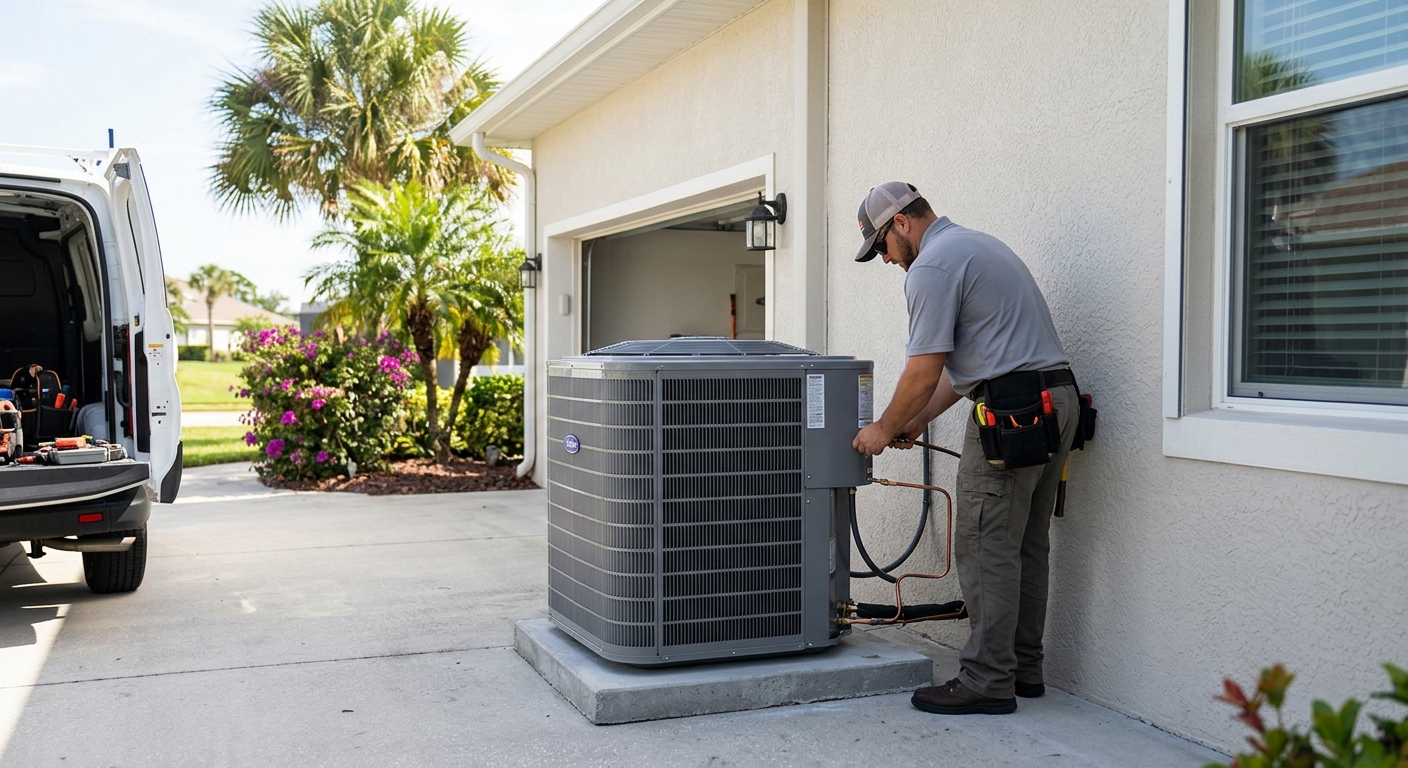
Whether you should repair or replace an R-22 AC depends on the system's condition, the type and cost of the repair, and how reliably it can cool your home. A minor electrical or drainage repair may be worthwhile, but a refrigerant leak, failed compressor, or repeated breakdowns often makes replacement the more practical choice in Brevard County's demanding climate. An HVAC professional should inspect the complete system before you decide.
Why are R-22 air conditioners becoming expensive to repair?
R-22, also called HCFC-22 or Freon, was widely used in residential air conditioners manufactured before 2010. Because it damages the ozone layer, the United States ended the production and import of new R-22 on January 1, 2020. Existing systems are still legal to operate, and homeowners are not required to replace working R-22 equipment.
However, technicians can only service these systems with refrigerant that was recovered, recycled, or reclaimed. That shrinking supply can be expensive, and availability may vary. If an R-22 system has a substantial leak, the cost involves more than adding refrigerant: a technician must locate the leak, determine whether the affected component can be repaired or replaced, complete the repair, evacuate the system, and recharge it correctly.
Adding refrigerant without addressing the leak is not a durable solution. Refrigerant circulates within a sealed system, so a low charge normally indicates a leak or a previous service problem. Because refrigerant handling requires specialized equipment and EPA-certified personnel, it is not a do-it-yourself job.
When is repairing an R-22 AC still reasonable?
Age alone does not automatically make every repair a bad investment. Repair may be reasonable when the air conditioner has been maintained, still cools the home evenly, and needs an affordable repair unrelated to the sealed refrigerant circuit.
Examples of repairs that may be worth considering
- A failed capacitor, contactor, relay, or thermostat
- A clogged condensate drain or a malfunctioning float switch
- A serviceable fan motor when the rest of the system is in good condition
- A wiring or control issue that has not damaged other components
- An airflow problem caused by a dirty coil, filter, or accessible duct defect
The decision should still reflect the unit's overall condition. Spending a modest amount to restore an otherwise dependable system can provide useful additional service life. Before authorizing the work, ask whether the diagnosis identifies the underlying cause, whether other major components are showing wear, and whether the repair comes with a written workmanship or parts warranty.
Aquila Air & Heating can provide an AC repair diagnosis to help determine whether the immediate problem is isolated or part of a broader decline.
When should I replace an R-22 air conditioner?
Replacement becomes more compelling when the repair is expensive, the system has recurring problems, or the equipment no longer keeps the home comfortable. In Brevard County, an air conditioner runs through long periods of heat and humidity, so unreliable equipment can create both comfort problems and moisture concerns.
The system has a refrigerant leak
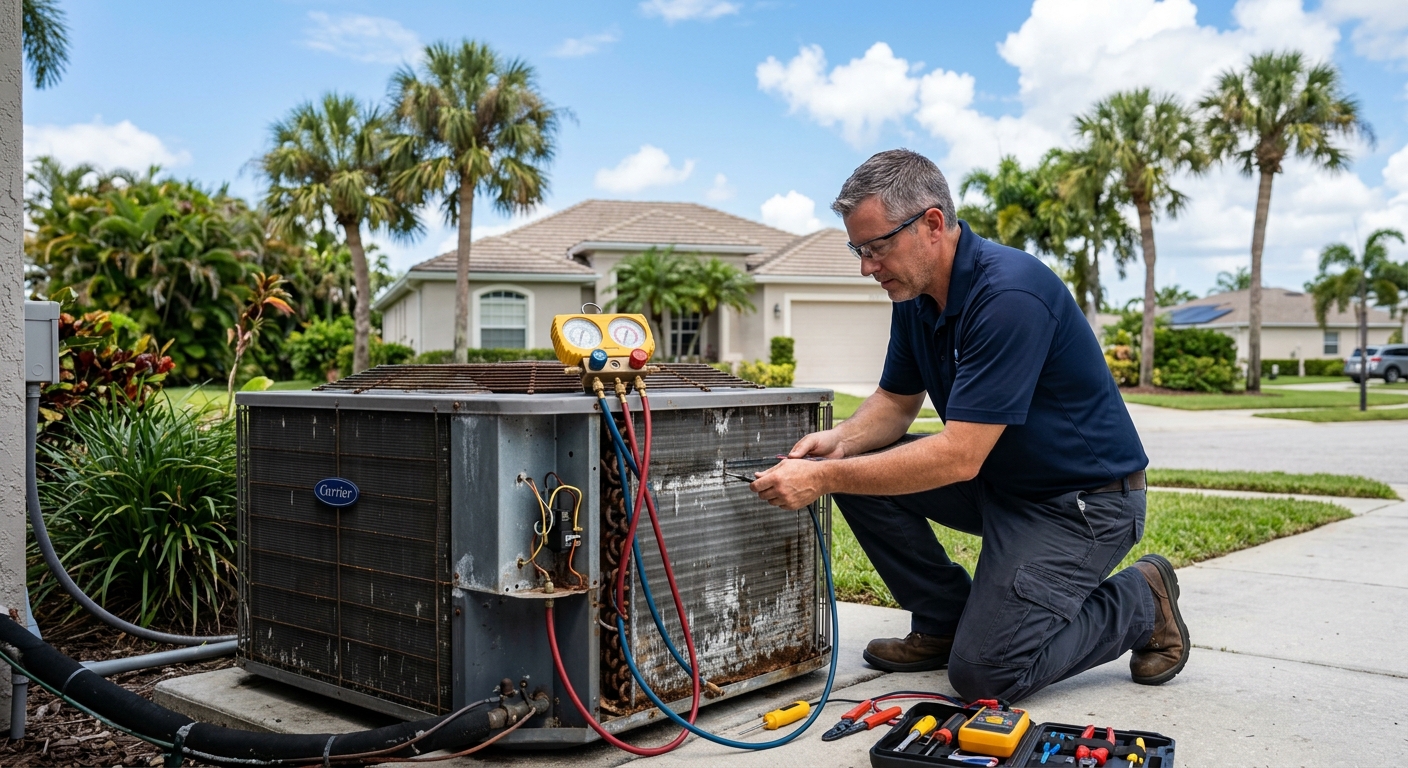
Leaks in an evaporator coil, condenser coil, or other major component can be costly to correct, especially when R-22 must be added afterward. If the coil is badly corroded, a compatible replacement part may also be difficult to source. A leak evaluation should identify its location and provide a full repair estimate rather than only quoting the refrigerant.
The compressor has failed
The compressor is one of the most expensive components in an air-conditioning system. Replacing a compressor in an aging R-22 unit may leave you with old coils, motors, controls, and other components that can still fail later. Ask for both repair and AC replacement options so you can compare the complete costs.
Breakdowns are becoming frequent
One repair does not necessarily predict another, but a pattern matters. Review invoices from the last two or three cooling seasons. Several service calls, rising repair costs, and recurring loss of cooling suggest that continued spending may only postpone replacement.
Comfort or humidity control is poor
An older system may run for long periods while leaving certain rooms warm or the house clammy. Equipment condition is only one possible cause; duct leakage, inadequate insulation, poor return airflow, or incorrect sizing may also contribute. A proper evaluation should examine these factors instead of assuming that a larger replacement unit will solve the problem.
Electricity use has increased
A rising power bill can result from weather, utility rates, thermostat settings, duct leakage, dirty coils, or equipment deterioration. Compare energy use over similar months rather than relying on the dollar amount alone. If the older unit is inefficient and also needs a major repair, replacement may provide a stronger long-term value, although actual savings depend on household habits, duct condition, system selection, and weather.
How does Brevard County's climate affect the decision?
Air conditioners along the Space Coast face a demanding combination of long cooling seasons, high humidity, thunderstorms, wind-driven debris, and salt exposure near the ocean and Indian River Lagoon. Outdoor coils, fasteners, electrical connections, and cabinets may corrode faster in coastal locations. Heavy runtime also increases wear on compressors, motors, and capacitors.
Drainage deserves special attention in Florida. A blocked condensate line or failed drain component can stop the system and may cause water damage if safeguards do not work. Humidity may also rise quickly during a prolonged outage, particularly in a tightly closed home.
Before repairing an older unit, inspect the outdoor cabinet and coil for significant corrosion, check the indoor coil and drain system, measure airflow, and evaluate the ductwork. After tropical weather, do not operate equipment that is flooded, visibly damaged, or surrounded by unsafe electrical conditions. Turn it off only if you can do so safely and call a qualified professional.
Can an R-22 system be converted to a newer refrigerant?
R-410A cannot simply be added to equipment designed for R-22. The refrigerants use different operating pressures and lubricants, and mixing refrigerants can damage equipment and make future recovery and service difficult.
Some alternative refrigerants may be approved for certain R-22 retrofit applications, but compatibility is equipment- and refrigerant-specific. A retrofit can require recovering the existing refrigerant, replacing components or oil, correcting leaks, relabeling the system, and carefully charging and testing it. Even when technically possible, converting an old residential system may not be economical or restore the efficiency and expected reliability of new equipment.
Never accept an unidentified replacement refrigerant or a proposal to mix products. Ask the contractor to name the refrigerant, explain manufacturer compatibility, list required modifications, and provide the total cost in writing.
How can I compare repair and replacement costs?
Do not compare only today's repair bill with the purchase price of a new system. Build a practical three- to five-year comparison that includes the immediate repair, likely future failures, maintenance, energy use, available warranties, financing costs, and the value of more dependable cooling.
- Confirm the unit's age from its model and serial numbers.
- Ask for an itemized repair estimate, including leak detection and refrigerant.
- Review repair records from recent years.
- Consider whether compatible parts are readily available.
- Compare efficiency ratings and estimated operating costs without assuming guaranteed savings.
- Include any duct, electrical, drain, pad, or permitting work required for replacement.
- Evaluate manufacturer, labor, and promotional warranty terms separately.
A common percentage rule cannot account for every home or failure. A relatively low-cost repair may be sensible on a sound system, while a major repair can be difficult to justify on equipment near the end of its service life. The best decision comes from a documented diagnosis and side-by-side estimates.
What should a replacement estimate include?
A replacement should begin with sizing and a review of the home's cooling needs, not simply matching the capacity of the old unit. Oversized equipment can cycle too quickly and provide poor humidity control, while undersized equipment may struggle during peak conditions. An installer should consider the home's size, windows, insulation, orientation, air leakage, occupancy, and duct system.
The written proposal should identify the indoor and outdoor equipment, efficiency ratings, refrigerant type, thermostat requirements, electrical work, permits, condensate management, disposal, and warranty terms. Because equipment standards and refrigerants continue to change, ask what refrigerant the proposed system uses and what future service considerations apply.
Professional AC installation is especially important in Florida, where correct airflow, refrigerant charging, drainage, and humidity performance affect comfort and equipment life. Aquila Air & Heating also offers qualifying options backed by a Lifetime Warranty; review the written terms, eligibility requirements, and maintenance obligations before purchasing.
What can I check before calling an HVAC technician?
Homeowners can safely perform a few basic checks. Confirm that the thermostat is set to cool, replace a visibly dirty filter with the correct size, check whether the breaker has tripped once, and look for water around the indoor unit. Keep vegetation and loose debris away from the outdoor cabinet without opening it or spraying chemicals onto the coil.
Call a professional if the system blows warm air, repeatedly trips a breaker, freezes, makes grinding or electrical noises, produces a burning smell, leaks water, or cannot control indoor humidity. Turn the system off and seek prompt help if there is smoke, arcing, significant flooding, or another electrical hazard. Do not open electrical panels, puncture refrigerant lines, or attempt to recharge the unit yourself.
Get a clear repair-or-replace recommendation in Brevard County
If you are deciding whether to repair or replace an R-22 AC, Aquila Air & Heating can inspect the equipment, explain the failure, and outline realistic options for your Brevard County home. Contact our family-run team for a professional diagnosis and written recommendations based on system condition, repair cost, comfort needs, and long-term value.