
Why Does My Heater Smell Like It’s Burning?
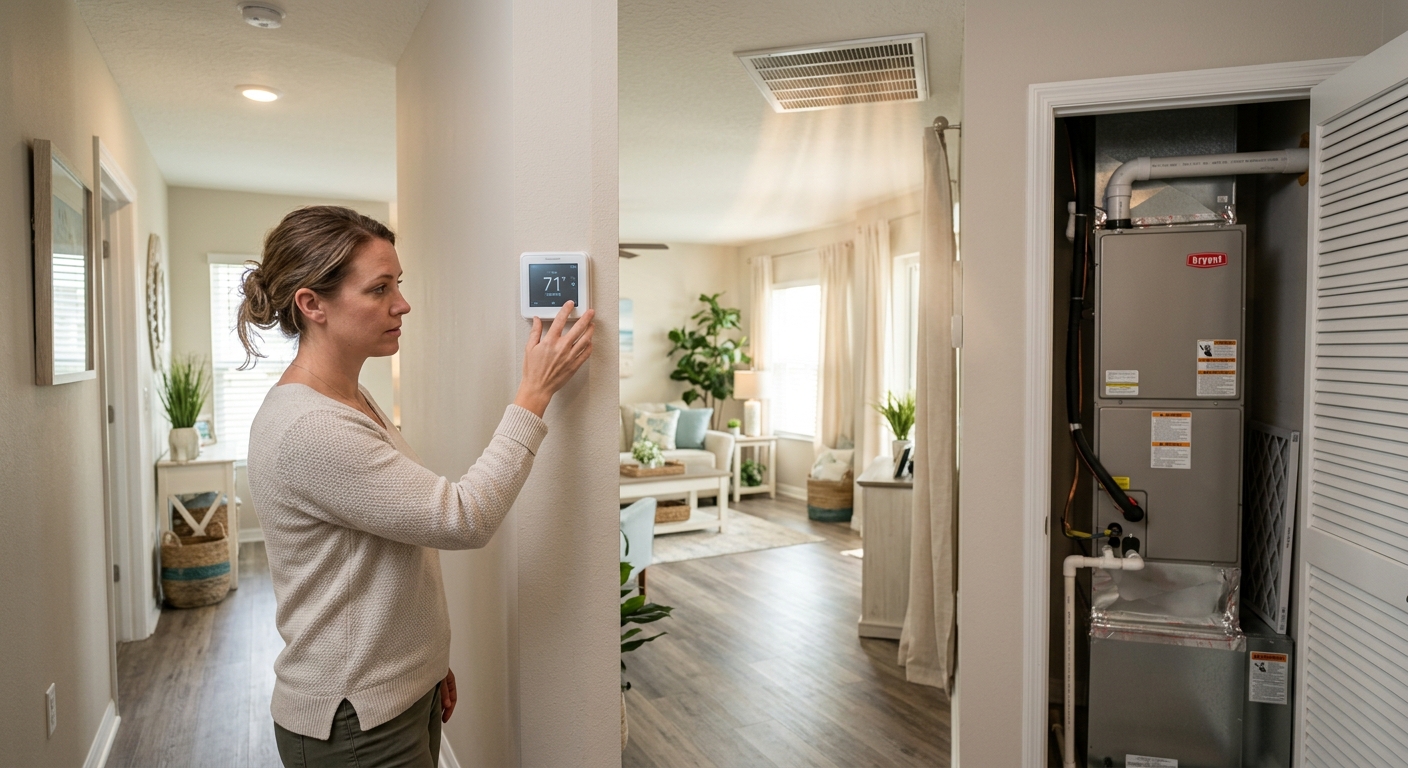
A dusty heater odor may be harmless, but electrical, plastic, or smoky smells require prompt attention. Learn what to do and when to call a professional.
A heater can smell like it is burning because dust is warming up after months of inactivity, especially during Brevard County’s first cold spell. A light dusty odor that fades within several minutes is usually normal. Smoke or a persistent smell resembling burning plastic, rubber, wiring, or oil means you should turn the system off and arrange professional heating repair.
Is a burning smell normal when I first turn on the heat?
A mild dusty smell can be normal the first time you use your heater for the season. During Florida’s long cooling season, dust may collect on electric heat strips, indoor coils, registers, and other components. When the heat turns on, that material warms up and produces an odor sometimes compared to burnt dust or a warm hair dryer.
The odor should be mild and begin fading within a few minutes. In some homes, it may return briefly during the next one or two heating cycles. Open interior doors, confirm that supply vents are unobstructed, and monitor the system while it runs.
Turn the heater off if the odor becomes stronger, lasts longer than about 20 to 30 minutes, returns during every cycle, or is accompanied by smoke, unusual noises, flickering lights, or a tripped breaker. Those symptoms are not typical seasonal dust burn-off.
What kind of burning smell is coming from my heater?
The character of the odor can offer clues, but smell alone cannot confirm the cause. HVAC cabinets contain high-voltage electrical parts, so do not remove panels or touch internal components while trying to identify an odor.
Why does my heater smell like burning dust?
Dust burn-off is the most common explanation after a heat pump or electric heater has sat unused. Brevard County homes may go many months without needing heat, allowing more dust to settle than it would in a colder climate. If the smell is light, produces no visible smoke, and disappears quickly, it is generally not an emergency.
A clogged air filter can make the problem more noticeable by restricting airflow and allowing particles to circulate. Replace a dirty filter with the size and type recommended for your system. If a new filter does not help or the odor persists, the equipment may need inspection and cleaning.
Why does the heater smell like burning plastic or rubber?
A hot plastic or rubber odor can indicate an overheated wire, failing motor, damaged insulation, foreign object, or slipping component. Plastic items can also fall into floor registers or be placed against supply vents, where heated air causes them to produce an odor.
Turn the thermostat off and check only accessible areas, such as the space around vents and returns. Do not restart the system if the smell is sharp, chemical, or persistent. An HVAC technician should inspect the blower, wiring, controls, and other components before the heater operates again.
What does an electrical burning smell mean?
An electrical problem may smell sharp, metallic, fishy, or similar to overheated electronics. Possible causes include a loose connection, failing capacitor, overheating blower motor, damaged relay, or electrical arcing. Because these conditions can create a fire risk, turn the system off immediately.
If it is safe to reach the electrical panel and there is no smoke or fire, you may also switch off the HVAC breaker. Do not repeatedly reset a breaker that trips. Breakers are safety devices, and recurring trips require professional diagnosis.
Why does my heater smell smoky or oily?
A smoky smell that does not quickly disappear may come from overheating debris, a motor problem, or an electrical component. An oily odor can indicate overheated mechanical parts or contamination near the air handler. Most Space Coast homes use electric heat pumps rather than oil-fired furnaces, so an unexplained oil-like odor should not be dismissed as normal fuel combustion.
Shut the system down if you see visible smoke. If smoke continues after the heater is off, you see flames, or a smoke alarm activates, leave the home and call 911.
Can a dirty duct system cause a burning odor?
Ducts can carry an odor from the air handler to every room, making it seem as though each vent is the source. Dust, construction debris, pests, or an overheated component near one part of the system may all affect the air coming from multiple registers.
A duct problem is more likely if the odor is strongest near a particular register, there is visible duct damage, or airflow varies substantially between rooms. Damaged or disconnected ducts should be evaluated through a proper duct inspection and repair service rather than treated with fragrance sprays, which only mask the symptom.
Why does my heat pump smell when auxiliary heat turns on?
Heat pumps provide most heating by moving heat rather than creating it through combustion. During colder weather, defrost cycles, or a large thermostat increase, the system may activate electric auxiliary heat strips. Those strips become hotter than the air produced during ordinary heat-pump operation and can warm accumulated dust, causing a temporary odor.
You may notice an AUX HEAT or EM HEAT indicator on the thermostat. A short-lived dusty smell may be normal when the strips first operate for the season. A plastic, electrical, or smoky odor is not normal, even if auxiliary heat is running.
Frequent auxiliary heat operation can also indicate that the thermostat setting was raised several degrees at once, outdoor temperatures are unusually low, or the heat pump needs service. Learning how your particular home heating system operates can help you distinguish normal backup heat from a developing problem.
What should I do if my heater smells like it is burning?
- Identify whether the odor is mild dust or something sharper, such as plastic, rubber, fish, oil, or electrical insulation.
- Look for visible smoke without opening the HVAC cabinet or touching internal parts.
- Turn the thermostat to OFF if the odor is strong, worsening, or persistent.
- Check for objects blocking supply registers, return grilles, or the indoor equipment.
- Inspect the air filter and replace it if dirty, using the correct size and airflow direction.
- Do not keep restarting the heater or resetting a breaker to see whether the problem returns.
- Leave the home and call 911 if there is an active fire, continuing smoke, or an immediate threat to occupants.
If your home has gas appliances and you smell rotten eggs or sulfur, leave immediately without operating switches, phones, thermostats, or anything that could create a spark. Call the gas utility or emergency services from a safe location. Carbon monoxide has no odor, so a burning smell cannot tell you whether carbon monoxide is present; working detectors remain essential wherever fuel-burning equipment is used.
Why are heater odors common during Brevard County cold snaps?
Heating systems on the Space Coast often sit idle for most of the year. When a cold front reaches Melbourne, Palm Bay, Cocoa, Titusville, or surrounding communities, many systems start at the same time after collecting months of dust. That makes first-use odors particularly common.
Coastal humidity and salt-laden air can also be hard on electrical connections and metal components over time, especially in equipment near the coast. They do not automatically explain a burning smell, but local environmental exposure is one reason seasonal inspection and prompt attention to corrosion or electrical odors matter.
Avoid raising the thermostat by many degrees at once. Select a reasonable temperature and let the heat pump work steadily. Large temperature increases may bring on auxiliary heat, which uses more electricity and can make first-use dust odors more noticeable.
When should I call an HVAC professional?
Schedule service when the smell lasts beyond the first short heating cycle, returns repeatedly, appears in only part of the house, or occurs with weak airflow, unusual noises, breaker trips, or poor heating. You should also call promptly for any odor resembling melting plastic, hot wiring, rubber, or smoke.
A technician can inspect the electrical connections, heat strips, blower assembly, motors, controls, air filter, indoor coil, and accessible ductwork. This is safer and more reliable than opening high-voltage equipment or trying to cover the odor with air fresheners.
If you are unsure whether an odor is normal, turn the system off and contact Aquila Air & Heating. Our family-run team serves homeowners throughout Brevard County and can identify the source, explain the repair options, and help restore safe operation. Homeowners considering replacement equipment can also review Aquila’s current Lifetime Warranty details, including applicable terms and eligibility.