Why Is One Room Hotter Than the Others?
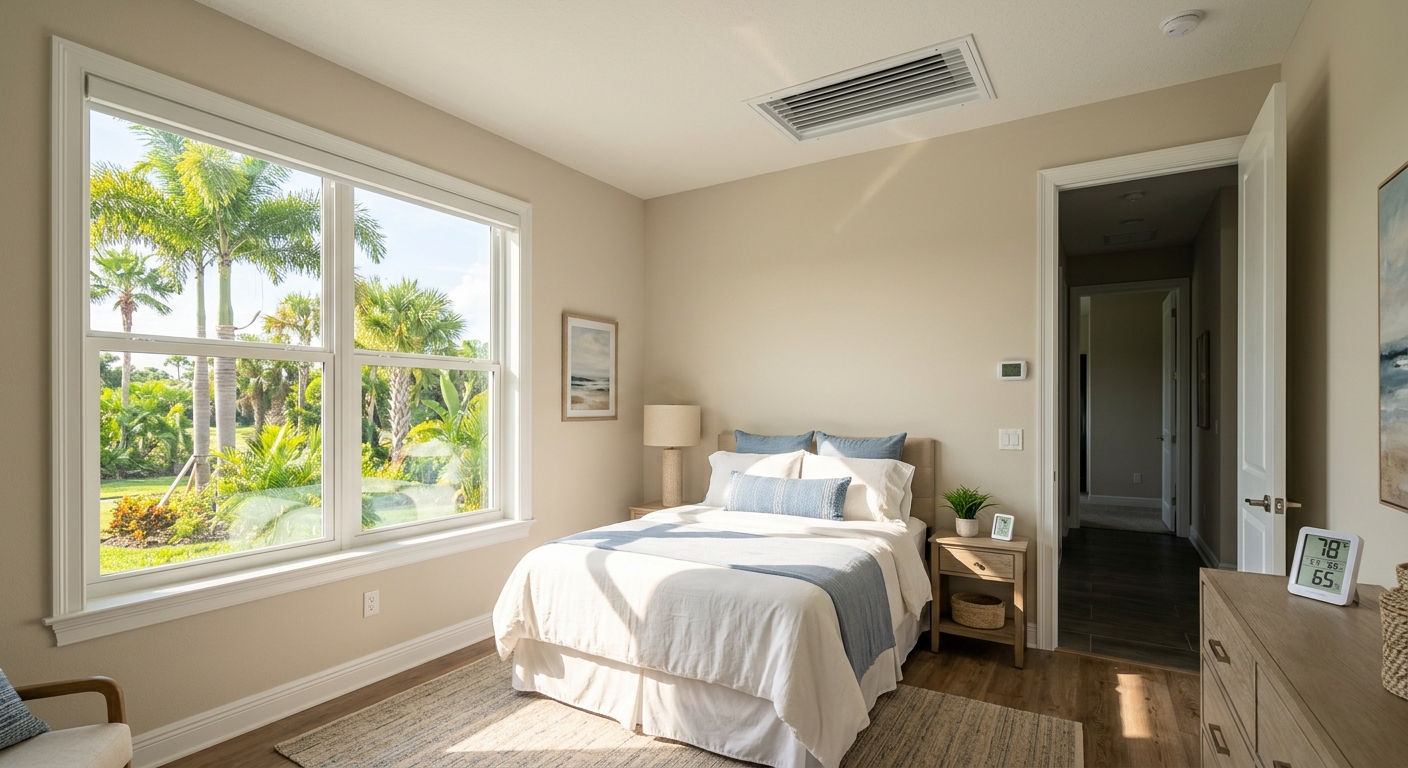
A hot room can point to blocked airflow, duct problems, insulation gaps, solar heat gain, or an HVAC design issue. Learn what Brevard homeowners can do.
If one room is hotter than the others, it is usually gaining more heat or receiving less conditioned air than the rest of the home. Common causes include closed vents, duct leaks, poor insulation, intense sun exposure, inadequate return airflow, or an HVAC system that was not balanced for the home's layout. Start with simple checks, but call an HVAC professional if the difference persists or is accompanied by weak airflow, high humidity, unusual noises, or rising energy bills.
Why is one room hotter than the rest of my house?
A room's temperature depends on both heat gain and the amount of conditioned air reaching it. Along Florida's Space Coast, strong afternoon sun, hot attics, humid outdoor air, and long cooling seasons can expose small weaknesses in ductwork, insulation, and HVAC design.
Is the room getting enough supply air?
A partially closed register, dirty filter, crushed duct, disconnected duct, or poorly adjusted balancing damper can reduce airflow. Compare the airflow at the problem room's vent with vents in similar rooms. A noticeable difference is useful evidence, although airflow cannot be measured accurately by feel alone.
Make sure the register is fully open and not covered by furniture, curtains, rugs, or storage. Avoid closing multiple vents elsewhere to force air toward the room. That approach can raise duct pressure, increase leakage, reduce system performance, and create new comfort problems.
Could the ductwork be leaking in the attic?
Many Brevard County homes have ducts running through a hot vented attic. A separated connection or damaged duct can spill cooled air into the attic before it reaches the room. Poorly sealed return ducts can also pull hot, humid attic air into the system.
Duct trouble is especially likely when airflow suddenly becomes weaker, the room was previously comfortable, or utility costs rise without a clear explanation. Visible attic ducts should be inspected cautiously from a safe location; homeowners should not walk across unsupported ceiling surfaces or attempt repairs with ordinary cloth-backed duct tape.
Does the room face west or have large windows?
West-facing rooms can become much warmer during late afternoons because glass, exterior walls, and roofing absorb intense solar heat. Rooms over garages and rooms with vaulted ceilings may also have more heat exposure than interior spaces. Worn weatherstripping, unshaded windows, and missing insulation make the effect stronger.
Close blinds or shades before peak afternoon sun reaches the glass. Exterior shading, solar screens, appropriate window film, and improved attic insulation can help, but window products should be compatible with the glass manufacturer's requirements.
Does the room have a return-air path?
Supply air must have a way to return to the HVAC system. When a bedroom door is closed, air can become trapped if there is no return grille, transfer grille, jumper duct, or adequate door undercut. The room may become warmer while nearby hallways feel cooler.
As a simple test, compare the room with the door open and closed over several cooling cycles. A large difference may indicate a return-air problem that should be evaluated professionally rather than solved by permanently leaving the door open.
What can I check before calling an HVAC technician?
- Open the room's supply register completely and clear away furniture, curtains, and other obstructions.
- Check the HVAC filter and replace it if it is dirty, using a size and efficiency rating appropriate for the system.
- Set the thermostat fan to AUTO unless an HVAC professional has recommended another operating strategy.
- Close blinds or shades during the hours when direct sunlight enters the room.
- Confirm that windows latch securely and exterior doors have intact weatherstripping.
- Compare room temperature with the rest of the home at the same time of day for several days.
- Note whether the problem changes when the bedroom door is open, which can reveal a return-air restriction.
- Look for safe, visible signs of ceiling stains, damaged insulation, or disconnected ducts, but do not enter hazardous attic areas.
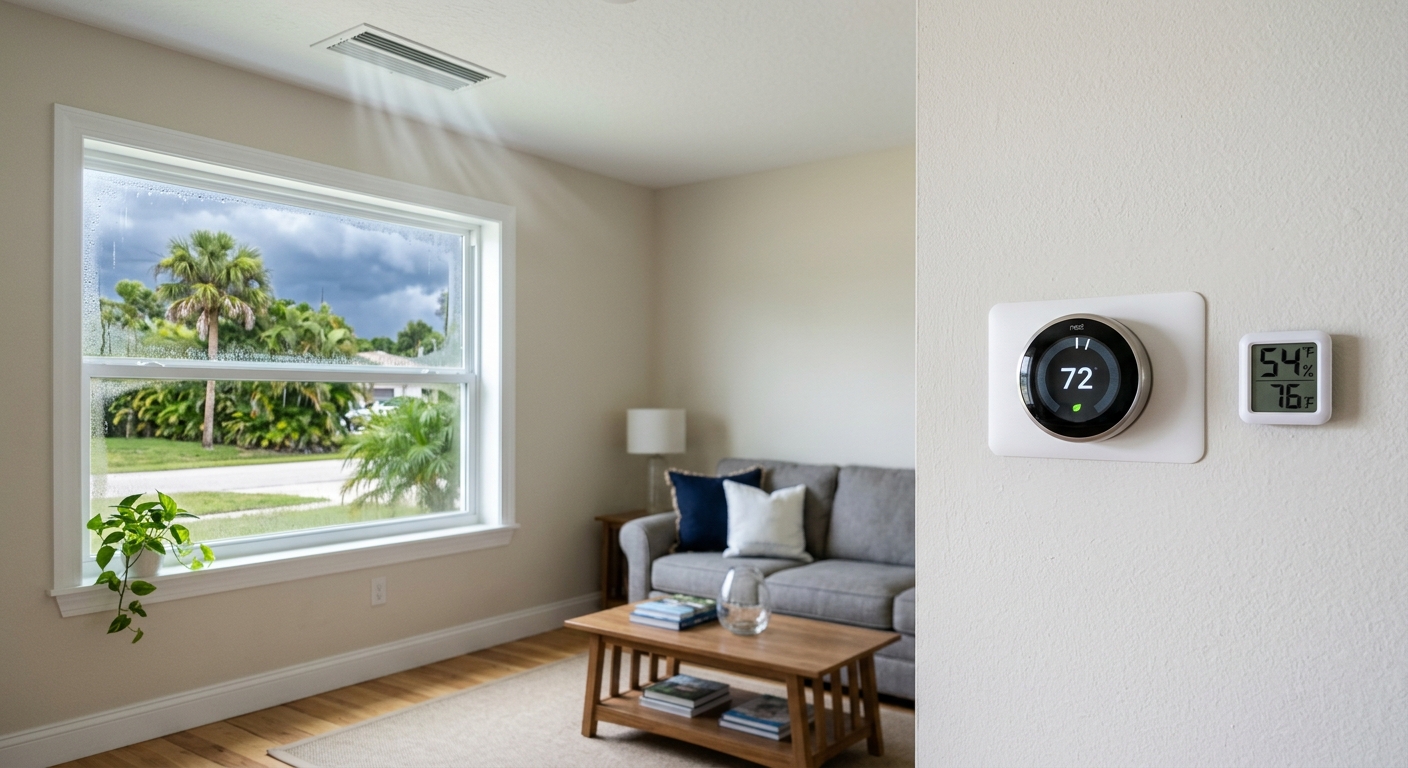
Use the same thermometer when comparing rooms because different devices may not read identically. Place it away from windows, exterior walls, supply vents, lamps, computers, and direct sunlight. Record the temperature near the middle of the occupied area after the AC has completed a normal cooling cycle.
Can humidity make one room feel hotter?
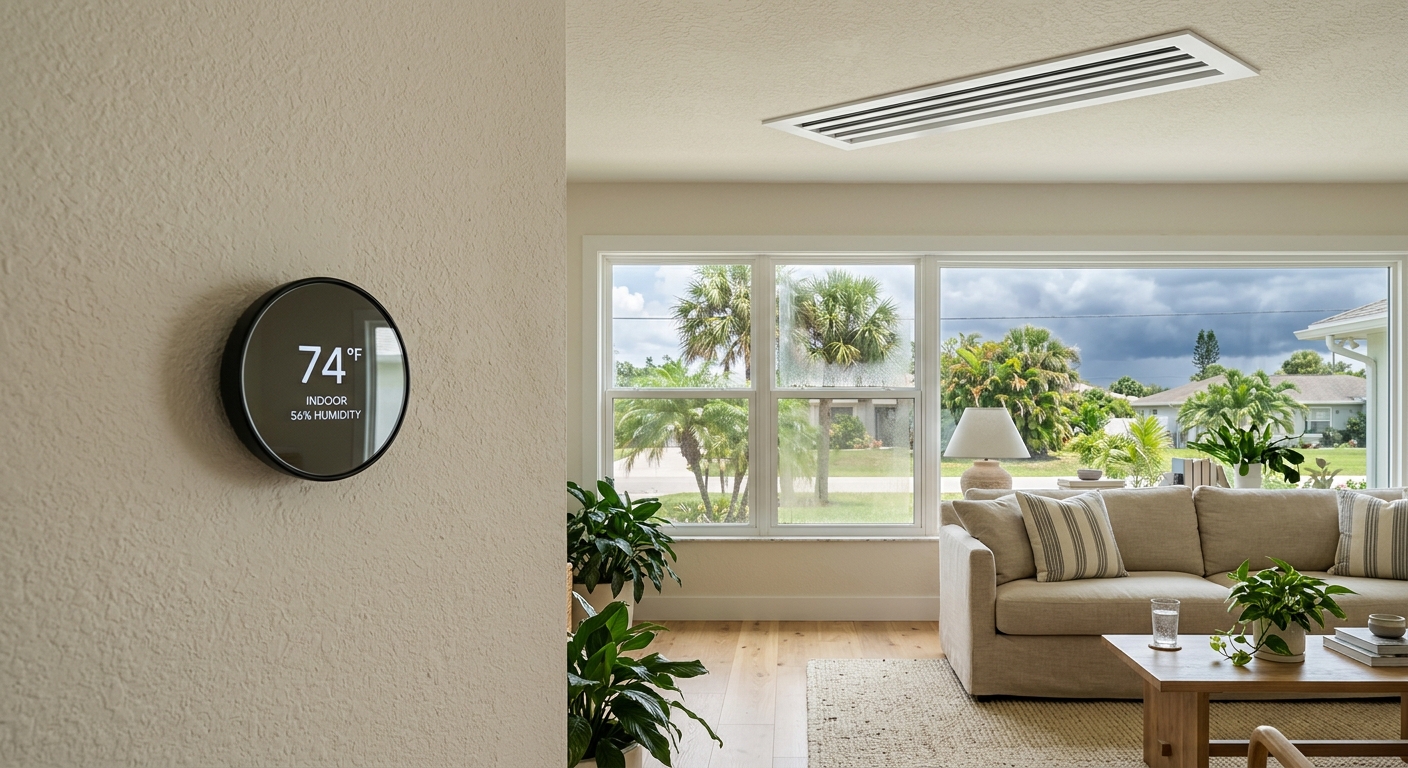
Yes. High humidity slows the evaporation of perspiration, so a room can feel warmer even when its air temperature is close to the thermostat setting. Coastal moisture, air leaks, an oversized cooling system that runs short cycles, or duct leakage can contribute to uneven humidity in a Brevard County home.
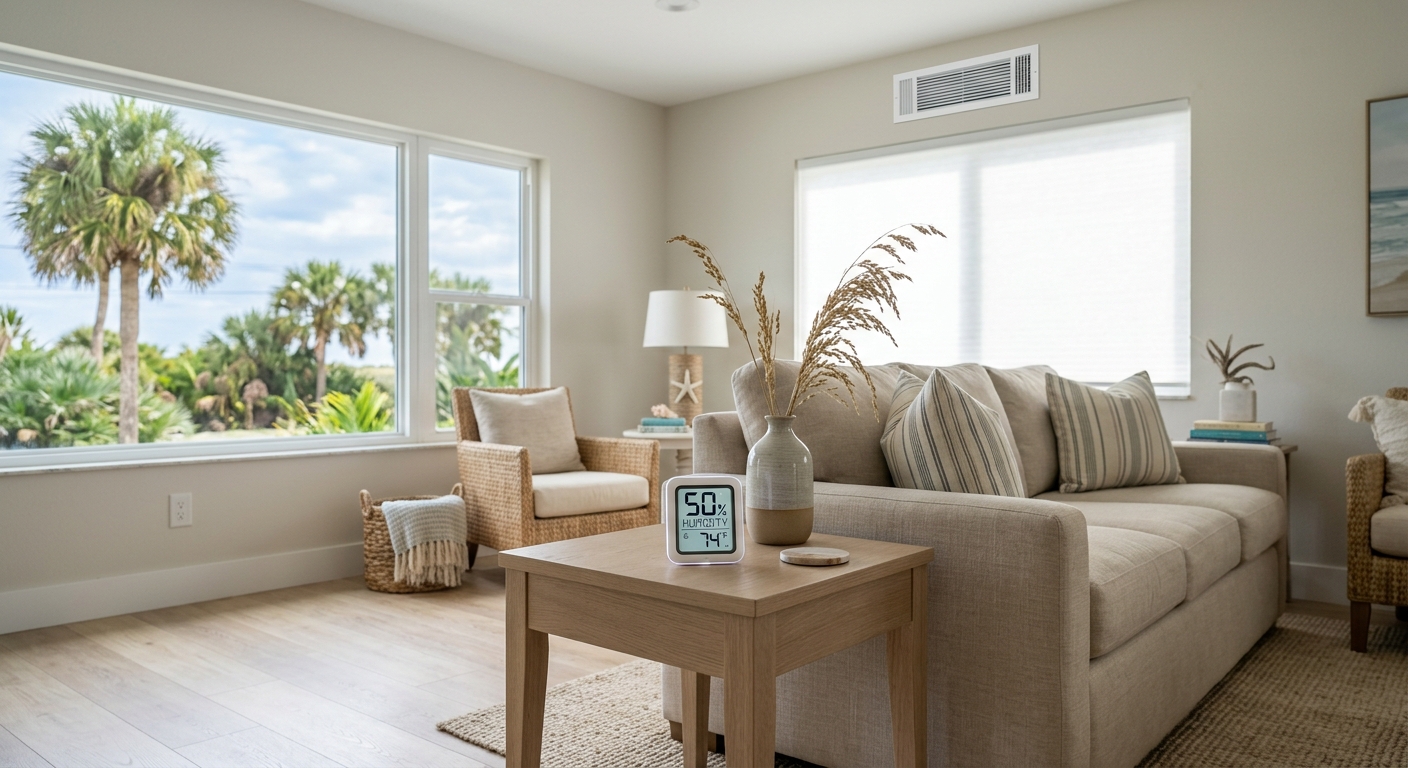
A commonly practical indoor target in Florida is around 45% to 55% relative humidity, while sustained readings above 60% deserve attention. Learn how seasons, thermostat settings, ventilation, and equipment operation affect comfort in The Best Indoor Humidity Level for Florida Homes.
Musty odors, recurring condensation, or visible growth should not be treated as temperature problems alone. Moisture control, filtration, ventilation, and source correction are connected parts of Indoor Air Quality.
When is a hot room a sign that I need professional help?
Call an HVAC professional when basic adjustments do not improve the room or when it remains several degrees warmer during normal operation. A technician should also inspect the system if the problem appeared suddenly, airflow is weak, the AC runs almost continuously, indoor humidity remains high, or you hear duct movement or air whistling.
Professional diagnostics may include measuring supply and return airflow, static pressure, temperature change across the equipment, room pressure with doors closed, duct leakage, refrigerant system performance, and thermostat operation. These measurements help separate a room-level airflow problem from an equipment-capacity or building-envelope issue.
Prompt service is particularly important if the system is not cooling the entire home, a breaker trips repeatedly, ice appears on refrigerant lines, water is leaking near the air handler, or there is a burning or electrical odor. Turn the system off when continued operation could cause damage or create a safety concern.
What is the best fix for one persistently hot room?
The right correction depends on the cause. Solutions may include sealing or repairing ducts, adjusting balancing dampers, adding a properly designed return-air pathway, correcting insulation gaps, improving window shading, or modifying duct size and layout. If the room is an addition or converted garage, its cooling load may never have been included in the original system design.
Zoning or a ductless mini-split may be appropriate for certain additions, bonus rooms, home offices, or areas with very different schedules and heat loads. However, adding equipment should follow a load calculation and airflow assessment. Installing a larger central AC without addressing ducts or insulation can create short cycling and poor humidity control.
Who can diagnose an unevenly cooled room in Brevard County?
Aquila Air & Heating can evaluate airflow, duct condition, humidity, insulation-related clues, and HVAC performance to identify why one room is hotter than others. Our team serves homeowners across Brevard County and can recommend repairs based on measurements rather than guesswork.
Contact Aquila Air & Heating to schedule a comfort evaluation. Aquila is Florida's First HVAC Company Offering a Lifetime Warranty; homeowners considering qualifying equipment can review the program details and terms on our Lifetime Warranty page.
Frequently asked questions about one hot room
Is a 3-degree difference between rooms normal?
A small variation can occur because of sun exposure, occupancy, or thermostat location. A consistent difference of roughly 3°F or more is worth investigating, especially when the room has weak airflow or becomes uncomfortable every day.
Will closing vents in cooler rooms send more air to the hot room?
Usually not in a controlled or reliable way. Closing several vents can increase system pressure and duct leakage while reducing total airflow. Proper balancing should be based on airflow measurements and equipment requirements.
Why is my bedroom hotter only when the door is closed?
The room may lack an adequate return-air path. Supply air enters but cannot easily move back to the central return, increasing room pressure and reducing airflow. A transfer grille, jumper duct, dedicated return, or correctly sized door undercut may be needed.
Can a thermostat fix one room that is always hot?
A remote sensor may help a compatible system respond to that room, but it cannot repair leaking ducts, missing insulation, or poor return airflow. It may also overcool other rooms if the underlying imbalance remains.
Why did one room suddenly become hotter than usual?
A sudden change can point to a closed register, dirty filter, failed damper, crushed or disconnected duct, new air leak, or HVAC performance problem. If simple checks do not reveal the cause, schedule an inspection before the issue worsens.