Why Is There Low Airflow From My Vents?
Weak AC airflow can come from a dirty filter, blocked vent, duct leak, frozen coil, blower problem, or an improperly sized HVAC system.
Low airflow from your vents is usually caused by a dirty air filter, blocked return, closed vent, duct problem, frozen evaporator coil, or malfunctioning blower. Start with simple checks such as replacing the filter and opening all vents, but arrange professional AC repair service if airflow remains weak, the system is freezing, or the equipment is making unusual sounds.
In Brevard County, weak airflow deserves prompt attention because an air conditioner must remove both heat and humidity during long periods of hot, damp weather. Restricted airflow can reduce comfort, increase operating time, and contribute to moisture problems inside the home.
What causes low airflow from AC vents?
An air conditioning system relies on a continuous air path. The return vents pull indoor air into the system, the blower moves it across the evaporator coil, and the supply ducts distribute conditioned air throughout the home. A restriction, leak, or mechanical problem anywhere along that path can reduce the air coming from your vents.
Is a dirty air filter restricting the airflow?
A clogged filter is one of the most common and easiest causes to check. As dust, pet hair, and other particles collect on the filter, the blower has to work harder to pull air through it. Airflow may gradually weaken throughout the house, and rooms farthest from the air handler may become uncomfortable first.
Turn the system off before removing the filter. If it is visibly dirty, replace it with the correct size and install it in the direction indicated by the airflow arrow. Avoid automatically choosing the highest filtration rating available: a filter that is too restrictive for the system can also reduce airflow. An HVAC professional can recommend an appropriate filter type for your equipment and indoor air quality needs.
Florida homes do not all need the same replacement schedule. Homes with pets, recent remodeling dust, frequent door openings, or year-round cooling may need more frequent checks. Inspecting the filter monthly is a practical approach, even if it does not need to be replaced every month.
Could a vent or return grille be blocked?
Furniture, rugs, curtains, storage boxes, and dust buildup can obstruct supply registers or return grilles. Return vents are especially important because blocking them reduces the amount of air available to the entire system. Walk through the home and make sure every grille has open space around it.
Open all supply registers fully unless an HVAC professional has specifically balanced the system differently. Closing vents in unused rooms does not necessarily save energy. It can increase duct pressure, worsen leakage, and create airflow or coil-temperature problems.
Can leaking or damaged ducts cause weak airflow?
Yes. A disconnected, crushed, torn, or poorly sealed duct can release conditioned air before it reaches the intended room. This is particularly relevant on the Space Coast, where ductwork may run through hot attics. Air escaping into an attic wastes cooling, while damaged return ducts can pull hot, humid, dusty air into the system.
Possible signs include one room with very low airflow, unusually dusty areas, rattling near a vent, hot or cold spots, and rising cooling costs without an obvious change in thermostat settings. Accessible duct damage should be evaluated rather than covered with ordinary household tape. Professional duct repair and sealing can address the damaged section and identify why it failed.
Does a frozen evaporator coil reduce airflow?
Ice on the evaporator coil can block air from passing through the system. You might notice weak airflow, longer cooling cycles, water near the indoor unit, or ice on the refrigerant lines or cabinet. Common contributors include restricted airflow, a dirty coil, blower trouble, or a refrigerant-related problem.
If you see ice, turn cooling off and set the thermostat fan to on only if the blower is operating normally. Allowing the equipment to thaw can prevent additional ice buildup, but thawing does not correct the underlying cause. Do not chip ice from the coil, and do not keep restarting the air conditioner. Water from melting ice can also overflow a drain pan or damage nearby materials.
Could the blower motor or fan be failing?
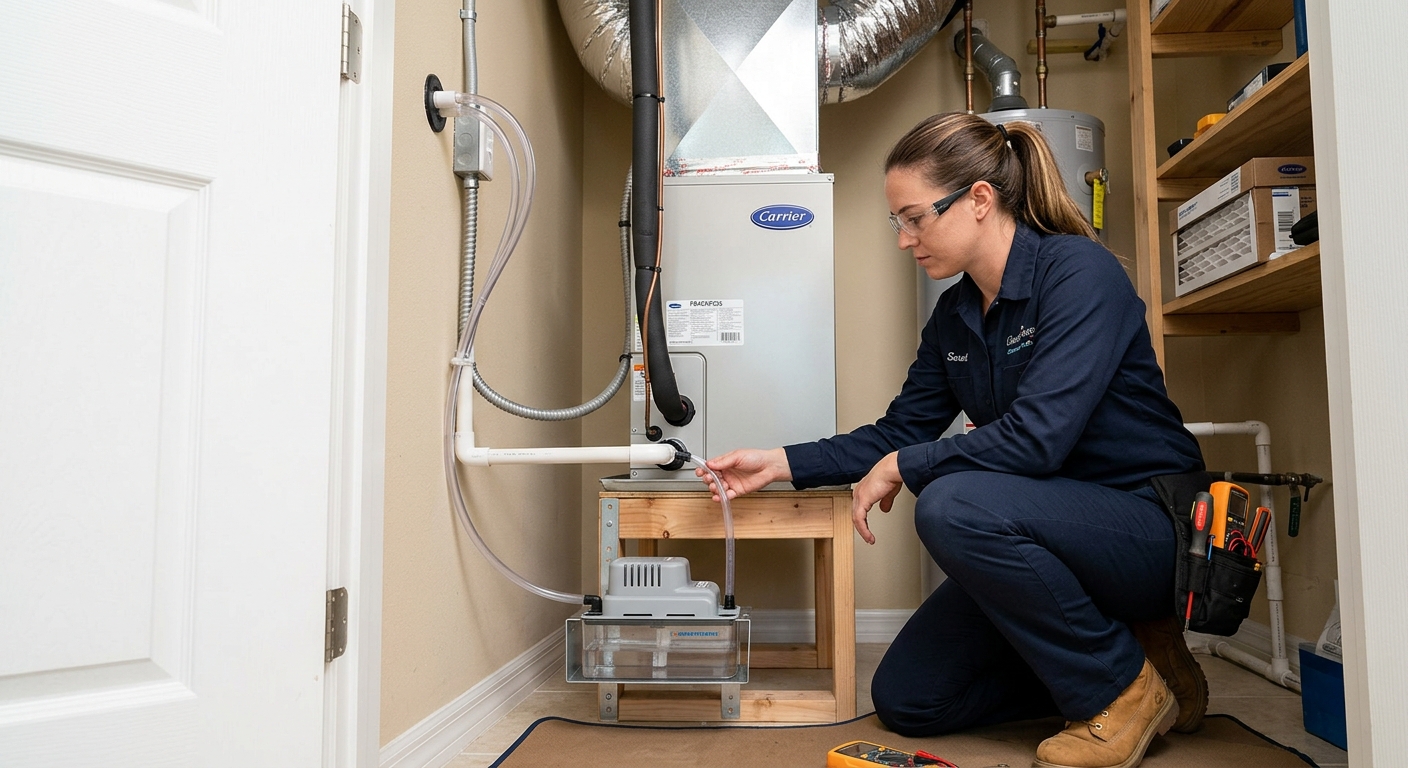
The indoor blower must move air through the filter, coil, ducts, and vents. A failing motor, damaged blower wheel, weak capacitor, control problem, or heavy buildup on the wheel can lower airflow. Warning signs include humming, scraping, intermittent airflow, delayed fan startup, or a system that runs without moving much air.
Blower components involve moving parts and electrical hazards. Turn the system off if you hear grinding or scraping, smell something burning, or notice repeated starting and stopping. These problems should be diagnosed by a trained technician.
Can the wrong system size or duct design cause low airflow?
An oversized or undersized air conditioner is not the only design concern. Duct dimensions, register placement, return-air capacity, blower settings, and static pressure all affect delivery. A home addition, remodeled interior, replaced doors, or closed-off floor plan can change how air moves through the house.
If airflow has always been poor, especially in certain rooms, the issue may be design-related rather than a sudden equipment failure. A technician can measure total external static pressure and airflow instead of guessing based only on how a vent feels.
Why is airflow weak from only one vent?
Low airflow at one vent usually points toward a localized issue. The register may be closed, the branch duct may be kinked or disconnected, an internal damper may be out of position, or the room may be at the end of a long duct run. A dirty register can also make airflow feel weaker, although heavy debris inside a duct should be investigated before cleaning is recommended.
Compare the affected vent with vents in similar rooms while the system is actively cooling. Confirm that the register is open and unobstructed. If the problem began suddenly or the room never reaches the thermostat setting, a duct inspection is more useful than trying to redirect air by closing other vents.
Why is airflow weak throughout the entire house?
Whole-house low airflow is more likely to involve the filter, return-air path, evaporator coil, blower, or a major duct connection. It can also occur when the thermostat fan setting, zoning controls, or blower configuration is incorrect.
If the air coming from the vents is also warm, the system may have both an airflow and cooling problem. The troubleshooting steps in Aquila's guide to an AC blowing warm air can help you distinguish a simple thermostat issue from a problem requiring service.
What can I safely check before calling an HVAC technician?
Homeowners can perform a few basic checks without opening equipment panels or handling electrical and refrigerant components:
- Confirm that the thermostat is set to cool and the temperature is below the current indoor temperature.
- Inspect the air filter and replace it if dirty, using the correct dimensions and airflow direction.
- Open supply registers and move furniture, rugs, or curtains away from them.
- Make sure return grilles are unobstructed and have not been covered during painting or remodeling.
- Look for visible ice on accessible refrigerant lines or around the indoor unit.
- Listen for grinding, scraping, repeated clicking, or a blower that does not start.
- Check whether the issue affects one room, one area, or the whole house.
- Look for water around the air handler and shut the system off if the drain pan is overflowing.
Avoid removing sealed panels, reaching into the blower compartment, adding refrigerant, or attempting electrical repairs. Do not enter a dangerously hot attic or step between ceiling joists to inspect ducts. Brevard County attics can reach hazardous temperatures, particularly during summer afternoons.
Can low airflow increase humidity in a Brevard County home?
It can. Your air conditioner removes moisture as indoor air passes over the cold evaporator coil. When airflow or cooling performance is impaired, the system may struggle to maintain both temperature and humidity. The result can be a clammy feeling, condensation on vents, musty odors, or longer run times.
Condensation around a vent is not always proof of a duct leak, but it should not be ignored. Warm, humid attic air contacting a cold register or poorly insulated duct can create moisture. Persistent dampness can stain drywall and support microbial growth, so the moisture source should be identified and corrected.
When does weak airflow require professional AC repair?
Schedule service when a clean filter and open vents do not restore airflow, or when the problem returns quickly. Professional diagnosis is also appropriate if airflow is uneven, the coil freezes, the blower sounds abnormal, the system runs constantly, or indoor humidity stays high.
Turn the equipment off and request prompt help if you smell burning, hear severe grinding, see water approaching electrical components, or the breaker repeatedly trips. If loss of cooling creates an urgent safety or property concern, Aquila offers emergency AC repair in Brevard County.
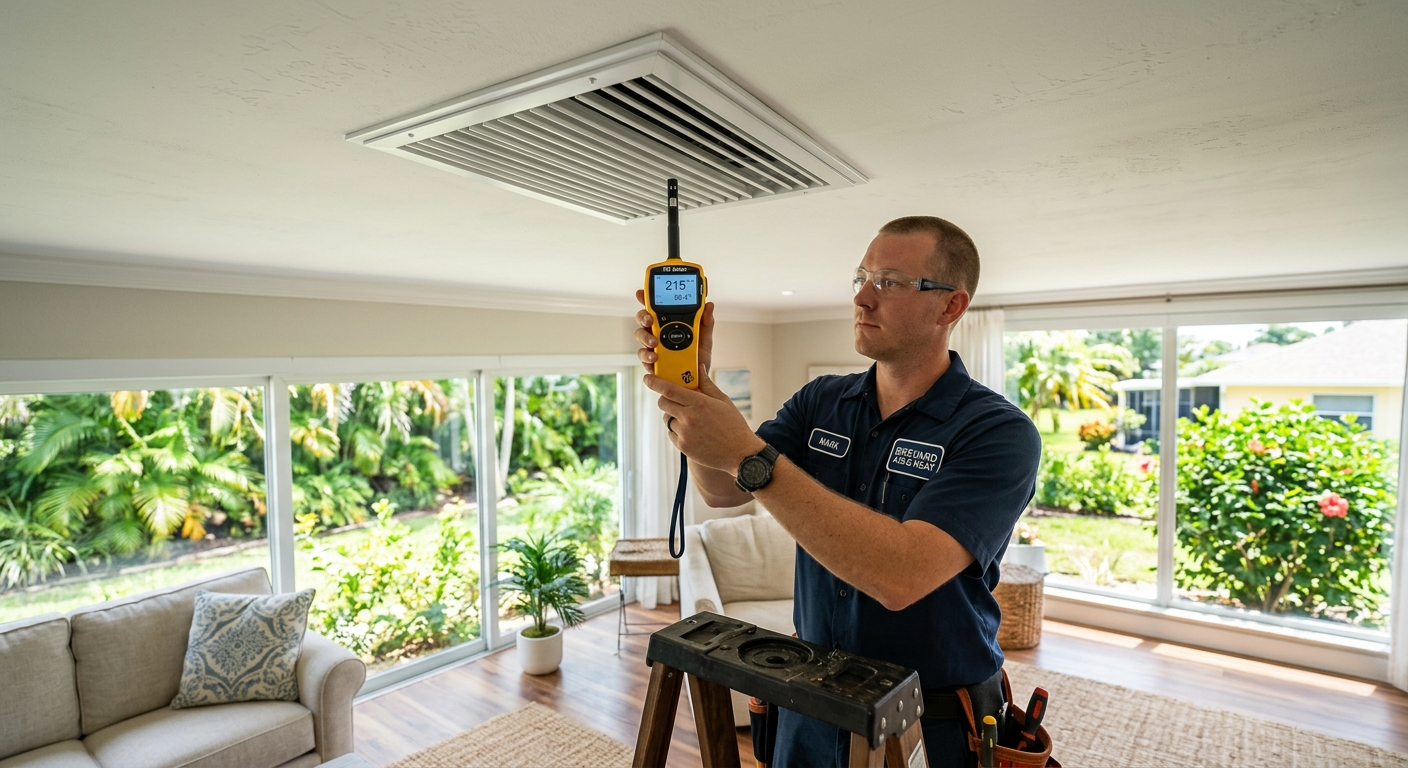
A thorough airflow diagnosis may include checking the filter and coil, testing blower operation, measuring temperature change, inspecting accessible ductwork, evaluating return-air capacity, and measuring static pressure. These measurements help locate the restriction instead of treating low airflow as a single-part problem.
How can I help prevent low airflow?
Routine attention can prevent many airflow problems and reveal others before they cause a breakdown:
- Inspect the filter monthly and replace it when dirty.
- Keep supply and return grilles open, clean, and unobstructed.
- Have unexplained room-to-room comfort differences investigated.
- Address attic duct damage after remodeling, pest activity, or storage work.
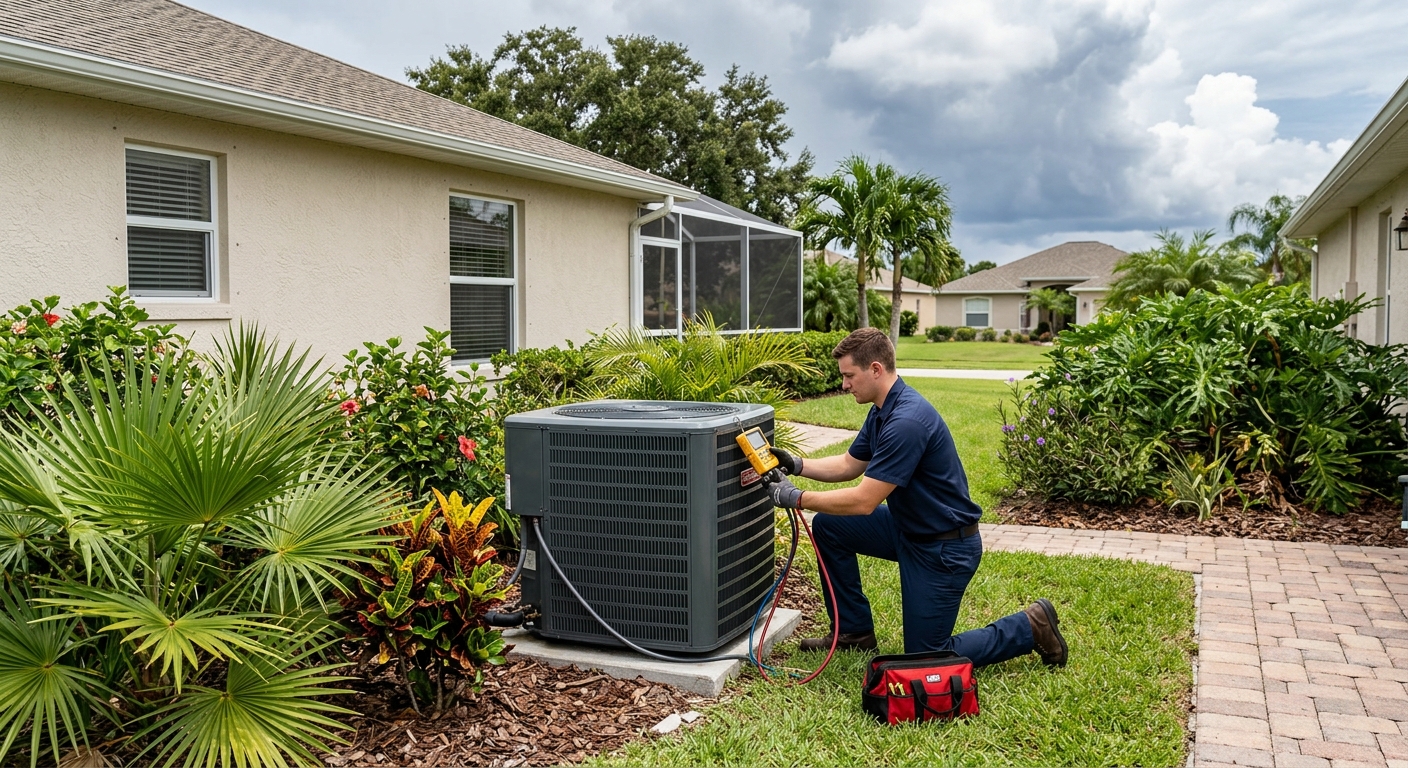
- Keep landscaping and debris away from the outdoor unit, although outdoor blockage is not a substitute explanation for weak indoor airflow.
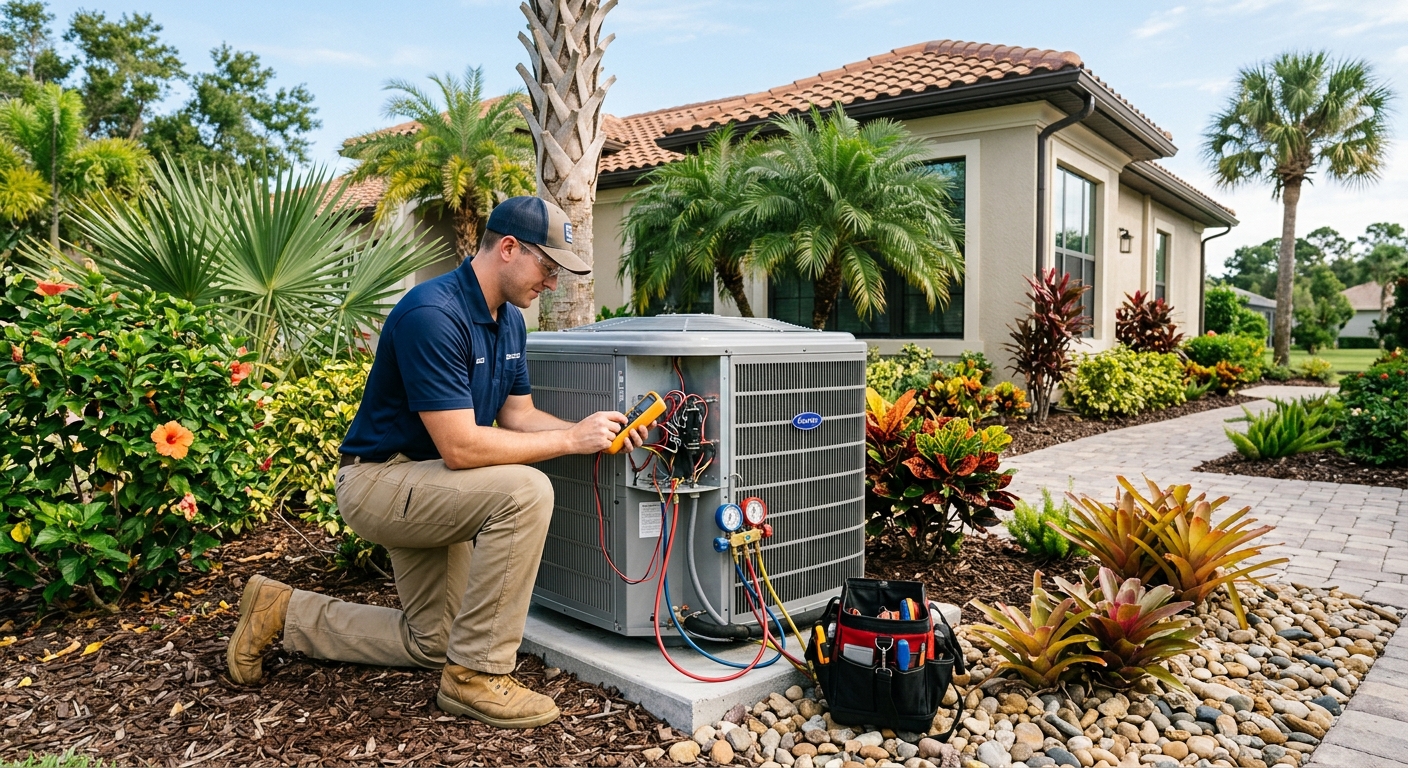
- Schedule maintenance so the coil, blower, drain, electrical components, and system operation can be evaluated.
Maintenance cannot prevent every motor failure or duct defect, but it can identify deteriorating components and airflow restrictions before peak Space Coast cooling demand puts the system under greater stress.
Who can diagnose low airflow in Brevard County?
Aquila Air & Heating serves homeowners across Brevard County with airflow troubleshooting, AC repair, and duct services. As a family-run local company, we understand how long cooling seasons, humid coastal air, and hot attic conditions affect Space Coast HVAC systems.
Contact Aquila Air & Heating if basic filter and vent checks do not solve the problem. We can inspect the system, explain the findings, and recommend repairs based on measured conditions. Homeowners considering replacement equipment can also ask which qualifying systems are covered and review the terms of Aquila's Lifetime Warranty.