Why Your AC Runs All Day and How to Fix It
An AC may run for long periods during Brevard County’s hottest weather, but dirty filters, duct leaks, frozen coils, and equipment problems can prevent cooling.
If your AC runs all day, it may be responding normally to extreme Brevard County heat, especially during humid summer afternoons. However, continuous operation can also point to restricted airflow, duct leakage, a dirty coil, incorrect thermostat settings, low refrigerant, or an improperly sized system. Start with safe airflow and thermostat checks, then call an HVAC professional if the home is not reaching the set temperature.
Is it normal for an AC to run all day in Florida?
Long cooling cycles are not automatically a sign of failure. On a hot, humid day, a correctly sized air conditioner may operate for extended periods to remove both heat and moisture from the home. This is especially common in Brevard County when strong afternoon sun, high outdoor temperatures, frequent door openings, and humidity increase the cooling load.
Variable-speed and inverter systems are also designed to run for long periods at lower output. Instead of repeatedly turning on and off, they may maintain a steady indoor temperature while using less power than they would at full capacity. If your home remains comfortable, indoor humidity is controlled, and the system slows down or eventually cycles off, extended runtime may be normal.
Continuous operation deserves attention when the indoor temperature keeps rising, certain rooms remain warm, the air from the vents feels weak or warm, or the system never reaches the thermostat setting even after sunset. A sudden change from your AC’s usual behavior is another reason to investigate.
Why does my AC run constantly without cooling the house?
Could a dirty air filter make the AC run continuously?
Yes. A clogged filter restricts the air moving across the indoor evaporator coil. Reduced airflow lowers cooling performance, makes the blower work harder, and can eventually cause the coil to freeze. The system may continue running because the thermostat is still calling for cooling, even though less conditioned air is reaching the rooms.
Check the filter and replace it if it is visibly loaded with dust. Use the filter size and type recommended for your system, because a filter that is too restrictive can also reduce airflow. Brevard County homes with pets, renovation dust, frequent open doors, or heavy system use may need filter checks more often than homes under lighter conditions.
Are blocked vents or return grilles causing the problem?
Closed supply vents, furniture over return grilles, and rugs or stored items blocking airflow can disrupt the system’s balance. Walk through the home and make sure supply vents are open and unobstructed. Return grilles should also have a clear path for room air to flow back to the equipment.
Do not close multiple vents in an attempt to save energy. Residential duct systems are designed for a certain amount of airflow, and closing too many vents can raise duct pressure, increase leakage, create noise, and contribute to coil freezing.
Can duct leaks keep a Florida home from cooling?
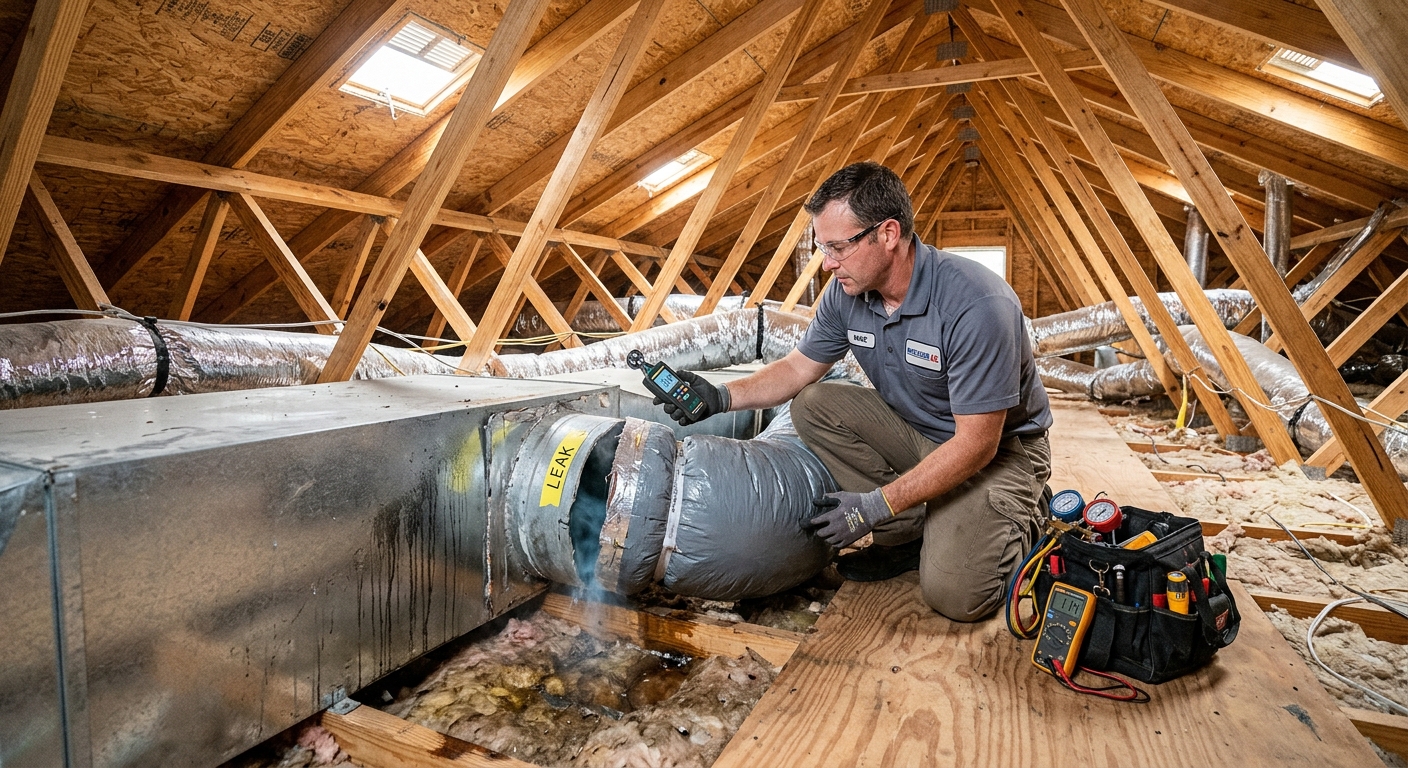
Leaky ducts can lose cooled air into an attic, garage, or wall cavity before it reaches the living space. They can also pull hot, humid, dusty air into the return side of the system. Because many Brevard County duct systems pass through extremely hot attics, even moderate leakage can increase runtime and create noticeable room-to-room temperature differences.
Signs include unusually weak airflow, dusty rooms, hot or cold spots, high utility use, and insulation moving near duct connections. Learn more about duct leaks and energy loss in Florida homes. If leakage or damaged ductwork is confirmed, professional duct repair and sealing can address the source rather than compensating with a lower thermostat setting.
Could the outdoor unit be unable to release heat?
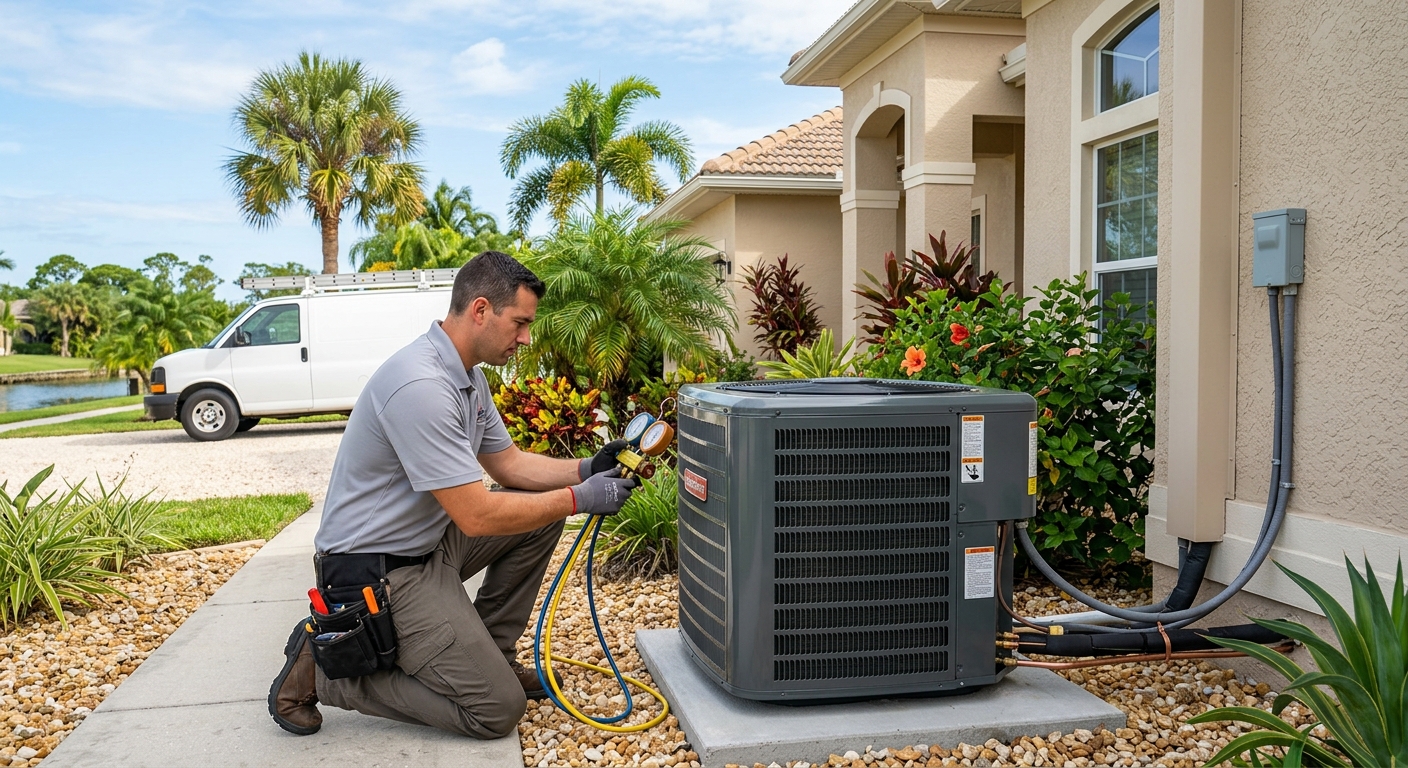
The outdoor condenser must release heat removed from your home. Grass clippings, leaves, dense vegetation, or dirt around the cabinet can interfere with airflow. Coastal conditions may also contribute to corrosion and buildup over time, particularly in communities closer to the Atlantic Ocean or Indian River Lagoon.
Turn the system off before removing loose debris from the immediate area, and keep plants trimmed back without damaging the coil fins. Do not open electrical panels, bend fins, or use a pressure washer on the equipment. A heavily soiled or corroded coil should be evaluated and cleaned using methods appropriate for that unit.
Does a frozen evaporator coil cause nonstop operation?
A frozen coil cannot absorb heat effectively. Possible causes include a dirty filter, blocked airflow, blower trouble, dirty coil surfaces, or a refrigerant problem. You may notice ice on the refrigerant line, weak airflow, water around the indoor unit after the ice melts, or a system that runs while producing little cooling.
If you see ice, switch cooling off to prevent further icing. You can set the thermostat fan to on to help thaw the coil, provided air is still moving and there is no electrical or water hazard. Do not chip away the ice. Replace a dirty filter if needed, but arrange professional service if freezing returns because refrigerant and mechanical problems require diagnosis.
Can low refrigerant make an AC run all day?
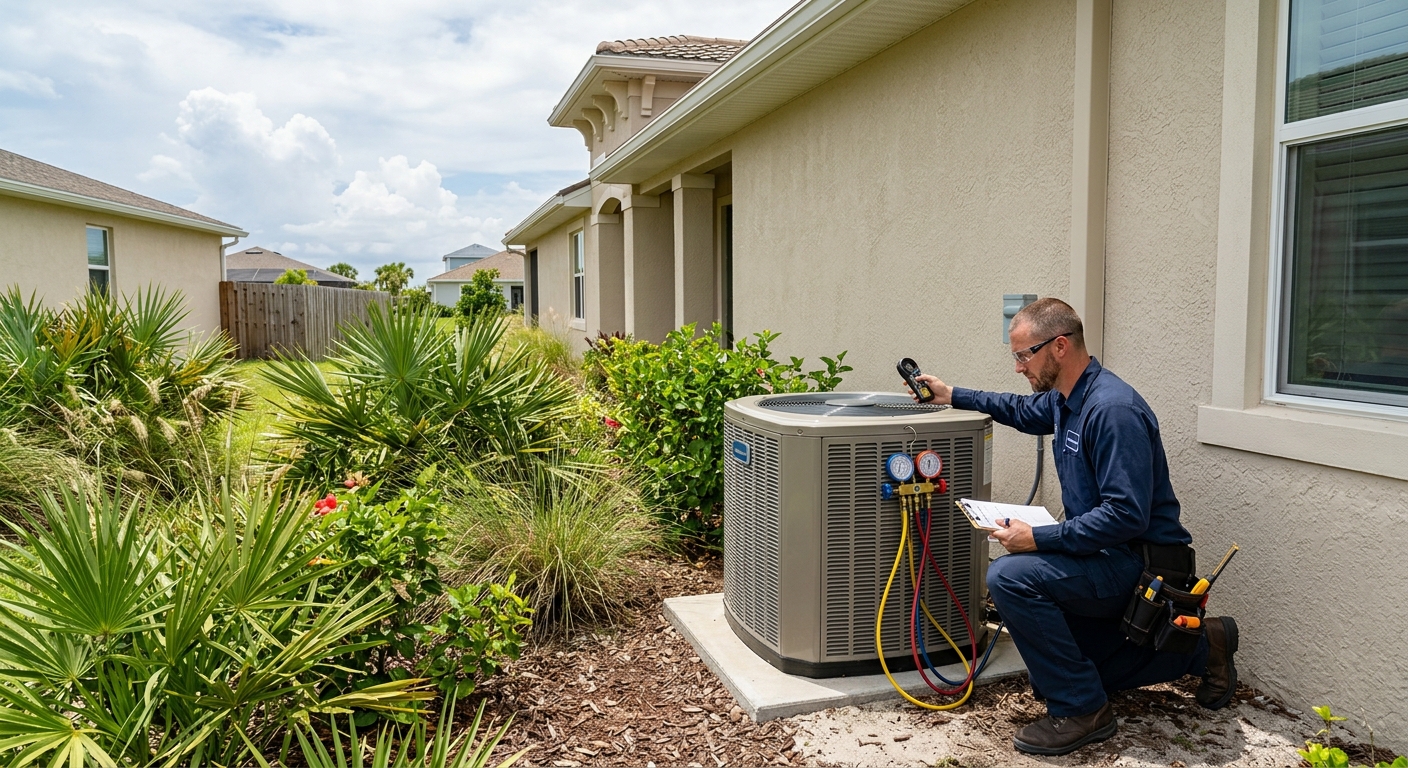
Yes. Refrigerant does not get used up like fuel, so a low charge usually indicates a leak or an incorrect charge from previous service. Low refrigerant can reduce capacity, cause ice formation, increase runtime, and damage the compressor if the problem continues.
Adding refrigerant without finding the reason for the low charge is not a complete repair. Refrigerant work should be performed by a qualified technician who can test system operation, locate repairable leaks, and charge the equipment according to manufacturer specifications.
Is the AC too small or too old for the home?
An undersized system may run almost continuously because it lacks enough capacity for the home’s actual cooling load. This can happen after additions, enclosure of a porch, significant duct changes, or installation based only on the size of the previous unit. Correct sizing requires a load calculation that considers square footage, windows, insulation, orientation, air leakage, occupancy, and other building details.
Age alone does not prove that an AC needs replacement, but worn compressors, damaged coils, failing motors, and declining heat-transfer performance can reduce capacity. A technician should identify the specific fault and compare repair options with replacement based on condition, efficiency, comfort, and expected service life.
What can I safely check before calling an AC technician?
- Confirm that the thermostat is set to cool and that the desired temperature is reasonable for current outdoor conditions.
- Set the fan to auto for normal operation. A fan set to on runs continuously even when the compressor is off, which can make it seem as though the AC never stops.
- Replace a visibly dirty filter with the correct size and recommended type.
- Open supply vents and remove furniture, curtains, or stored items blocking return grilles.
- Check whether multiple rooms are warm or the problem is isolated to one area.
- Look for ice, unusual water, burning odors, grinding noises, or a blank thermostat.
- Remove loose leaves and vegetation around the outdoor unit without opening or disassembling it.
- Keep windows and exterior doors closed while the system is cooling.
After completing these checks, give the system time to respond. Avoid repeatedly lowering the thermostat, because setting it to 65 degrees does not make a standard single-stage AC cool faster. It simply tells the system to keep operating longer.
How can I tell whether the AC is actually cooling?
Compare the temperature of air entering the return with the temperature at a nearby supply vent after the system has been running steadily. Many functioning systems show an approximate difference of 16 to 22 degrees Fahrenheit under suitable conditions, but humidity, airflow, equipment type, instrument accuracy, and test location can change the result. This quick check is not a substitute for professional testing.
If the temperature difference is very small, the system may have an airflow, refrigerant, compressor, or coil problem. An unusually large difference paired with weak airflow may indicate restriction or freezing. A technician can measure static pressure, refrigerant conditions, electrical performance, temperatures, and airflow to distinguish among these causes.
Will setting the thermostat higher reduce continuous runtime?
Raising the setting by a few degrees can reduce cooling demand, particularly during the hottest part of the day. Ceiling fans can improve comfort by moving air across occupants, allowing some households to use a slightly higher thermostat setting. Turn fans off in empty rooms because fans cool people, not the room itself.
Solar heat also matters in Space Coast homes. Close blinds or shades on sun-exposed windows, use bathroom and kitchen exhaust fans only as needed, and avoid heat-producing tasks during peak afternoon hours when practical. These steps reduce load, but they will not correct a broken component, major duct leak, or refrigerant problem.
When should I call an HVAC professional?
Schedule professional AC repair in Brevard County when the system cannot reach the thermostat setting, starts running continuously without an obvious weather-related reason, freezes more than once, produces weak airflow, leaks water, or causes an unexplained increase in electricity use. Prompt diagnosis can help prevent a minor airflow or electrical issue from becoming a more expensive equipment failure.
Turn the system off and seek urgent help if you smell burning, see smoke or sparking, hear severe mechanical noises, notice repeated breaker trips, or find water threatening electrical equipment or the home. Aquila’s emergency AC repair service is available for cooling problems that should not wait for a routine appointment.
How can I prevent the AC from running excessively?
Routine maintenance should include filter checks, condensate drainage inspection, indoor and outdoor coil evaluation, electrical testing, airflow assessment, and verification that the thermostat operates correctly. Keeping the outdoor area clear and addressing small comfort changes early can also help preserve performance.
Home improvements can reduce the cooling load as well. Air sealing, appropriate attic insulation, repaired ducts, window shading, and controlling indoor moisture can make it easier for the system to maintain temperature. Before replacing equipment, ask whether duct leakage or building conditions are contributing to long runtime; installing a larger unit without solving those issues can create poor humidity control and short cycling.
Who can diagnose an AC that runs all day in Brevard County?
Aquila Air & Heating serves homeowners across Brevard County and the Space Coast. Our technicians can evaluate airflow, ductwork, thermostat operation, coils, refrigerant performance, electrical components, and system capacity to identify why your AC runs all day and explain practical repair options.
Contact Aquila Air & Heating to schedule an assessment rather than guessing at the cause. If you are considering new equipment, you can also review Aquila’s Lifetime Warranty information and request the written terms, eligibility requirements, and coverage details that apply to your installation.