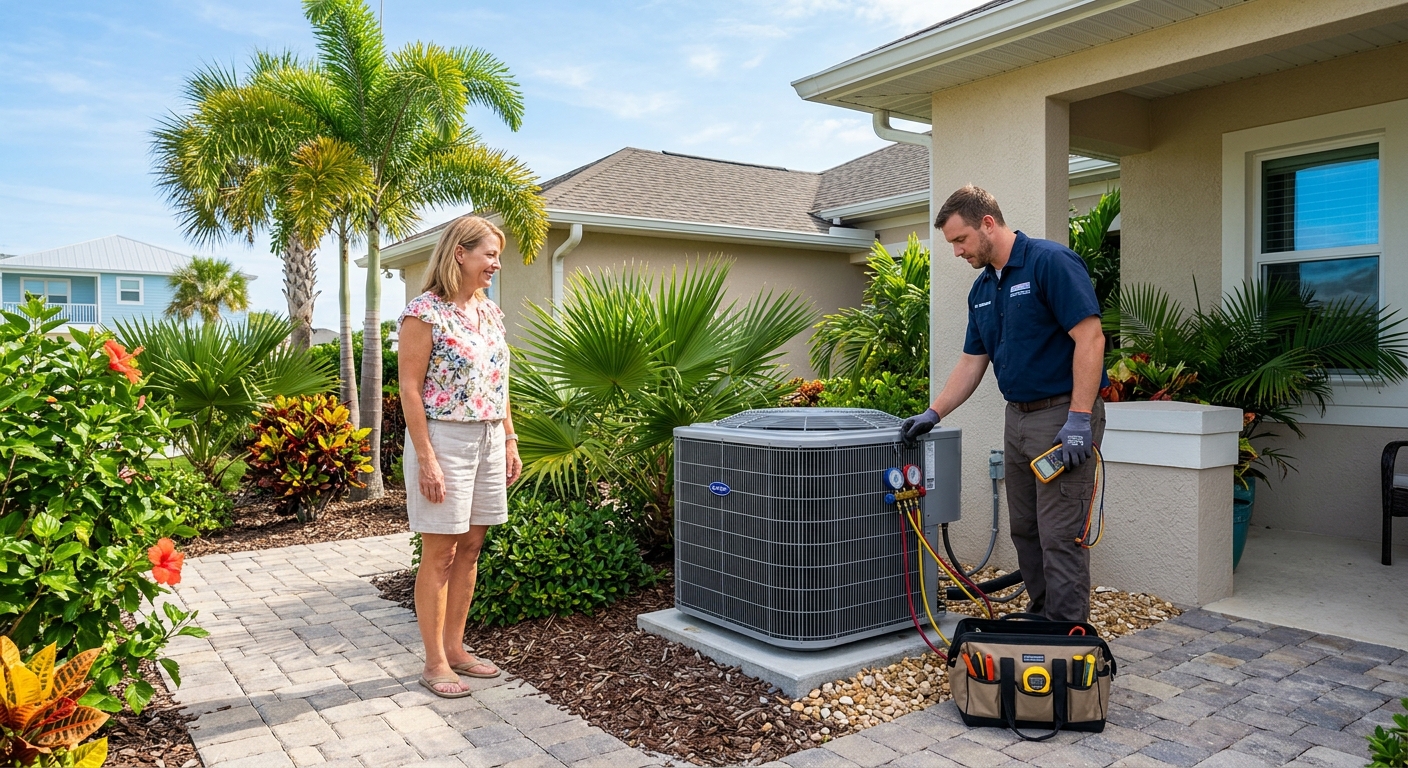
Do You Need Heating in Florida? Heat Pumps Explained
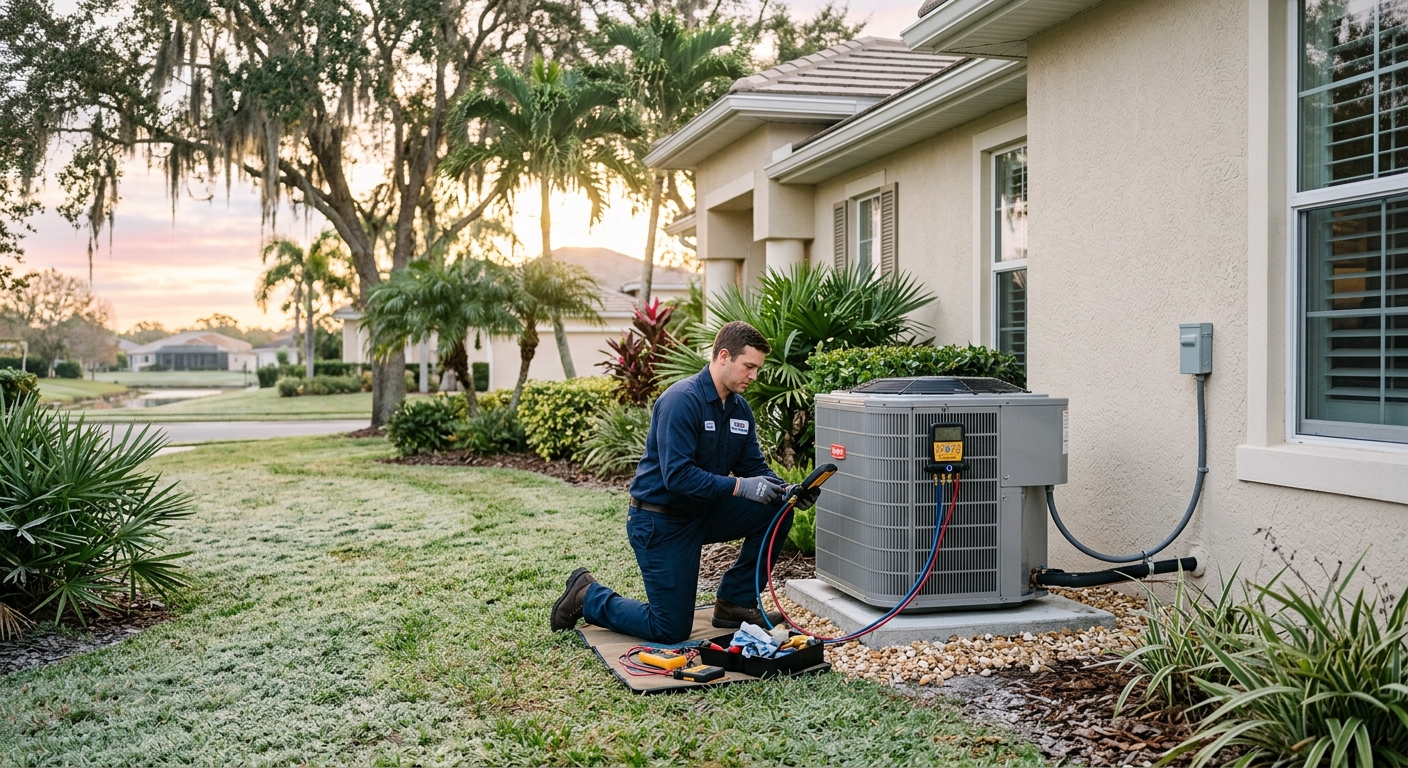
Brevard County winters are mild, but cold snaps still make dependable heating important. Learn why a heat pump is often the best fit for Florida homes.
Yes, Brevard County homes need some form of heating, even if it runs only during short winter cold snaps. For most households, a heat pump is the practical choice because one system cools the home in summer and reverses operation to provide efficient heat in mild weather. When homeowners search for heating in Florida heat pump options, the right answer usually depends on the home's size, ducts, electrical service, layout, and comfort priorities.
Does a Brevard County home really need heat?
Florida's Space Coast does not experience a long heating season, but winter nights can still become uncomfortable. Temperatures in Brevard County commonly fall into the 40s during passing cold fronts, and colder nights can reach the 30s. Inland neighborhoods may cool differently from homes near the Indian River, Banana River, or Atlantic coast, where surrounding water can moderate temperatures.
Without working heat, indoor temperatures can drop quickly in homes with older windows, minimal insulation, leaky ducts, or high ceilings. Heating is especially important for infants, older adults, people with certain health conditions, and anyone who works from home early in the morning.
The key is not installing the largest or most powerful heater available. Florida homeowners generally need a system that handles occasional cold weather efficiently without compromising air-conditioning performance, humidity control, or year-round operating costs.
How does a heat pump heat a Florida home?
A heat pump is an air-conditioning system that can move heat in either direction. During summer, it transfers heat from inside the house to the outdoors. In heating mode, a reversing valve changes the refrigerant flow so the system can collect heat from outdoor air and move it indoors.
Outdoor air still contains usable thermal energy when it feels cold. Because a heat pump moves heat instead of creating all of it through electric resistance, it can often provide more heat per unit of electricity than electric heating strips alone. Actual performance depends on the equipment, outdoor temperature, installation quality, duct condition, and thermostat settings.
This ability to provide both cooling and heating makes a heat pump well suited to Brevard County's long cooling season and relatively short, mild winter. Homeowners who need maintenance, diagnostics, or repair can learn more about Aquila's heat pump services in Brevard County.
What is auxiliary heat, and will I need it?
Many central heat pumps in Florida include electric resistance heating elements inside the air handler. These are commonly called auxiliary heat, backup heat, or heat strips. Depending on the thermostat and system controls, they may turn on automatically when the heat pump cannot raise the indoor temperature quickly enough, during certain defrost cycles, or when outdoor conditions reduce the system's heating capacity.
Auxiliary heat can make a home comfortable faster, but it generally uses more electricity than normal heat-pump operation. A sudden increase in energy use during a cold spell does not automatically mean something is wrong. However, unusually frequent auxiliary operation in mild weather may point to a thermostat problem, dirty filter, refrigerant issue, duct loss, equipment fault, or an aggressive temperature increase.
To reduce unnecessary backup-heat use, make gradual thermostat adjustments instead of raising the setting several degrees at once. Thermostat behavior varies, so follow the instructions for your specific model rather than assuming every system uses the same control strategy.
Is emergency heat the same as auxiliary heat?
No. Auxiliary heat is normally controlled automatically and works with the heat pump when extra capacity is needed. Emergency heat is a manual thermostat setting that usually disables the outdoor heat-pump operation and relies on the backup heating source.
Emergency heat is not intended as a routine way to warm the house faster. It may be appropriate if the outdoor unit has failed, is making alarming mechanical noises, or has been switched off by an HVAC technician. Because configurations vary, contact a professional if you are uncertain whether using emergency heat is safe for your system.
Why does the outdoor unit run or make steam in winter?
The outdoor unit normally runs while a heat pump is heating. Under cool, damp conditions, moisture can form frost on the outdoor coil. The system periodically enters a defrost cycle to warm the coil and melt that frost.
During defrost, you may hear a change in sound, see the outdoor fan stop briefly, or notice a cloud that resembles smoke. That cloud is usually water vapor and can be normal. A thin layer of temporary frost is also different from a unit that remains encased in heavy ice.
Call an HVAC professional if ice continues building, the unit never appears to defrost, breakers trip, the system produces no heat, or you hear grinding or electrical buzzing. Do not chip ice from the coil or pour boiling water over it; either action can damage the equipment.
Is a heat pump better than straight electric heat in Florida?
For many Brevard County homes, yes. Electric resistance heaters turn electricity directly into heat. A heat pump primarily uses electricity to transfer existing heat, so it will often consume less electricity while providing the same amount of space heating under mild conditions.
A heat pump also serves as the home's central air conditioner, avoiding the need for separate cooling and heating systems. That does not mean every house should receive the same equipment. Available natural gas, an existing furnace, solar production, generator capacity, service-panel space, duct design, and homeowner preferences can affect the best choice.
Homes without usable ductwork may benefit from ductless equipment. A mini-split heat pump can condition a room addition, converted garage, workshop, or enclosed lanai without extending an inadequate central duct system. See this guide to mini-splits for Florida additions, garages, and lanais for situations where ductless heating and cooling may make sense.
What should I consider when choosing a heat pump?
Proper system sizing
An HVAC contractor should evaluate more than the home's square footage. A professional load calculation considers insulation, windows, orientation, air leakage, ceiling height, occupancy, and other sources of heat gain and loss. Oversized equipment may cool in short bursts, which can reduce summer humidity removal and create uneven temperatures. Undersized equipment may struggle during peak weather.
Duct condition and airflow
Duct leaks in a hot attic can waste conditioned air in both summer and winter. Restricted returns, crushed flex duct, dirty filters, closed registers, or an incorrectly selected air handler can also reduce airflow. Before replacing equipment, ask whether the duct system needs testing, sealing, repair, or redesign.
Electrical capacity
The contractor should confirm that the electrical panel, breakers, wiring, and disconnects match the new equipment's requirements. Backup heating elements can create a substantial electrical load. Never assume an existing circuit is suitable merely because the replacement unit has a similar cooling capacity.
Efficiency and operating priorities
Cooling efficiency matters greatly in Brevard County because air conditioning operates for much of the year. Heating efficiency still matters, but the best value is not always the model with the highest published rating. Compare expected use, comfort features, humidity performance, sound, maintenance requirements, and total installation quality.
Coastal exposure
Salt-laden air can accelerate corrosion, particularly near the beach and other exposed coastal areas. Installation location, drainage, manufacturer-approved coil protection, routine rinsing recommendations, and professional maintenance may help preserve equipment condition. Follow the manufacturer's care instructions and avoid chemicals or pressure washing that could damage the outdoor coil.
When should I replace an air conditioner with a heat pump?
A heat pump is worth discussing when an aging air conditioner needs replacement, the existing electric heater is expensive to operate, repairs are becoming frequent, or the home has no dependable heating source. Replacing a functioning system solely to gain heat may not always be cost-effective, so compare the equipment's condition, repair history, efficiency, and expected remaining service life.
If the current system is a straight-cool air conditioner with heat strips, converting to a heat pump may require compatible indoor equipment, thermostat wiring, electrical review, a new outdoor unit, and possibly duct improvements. A professional survey can identify what can remain and what must change. Aquila's heat pump installation service explains the installation process and available options.
How can I prepare my heat pump before a cold front?
- Replace or clean the air filter according to the equipment and filter manufacturer's directions.
- Clear leaves, weeds, and stored objects away from the outdoor unit without bending the coil fins.
- Test heating mode before the first cold night so there is time to address a problem.
- Confirm that supply registers and return grilles are open and unobstructed.
- Use steady, moderate thermostat settings rather than making large temperature changes.
- Schedule service if the system smells electrically hot, trips a breaker, makes unusual mechanical sounds, or cannot maintain a reasonable indoor temperature.
A brief dusty smell at the first heating cycle of the season can occur as residue warms inside the air handler. Turn the system off and call a professional if the odor is strong, persists, resembles melting plastic, or is accompanied by smoke or electrical problems.
When should you call a heat pump professional?
Professional diagnosis is appropriate when the system blows cool air continuously, runs without reaching the thermostat setting, uses auxiliary heat during mild conditions, develops persistent ice, leaks water indoors, trips breakers, or produces new noises or odors. Refrigerant circuits, high-voltage components, controls, and heating elements should not be treated as do-it-yourself repairs.
If you are planning a replacement, request a load calculation, an inspection of the duct system, clear efficiency ratings, and a written scope describing equipment, electrical work, permits, controls, and startup testing. Price matters, but correct design and commissioning strongly influence comfort and performance.
Aquila Air & Heating helps Space Coast homeowners compare heat-pump choices based on the house rather than a one-size-fits-all recommendation. Contact our family-run team for an assessment in Brevard County. Homeowners interested in equipment protection can also review Aquila's Lifetime Warranty and ask which systems qualify, what registration or maintenance is required, and what terms apply.