When Should I Replace My AC in Florida?
Know when to replace your Florida AC based on its age, repair history, energy use, humidity control and Brevard County's demanding coastal climate.
Consider replacing your Florida AC when it is roughly 10 to 15 years old and has frequent breakdowns, rising operating costs, poor humidity control or a major repair ahead. In Brevard County, long cooling seasons, coastal salt exposure and heavy summer workloads can shorten that timeline, so condition and performance matter more than age alone. A professional inspection can help you compare the cost and reliability of repairing your current system with installing a properly sized replacement.
How old is too old for an air conditioner in Florida?
Many central air conditioners can last 10 to 15 years, but that range is not a promise. A well-maintained system in inland West Melbourne may age differently from the same model installed near the ocean in Satellite Beach or Cocoa Beach. Salt-laden air can accelerate corrosion, while Florida's heat and humidity require compressors, blower motors and electrical components to operate for long periods.
Age becomes especially important once a system passes about 10 years. At that point, review its repair history, comfort performance and energy use rather than automatically replacing it. A 12-year-old unit that has received regular maintenance, has a clean coil and keeps the home comfortable may still have useful life. A younger system with severe corrosion, recurring refrigerant leaks or an improperly sized installation could be a stronger replacement candidate.
What signs indicate that it is time to replace my AC?
No single symptom always means you need a new system. Several problems appearing together, however, often signal that continued repairs may not be the best use of your money.
Frequent repairs: Service calls every cooling season suggest that multiple components are aging or that an underlying installation problem remains unresolved.
A major failed component: Compressor or coil replacement can be costly, particularly on an older system with other worn parts.
Uneven temperatures: Rooms that stay warm may indicate equipment decline, but duct leakage, insulation gaps, solar heat gain or poor airflow should be ruled out first.
High indoor humidity: A properly operating AC should remove moisture while it cools. Oversizing, short cycling, low airflow, duct problems and equipment faults can all leave a Brevard County home feeling clammy.
Increasing electric bills: Compare similar months and account for utility rate changes and weather. A sustained increase in cooling energy use can point to declining efficiency.
Excessive noise or short cycling: Repeated starts, grinding, buzzing or unusually loud operation warrant prompt diagnosis.
Visible coastal corrosion: Surface rust is not always serious, but corrosion affecting coils, electrical connections, the cabinet or refrigerant circuit can reduce reliability.
Should I repair or replace my AC?
Start with an actual diagnosis and written repair estimate. Rules of thumb based only on age or multiplying repair cost by system age can be convenient, but they do not account for equipment condition, installation quality or the cause of failure.
A repair may make sense when the system is relatively young, has otherwise been dependable and needs a straightforward fix. Replacement deserves closer consideration when a large repair is proposed for an older unit, parts are difficult to obtain, the equipment has recurring leaks or several components are deteriorating at once.
Ask the technician whether the repair addresses the root cause and what other issues are visible. You should also ask whether the indoor coil, outdoor unit, air handler, electrical service, drain system and ductwork are compatible and in serviceable condition. Comparing the repair estimate with a complete replacement proposal provides a more useful picture than comparing equipment prices alone.
If replacement appears likely, review the factors that influence pricing in How Much Does a New AC Cost in Florida? (2026 Guide). Capacity, efficiency, duct repairs, electrical work, access and installation details can all affect the final amount.
Will a new air conditioner lower my electric bill?
A newer, more efficient system may reduce cooling energy use, especially when replacing old or poorly performing equipment. Actual savings depend on thermostat settings, weather, home construction, duct leakage, insulation, equipment sizing and utility rates. Be cautious of anyone promising a fixed percentage of savings without evaluating your home.
Installation quality matters as much as the efficiency rating on the label. Incorrect refrigerant charging, restricted airflow or leaky ducts can prevent new equipment from delivering its rated performance. In Florida, correct sizing is also critical: an oversized AC may cool the air quickly but shut off before removing enough moisture, while an undersized unit may struggle during peak conditions.
How does living in Brevard County affect replacement timing?
The Space Coast combines high humidity, intense sun, thunderstorms, long cooling seasons and coastal air. Homes closer to the Atlantic or Indian River Lagoon may experience more corrosion than homes farther inland, although wind patterns and the equipment's immediate surroundings also matter.
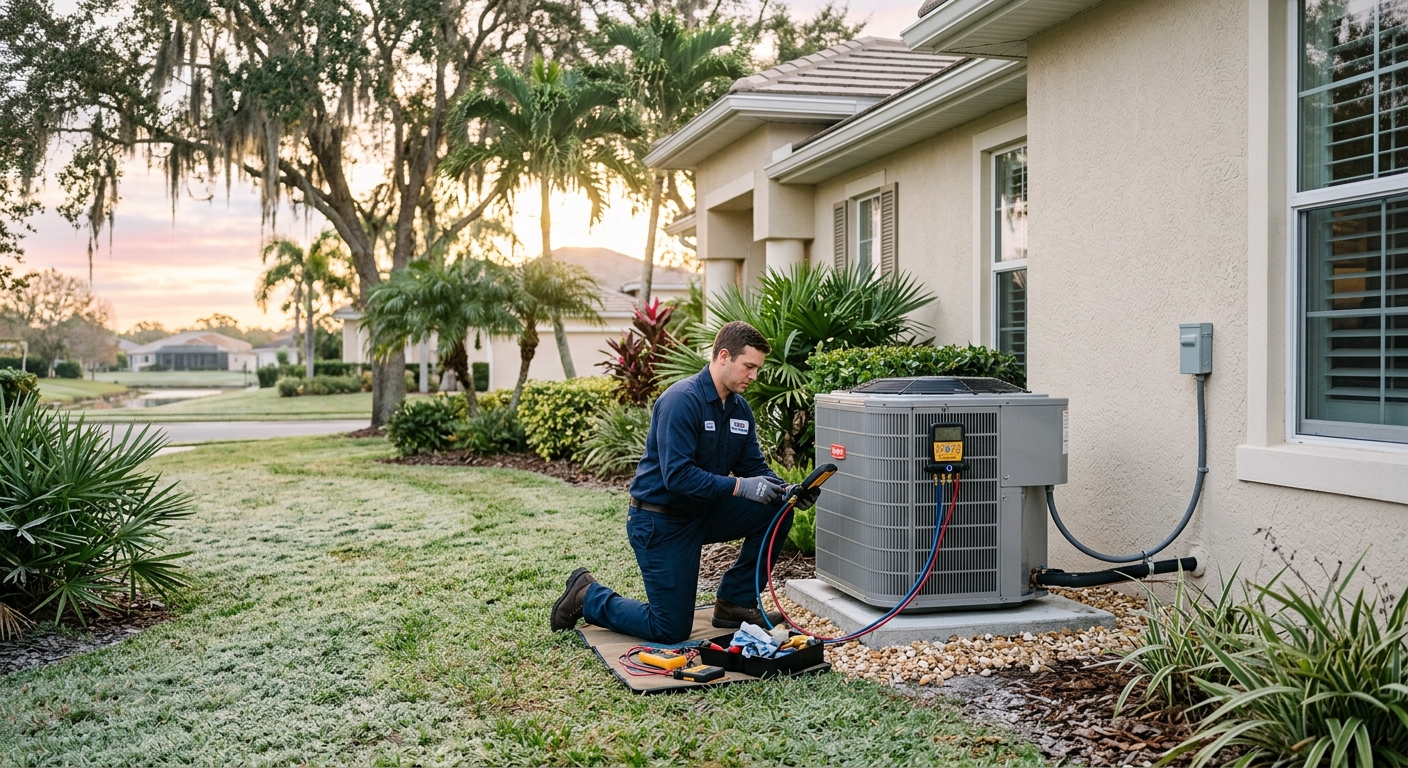
Outdoor units should have clear airflow and should not be blocked by shrubs, fencing or debris. After tropical weather, have the unit checked if it was exposed to flooding, impact damage or prolonged power irregularities. Do not restart flood-exposed HVAC equipment until a qualified professional determines that it is safe.
Drainage is another local concern. Florida air conditioners remove substantial moisture, and clogged condensate lines can cause water damage or trigger a safety switch. Drain issues alone rarely justify replacement, but repeated moisture problems may reveal installation, maintenance or airflow deficiencies that should be addressed with any new system.
Does the type of refrigerant affect whether I should replace my AC?
It can influence the decision, but refrigerant type should not be the only factor. R-22 production and import ended in the United States in 2020, although reclaimed supplies may still be used for service. Repairing a major leak in an older R-22 system can therefore be less practical than replacing it.
R-410A systems remain serviceable, and owning one does not mean it must be replaced. New residential equipment is transitioning to lower-global-warming-potential refrigerants such as R-32 and R-454B. These systems require compatible equipment, components and service procedures, which is one reason replacement planning should be handled by a trained HVAC contractor.
What is the best time of year to replace an AC in Florida?
The best time is before reliability becomes an emergency. Brevard County can experience cooling weather during much of the year, but demand is often highest during hot, humid stretches. Planning replacement while the existing system still operates gives you more time to review equipment options, ask questions and address duct or electrical work.
If your AC is aging but functional, schedule an evaluation before summer or ahead of an extended trip, a home renovation or hurricane season preparations. Do not delay if the system repeatedly trips breakers, smells burnt, leaks refrigerant, has electrical damage or was exposed to floodwater.
What should a contractor evaluate before recommending replacement?
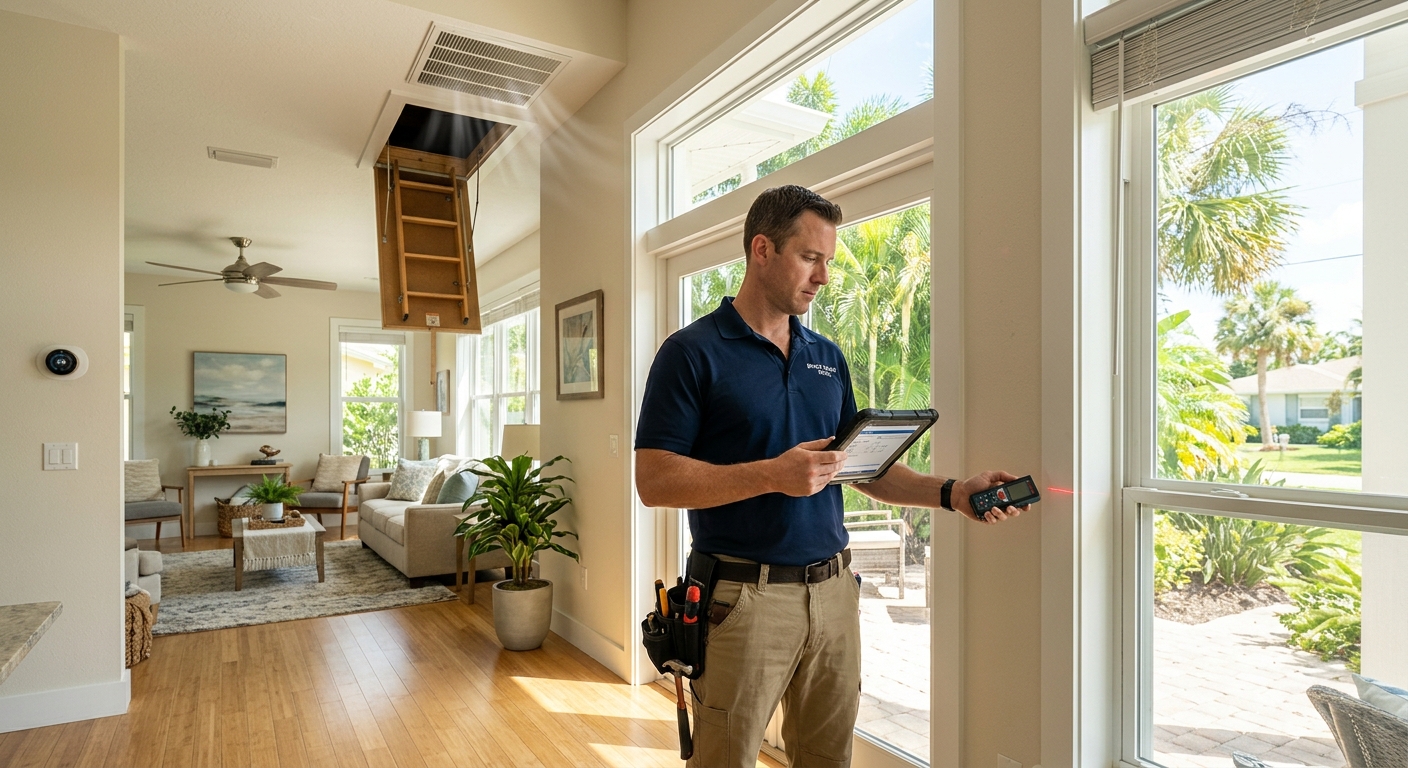
A replacement estimate should involve more than reading the model number on the outdoor unit. The contractor should assess the house and installation conditions that determine comfort, moisture removal and equipment life.
A cooling-load calculation based on the home's size, windows, orientation, insulation and other heat-gain factors
Duct sizing, leakage, insulation, return-air capacity and airflow
Indoor and outdoor equipment compatibility
Condensate drainage and overflow protection
Electrical disconnects, breakers and wiring requirements
Outdoor-unit placement, service access and exposure to coastal conditions
Permit and inspection requirements for the applicable Brevard County municipality or jurisdiction
Ask for an itemized scope explaining what is included, which efficiency ratings apply to the matched system and whether duct, electrical or structural work is separate. You can also review Aquila's approach to AC Installation before scheduling an assessment.
When should I call an HVAC professional?
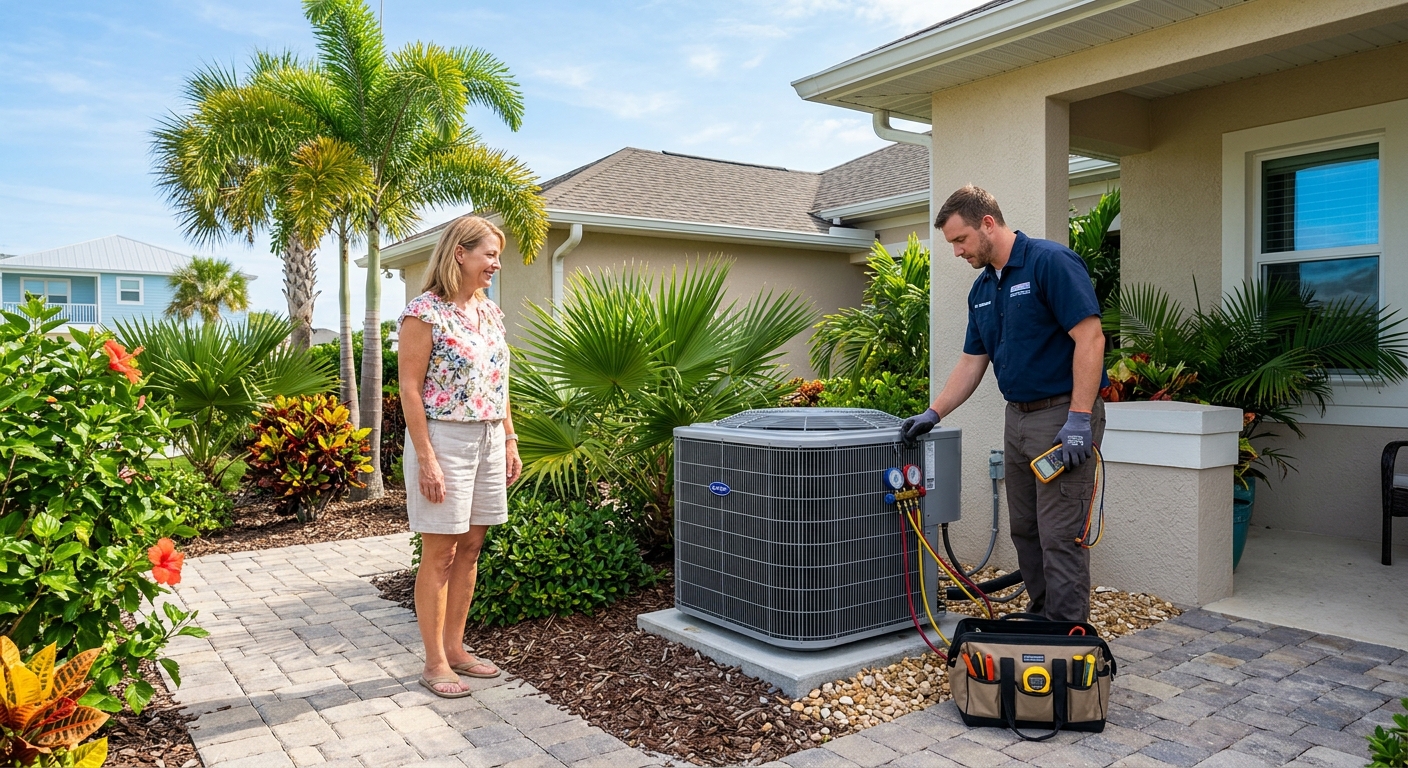
Call for professional service when the AC cannot maintain temperature, cycles repeatedly, produces unusual sounds or odors, leaks water, freezes at the coil or causes an unexplained increase in energy use. Shut the system off and seek prompt help if you notice burning odors, sparking, smoke, a repeatedly tripping breaker or flood exposure. Refrigerant circuits and electrical components should not be handled as do-it-yourself repairs.
For an older but operating system, request a condition assessment rather than waiting for a breakdown. A qualified technician can measure temperature change, airflow, electrical performance and system operation, inspect for corrosion or leakage, and explain which findings support repair or replacement.
How can Aquila Air & Heating help me decide?
Aquila Air & Heating is a family-run company serving Brevard County and the Space Coast. Our team can diagnose your current equipment, discuss repair and replacement paths, and prepare an installation proposal based on the needs of your home rather than age alone.
Aquila is Florida's First HVAC Company Offering a Lifetime Warranty. Homeowners considering qualifying equipment can learn about the Lifetime Warranty; always review the written warranty terms, eligibility requirements and exclusions before making a purchase decision.
If your AC is unreliable, struggling with humidity or approaching the end of its practical service life, contact Aquila Air & Heating to schedule an evaluation. We will help you understand the condition of the system and make an informed decision before a Brevard County cooling problem becomes an emergency.