How Much Does a New AC Cost in Florida? (2026 Guide)
A practical 2026 guide to new AC prices in Brevard County, with realistic ranges and advice for comparing installation quotes.
In 2026, a new central AC or heat pump system in Florida commonly costs about $7,000 to $14,000 installed, while straightforward projects may cost less and larger or more complex installations can exceed $20,000. The final price depends on system size, efficiency, equipment configuration, duct condition, electrical work, permits and installation requirements. Brevard County homeowners need an on-site load evaluation and written proposal to receive an accurate price.
What is the average cost of a new AC system in Florida?
For budgeting purposes, many Florida homeowners can expect the following broad installed price ranges in 2026:
- Basic replacement using existing serviceable ducts: approximately $5,500 to $9,000
- Mid-range central heat pump or AC system: approximately $7,000 to $14,000
- High-efficiency, variable-speed or communicating system: approximately $12,000 to $20,000 or more
- New ductwork or extensive duct replacement: often an additional $3,000 to $10,000 or more
These figures are planning ranges, not fixed quotes. The new AC cost Florida homeowners pay can vary considerably between a small inland condominium, a typical Palm Bay home and a larger coastal property in Satellite Beach or Cocoa Beach.
Florida homes generally use heat pumps, which provide cooling and electric heating in one system. Some properties use a straight-cool air conditioner paired with electric resistance heat, while others have packaged units or ductless systems. Because these configurations require different equipment and labor, comparing only the advertised equipment price can be misleading.
What is included in an installed AC price?
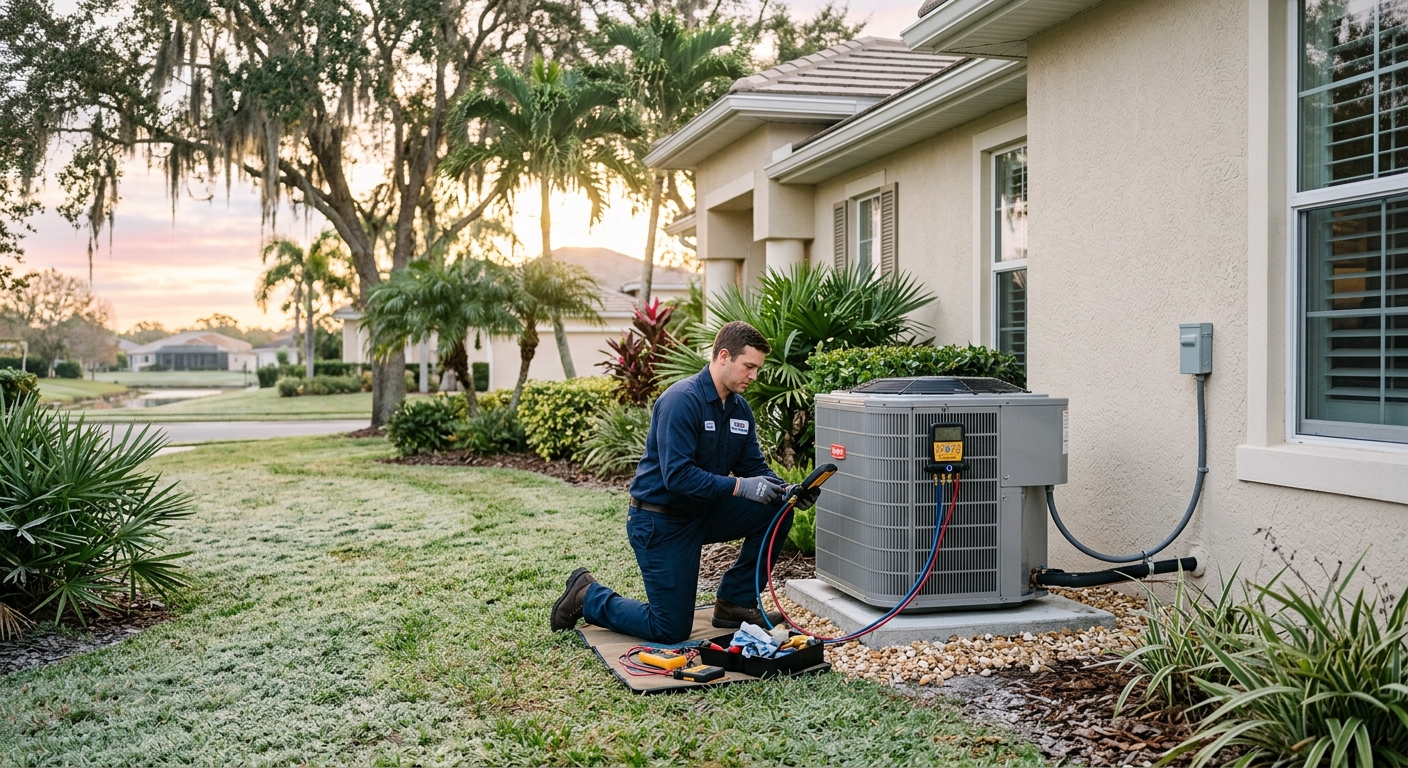
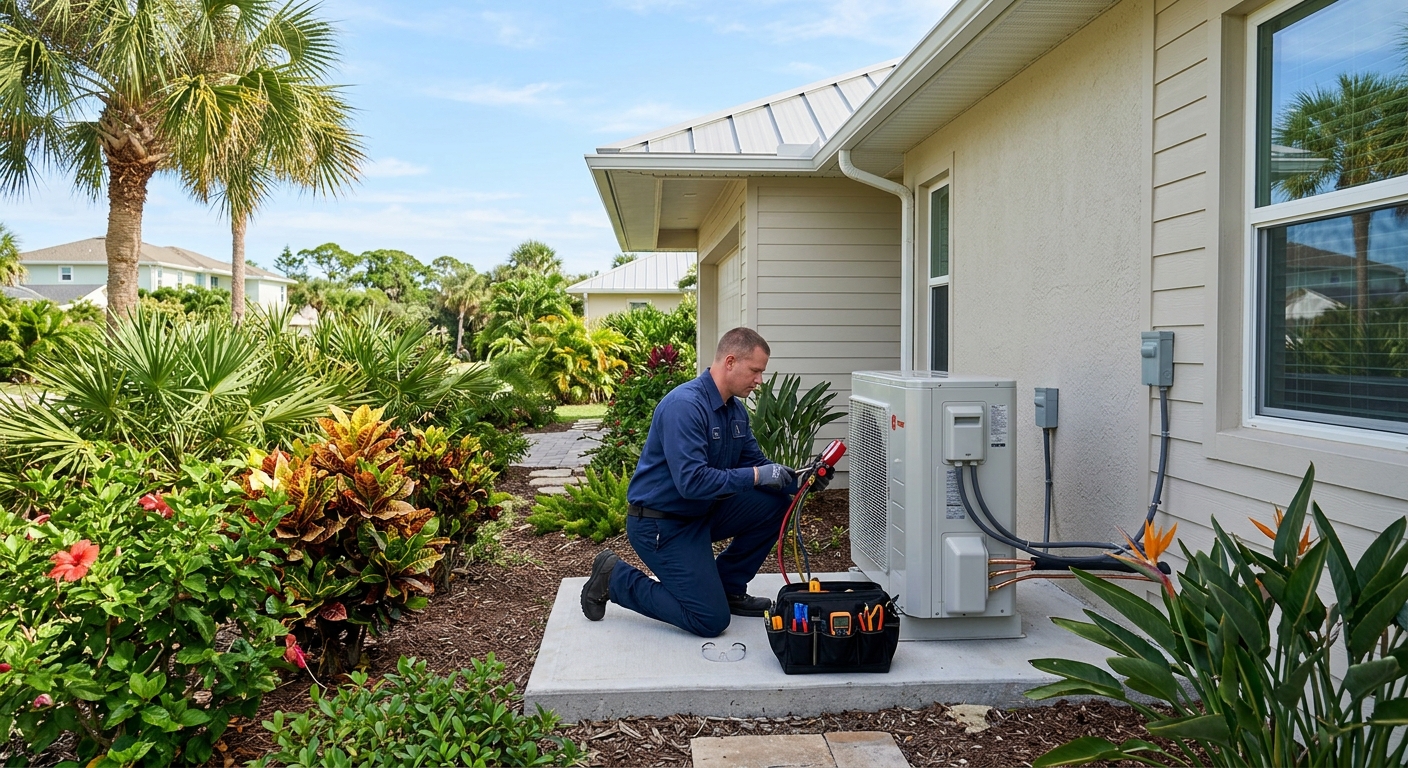
A complete replacement price should cover more than the outdoor unit. Depending on the project, a professional installation may include the outdoor condenser or heat pump, indoor air handler, matched evaporator coil, thermostat, refrigerant piping connections, drain components, equipment pad or mounting hardware, electrical connections, startup testing and disposal of the old system.
The proposal should also identify permit costs, any needed electrical upgrades, duct modifications and accessories. Ask whether the quoted indoor and outdoor components form an approved matched system and whether the contractor will document startup readings. An inexpensive quote may not be a good value if essential work appears later as an unexpected charge.
Which factors have the biggest effect on AC replacement cost?
How does system size affect the price?
Residential cooling capacity is usually expressed in tons, with one ton equal to 12,000 BTUs per hour. Larger systems generally cost more, but bigger is not automatically better. An oversized system may cool the house quickly without running long enough to remove sufficient humidity, leaving a Brevard home cool but clammy.
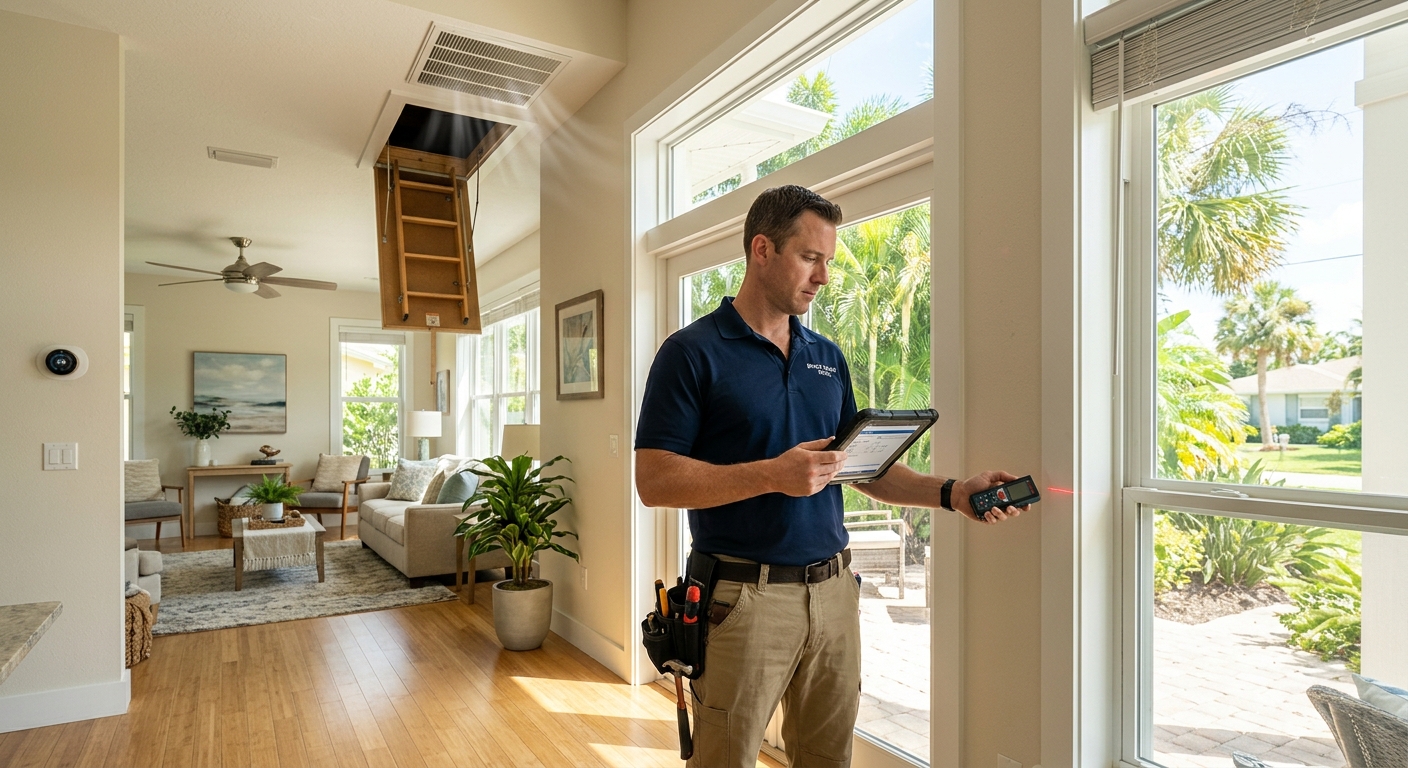
A contractor should evaluate more than the square footage. Insulation, window area, ceiling height, orientation, air leakage, shade, occupancy and duct location all influence the cooling load. For major replacements, ask whether the recommended capacity is supported by a Manual J load calculation or another recognized sizing method.
Does a higher SEER2 rating save money?
SEER2 is a seasonal measure of cooling efficiency. Higher-efficiency equipment may reduce electricity use under comparable conditions, but it also tends to cost more initially. The financial value depends on your current system, thermostat habits, electric rates, house efficiency and how long you expect to own the property.
Brevard County's long cooling season can make efficiency upgrades more useful than they would be in a mild climate. Even so, the highest rating is not always the best investment. Request estimated operating costs for multiple equipment options rather than choosing solely by the SEER2 number.
Why do variable-speed systems cost more?
Single-stage equipment generally operates at one main capacity. Two-stage and variable-capacity systems can adjust output as conditions change. Longer cycles at lower output may improve temperature consistency, humidity control and sound levels, especially during Florida's humid shoulder seasons.
Variable-speed systems contain more advanced controls and usually have a higher purchase price. Ask about repair costs, thermostat compatibility, available service support and the comfort benefits for your particular home before deciding.
Can existing ductwork be reused?
Ductwork can often be reused if it is correctly sized, reasonably airtight, clean and in sound condition. However, crushed flex duct, disconnected runs, undersized returns and leakage in a hot attic can reduce comfort and waste energy even after new equipment is installed.
A contractor should inspect accessible ducts and measure airflow or static pressure when appropriate. Needed repairs may add to the project price, but installing premium equipment on a poor duct system can prevent that equipment from performing as intended.
Will electrical or structural work increase the cost?
A replacement may require a new disconnect, circuit, breaker, surge protection, drain correction, equipment stand or condenser pad. Coastal properties may also need mounting and anchoring appropriate for local wind and exposure conditions. If the new air handler has different dimensions, access platforms or closet framing may need adjustment.
These items are site-specific. They should be identified during an in-person assessment rather than assumed from a telephone price.
Do permits affect AC installation prices in Brevard County?
Mechanical replacements generally require permits and inspections through the authority responsible for the property. That may be Brevard County or a city such as Melbourne, Titusville, Rockledge, Cocoa, Palm Bay or West Melbourne. Requirements and fees can differ by jurisdiction and project scope.
A licensed contractor should confirm the applicable permit, equipment certification, electrical requirements, condensate management and wind-related installation details. Permit fees are only one portion of the total cost, but properly permitted work helps document that the installation was reviewed for applicable code requirements.
How do Florida's newer refrigerants affect 2026 prices?
Federal refrigerant rules have changed the residential equipment market. Manufacturers stopped producing or importing many categories of new R-410A residential equipment after the applicable transition dates, while existing R-410A systems can still be serviced. Many current systems use lower-global-warming-potential refrigerants such as R-32 or R-454B.
These refrigerants are classified as mildly flammable and require compatible equipment, installation practices and technician training. A homeowner should not select equipment based only on refrigerant type. Ask whether replacement components are locally available, whether the contractor is trained for the proposed system and how future service will be handled.
Is it cheaper to replace only the outdoor AC unit?
Replacing one component may appear cheaper, but the indoor coil and outdoor unit must be compatible. Mismatched equipment can reduce performance, complicate code compliance and affect manufacturer warranty eligibility. If an older indoor unit uses a different refrigerant or cannot meet the new system's airflow requirements, a complete matched replacement may be necessary.
There are situations in which replacing a failed component is reasonable, particularly when the rest of the system is relatively new and a properly matched part is available. Have a licensed HVAC professional verify the model numbers, refrigerant, capacity and approved equipment combination before authorizing the repair.
Should you repair your current AC or replace it?
Replacement deserves consideration when the system has repeated failures, severe coil corrosion, an unavailable major component, high operating costs or difficulty maintaining temperature and humidity. Age matters, but it should not be the only deciding factor. A well-maintained older unit with a minor repair may still have useful service life.
Compare the repair cost with the price of a replacement, recent repair history and expected efficiency improvement. Also consider whether the existing system is correctly sized and whether the ducts are contributing to comfort problems. If a repair involves refrigerant, compressors, electrical modifications or sealed-system work, call a licensed professional rather than attempting it yourself.
How can homeowners compare AC quotes accurately?
Ask each contractor to quote a clearly defined scope. Proposals are easier to compare when they include:
- Indoor and outdoor model numbers
- Cooling capacity and SEER2 rating
- Single-stage, two-stage or variable-capacity operation
- Duct repairs and airflow improvements
- Thermostat and accessory details
- Electrical, drain, pad and equipment-mounting work
- Permit and disposal fees
- Manufacturer and contractor warranty terms
- Required registration and maintenance conditions
- Estimated schedule and payment terms
Be cautious about choosing a system from a price given without inspecting the home. Accurate sizing, attic conditions, electrical capacity and equipment access cannot always be determined from square footage or photographs.
How can you control the cost without sacrificing installation quality?
Request good, better and best equipment options sized for the same cooling load. A well-installed mid-efficiency system can be a better value than high-end equipment connected to leaking ducts. Address major air leaks, damaged ductwork and inadequate attic insulation where those issues are documented.
Ask about current manufacturer promotions, utility programs and financing, but verify eligibility and expiration dates directly. Incentives can change, and financing reduces the upfront payment rather than the total purchase price. Review the annual percentage rate, fees and total amount paid before signing.
Plan replacement before an emergency when possible. During a no-cooling failure, homeowners have less time to compare equipment, inspect ducts and review the full scope.
When should you call an AC installation professional?
Call a licensed HVAC contractor when your system cannot maintain the set temperature, runs continuously, trips breakers, leaks water, produces unusual odors or needs repeated refrigerant-related repairs. Shut the system off and seek prompt help if you notice burning smells, damaged wiring, heavy water leakage near electrical components or loud mechanical failure.
For a planned replacement, schedule an assessment before the hottest part of the year. Aquila Air & Heating can inspect your Brevard County home, evaluate sizing and duct conditions, and prepare a written proposal for AC Installation. Homeowners can also review the company's Lifetime Warranty information, including its stated terms and homeowner responsibilities.
Aquila Air & Heating is a family-run Space Coast company and positions itself as Florida's First HVAC Company Offering a Lifetime Warranty. Contact the team for a site-specific estimate and compare the recommended system, installation scope and warranty documents before making your decision.