Heat Pump Maintenance Tips for Brevard County Homeowners
Learn how to maintain a heat pump in Brevard County’s humid, coastal climate, including filter, drain, outdoor-unit, and seasonal service tips.
The most important heat pump maintenance tips for Brevard County homeowners are to inspect the filter monthly, keep the outdoor unit clear, watch the condensate drain, and schedule regular professional service. If your system is leaking, freezing, making unusual noises, or no longer controlling indoor temperature, arrange professional heat pump repair instead of relying on routine maintenance alone.
Why do Brevard County heat pumps need regular maintenance?
A heat pump works as both an air conditioner and a heater, so it may operate during nearly every month of the year. Brevard County’s long cooling season, high humidity, airborne debris, heavy rain, and coastal salt exposure can increase wear on coils, electrical components, drain lines, and outdoor cabinets.
Maintenance helps the system move air and transfer heat without unnecessary strain. It also gives a technician an opportunity to identify loose electrical connections, drainage problems, deteriorating components, and other developing issues before they cause a breakdown.
Maintenance cannot prevent every repair or restore a system with a failed component. However, keeping the equipment clean and addressing small problems promptly can support reliable operation, consistent comfort, and efficient performance.
How often should a heat pump be maintained in Florida?
Homeowners should inspect their air filter every month and replace or clean it according to the filter and equipment manufacturers’ instructions. Homes with pets, ongoing construction, frequent door traffic, or occupants with respiratory sensitivities may need more frequent filter changes.
Professional service should be performed at least as often as the equipment manufacturer recommends. Because Space Coast heat pumps operate heavily during the cooling season and may also provide winter heat, many local homeowners benefit from service before peak summer demand and another check before heating season.
A professional air conditioning maintenance visit can cover the cooling-side components of a heat pump, but homeowners should confirm that the appointment includes the controls and heating functions specific to heat pump operation.
What heat pump maintenance can homeowners safely do?
Check the air filter every month
A dirty filter reduces airflow and can make it harder for the system to heat, cool, and remove humidity. Depending on the equipment, the filter may be located at a central return grille, inside an air handler compartment, or at multiple return grilles.
Use the filter size and type recommended for your system. A filter with a very high efficiency rating is not automatically better if the equipment and duct system cannot accommodate its airflow resistance. Ask an HVAC professional before changing to a substantially different filter.
Keep supply and return vents open
Make sure furniture, rugs, curtains, and stored items are not blocking return grilles or supply registers. Closing multiple vents in unused rooms can increase duct pressure and reduce system airflow rather than delivering the expected savings.
Look for unusually weak airflow from one or more registers. A single weak room could indicate a duct issue, while weak airflow throughout the house may point to a clogged filter, blower problem, dirty coil, or another system fault.
Clear debris from the outdoor unit
Leaves, grass clippings, mulch, palm debris, and windblown material can collect around the outdoor coil. Turn the system off before removing loose surface debris, and maintain the clearance specified by the equipment manufacturer. Avoid placing shrubs, fencing, or storage items where they restrict airflow or technician access.
Do not use a pressure washer on the coil. High pressure can bend delicate fins and push water into electrical areas. Deep coil cleaning is best left to a technician who can use suitable cleaners, water pressure, and procedures for the equipment.
Watch the condensate drain
During Brevard County’s humid season, a heat pump can remove a substantial amount of moisture from indoor air. Algae, sediment, or debris in the condensate line can cause water to back up, activate a safety switch, or overflow near the air handler.
Periodically look for water around the indoor unit, staining below the drain pan, or a thermostat that has gone blank unexpectedly. Follow the equipment or installer’s instructions for homeowner drain care. Avoid pouring an unapproved chemical into the line because it may damage components or react with residue already in the drain.
Use reasonable thermostat settings
Large, repeated thermostat changes can cause long run times and may activate auxiliary heat during cooler weather. Choose a comfortable setting and make gradual adjustments. If you use a programmable or smart thermostat, verify that it is configured for a heat pump rather than a conventional furnace and air conditioner.
Do not switch to emergency heat unless the heat pump is malfunctioning or a technician instructs you to do so. Emergency heat usually relies on electric resistance heating, which can consume significantly more electricity.
How should coastal homeowners protect an outdoor heat pump?
Properties near the Atlantic Ocean, Indian River Lagoon, Banana River, or other saltwater environments may experience greater salt exposure. Salt deposits can accelerate corrosion on metal cabinets, fasteners, coil surfaces, and electrical connections. The effect varies with distance from the water, wind direction, landscaping, equipment placement, and the unit’s materials.
Inspect the cabinet for spreading rust, deteriorated fasteners, damaged coil fins, or peeling protective finishes. Follow the manufacturer’s approved coastal cleaning guidance rather than applying household coatings or chemicals. A technician can evaluate whether corrosion is cosmetic or is beginning to threaten the coil, cabinet, or electrical system.
After tropical storms or severe thunderstorms, check the area for branches, standing water, shifted equipment, or storm debris. Do not operate a unit that appears displaced, flooded, or electrically damaged. If floodwater reached the equipment, leave it off until it has been professionally evaluated.
What does professional heat pump maintenance include?
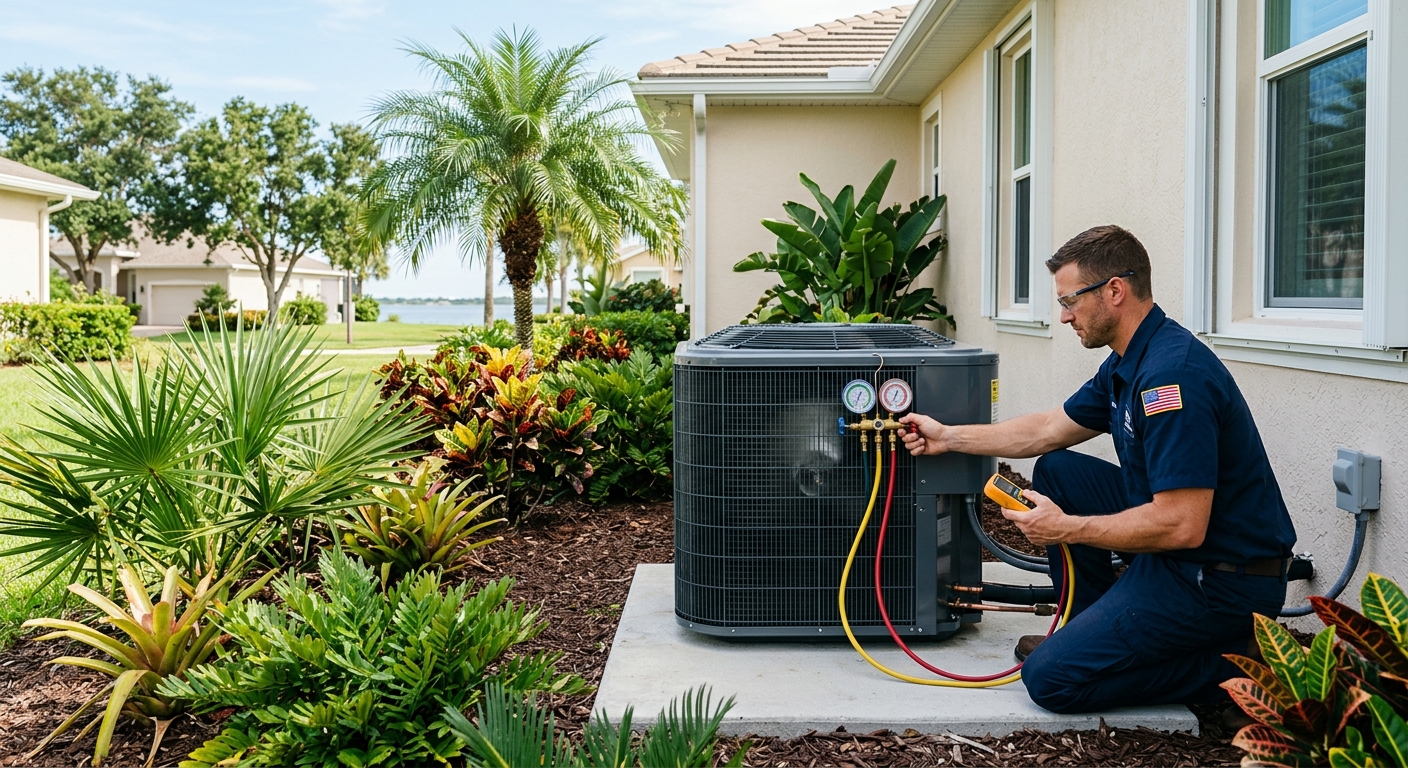
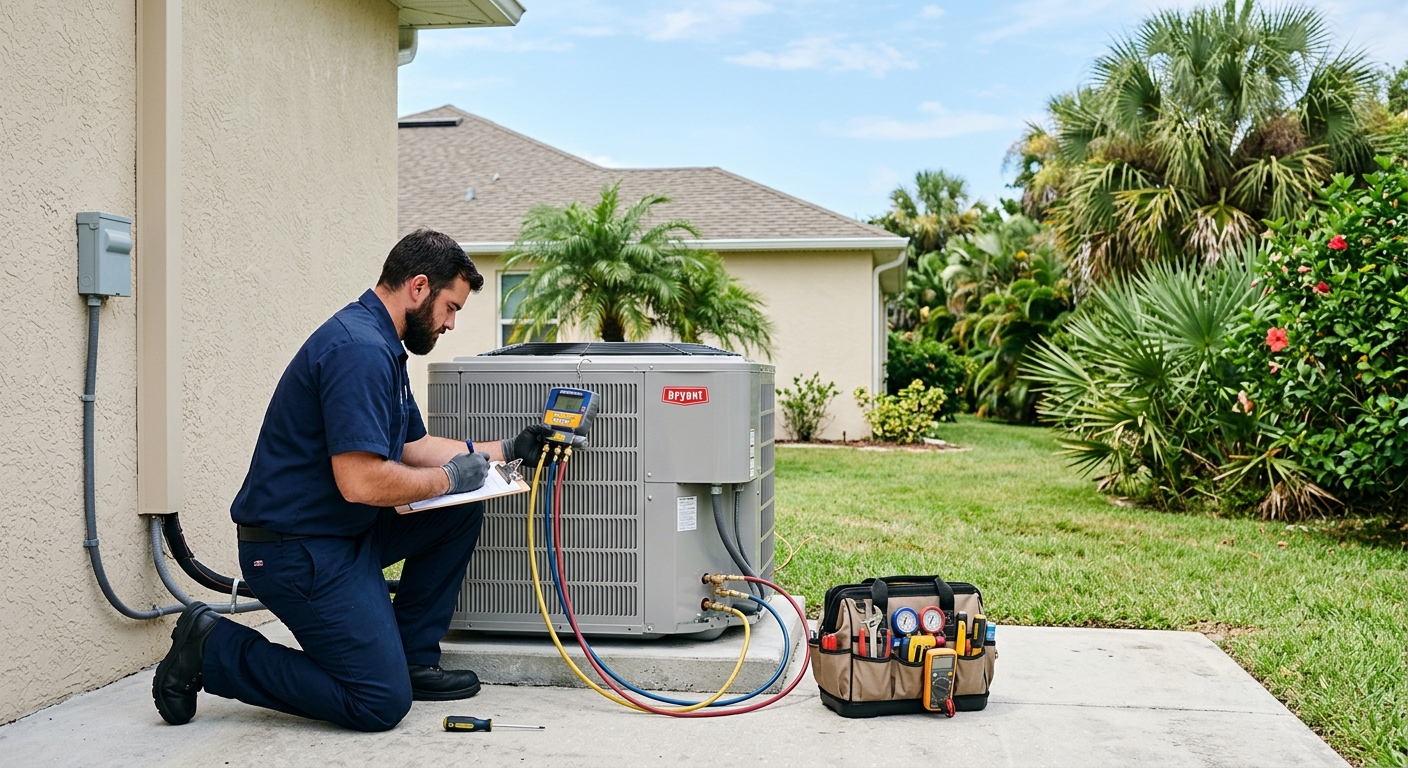
The exact checklist depends on the system and its condition, but a thorough visit commonly includes checking the filter and airflow, inspecting indoor and outdoor coils, clearing or evaluating the condensate system, testing thermostat operation, and examining accessible electrical connections and components.
The technician may also measure operating temperatures and pressures, inspect the blower assembly, check the outdoor fan, test heating and cooling modes, and verify that safety controls respond correctly. Refrigerant should not need routine topping off in a sealed system. A low charge generally indicates a leak or another issue that should be diagnosed rather than repeatedly refilled.
Ask for findings and recommendations in plain language. If a component is worn but still operating, the technician should explain the urgency, likely consequences, and available options so you can make an informed decision.
Which warning signs mean maintenance is not enough?
Call an HVAC professional when you notice symptoms that indicate an active mechanical, electrical, refrigerant, airflow, or drainage problem. Warning signs include:
- The heat pump runs continuously but does not reach the thermostat setting.
- Ice forms on the indoor or outdoor coil and does not relate to a brief normal defrost cycle.
- The system repeatedly starts and stops within short periods.
- You hear grinding, screeching, buzzing, rattling, or other new sounds.
- Water is pooling around the air handler or appearing on ceilings and walls.
- The circuit breaker trips repeatedly.
- Airflow becomes noticeably weaker throughout the home.
- Energy use rises sharply without a clear weather or household explanation.
- You smell burning, see smoke, or notice damaged wiring.
Turn the system off and seek prompt service if there is smoke, a burning odor, exposed electrical damage, severe water leakage, or repeated breaker trips. Resetting a breaker over and over can create a safety risk and does not correct the underlying fault.
Is frost on a Brevard County heat pump normal in winter?
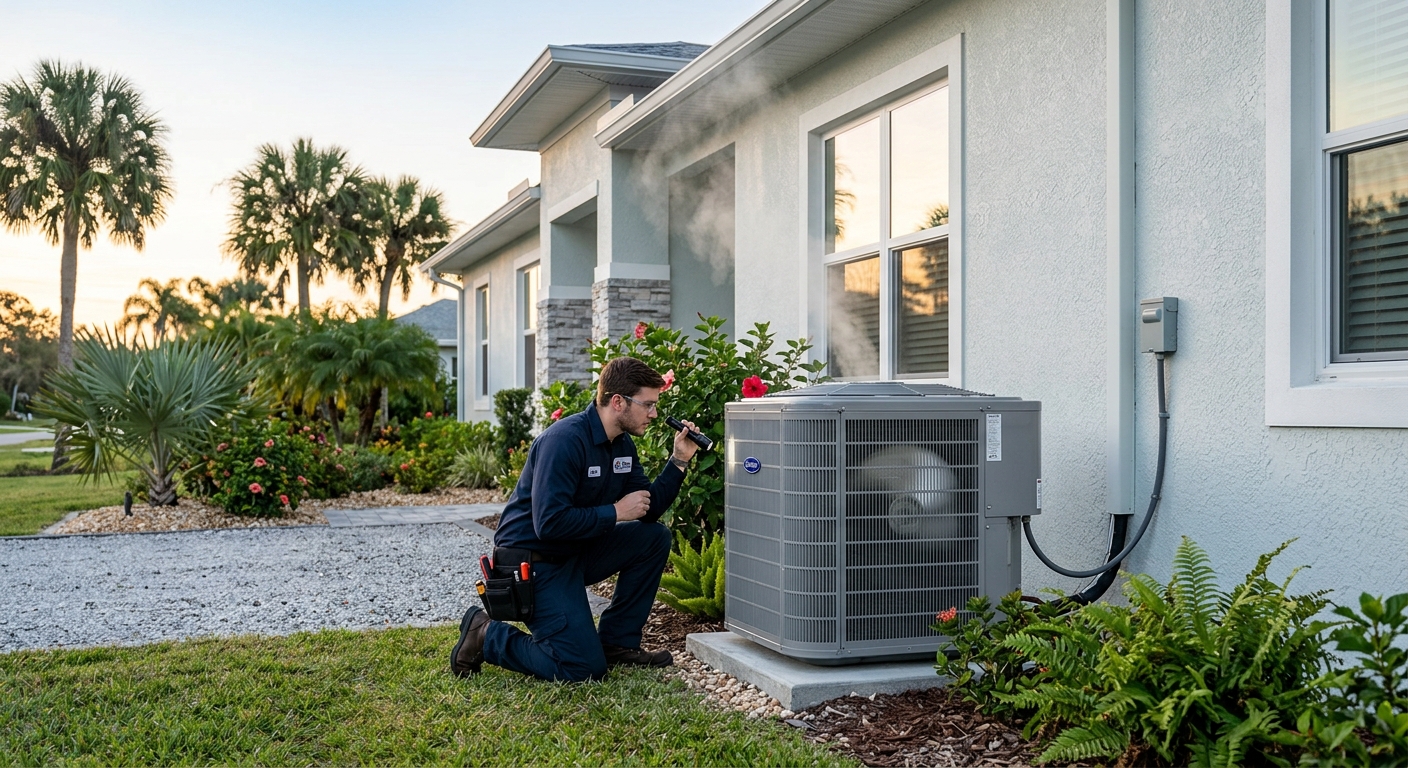
A light layer of frost can develop on the outdoor coil while a heat pump is heating the home on a cool, damp morning. The system should periodically enter defrost mode to melt it. During defrost, the outdoor fan may stop, you may hear a change in operation, and steam may rise from the unit. Steam during a normal defrost cycle is not the same as smoke.
Call for service if the outdoor unit becomes encased in ice, the ice does not clear, or the system cannot maintain indoor comfort. Possible causes include restricted airflow, a defrost-control problem, an outdoor fan issue, low refrigerant, or a faulty sensor. Do not chip ice from the coil because the fins and refrigerant tubing can be damaged.
Can maintenance lower heat pump operating costs?
Maintenance can help a heat pump operate closer to its intended performance by supporting airflow, heat transfer, drainage, and correct controls. Actual electric bills still depend on weather, thermostat settings, insulation, duct leakage, equipment efficiency, home size, utility rates, and household habits.
If you are evaluating operating expenses or comparing a heat pump with other systems, review how heat pumps may affect electric bills in Brevard County. A sudden unexplained increase is worth investigating, especially when it occurs with longer run times, comfort problems, or frequent auxiliary heat use.
When should an older heat pump be replaced instead of maintained?
Age alone does not determine whether replacement is necessary. Consider the system’s repair history, corrosion, refrigerant type, efficiency, comfort performance, installation quality, and the cost and availability of parts. A repair may make sense for an otherwise dependable system, while repeated major failures can make replacement more practical.
If replacement becomes appropriate, a contractor should calculate the required capacity rather than automatically installing the same size. Proper sizing, duct condition, drainage, and installation practices all influence comfort and humidity control. Homeowners can review Aquila’s heat pump installation services to understand the replacement process.
Who can maintain a heat pump in Brevard County?
Aquila Air & Heating provides heat pump maintenance and repair for homeowners across Brevard County and the Space Coast. Our team can inspect your system, explain any problems found, and recommend practical next steps based on the equipment’s condition.
Aquila is Florida's First HVAC Company Offering a Lifetime Warranty. Warranty availability, eligibility, coverage, and obligations depend on the applicable written terms, so review the Lifetime Warranty information and ask our team how it applies to a specific installation.
Contact Aquila Air & Heating to schedule heat pump service before peak weather arrives or whenever you notice a change in comfort, airflow, drainage, sound, or energy use.