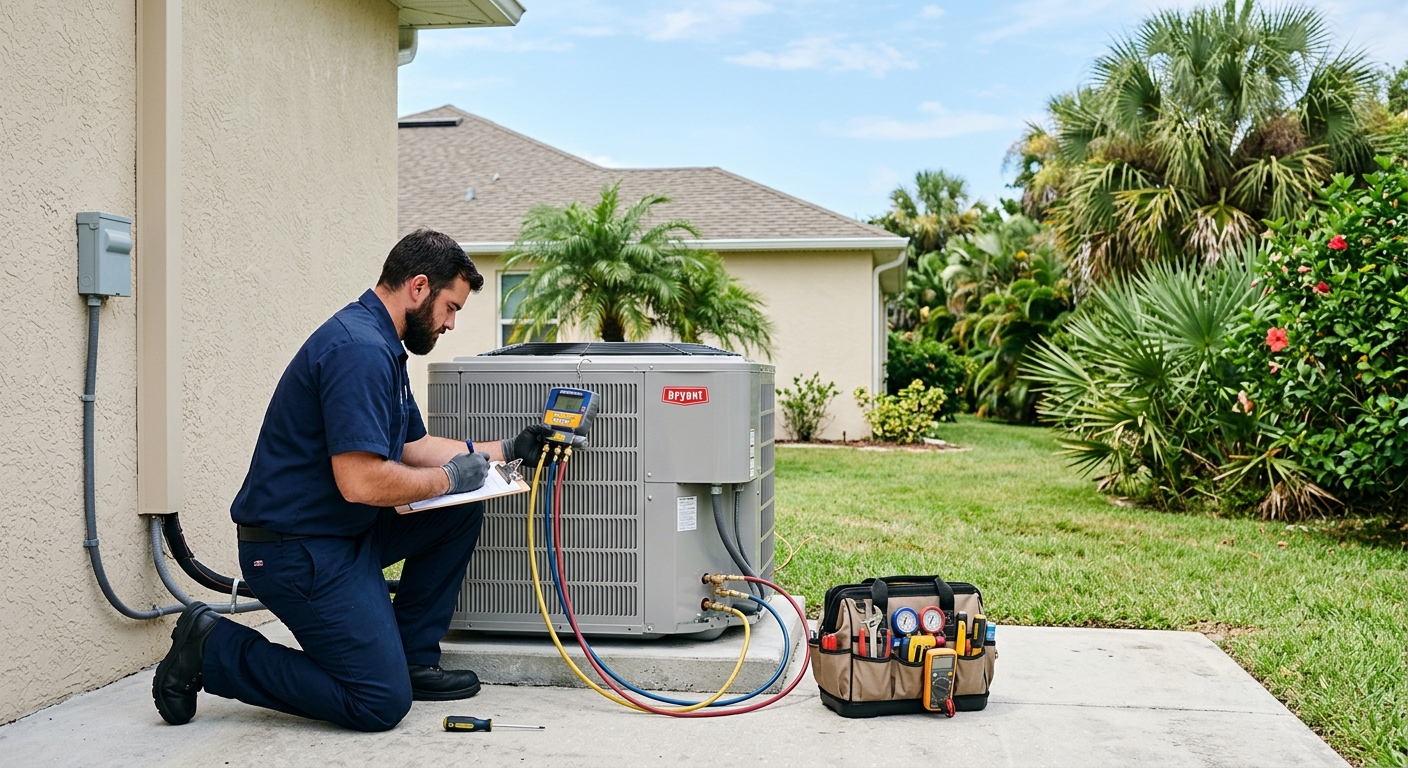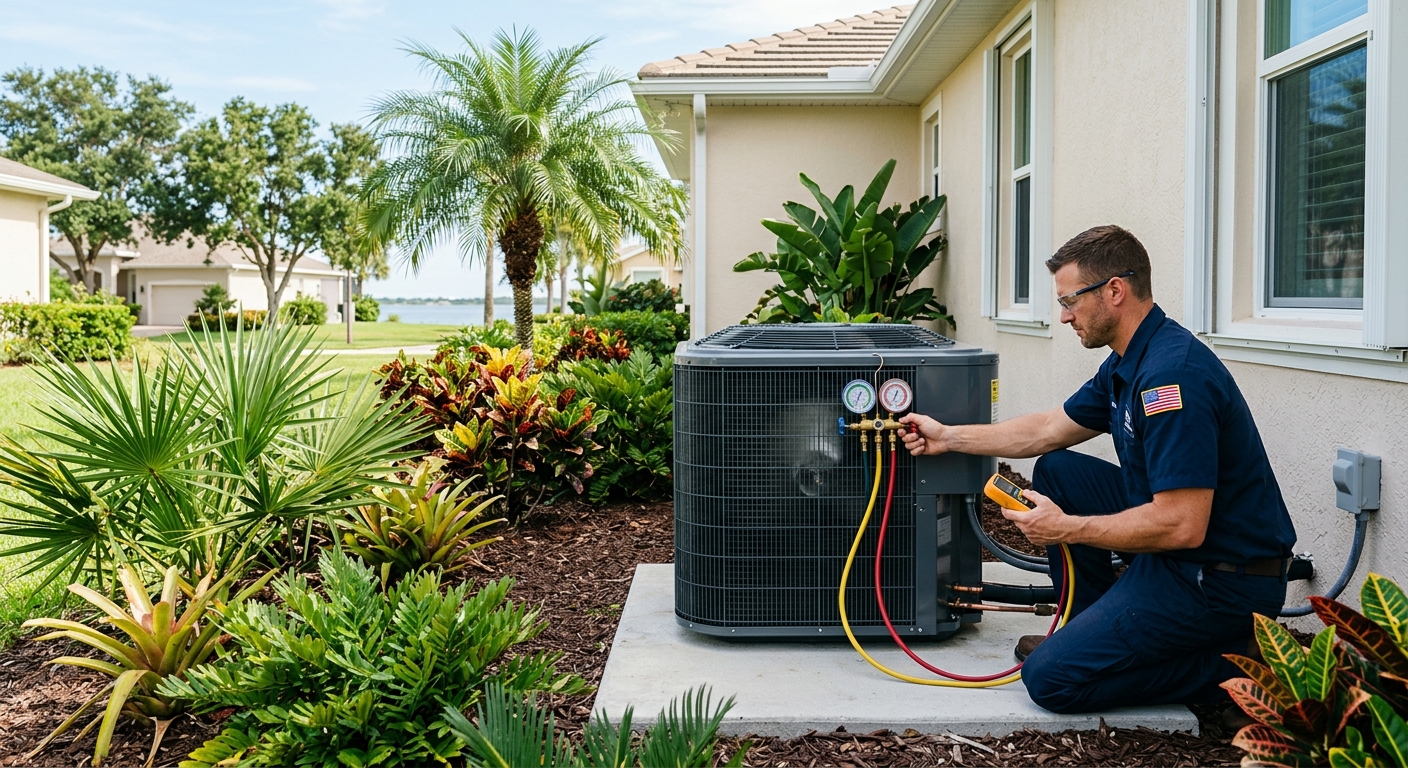
How Do Heat Pumps Work in Florida's Mild Winters?
Learn how a heat pump keeps your Brevard County home warm, why auxiliary heat raises energy use, and which winter warning signs require service.
A heat pump warms a Florida home by moving heat from the outdoor air indoors rather than creating all its heat with electric resistance coils. Because Brevard County winters are usually mild, a properly sized heat pump can provide efficient heating during most cool weather, with auxiliary heat available when conditions or system demands require it.
The same equipment also reverses direction to cool your home in summer. That ability to provide both heating and cooling makes heat pumps particularly practical for the Space Coast's long cooling season and relatively short heating season.
How does a heat pump produce heat when it is cool outside?
Even cool outdoor air contains thermal energy. In heating mode, cold refrigerant flows through the outdoor coil and absorbs some of that energy. The compressor then raises the refrigerant's pressure and temperature before sending it to the indoor coil, where the captured heat is released into your home's air.
A blower moves the warmed air through the duct system. After releasing its heat, the refrigerant returns outdoors and repeats the cycle. A component called a reversing valve changes the refrigerant's direction so the same system can switch between heating and cooling.
This process is different from a furnace burning fuel or a portable electric heater converting electricity directly into heat. Under suitable conditions, a heat pump can deliver more heat energy than the electrical energy it consumes because much of the heat is being transferred rather than generated.
Homeowners who need maintenance, diagnosis, or replacement guidance can review Aquila's heat pump services in Brevard County.
Why do heat pumps work well during Brevard County winters?
Heat pumps generally operate more efficiently when outdoor temperatures are moderate. That matches the typical winter pattern in Melbourne, Palm Bay, Rockledge, Cocoa, Titusville, and other Space Coast communities, where many heating days are cool rather than severely cold.
During an ordinary Brevard County winter day, the outdoor unit can usually collect enough heat to warm the home without relying heavily on electric resistance heat. Actual performance depends on the equipment's condition, capacity, efficiency rating, ductwork, insulation, thermostat settings, and outdoor temperature.
A heat pump may run for longer cycles than some homeowners expect. Long, steady operation is not automatically a problem; it can maintain an even indoor temperature more efficiently than repeated short cycles. The air from a heat pump may also feel warm rather than intensely hot when compared with furnace air.
What happens when temperatures drop during a Florida cold snap?
A heat pump continues extracting outdoor heat as temperatures fall, but its heating capacity and efficiency generally decrease. If the system cannot meet the thermostat's demand by itself, controls may activate auxiliary heat, often called AUX heat. In many all-electric Florida systems, this backup comes from electric resistance heat strips inside the air handler.
Auxiliary heat can be useful, but it consumes substantially more electricity than normal heat-pump operation. It may come on briefly during a cold morning, when the thermostat temperature is increased several degrees at once, or while the system completes a defrost cycle. Brief AUX operation is not necessarily evidence of a malfunction.
Emergency Heat is different. On many thermostats, that setting shuts off normal compressor-based heating and relies on the backup heat source. Homeowners generally should not select Emergency Heat simply because it is cold outside. Use it according to the equipment manufacturer's instructions or when an HVAC professional advises it, such as when the outdoor unit has failed.
Why does the outdoor unit run a defrost cycle in winter?
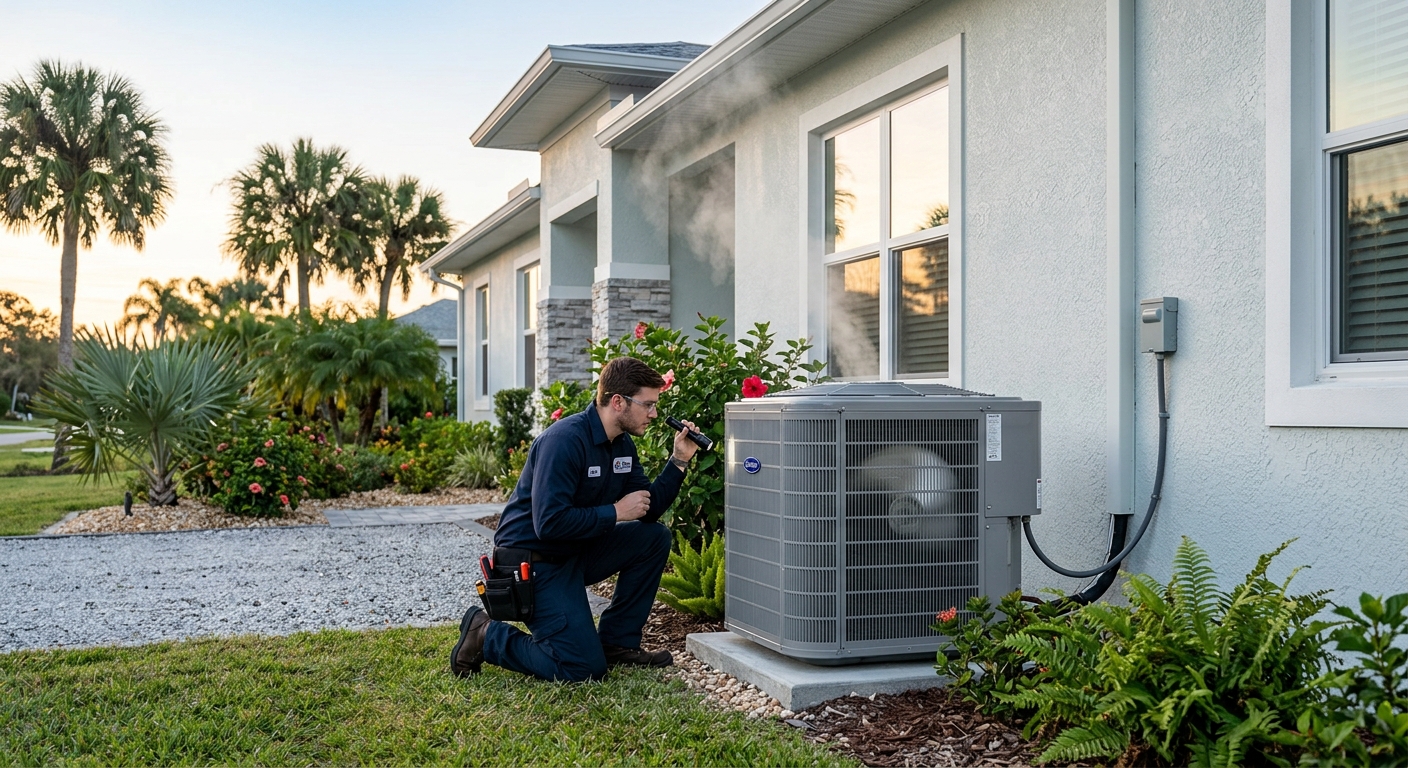
The outdoor coil becomes cold while absorbing heat, so moisture in the air can freeze on it. The system periodically enters defrost mode to melt this frost and preserve airflow. During defrost, the outdoor fan may stop, the operating sound may change, and steam may rise from the unit. These can all be normal.
Some systems energize auxiliary heat during defrost to keep cool air from reaching the rooms. A typical defrost cycle lasts only a short time. Call a professional if the outdoor unit remains covered by thick ice, repeatedly freezes without clearing, makes harsh mechanical noises, or cannot resume normal heating. Do not chip ice from the coil because the fins and refrigerant tubing are easily damaged.
How should I operate my heat pump efficiently in winter?
Choose a comfortable, steady thermostat setting. Raising the setting several degrees at once may trigger auxiliary heat, depending on the thermostat and system controls.
Leave the thermostat in Heat mode rather than Emergency Heat during normal operation. If you are unsure what a thermostat indicator means, consult the system manual or ask an HVAC technician.
Replace or clean the air filter according to the equipment and filter manufacturer's guidance. Restricted airflow can reduce comfort and contribute to equipment problems.
Keep supply registers and return grilles open and unobstructed. Closing too many registers does not reliably save energy and can create airflow or pressure issues.
Keep vegetation, leaves, and windblown debris away from the outdoor unit. Maintain the clearances specified by the manufacturer rather than enclosing the unit tightly.
Use ceiling fans at low speed if they help distribute warm air, but turn them off when rooms are unoccupied.
Seal obvious air leaks around exterior doors and windows. Attic insulation and properly sealed ducts can also reduce the amount of heat the system must replace.
Large overnight thermostat setbacks do not always produce savings with a heat pump if recovery activates expensive heat strips. The best schedule depends on the system, thermostat logic, home, and household routine.
Why can my electric bill still increase in winter?
Heat pumps are efficient, but heating is not free. A colder-than-normal month increases runtime, and greater use of auxiliary heat can cause a noticeable jump in consumption. Holiday occupancy, water heating, pool equipment, and other electrical loads can also affect the total bill.
Potential HVAC causes include dirty filters, duct leakage, incorrect refrigerant charge, failing components, or a thermostat that is bringing on backup heat too aggressively. Compare energy use with weather conditions and prior years rather than evaluating only the dollar amount, since utility rates may change. For a closer look at local operating costs, read whether heat pumps can save money on electric bills in Brevard County.
How does the Space Coast environment affect a heat pump?
Brevard County's humidity, salt-laden coastal air, vegetation, and year-round cooling demand can be hard on outdoor equipment. Corrosion, clogged drain lines, dirty coils, and electrical wear may affect reliability even when winter heating use is modest. Homes close to the Atlantic or Indian River Lagoon may experience more salt exposure than inland properties.
Routine professional maintenance can identify drainage, airflow, electrical, coil, and refrigerant-circuit concerns before a rare cold night exposes them. Homeowners should avoid applying unapproved coatings or harsh chemicals to coils because these can damage equipment or conflict with manufacturer instructions.
When should I call a heat pump professional?
Schedule professional service if the heat pump blows cool air continuously, cannot maintain a reasonable indoor temperature, trips breakers, produces burning odors, leaks water indoors, makes new grinding or buzzing sounds, or stays encased in ice. You should also request help if auxiliary heat remains on through mild weather or heating costs rise sharply without a clear weather-related explanation.
Turn the system off and seek prompt assistance if you smell burning, see smoke, notice damaged wiring, or hear severe mechanical noises. Do not repeatedly reset a tripped breaker. A breaker that trips again may indicate an electrical or equipment fault that requires diagnosis.
A technician can test airflow, controls, temperature change, electrical components, the defrost system, refrigerant performance, and backup heat operation. Aquila provides heat pump repair across Brevard County when normal troubleshooting does not solve the problem.
What should I consider when replacing a Florida heat pump?
Correct sizing matters more than simply buying the largest system available. A contractor should consider the home's construction, windows, insulation, orientation, air leakage, duct system, and design conditions. Oversized equipment can cycle excessively and may provide less effective humidity control during the cooling season, while undersized equipment may struggle at peak conditions.
Because air conditioning accounts for much more of the year in Brevard County, compare both cooling and heating performance. SEER2 addresses seasonal cooling efficiency, while HSPF2 helps describe seasonal heating efficiency. Noise, controls, duct condition, installation quality, corrosion exposure, and available service support also deserve consideration. Learn more about Aquila's approach to heat pump installation in Brevard County.
Frequently asked questions about Florida heat pumps
Can a heat pump work when it is below freezing outside?
Yes. Modern heat pumps can continue operating below freezing, although their capacity and efficiency vary by model and generally decline as the temperature falls. Auxiliary heat may assist when the home's heating demand exceeds the heat pump's output. Freezing temperatures are uncommon in coastal Brevard County but can occur during strong cold fronts.
Is it normal for AUX heat to appear on my thermostat?
Brief AUX heat operation can be normal during cold weather, a large thermostat adjustment, or a defrost cycle. It deserves professional attention if it remains active for long periods during mild conditions or if the heat pump cannot maintain temperature without it.
Why is steam coming from my outdoor heat-pump unit?
Steam or water vapor can appear when the unit melts frost during a normal defrost cycle. The outdoor fan may temporarily stop during this process. Smoke, electrical odors, persistent heavy ice, or a cycle that never ends are not normal and require service.
What temperature should I set my heat pump to in a Florida winter?
There is no single setting that fits every household. Select the lowest steady temperature that remains comfortable, and avoid frequent multi-degree increases that may activate resistance heat. People with health or mobility needs should prioritize safe indoor comfort over small energy savings.
Does a heat pump remove humidity while heating?
Not in the same way it dehumidifies during air-conditioning operation. Heating mode warms the indoor air, which lowers relative humidity without necessarily removing much moisture. If a Brevard County home feels damp during mild weather, the cause may involve ventilation, air leakage, drainage, system operation, or indoor moisture sources.
Get local help with your heat pump
If your heat pump is struggling, using excessive auxiliary heat, or due for replacement, contact Aquila Air & Heating for an evaluation tailored to your Brevard County home. Aquila is a family-run Space Coast company and Florida's First HVAC Company Offering a Lifetime Warranty; homeowners considering qualifying equipment can review the Lifetime Warranty details and terms before making a decision.