AC Capacitor Failure in Florida Heat: Signs and Fixes
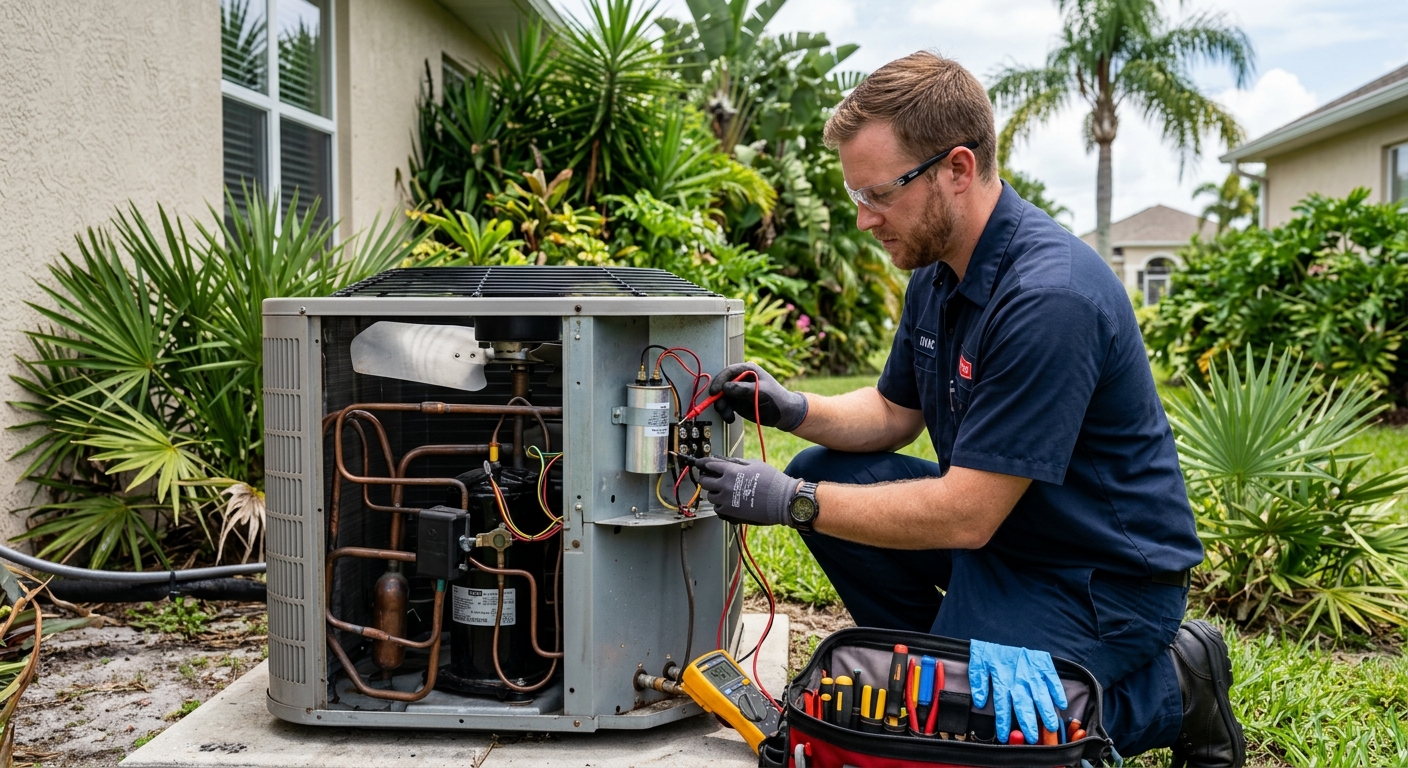
Is your AC humming, starting slowly, or blowing warm air? Learn how to recognize capacitor trouble and protect your cooling system in Brevard County.
Common AC capacitor failure signs include humming, delayed startup, warm air, an outdoor fan that will not run, repeated shutdowns, and a rising power bill. Because capacitors can retain a dangerous electrical charge even after power is disconnected, homeowners should shut off a struggling system and have a qualified HVAC technician test it rather than opening the equipment cabinet.
In Brevard County, prolonged summer operation, high outdoor temperatures, storms, power disturbances, and coastal conditions can place additional stress on air-conditioning components. Prompt diagnosis may prevent a relatively small electrical failure from contributing to damage to a fan motor or compressor.
What does an AC capacitor do?
An air-conditioning capacitor is an electrical component that stores and releases energy to help a motor start or continue running efficiently. Depending on the system, capacitors may serve the compressor, outdoor condenser fan, indoor blower motor, or a combination of components.
Many central AC systems use a dual-run capacitor in the outdoor unit. It supports both the compressor and condenser fan motor and commonly has terminals labeled C, FAN, and HERM. Other systems use separate start or run capacitors. The correct type, capacitance, and voltage rating depend on the equipment and motor specifications.
When a capacitor weakens, a motor may struggle to start, draw excessive current, overheat, or stop operating. A completely failed capacitor can leave the outdoor unit humming without successfully starting the fan or compressor.
What are the most common AC capacitor failure signs?
The outdoor unit hums but does not start
A steady hum or repeated clicking from the condenser may mean that a motor is receiving a call to run but cannot start. A failed capacitor is one possible cause, but a seized motor, damaged contactor, low voltage, wiring fault, or compressor problem can produce similar symptoms. Turn the system off instead of allowing it to keep attempting to start.
The condenser fan is not spinning
If the indoor blower runs but the outdoor fan remains still, the system cannot reject heat properly. A failed fan side of a dual-run capacitor may be responsible, although the fan motor or electrical controls may also be at fault. Do not reach through the grille or try to push-start the fan with an object.
The AC takes longer than usual to turn on
A weakening capacitor may cause delayed or labored startup. You might hear a hum before the equipment begins running, or the system may need several attempts to start. This symptom should be investigated before the component fails completely.
The system blows warm or only slightly cool air
If the compressor does not start, the indoor fan can continue circulating room-temperature air through the vents. Capacitor trouble is only one possible explanation; refrigerant problems, a dirty coil, thermostat settings, airflow restrictions, and compressor faults can also cause warm air. Our guide to an AC blowing warm air explains several other causes to check.
The AC starts and stops repeatedly
Rapid or irregular cycling can occur when a motor struggles to start or overheats. However, short cycling may also result from thermostat issues, restricted airflow, an oversized system, a clogged condensate drain safety switch, refrigerant problems, or electrical faults. A technician must test the system to identify the actual cause.
Your electric bill rises unexpectedly
A weak capacitor can make a motor work harder, but an increased utility bill alone does not prove capacitor failure. Dirty filters, duct leakage, thermostat changes, declining system efficiency, and exceptionally hot weather can all increase energy use. Look for a higher bill alongside startup noises, poor cooling, or unusually long cycles.
The capacitor appears swollen or is leaking
A failed capacitor may have a domed top, distorted casing, rust, or oily residue. This is useful diagnostic evidence, but a capacitor can also test bad while looking normal. Homeowners should not remove an equipment panel to inspect it because the cabinet contains high-voltage components and the capacitor may remain charged after the disconnect is pulled.
Why do capacitors fail more often during Florida heat?
Heat does not automatically mean a capacitor will fail, but high temperature accelerates stress on electrical components. During a Brevard County summer, an AC system may operate for long periods to remove both heat and indoor humidity. Frequent startups and sustained operation can expose an already weakened capacitor.
Other local factors may contribute:
- High condenser temperatures caused by outdoor heat, dirty coils, blocked airflow, or a struggling fan
- Voltage fluctuations and storm-related power disturbances
- Corrosion at electrical connections, particularly near salty coastal air
- Age-related deterioration of the capacitor's internal materials
- An incorrect replacement capacitor installed during an earlier repair
- A failing motor or compressor creating abnormal electrical demand
Capacitors sometimes fail without warning, including during the first major heat wave after months of lighter operation. Failure does not necessarily mean the entire AC system needs replacement. Correct testing is important because replacing a capacitor will not solve an underlying motor, wiring, or compressor problem.
What should I do if I suspect a bad capacitor?
Set the thermostat to off if the outdoor unit is humming, repeatedly clicking, or failing to start. If you smell burning, see smoke, or hear harsh electrical noises, turn off the HVAC breaker if it is safe to reach and leave the equipment off.
Homeowners can safely check a few basics without opening the system:
- Confirm the thermostat is set to cool and below the current indoor temperature.
- Replace a visibly dirty air filter with the correct size and type.
- Check whether a breaker has tripped, but do not repeatedly reset it.
- Look from outside the cabinet for blocked airflow, storm debris, or heavy vegetation.
- Note whether the indoor blower, outdoor fan, and compressor appear to be operating.
Do not remove the condenser access panel, touch terminals, or test the capacitor with a household multimeter unless you are a trained professional using appropriate procedures. Disconnecting power does not automatically discharge a capacitor. Contact Aquila Air & Heating for professional AC repair in Brevard County when the system will not start, continues humming, or cannot cool the home.
How does an HVAC technician diagnose capacitor failure?
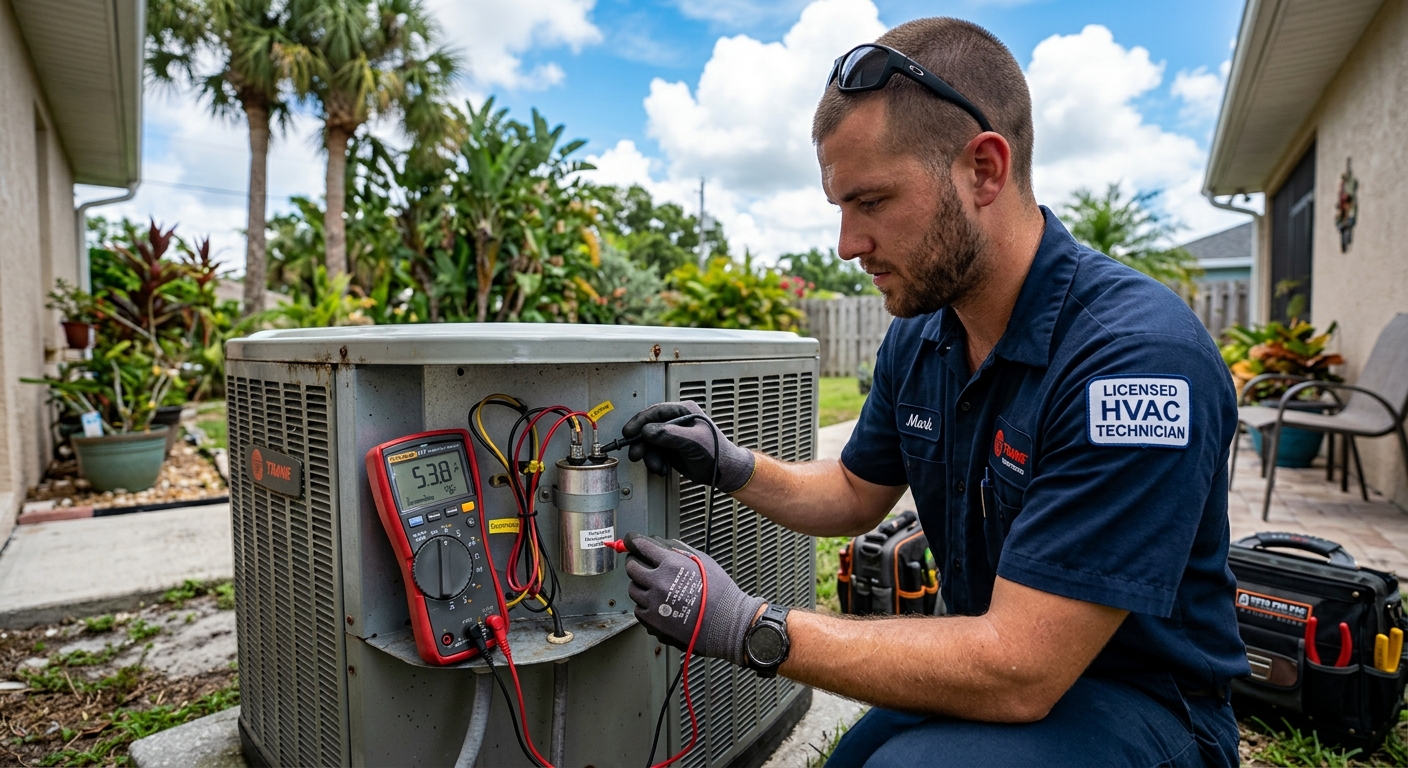
A technician should first disconnect and verify power, safely address stored electrical energy, inspect the wiring, and check for heat or corrosion damage. The capacitor is then measured in microfarads and compared with the rating and allowable tolerance printed on its label. A visual inspection alone is not enough.
The technician may also test supply voltage, contactor operation, motor windings, compressor condition, and operating amperage. These checks matter because a failed capacitor can be the result of another defect rather than the only problem.
If replacement is appropriate, the new capacitor must have the correct capacitance rating. Its voltage rating must meet the equipment requirements and should never be lower than the specified rating. Connections must return to the proper terminals, and the component must be securely mounted and protected from contact with other parts.
A hard-start kit is not a universal substitute for a failing run capacitor. It is an application-specific component that should only be installed after evaluating the compressor and following manufacturer requirements.
Can running the AC with a bad capacitor cause more damage?
Yes. Repeatedly trying to run a system with a weak or failed capacitor can overheat a compressor or fan motor. Motors that cannot start may draw high current, trip a breaker, or damage electrical connections. Continuing to operate a condenser without its fan can also cause high pressure and thermal shutdown.
Switching the system off promptly is generally less expensive than repeatedly resetting breakers or lowering the thermostat. If cooling is essential because of medical needs, vulnerable occupants, pets, or unsafe indoor conditions, arrange service quickly and use a safe alternate cooling location when necessary. For smoke, a burning odor, repeated breaker trips, or a total cooling loss that cannot wait, request emergency AC repair.
How can Brevard County homeowners reduce capacitor stress?
No maintenance plan can guarantee that a capacitor will never fail, but reducing heat and electrical stress can support overall system reliability. Schedule routine service so a technician can inspect electrical connections, record capacitor readings, assess motor amperage, and clean the system as needed.
- Change filters at an interval appropriate for the home, filter type, pets, and system use.
- Keep plants and debris away from the outdoor unit without enclosing or covering it during operation.
- Have dirty condenser coils cleaned using methods appropriate for the equipment.
- Address unusual humming, slow starts, or intermittent operation early.
- Ask an electrician or HVAC professional whether properly selected surge protection is appropriate for the home.
- Avoid repeatedly changing the thermostat in ways that create unnecessary short cycles.
Surge protection may reduce exposure to some electrical transients, but it cannot prevent every capacitor failure or protect against every lightning event. Likewise, annual testing may identify a capacitor that has drifted outside its rated tolerance, but an electrical component can still fail unexpectedly between visits.
When is repair better than replacing the AC?
A capacitor replacement is often a focused repair when the rest of the equipment is in serviceable condition. Replacement decisions become more complex if testing reveals a damaged compressor, obsolete refrigerant equipment, extensive corrosion, recurring breakdowns, or repair costs that are high relative to the system's age and condition.
A trustworthy recommendation should be based on measured findings rather than the warm-air symptom alone. If replacement makes more financial sense, ask Aquila Air & Heating about eligible system options and the terms of our Lifetime Warranty. Warranty eligibility and coverage depend on the applicable written terms.
Who should I call for AC capacitor repair in Brevard County?
Aquila Air & Heating serves homeowners across Brevard County and the Space Coast. If your system is humming, starting slowly, blowing warm air, or leaving the outdoor fan motionless, contact our family-run team for a complete diagnosis. We will determine whether the capacitor is actually at fault, check for related electrical or motor problems, and explain the repair options before work proceeds.