AC Power Surge and Lightning Protection in Florida
Protect your Florida AC from lightning, utility surges, and outage-related damage with practical guidance for Brevard County homeowners.
AC power surge protection in Florida usually works best as a layered system: a whole-home surge protective device at the electrical panel plus dedicated protection for sensitive HVAC equipment. No device can guarantee protection from a direct lightning strike, but properly selected and installed equipment can reduce the risk of damage from common lightning-related and utility-generated voltage surges. Brevard County homeowners should also know how to inspect their systems safely after an outage and when to call an HVAC technician or electrician.
Why are Florida air conditioners vulnerable to power surges?
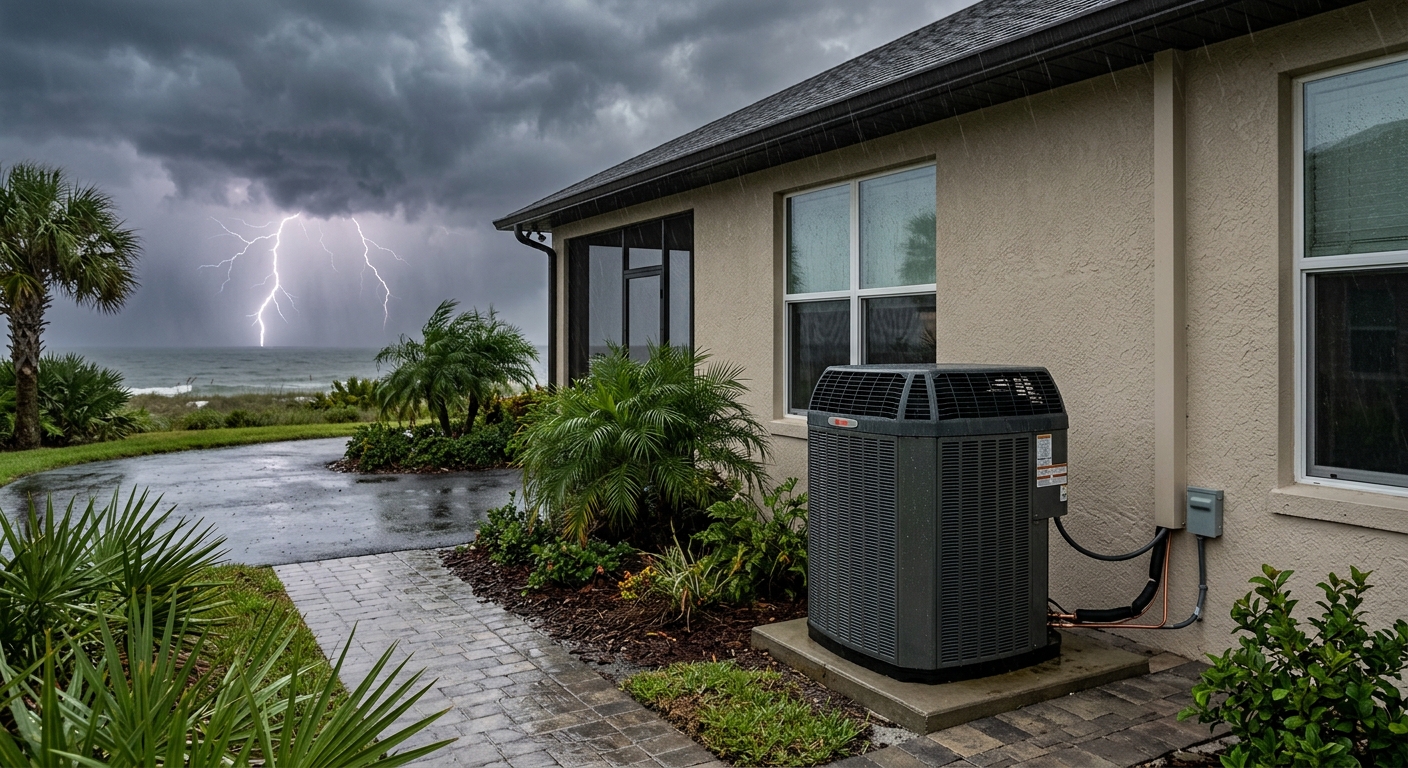
Florida experiences frequent thunderstorms, especially during the warm, humid months when air conditioners are already working their hardest. Lightning does not have to strike your house directly to affect your equipment. A nearby strike can create a voltage surge through utility lines, communication cables, or electrical wiring.
Surges can also happen when utility service is interrupted and restored, when large motors cycle on the electrical grid, or when power fluctuates during a storm. Brevard County homes may experience these conditions during afternoon thunderstorms, tropical systems, and localized outages along the Space Coast.
Modern HVAC systems contain more electronics than older units. Inverter-driven compressors, variable-speed motors, communicating thermostats, heat pumps, and control boards can all be sensitive to abnormal voltage. Even a conventional central AC has electrical components that may be damaged by a severe surge.
What parts of an AC system can a surge damage?
A power surge can affect the outdoor condenser, indoor air handler, thermostat, or any connected accessory. Commonly damaged components include:
- Compressor windings and compressor electronics
- Condenser fan and blower motors
- Control boards and communication modules
- Thermostats and low-voltage transformers
- Contactors, relays, and wiring terminals
- Inverter boards in variable-capacity systems
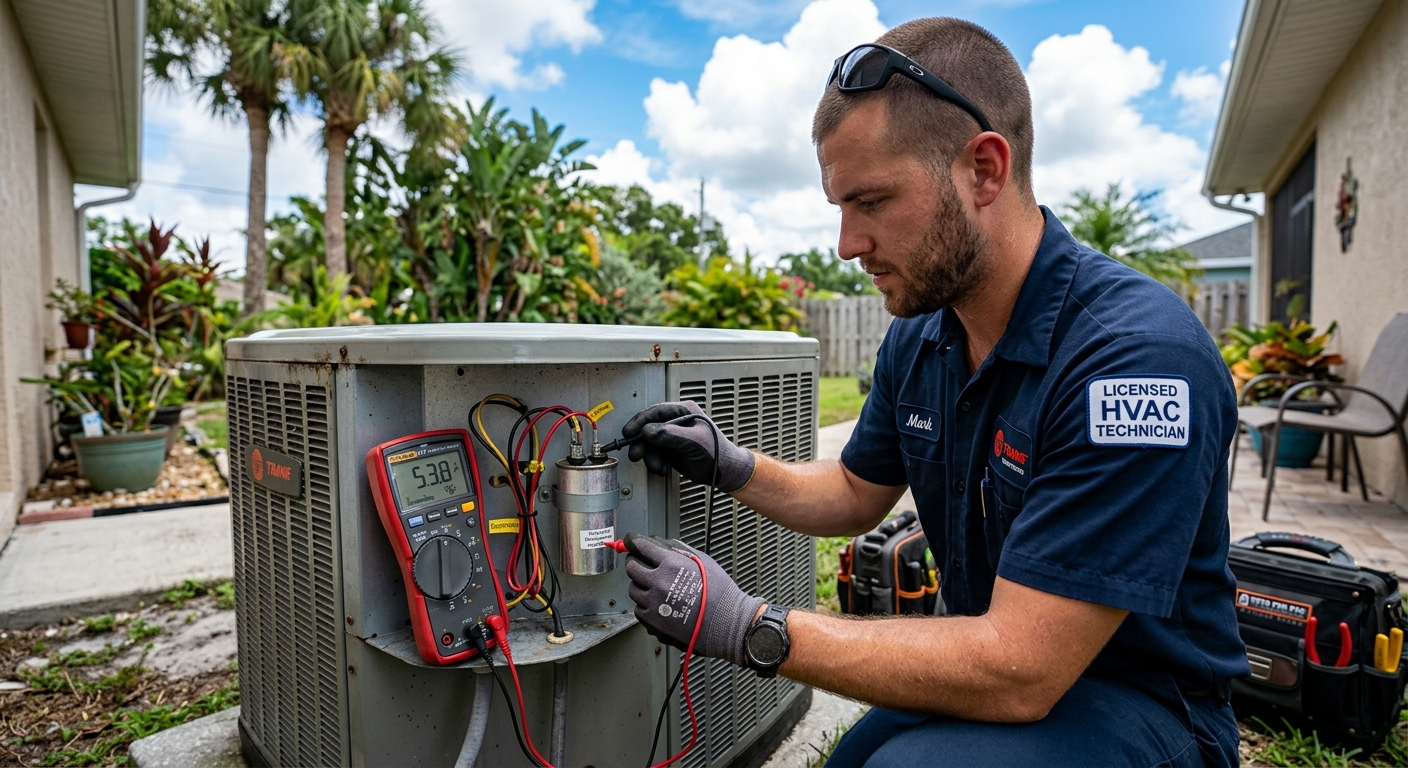
A failed capacitor is sometimes discovered after a storm, but a capacitor is not a surge protector. Capacitors help motors start or run and can fail because of age, heat, electrical stress, or other operating conditions. A technician must test the system to determine which component failed and whether additional damage is present.
If your system stopped working, trips a breaker, or behaves abnormally after a storm, schedule professional AC repair in Brevard County rather than repeatedly resetting it. Repeated attempts to run electrically damaged equipment can create additional problems.
What type of surge protection should I use for my AC?
Is a whole-home surge protector enough?
A whole-home surge protective device is typically installed at or near the main electrical panel. It helps divert transient voltage before it travels through the home's branch circuits. This provides broad protection for appliances and electronics, but it does not make the home immune to lightning or every electrical disturbance.
Installation at the service panel involves hazardous voltage and should be handled by a properly licensed electrician. The electrician can evaluate the panel, grounding and bonding, device rating, installation location, and compatibility with the home's electrical system.
Should the outdoor AC unit have its own surge protector?
A dedicated HVAC surge protective device can add another layer of defense close to the condenser or heat pump. Depending on the product and system design, protection may also be appropriate for an indoor air handler, furnace, or communicating controls.
An HVAC professional should verify that the device is compatible with the equipment voltage and manufacturer requirements. Correct installation matters: conductor length, placement, grounding, and connection method can affect performance. The device should not bypass disconnects, overcurrent protection, or other required safety components.
Does a plug-in power strip protect central air conditioning?
No. A central air conditioner is normally hardwired through dedicated electrical circuits, so a household plug-in strip does not protect the condenser or air handler. Plug-in surge protectors may be useful for certain cord-connected electronics, but they are not substitutes for panel-level or HVAC-specific protection.
Can surge protection stop damage from a direct lightning strike?
No surge protector can promise complete protection from a direct strike or every lightning event. Lightning can carry extraordinary energy and may enter a property through multiple paths. Surge protective devices are designed to divert transient voltage within their ratings, not to create an impenetrable shield around the home.
A layered approach is still worthwhile because many storm-related surges are indirect. Protection may include a properly installed service-level device, point-of-use protection where appropriate, sound grounding and bonding, and dedicated HVAC protection. Homes with an external lightning protection system require specialized design and installation by qualified lightning protection professionals.
How can I tell if lightning or a surge damaged my AC?
Storm damage is not always obvious. The system may fail immediately, or a weakened electrical component may produce intermittent symptoms. Warning signs include:
- The thermostat is blank after power returns
- The outdoor unit hums, clicks, or does not start
- The indoor fan runs but the vents deliver warm air
- The AC starts and stops unusually often
- A breaker trips again after one reset
- The system displays a fault code
- You notice a burnt odor, scorching, melted insulation, or buzzing
Warm air can have several causes besides surge damage, including refrigerant, airflow, thermostat, or compressor problems. This guide to why an AC may be blowing warm air explains other possibilities, but a symptom that begins immediately after a storm deserves prompt electrical and HVAC evaluation.
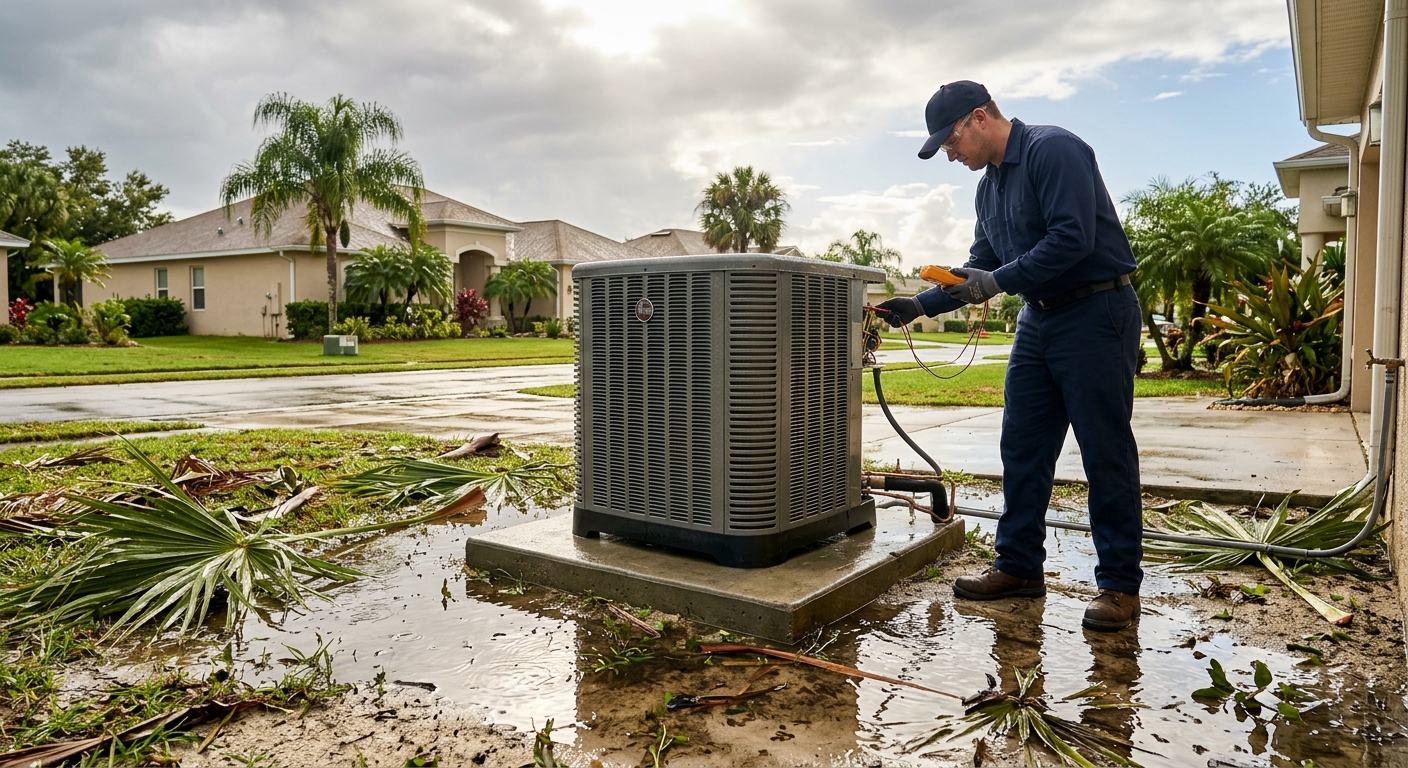
Turn the system off and seek urgent help if you smell burning, see smoke or scorching, hear arcing, or find water near electrical equipment. Do not touch damaged wiring or open an electrical panel. If the condition presents an immediate fire or shock hazard, leave the area and contact emergency services or the electric utility as appropriate.
What should I do after a Brevard County power outage?
Once the storm has passed and utility power is stable, use this cautious process:
- Check whether the entire home has power or whether only the HVAC system is off.
- Look at the thermostat and confirm that its settings did not reset during the outage.
- Allow several minutes for the AC's built-in compressor delay before expecting it to restart.
- If the area is dry and there are no signs of damage, check the labeled HVAC breakers. Reset a tripped breaker only once by moving it fully off and then on.
- Inspect from a safe distance for unusual sounds, odors, scorch marks, or visible damage.
- Turn the system off and call a professional if the breaker trips again or operation remains abnormal.
Do not remove condenser panels, test live terminals, replace fuses, or handle electrical components without appropriate training and test equipment. For a cooling failure that cannot safely wait in Brevard's heat and humidity, Aquila offers emergency AC repair.
Should I turn off my AC before a thunderstorm?
Switching the thermostat off stops a cooling call, but it does not electrically isolate every HVAC component or prevent surge energy from reaching the equipment. Turning off a breaker may provide greater separation in some situations, but homeowners should never operate electrical equipment while standing in water, during unsafe storm conditions, or when a panel shows signs of damage.
Because Brevard thunderstorms can develop quickly and AC is important for humidity control, manually shutting down the system for every storm is often impractical. Permanently installed surge protection and a sound electrical system provide a more consistent strategy. If you evacuate for a hurricane, follow local emergency guidance and your home's documented shutdown plan rather than improvising during the storm.
Will a portable generator protect my AC from surges?
A generator is a backup power source, not automatically a surge protection device. Voltage and frequency quality can vary by generator type, condition, loading, and installation. Central HVAC equipment also has substantial starting and running demands that may exceed a portable generator's capacity.
Never connect a generator to household wiring without an approved transfer method, and never backfeed through a receptacle. Ask a licensed electrician to size the generator and transfer equipment. An HVAC technician can provide equipment load information and determine whether your air conditioner, heat pump, or controls have special power requirements.
How often should HVAC surge protection be inspected?
Some surge protective devices have indicator lights or status displays showing whether protection remains active. Check the manufacturer's instructions and look at the indicator periodically, especially after a significant storm or known electrical event. A device may continue passing power even when its protective components are no longer functional, so normal AC operation does not necessarily confirm that protection remains active.
Have the device evaluated if its status light changes, the enclosure appears damaged, or the home experiences a major surge. During routine HVAC maintenance, ask the technician to visually inspect accessible HVAC protection and electrical connections. Service-panel devices should be evaluated by an electrician.
When should I call an HVAC technician instead of an electrician?
Call an HVAC technician when the air conditioner will not start, cools poorly, displays HVAC fault codes, makes abnormal noises, or needs equipment-specific surge protection. Call an electrician for main-panel surge protection, grounding or bonding concerns, damaged service equipment, recurring whole-home voltage problems, or issues affecting multiple circuits.
Some storm events require both trades. The electrician can confirm that safe power reaches the HVAC circuits, while the HVAC technician diagnoses controls, motors, compressors, and refrigeration operation. If a heat pump develops problems after a surge, professional heat pump repair can identify whether the fault is electrical, mechanical, or control-related.
Get storm-related AC help in Brevard County
Aquila Air & Heating helps Space Coast homeowners diagnose AC failures after lightning, outages, and electrical disturbances. Our technicians can inspect HVAC components, explain practical protection options, and coordinate the next step when an electrician is needed.
As Florida's First HVAC Company Offering a Lifetime Warranty, Aquila also provides clear information about eligible systems and applicable terms. Surge and lightning coverage should never be assumed; review the written warranty details and ask how a specific event would be handled. Learn more about Aquila's Lifetime Warranty, or contact our family-run team to schedule service in Brevard County.
Frequently asked questions about AC surge protection in Florida
Can a nearby lightning strike damage my AC without hitting my house?
Yes. A nearby strike can induce transient voltage in utility lines or household wiring. Damage can occur even when there is no visible lightning strike on the property.
Will an AC surge protector lower my electric bill?
No. Its purpose is to divert short-duration voltage spikes, not reduce normal energy consumption. AC efficiency depends more on equipment condition, sizing, settings, duct performance, and maintenance.
Does homeowners insurance pay for lightning damage to an air conditioner?
Coverage depends on the policy, cause of loss, deductible, exclusions, and documentation. Photograph visible damage, preserve service records and replaced parts when appropriate, and contact the insurer before assuming the repair is covered.
Can I install an HVAC surge protector myself?
It is not a recommended do-it-yourself project. Installation involves high voltage, equipment disconnects, grounding, and product-specific requirements. Use a qualified HVAC professional or licensed electrician based on the installation location.
Should surge protection be replaced after every thunderstorm?
Not necessarily. Follow the device manufacturer's instructions and check its status indicator. Replacement may be necessary if protection status is lost, the device is damaged, or testing shows that it is no longer functional.