How to Clear a Clogged AC Drain Line in Florida Humidity
A practical Brevard County guide to clearing an AC drain line safely, preventing water damage, and knowing when the problem requires HVAC repair.
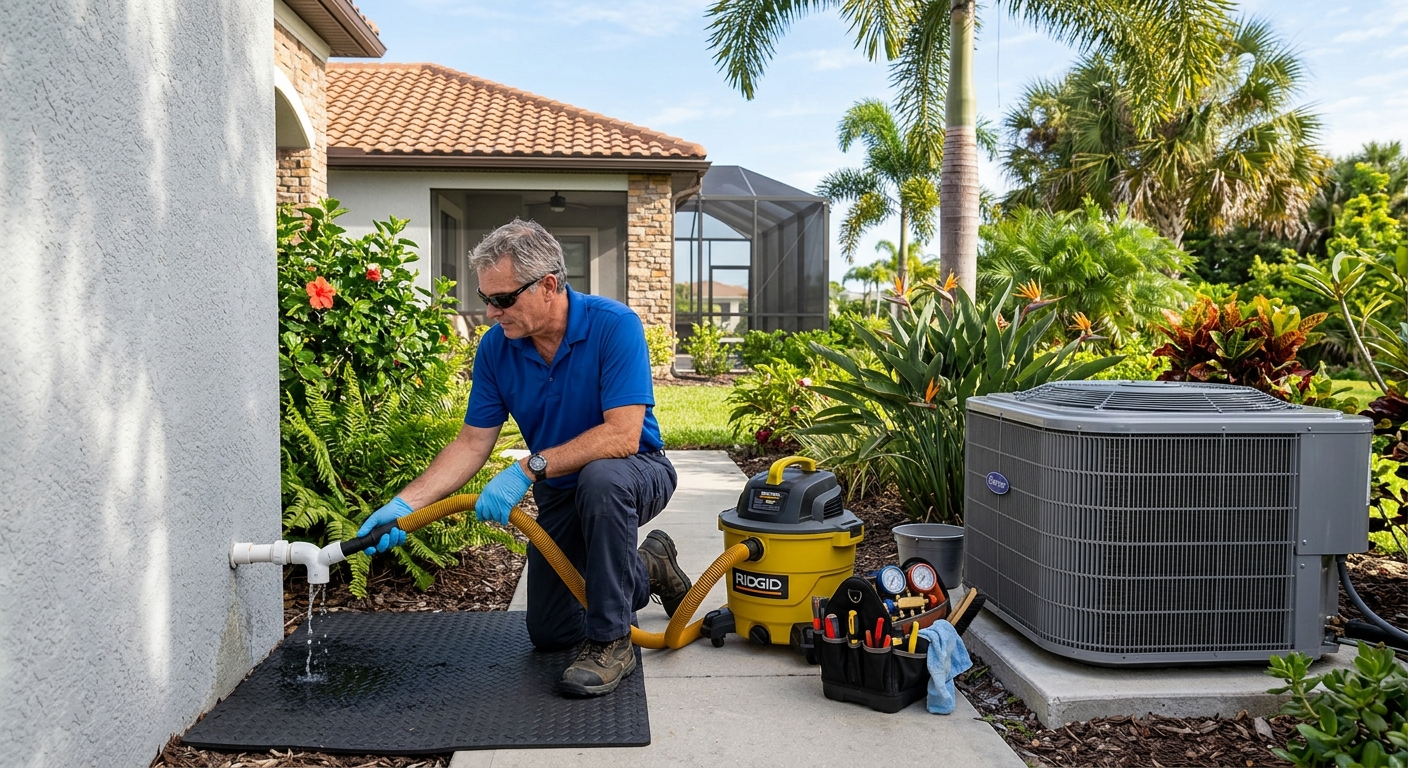
To clear a clogged AC drain line, turn off the cooling system, remove standing water, and use a wet/dry vacuum at the outdoor drain outlet to pull out algae and sludge. If the line will not drain, water has reached electrical components, or the system repeatedly shuts off, schedule professional AC repair in Brevard County rather than forcing the blockage farther into the pipe.
Florida humidity makes condensate drain problems especially common because air conditioners remove large amounts of moisture from indoor air. Routine inspection and safe drain maintenance can reduce clogs, water damage, and unexpected cooling interruptions.
Why do AC drain lines clog so often in Brevard County?
Your air conditioner does more than cool your home. As warm, humid air passes over the indoor evaporator coil, moisture condenses on the cold surface, falls into a drain pan, and exits through a PVC condensate line.
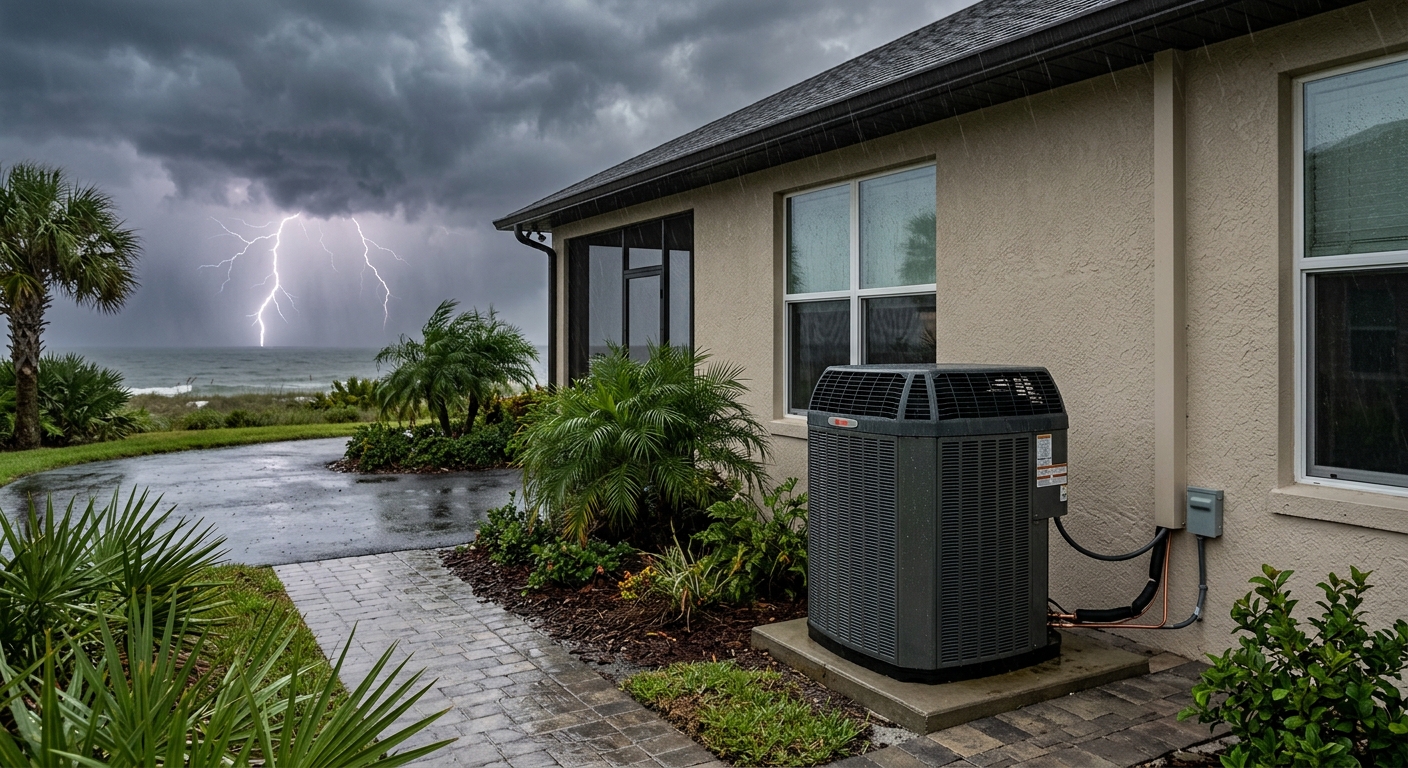
Homes in Melbourne, Palm Bay, Cocoa, Titusville, Rockledge, and other Space Coast communities often experience long cooling seasons and persistent humidity. The resulting moisture creates favorable conditions for algae and bacterial biofilm inside the drain line. Dust, pet hair, insulation particles, rust, and other debris can combine with this growth to form a thick obstruction.
A poorly pitched line, a dirty evaporator coil, or an incorrectly configured drain trap can make the problem worse. In some installations, insects, soil, or landscaping debris can also obstruct the outdoor drain opening.
What are the signs of a clogged AC drain line?
A drain clog may initially look like an air-conditioning failure. Watch for these common warning signs:
- Water around the indoor air handler, furnace closet, or garage unit
- A full or overflowing auxiliary drain pan
- The thermostat is on, but the indoor system has stopped running
- A float-switch warning or intermittent cooling
- Musty odors near the air handler or supply vents
- Water stains on a ceiling, wall, baseboard, or floor
- Little or no water leaving the outdoor drain while the AC is running on a humid day
- Gurgling sounds from the condensate pipe or drain connection
A clogged line is only one possible cause of an AC shutdown. If the equipment runs but produces warm air, review these common reasons an AC may blow warm air before assuming the drain is responsible.
What should you do before clearing the drain?
Set the thermostat to off. If you need to work near the air handler, drain pan, wiring, or access panels, turn off power at the appropriate breaker or service disconnect as well. Never reach into powered HVAC equipment.
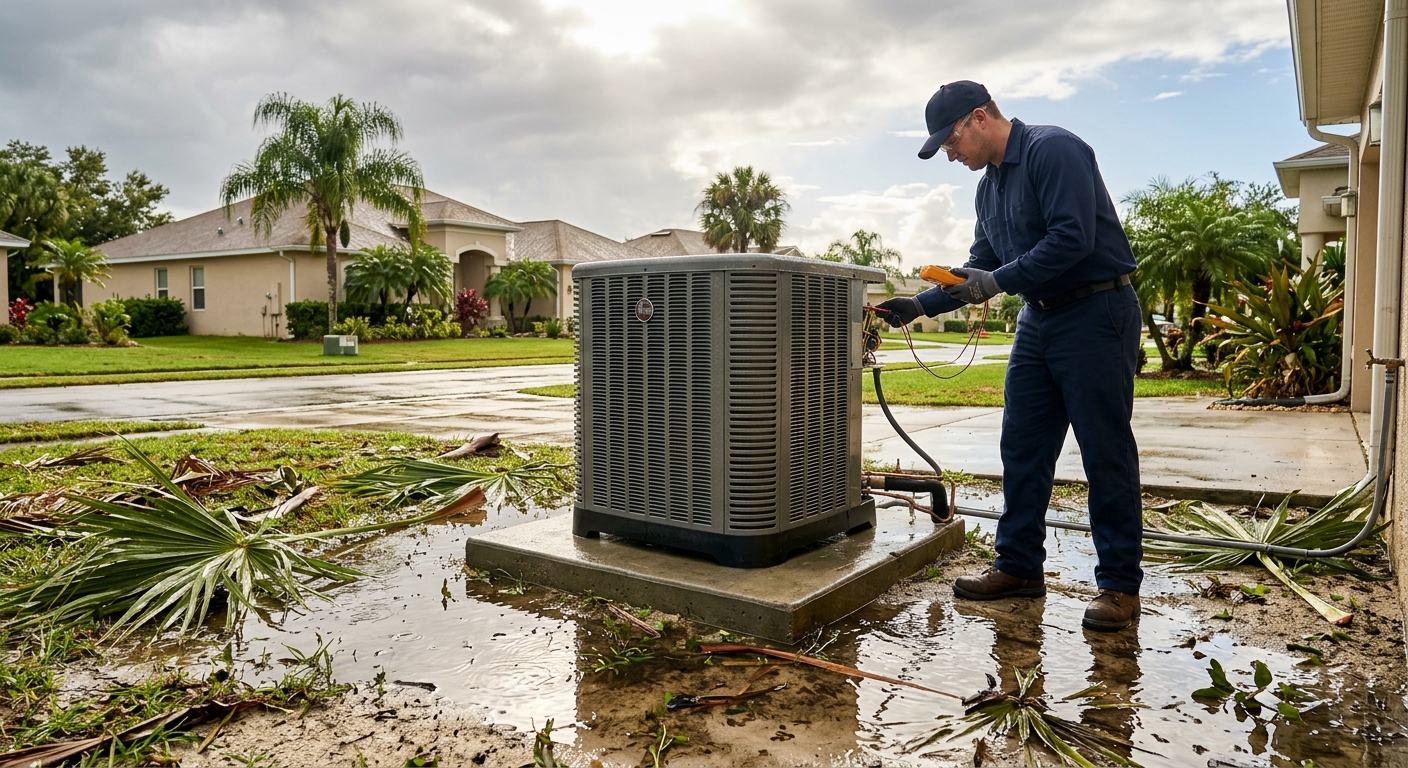
Use towels or a wet/dry vacuum to remove standing water before it spreads. If water is leaking through a ceiling, near electrical wiring, or from an inaccessible attic unit, stop and call a professional. Avoid climbing into a hot attic or balancing on an unsafe ladder to reach the equipment.
Confirm that the water is actually coming from the condensate system. Plumbing leaks, roof leaks, frozen coils, cracked drain pans, and sweating ducts can create similar symptoms.
How can you clear a clogged AC drain line safely?
1. Find the indoor drain connection and outdoor outlet
Look for a white PVC pipe connected to the indoor air handler or evaporator coil cabinet. Many systems have a capped vertical access tee near the unit. Do not remove glued fittings or open the equipment cabinet unless you are qualified to do so.
The outdoor drain outlet is usually a short PVC pipe terminating near the house, often close to the outdoor AC unit. However, installation layouts vary. Do not confuse a condensate drain with a plumbing, pool, water-heater, or pressure-relief line.
2. Inspect the drain pan and float switch
Check the accessible drain pan for standing water, slime, corrosion, or cracks. A float switch may have shut the system off because the water level rose too high. That shutdown is a safety response, not necessarily a failed switch.
Remove accessible standing water with a wet/dry vacuum. Do not bypass, tape down, or disconnect the float switch to make the AC run. Doing so can allow additional water to overflow into the home.
3. Use a wet/dry vacuum at the outdoor outlet
Connect a wet/dry vacuum hose to the outdoor condensate outlet. Create a temporary seal around the connection with a cloth or removable tape, then run the vacuum for two or three minutes. The goal is to pull the obstruction toward the outlet instead of pushing it deeper into the system.
Turn off the vacuum and inspect its tank. Slime, algae, or dirty water can indicate that material has been removed. Repeat once if needed, but stop if the line remains blocked. Excessive suction or improvised high-pressure tools may damage loose fittings or an older drain system.
4. Flush only through an approved access point
If the system has a clearly identified, accessible condensate cleanout, slowly add warm water after vacuuming and verify that it exits outdoors. Use only a condensate cleaner approved by the equipment manufacturer or installer. Some drain systems include traps or vent arrangements that require a specific cap position for proper drainage, so replace the cap as it was found.
Do not mix bleach, vinegar, drain opener, or other chemicals. Household drain openers can damage HVAC drain components and create hazardous fumes. Bleach may also affect metals, adhesives, septic systems, or manufacturer requirements, especially when used too strongly.
5. Restore power and confirm drainage
Dry the surrounding area, reinstall any caps you removed, and restore power. Run the cooling system and monitor the indoor pan and outdoor outlet. On a humid Brevard County day, condensate may take several minutes to appear after the system starts.
Turn the system back off if water rises in the pan, leaks return, the float switch trips again, or the outdoor line does not drain. A partial blockage can appear cleared and then quickly close again.
When should you call an HVAC professional?
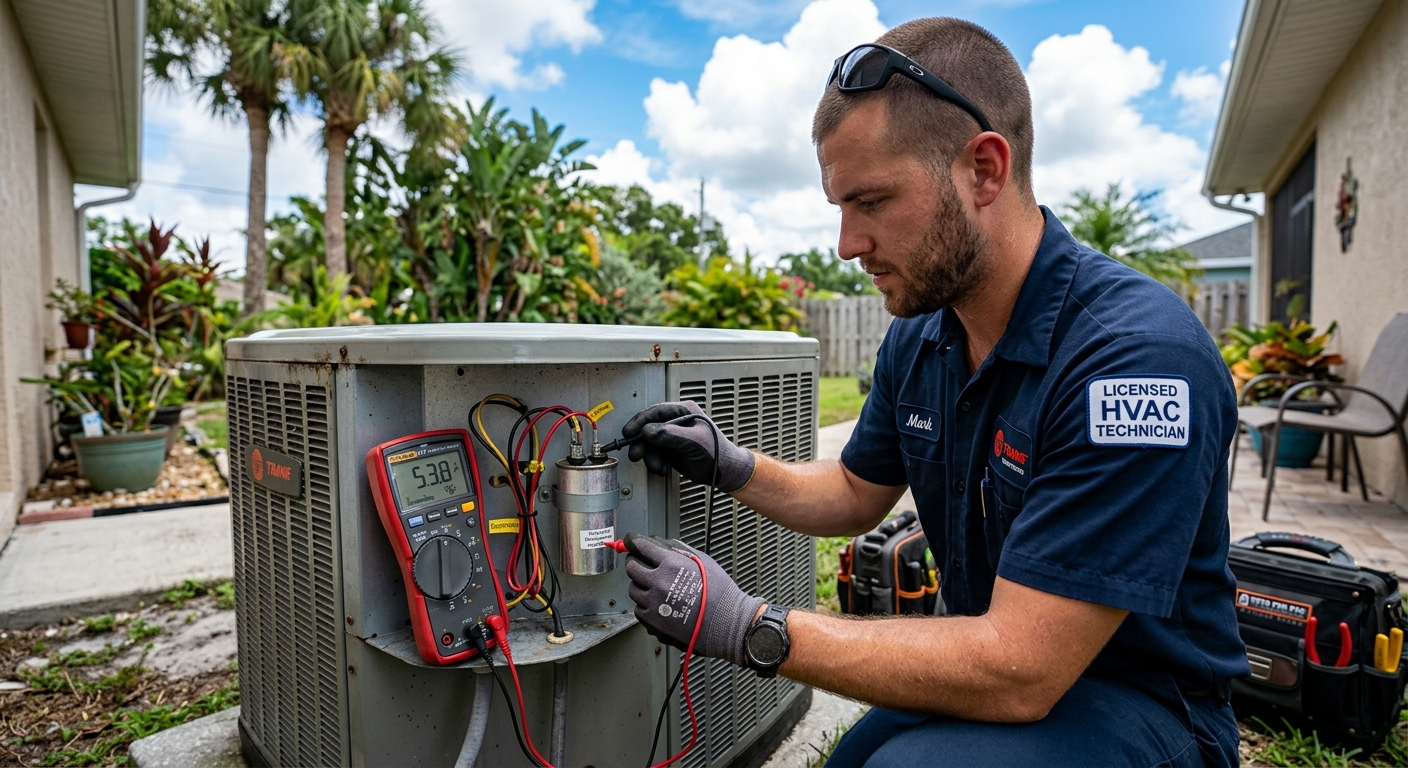
Call a licensed HVAC technician when basic exterior vacuuming does not restore drainage or when the source of the water is uncertain. Professional service is also appropriate if:
- The AC repeatedly shuts down after the drain is cleared
- The evaporator coil is frozen or covered in ice
- The primary or auxiliary drain pan is cracked or heavily rusted
- Water has reached drywall, insulation, electrical parts, or finished flooring
- The drain line is concealed, disconnected, sagging, or improperly pitched
- You notice recurring musty odors or suspected microbial growth
- The air handler is in an unsafe attic or elevated location
- The float switch is missing, damaged, or bypassed
If water is actively spreading or the system cannot operate safely during extreme heat, contact an emergency AC repair technician. Shut the equipment off while waiting unless a technician gives you different instructions.
How can you prevent another condensate drain clog?
Inspect the visible drain outlet and the area around the indoor unit regularly during Brevard County’s long cooling season. Keep plants, mulch, mud, insect nests, and stored belongings away from the outdoor opening. Never cap or permanently seal the outlet.
Replace or clean the HVAC filter according to the equipment and filter manufacturer’s instructions. A severely dirty filter can reduce airflow and contribute to evaporator-coil icing. When that ice melts, the sudden volume of water may overwhelm an already restricted drain.
During professional maintenance, ask the technician to inspect the evaporator coil, drain pan, trap, vent, float switch, and full drain route. Maintenance is especially important for attic air handlers because a small overflow can damage ceilings and insulation before anyone notices it.
Homeowners should also check for water after long power outages or the first heavy cooling cycles of the season. A line that accumulated dry residue or insect debris may clog once condensate begins flowing again.
Why does a cleared drain line keep clogging?
A recurring clogged AC drain line often points to more than routine algae buildup. The PVC line may lack sufficient downward pitch, contain a sag where water collects, or have a trap that is incorrectly installed. A dirty coil or damaged drain pan can continually send debris into the pipe.
Negative air pressure inside some air handlers can also prevent proper drainage when the trap or vent is missing or incorrectly configured. These issues require diagnosis rather than repeated chemical treatments. A technician can clear the complete line, test drainage under operating conditions, and determine whether the piping needs correction.
Get help with a clogged AC drain line in Brevard County
A simple outdoor vacuum may resolve a minor condensate blockage, but overflowing water, repeated float-switch trips, and concealed leaks should not be ignored. Prompt attention can help protect flooring, ceilings, cabinets, and nearby HVAC components.
Aquila Air & Heating is a family-run company serving homeowners throughout Brevard County and the Space Coast. Contact our team to diagnose a clogged AC drain line, inspect the condensate system, and restore safe operation without unnecessary guesswork.