What to Do If Your AC Floods After a Storm in Brevard County
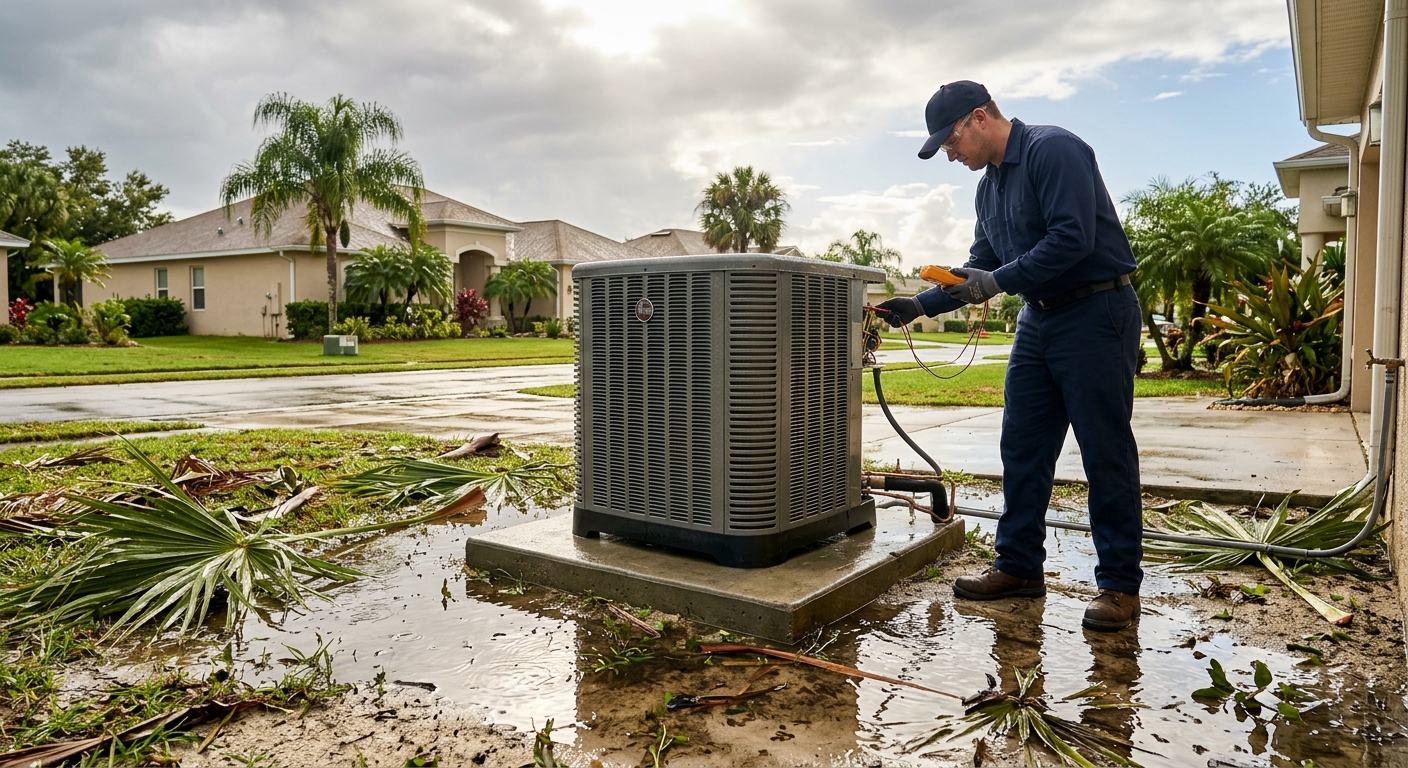
If your AC floods after a Brevard County storm, turn it off safely, avoid standing water, document the damage, and arrange a professional inspection.
If your AC flooded after a storm, turn the system off without entering standing water, and do not restart it until you know the electrical and mechanical components are dry and undamaged. Photograph the water level and visible damage, then contact an HVAC professional promptly if water reached the air handler, outdoor unit controls, ductwork, wiring, or electrical connections.
In Brevard County, tropical downpours, hurricanes, storm surge, clogged drains, and neighborhood flooding can affect an HVAC system in different ways. The safest response depends on whether you are dealing with a backed-up condensate drain, rain entering the home, or floodwater surrounding equipment.
What should I do first if my AC floods after a storm?
Prioritize personal safety over the equipment. Floodwater can conceal energized wiring, sharp debris, sewage, chemicals, insects, and other hazards. Never walk through water to reach an air handler, outdoor condenser, disconnect box, electrical panel, or thermostat.
- Turn the thermostat to the off position if you can reach it without entering a wet area.
- If the electrical panel is completely dry and safely accessible, switch off the breakers serving the indoor and outdoor HVAC equipment. Do not touch the panel if it is wet, damaged, buzzing, hot, or surrounded by water.
- Keep children and pets away from standing water and storm-damaged equipment.
- Do not remove access panels or touch wiring, capacitors, motors, or electrical connections.
- Take photos or video from a safe location, including visible water lines and debris around the equipment.
- Call the electric utility or emergency services if you see arcing, downed power lines, smoke, fire, or an immediate electrical hazard.
If the system is underwater or appears electrically damaged, request professional emergency AC repair. Waiting to have the equipment evaluated is safer than testing it yourself.
Is an outdoor AC unit ruined if it gets wet?
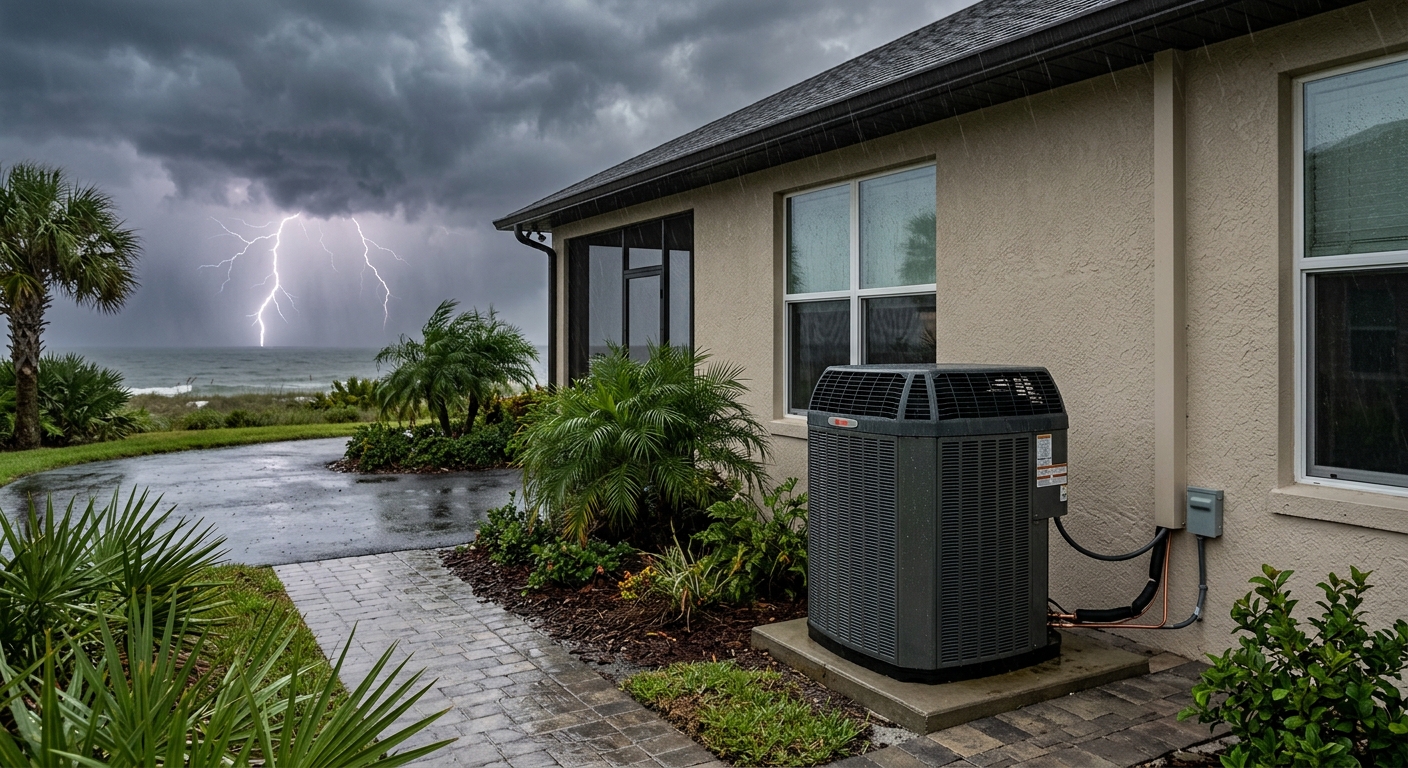
Not necessarily. Outdoor condenser units are built to operate in normal rain, so a rain-soaked cabinet alone usually does not mean the system has flooded. The greater concern is rising water that reaches electrical controls, motors, wiring terminals, refrigerant components, or the interior of the cabinet.
Wind-driven debris can also bend coil fins, block airflow, damage the fan, or shift the equipment pad. In coastal and barrier-island areas of Brevard County, saltwater exposure is especially corrosive and should be reported to the technician. Do not rinse or restart saltwater-exposed equipment before it is inspected.
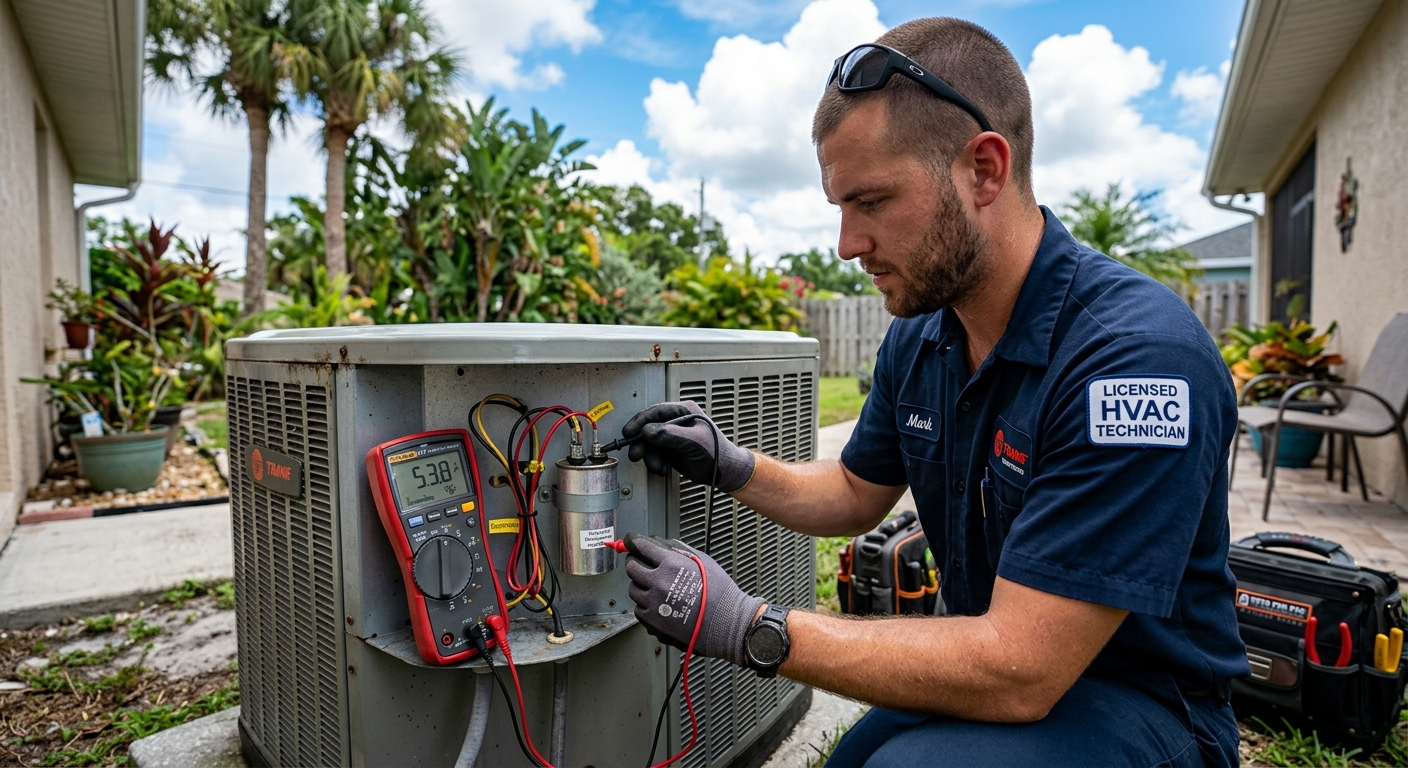
A technician may need to examine the water line, control components, compressor terminals, fan motor, disconnect, wiring, refrigerant lines, and equipment base. The appropriate repair depends on the depth and duration of flooding, the type of water involved, and the condition of individual parts. A visual check from outside the cabinet cannot confirm that energized components are safe.
What if the water is coming from the indoor AC unit?
Water around an air handler or furnace does not always mean outside floodwater entered the system. Brevard County's high humidity causes air conditioners to remove substantial moisture from indoor air. That moisture normally flows through a condensate drain, but a clog, damaged drain pan, failed condensate pump, disconnected pipe, or poorly draining line can cause an overflow.
How can I recognize a condensate drain problem?
Common signs include water concentrated near the air handler, a full auxiliary drain pan, a wet ceiling below an attic unit, algae or sludge near the drain outlet, and a system that shut down after its float switch activated. A working float switch is intended to stop operation before more water spills, so repeatedly resetting it can worsen property damage.
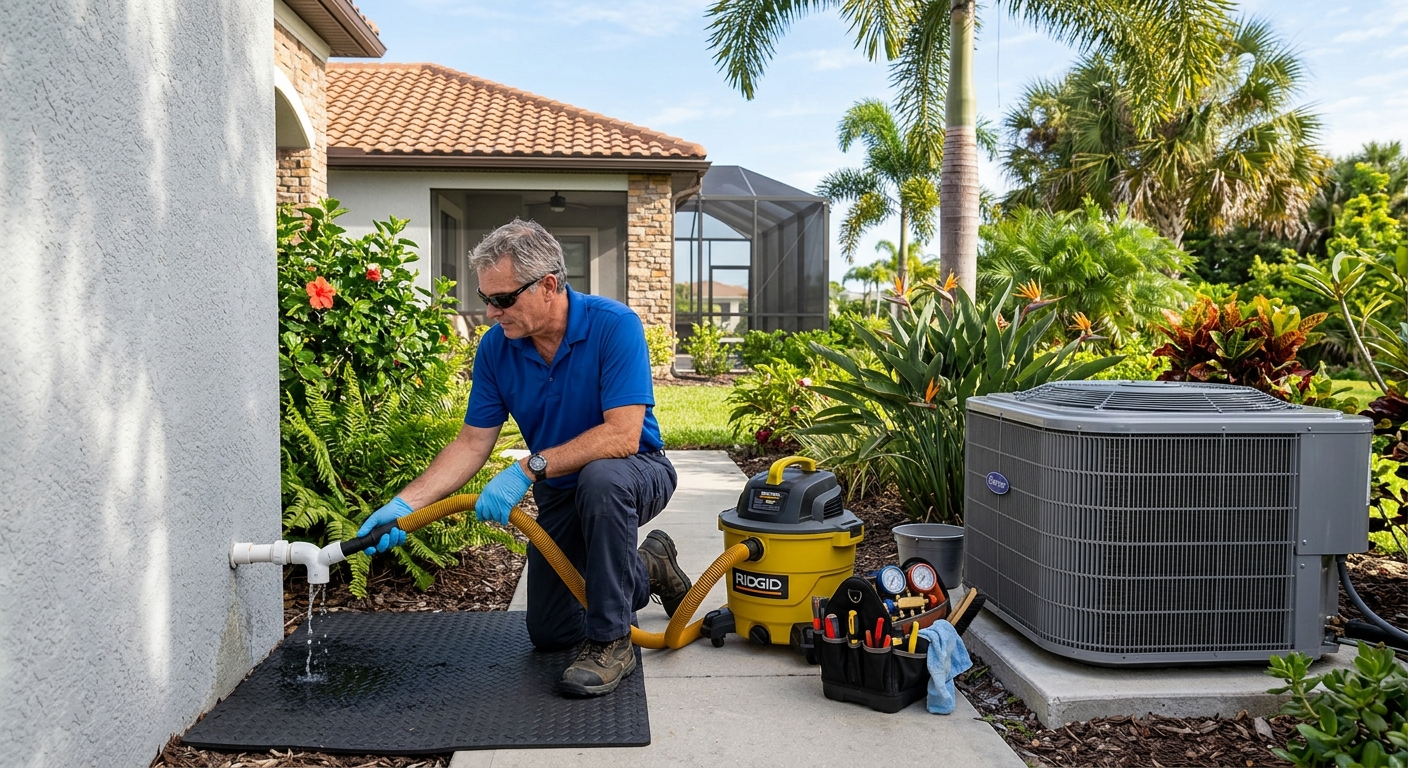
Turn the system off and place a container under an active drip only if the area is dry and safe to access. Do not open electrical compartments or pour chemicals into an unfamiliar drain. A technician can clear the blockage, identify why it formed, inspect the drain pan and safety switches, and verify that the line drains correctly. Aquila's AC repair service in Brevard County can address drainage failures as well as storm-related cooling problems.
What if water is coming through the ceiling or walls?
Water near an air vent may originate from an attic air handler, damaged roof, wet insulation, or wind-driven rain rather than the vent itself. Shut down the HVAC system if water may be contacting ducts or electrical equipment. A roofing or water-remediation professional may also be needed because an HVAC repair will not correct a roof leak or remove contaminated building materials.
Can I restart my AC after the water recedes?
Do not assume equipment is safe simply because the visible water is gone. Moisture, silt, corrosion, and conductive residue can remain inside motors and electrical assemblies. Turning the system on too soon could damage components, create a shock or fire hazard, or make an existing problem more expensive.
A professional inspection is especially important when:
- Water reached any part of the outdoor unit's internal controls or motor.
- The air handler, furnace, heat pump, disconnect, wiring, or receptacle was submerged or splashed.
- The system trips a breaker, hums, buzzes, smells burnt, or will not start.
- The outdoor unit shifted, tilted, or separated from its pad.
- Refrigerant lines, electrical conduit, or drain piping moved or broke.
- Water entered supply or return ducts.
- The floodwater may contain sewage, salt, fuel, lawn chemicals, or other contaminants.
Even when the unit starts, it may not cool correctly after a storm. If the fan runs but the vents deliver warm air, turn the system off and arrange service rather than repeatedly cycling it. This guide to an AC blowing warm air explains several possible causes, including problems unrelated to flooding.
What happens if stormwater gets into the ductwork?
Wet ducts can spread moisture, particles, odors, and contaminants through the home. The correct response depends on the duct material, the source of the water, and how much of the system was affected. Metal duct surfaces may sometimes be cleaned and dried, while saturated fiberglass duct board or insulation may require removal rather than surface drying.
Do not run the blower to dry contaminated ducts. Doing so can distribute material from wet sections into rooms and other parts of the system. Keep the HVAC system off and arrange an assessment. Aquila offers duct repair and inspection when storm damage, loose connections, crushed runs, or water intrusion affects the air distribution system. Significant flooding may also require a qualified water-remediation company.
How can I document storm damage for insurance?
Before cleanup or repair begins, take clear photos and videos without entering an unsafe area. Record the approximate water depth, visible water line, equipment model and serial number, displaced parts, damaged ducts, and debris. Note when the storm occurred, when the system stopped working, and any sounds, odors, fault codes, or breaker trips.
Contact your insurer promptly and follow its instructions. Homeowners, flood, equipment, and warranty coverage are separate matters, and coverage depends on the policy, cause of loss, exclusions, deductibles, and documentation. Ask the HVAC contractor for written findings and an itemized estimate, but do not delay emergency steps needed to prevent additional damage or protect occupants.
A product or contractor warranty should not be assumed to cover flood or storm damage. Aquila Air & Heating provides information about its Lifetime Warranty, but homeowners should review the actual terms, eligibility requirements, exclusions, and covered equipment before making a coverage decision.
How can Brevard County homeowners reduce future storm damage?
No preparation can make HVAC equipment floodproof, but several practical measures can reduce risk. Because conditions vary from inland Palm Bay neighborhoods to low-lying areas near the Indian River Lagoon and the beaches, changes involving elevation, drainage, wind protection, or construction should comply with local codes and manufacturer requirements.
- Schedule maintenance before hurricane season so drains, pans, float switches, wiring, and equipment mounts can be checked.
- Keep leaves, mulch, branches, and loose yard items away from the outdoor unit while maintaining the manufacturer's required clearance.
- Direct roof and yard drainage away from HVAC equipment without blocking airflow.
- Have a professional assess a sinking, cracked, or unstable condenser pad.
- Ask a licensed contractor whether code-compliant elevation is practical if the property has a known flood risk.
- Never cover an operating condenser. If using an approved storm cover while the system is off, remove it before restarting the unit.
- Use properly installed electrical surge protection as part of a broader storm plan, recognizing that no device prevents every surge or flood-related failure.
- Know which breakers serve the indoor and outdoor equipment before severe weather arrives.
When should I call Aquila Air & Heating?
Call as soon as it is safe if floodwater reached HVAC components, the condensate system overflowed, ducts became wet, the unit shifted, or the system behaves differently after the storm. Keep it off while waiting if there is any chance of electrical damage or contamination.
Aquila Air & Heating is a family-run company serving Brevard County and the Space Coast. Our technicians can identify whether the problem involves drainage, electrical controls, storm debris, duct damage, or another cooling-system failure and explain the available repair options. Contact Aquila for prompt help with an AC flooded after a storm, and report any standing water, saltwater exposure, burning odor, or electrical symptoms when scheduling service.