AC Compressor Not Turning On? Causes for Florida Homes
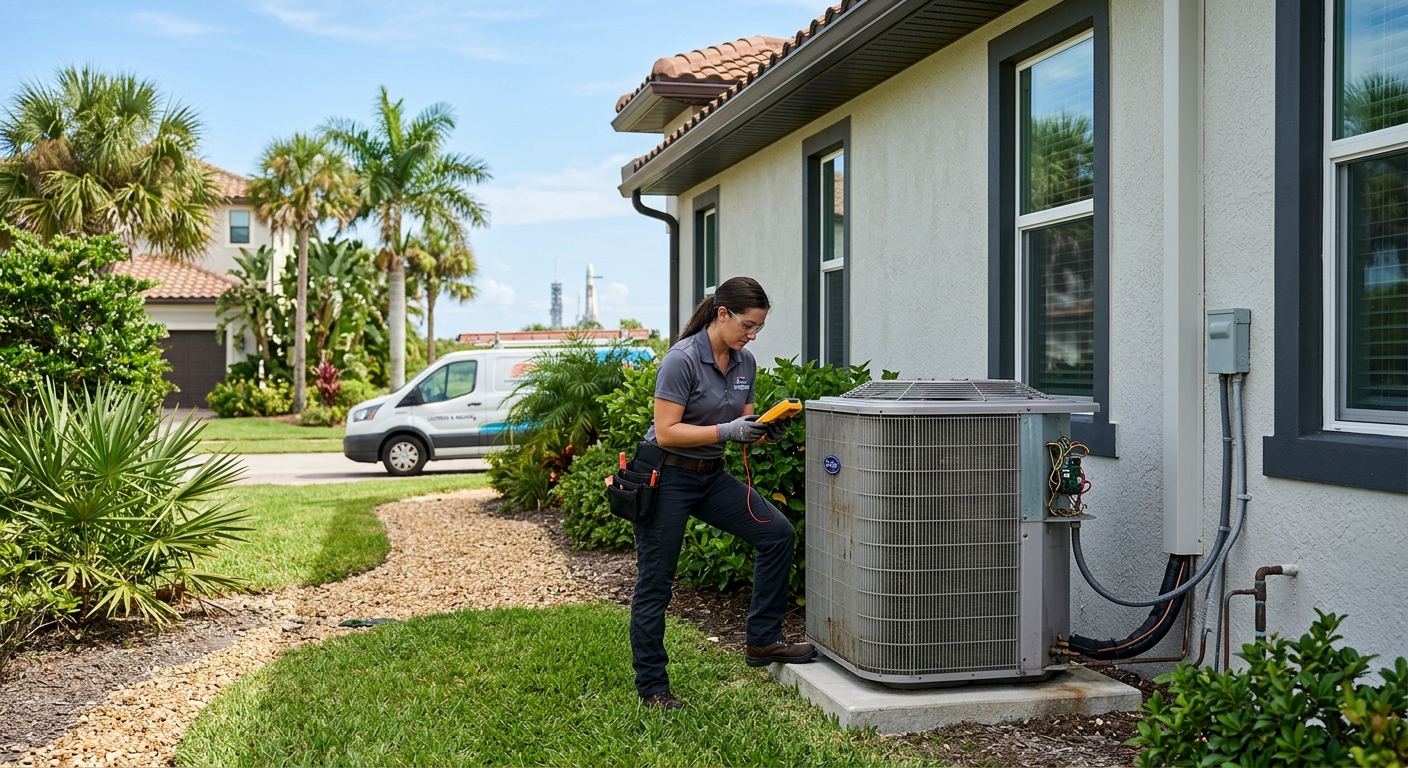
If your outdoor AC unit will not start, check the thermostat, breaker, air filter, and drain system before calling for professional diagnosis.
If your AC compressor is not turning on, the cause may be as simple as an incorrect thermostat setting or tripped breaker, but it could also involve a failed capacitor, electrical fault, refrigerant problem, or damaged compressor. Homeowners can safely check basic controls, airflow, and power settings, but testing components inside the outdoor unit should be left to a licensed HVAC technician. In Brevard County’s heat, prompt diagnosis helps prevent indoor temperatures from rising and keeps a smaller fault from causing additional damage.
How can I tell whether the AC compressor is running?
The compressor is inside the outdoor condensing unit. When cooling begins, you will normally hear the outdoor fan and a steady mechanical hum from the compressor. Refrigerant lines may also begin changing temperature after the system has operated for several minutes.
A spinning outdoor fan does not necessarily mean the compressor is working. If the fan runs but the air from your vents stays warm, the compressor may have failed to start or may have shut down on a safety control. Conversely, if the entire outdoor unit is silent, the problem could be with power, the thermostat signal, a contactor, a drain safety switch, or another control.
Allow about five minutes after lowering the thermostat before assuming something is wrong. Many thermostats and HVAC controls include a short delay that protects the compressor from restarting immediately after a shutdown or power interruption.
What should I check before calling an AC technician?
Confirm the thermostat settings
Set the thermostat to cooling and choose a temperature several degrees below the current indoor reading. Make sure the fan setting is on auto rather than on. With the fan set to on, the indoor blower may continue circulating room-temperature air even when the compressor is not operating, which can make the symptoms confusing.
If the thermostat screen is blank, replace its batteries if applicable. A blank screen can also indicate loss of low-voltage power, a tripped condensate float switch, or an equipment problem that requires diagnosis.
Check the circuit breakers and outdoor disconnect
Look for labeled breakers serving the indoor air handler and outdoor AC unit. A tripped breaker may sit between the on and off positions. Turn it fully off and then back on once. If it trips again, leave it off and arrange professional AC repair in Brevard County; repeated resetting can expose the equipment to further damage and may create an electrical hazard.
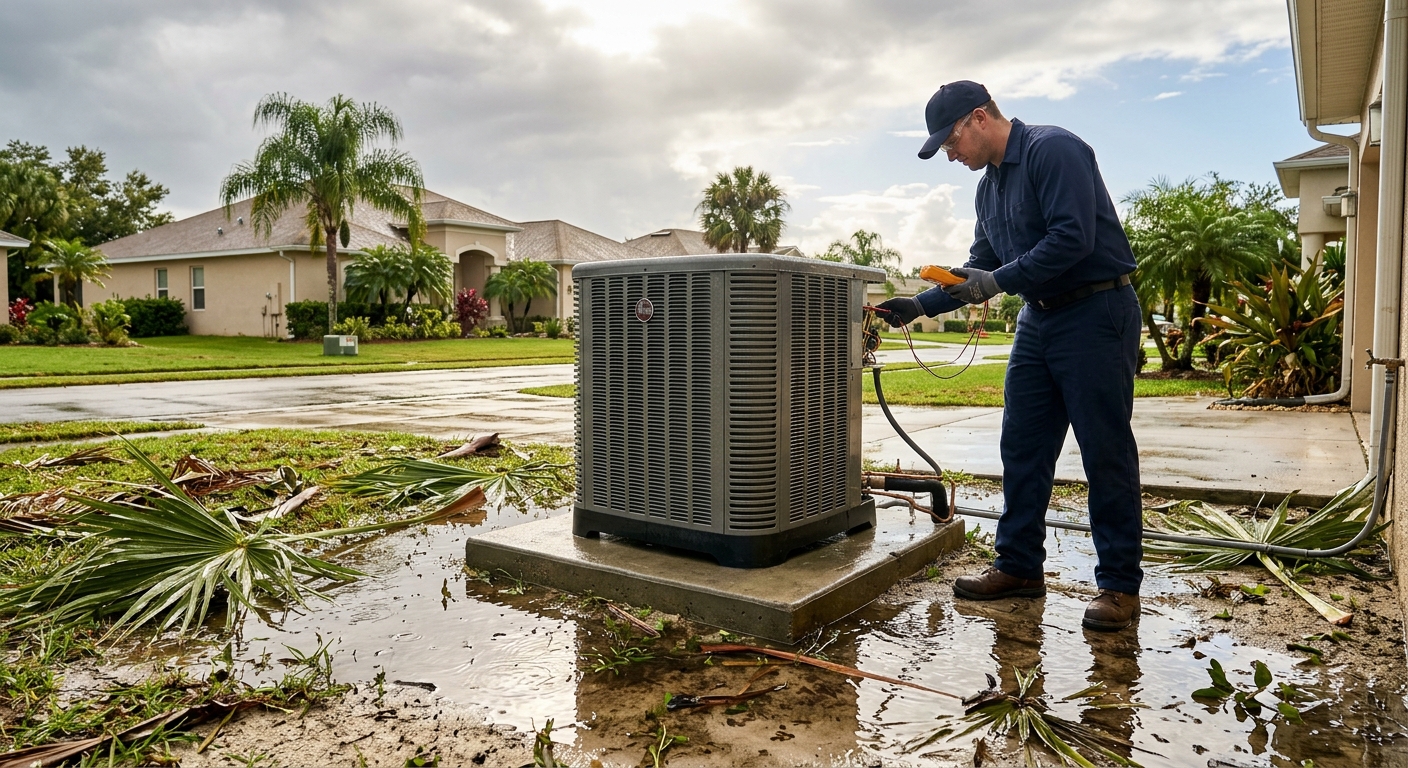
You can also visually confirm that the outdoor disconnect has not been switched off, but do not remove equipment panels or touch wiring. If the unit was flooded, struck by debris, or surrounded by standing water after a storm, do not energize it.
Inspect the filter, vents, and outdoor airflow
A severely clogged filter or blocked return can reduce airflow enough to contribute to coil icing or abnormal system pressures. Replace a dirty filter with the correct size and type, open supply vents, and make sure return grilles are not covered by furniture.
Outside, remove loose leaves or yard debris from around the condenser without opening it. Keep plants and stored items from restricting airflow. Do not use a pressure washer on the coil because it can bend the delicate fins and damage electrical components.
Look for a full condensate drain or float switch
Florida air conditioners remove substantial humidity. Algae and sludge can block the condensate drain, causing a float switch to shut down all or part of the system before water overflows. If you see water in the drain pan or around the air handler, turn the system off and address the blockage or call a technician. Do not bypass the float switch.
What commonly causes an AC compressor not to turn on?
A weak or failed capacitor
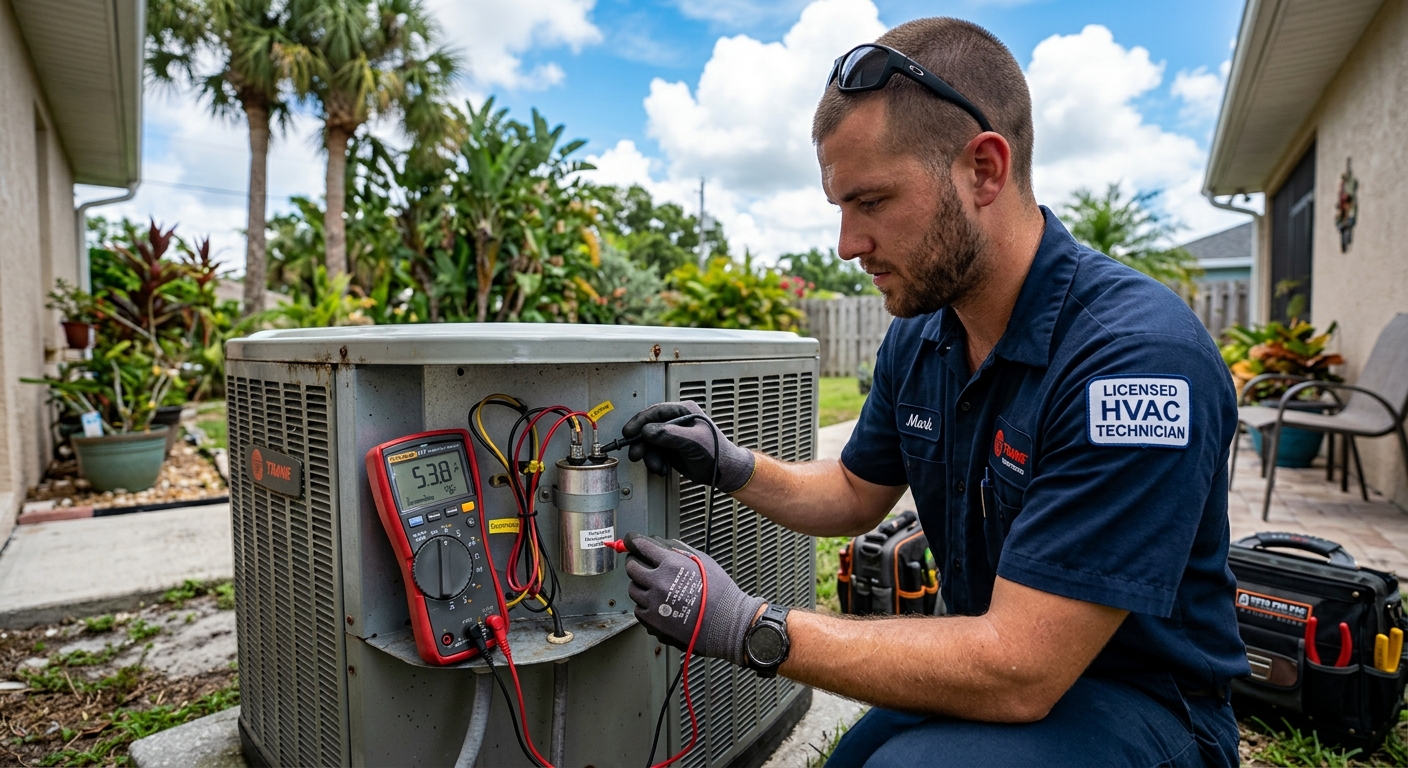
The outdoor capacitor helps the compressor and condenser fan start and run. Florida heat places significant stress on this component, and a failed capacitor may leave the compressor humming, clicking, starting intermittently, or doing nothing at all. A capacitor can retain a dangerous electrical charge even after power is disconnected, so it is not a safe do-it-yourself repair.
A damaged contactor or electrical connection
The contactor is an electrically controlled switch that sends power to the outdoor components. Worn contacts, a failed control coil, loose terminals, damaged wiring, or insect contamination can interrupt that power. Ants, lizards, and other small pests sometimes enter outdoor electrical compartments in Florida, while salt exposure can accelerate corrosion in beachside areas.
A technician should verify voltage and inspect the complete electrical circuit rather than replacing a part based only on appearance. Similar symptoms can result from different failures.
A refrigerant pressure safety switch has opened
Some systems use pressure switches or electronic sensors to stop compressor operation when refrigerant pressure is abnormally high or low. Restricted airflow, a dirty outdoor coil, a failed fan, or an incorrect refrigerant charge can create unsafe operating conditions. Low refrigerant usually indicates a leak; refrigerant is not consumed like fuel during normal operation.
Refrigerant work requires appropriate tools, training, and certification. Simply adding refrigerant without locating the reason for a low charge does not correct the underlying problem.
The compressor has overheated
A compressor may shut off through its internal overload protector when it becomes too hot. Dirty coils, poor airflow, low voltage, refrigerant problems, repeated short cycling, and extreme outdoor conditions can all contribute. During a hot Brevard County afternoon, the compressor may remain off until it cools, only to trip again when restarted.
Turn the cooling system off if it repeatedly tries and fails to start. Continuing to run it can place additional stress on the compressor and electrical components.
A control board, thermostat wire, or sensor has failed
The thermostat initiates a cooling request, but that signal must pass through wiring, safety switches, and controls before reaching the outdoor unit. A broken low-voltage wire, faulty relay, failed control board, or disconnected communication circuit can prevent compressor operation. This is especially relevant after electrical work, landscaping near thermostat wiring, or storm-related power disturbances.
The compressor itself has failed
Internal mechanical damage, worn motor windings, an electrical short, or a locked rotor can prevent the compressor from starting. Because a weak capacitor, low supply voltage, or control fault can imitate compressor failure, technicians should perform electrical and operational tests before recommending compressor replacement.
If the compressor runs but your home is still uncomfortable, other issues may be involved. Aquila’s guide to an AC blowing warm air explains additional causes such as airflow restrictions and refrigerant problems.
Why are compressor problems common in Brevard County?
Air conditioners in Melbourne, Palm Bay, Cocoa, Titusville, and surrounding Space Coast communities operate for long cooling seasons and remove heavy indoor humidity. Long run times increase the workload on capacitors, contactors, fan motors, and compressors. Outdoor equipment near the Indian River Lagoon or Atlantic coast may also experience faster corrosion from humid, salt-laden air.
Thunderstorms and utility interruptions can cause abrupt shutdowns or voltage irregularities. After an outage, wait several minutes before restarting the system so pressures can equalize and built-in delays can finish. Whole-home surge protection and HVAC-specific protective devices may reduce risk, but they cannot prevent every electrical failure.
Heat pumps use the same compressor for cooling and heating. If a heat pump’s outdoor unit will not operate in either mode, professional heat pump repair may be appropriate.
Can I keep running the indoor fan without the compressor?
Running the blower may circulate air, but it will not actively cool or dehumidify the home when the compressor is off. In some cases, the fan can evaporate moisture remaining on the indoor coil back into the house, increasing humidity. If the coil is frozen, turn cooling off and use the fan only if an HVAC professional recommends it to help thaw the coil.
Do not repeatedly lower the thermostat in an attempt to force the compressor on. A lower setting does not increase cooling capacity and will not overcome a failed component.
When does the problem require urgent service?
Turn the system off and request prompt help if you notice any of the following:
- A breaker that trips again after one reset
- A burning odor, smoke, sparking, or melted wiring
- Loud buzzing, grinding, or repeated clicking from the outdoor unit
- Ice on the refrigerant lines or indoor coil
- Water near electrical equipment
- An outdoor unit damaged or submerged during severe weather
- Dangerously rising indoor temperatures, especially where children, older adults, pets, or medically vulnerable people are present
For safety concerns or a loss of cooling that cannot wait for normal scheduling, contact an emergency AC repair technician. Stay away from damaged electrical equipment while waiting for service.
Is compressor repair or AC replacement the better option?
The answer depends on the diagnosis, equipment age, system condition, refrigerant type, efficiency, repair history, and warranty status. A failed capacitor or contactor is very different from an internally damaged compressor. Even when the compressor has failed, replacement of that component may be reasonable on a newer, otherwise healthy system.
For an older system with major corrosion, recurring leaks, or multiple failing components, comparing repair and replacement costs can be more practical. Ask for test results and written options rather than assuming that a silent compressor automatically means the entire system must be replaced. Warranty eligibility and terms should also be verified for the specific equipment.
Get a clear compressor diagnosis from Aquila Air & Heating
Aquila Air & Heating is a family-run company serving Brevard County and the Space Coast. Our technicians can trace the cooling signal, test electrical components, evaluate refrigerant conditions, and determine why the compressor is not starting before discussing repair options.
Aquila is Florida's First HVAC Company Offering a Lifetime Warranty. Homeowners considering eligible replacement equipment can review the Lifetime Warranty information and terms. Contact Aquila Air & Heating to schedule service if basic checks do not restore cooling or if the system shows any electrical or mechanical warning signs.