The True Cost of Owning an AC in Florida: Beyond the Install Price
A practical Brevard County guide to AC installation, energy, maintenance, repair and replacement costs over the system's full life.
The cost of owning AC in Florida includes much more than the initial equipment and installation price. Brevard County homeowners should budget for electricity, preventive maintenance, repairs, filters, possible duct improvements and eventual replacement. Comparing these lifetime expenses can reveal that the lowest installation quote is not always the least expensive choice.
What expenses make up the true cost of an air conditioner?
A useful ownership estimate includes every predictable expense from the day the system is installed until it is replaced. While no contractor can forecast every repair or future electricity rate, homeowners can make a realistic comparison by considering the same cost categories for each system.
- Equipment, installation labor, permits and required materials
- Electrical work, drain modifications or equipment-pad improvements
- Duct repairs, sealing or replacement when needed
- Electricity used for cooling and humidity control
- Filters and professional maintenance
- Repairs, replacement parts and diagnostic charges
- Warranty terms and owner responsibilities
- Expected service life and future replacement cost
When reviewing an AC installation proposal, ask for an itemized scope rather than comparing only the total price. One proposal may include permits, a new thermostat, drain protection and duct transitions, while another may leave those items out.
How much does the installation price affect lifetime cost?
The initial purchase is a major expense, but it is only one part of the equation. A properly selected and installed system may cost more upfront than a basic replacement, yet it can potentially reduce operating problems by addressing airflow, drainage, electrical requirements and equipment sizing at the beginning.
Important installation variables include the system's capacity, efficiency rating, equipment type, indoor and outdoor unit compatibility, refrigerant lines, electrical service and accessibility. Homes with equipment in tight closets or hot attics may require more labor than straightforward installations.
Why is proper sizing so important in Brevard County?
An oversized AC can cool the thermostat area quickly and shut off before removing enough indoor moisture. An undersized unit may run continuously during hot weather and still struggle to maintain the desired temperature. Either condition can increase discomfort and operating costs.
Professional sizing should be based on a load calculation that considers square footage, insulation, windows, orientation, air leakage, occupancy and other building characteristics. Replacing an old system with the same capacity is not automatically correct, especially if the home has received new windows, insulation, additions or duct changes.
Should ductwork be included in the quote?
The air conditioner and duct system operate as one system. Damaged, disconnected, poorly insulated or restrictive ducts can waste conditioned air and reduce comfort even when the new equipment is efficient.
In Brevard County, many ducts run through very hot attics. Ask whether the contractor has inspected accessible ductwork, measured airflow or static pressure, and identified rooms with recurring comfort problems. Necessary duct work adds to the project cost, but ignoring it can prevent new equipment from performing as intended.
How much will electricity add to the cost of owning AC in Florida?
Cooling demand is substantial on the Space Coast because air conditioners operate through long periods of heat and humidity. Actual expense depends on the home's construction, thermostat settings, system condition, efficiency, electricity rate and household habits.
To estimate your current cooling expense, compare utility usage during mild months with usage during the hottest months. The difference will not represent air conditioning alone, but it provides a practical household baseline. You can also multiply the cooling-related kilowatt-hours shown by an energy monitor or connected thermostat by your utility's current per-kilowatt-hour rate.
Does a higher-efficiency system always save enough to justify its price?
Not necessarily. Higher efficiency can reduce electricity consumption under comparable conditions, but the financial payback depends on how much the system runs, the additional purchase price, electricity rates and whether the equipment is installed and maintained correctly.
Ask for estimated annual operating costs for each proposed option using the same assumptions. Treat estimates as comparisons rather than guarantees. Air leakage, duct losses, thermostat choices and weather can create a substantial difference between a rating-based estimate and the actual bill.
Can thermostat settings control ownership costs?
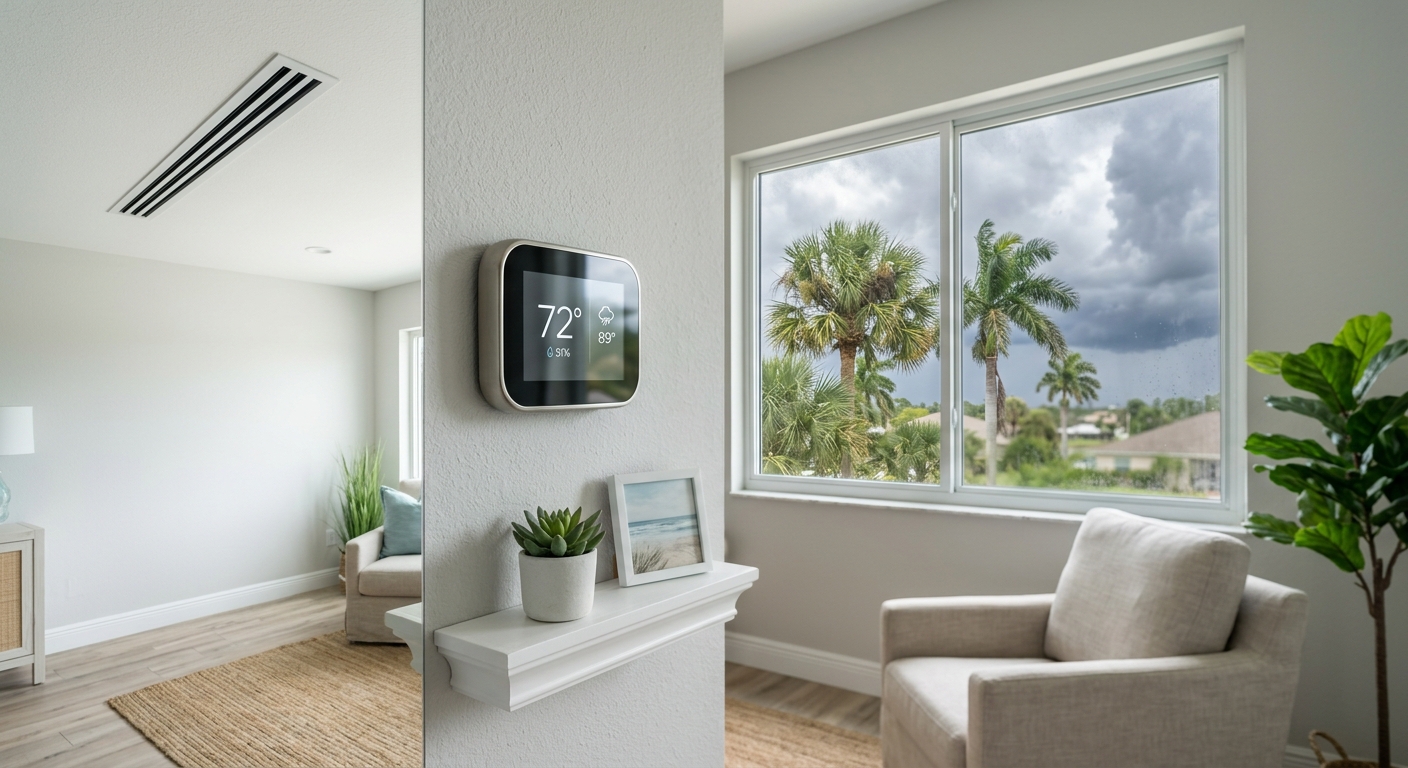
Reasonable temperature adjustments can reduce runtime, but setting the thermostat excessively warm may create humidity concerns. Avoid large temperature setbacks if the system then has to run for hours to recover during the hottest part of the day. A programmable or smart thermostat can help maintain a consistent schedule, but it cannot correct improper sizing, low airflow or mechanical problems.
What maintenance costs should Florida homeowners expect?
Florida systems work in a demanding environment, so routine care is part of ownership rather than an optional extra. Maintenance needs vary by equipment and household, but they commonly include filter replacement, drain cleaning, coil inspection, electrical checks and confirmation that the system is cooling and draining correctly.
Homeowners can handle several basic tasks:
- Check the filter monthly and replace it according to its condition and manufacturer guidance.
- Keep furniture and rugs from blocking supply and return grilles.
- Remove leaves and vegetation from around the outdoor unit while keeping panels accessible.
- Watch for water near the indoor unit or drain outlet.
- Record unusual sounds, odors, short cycling or rising energy use.
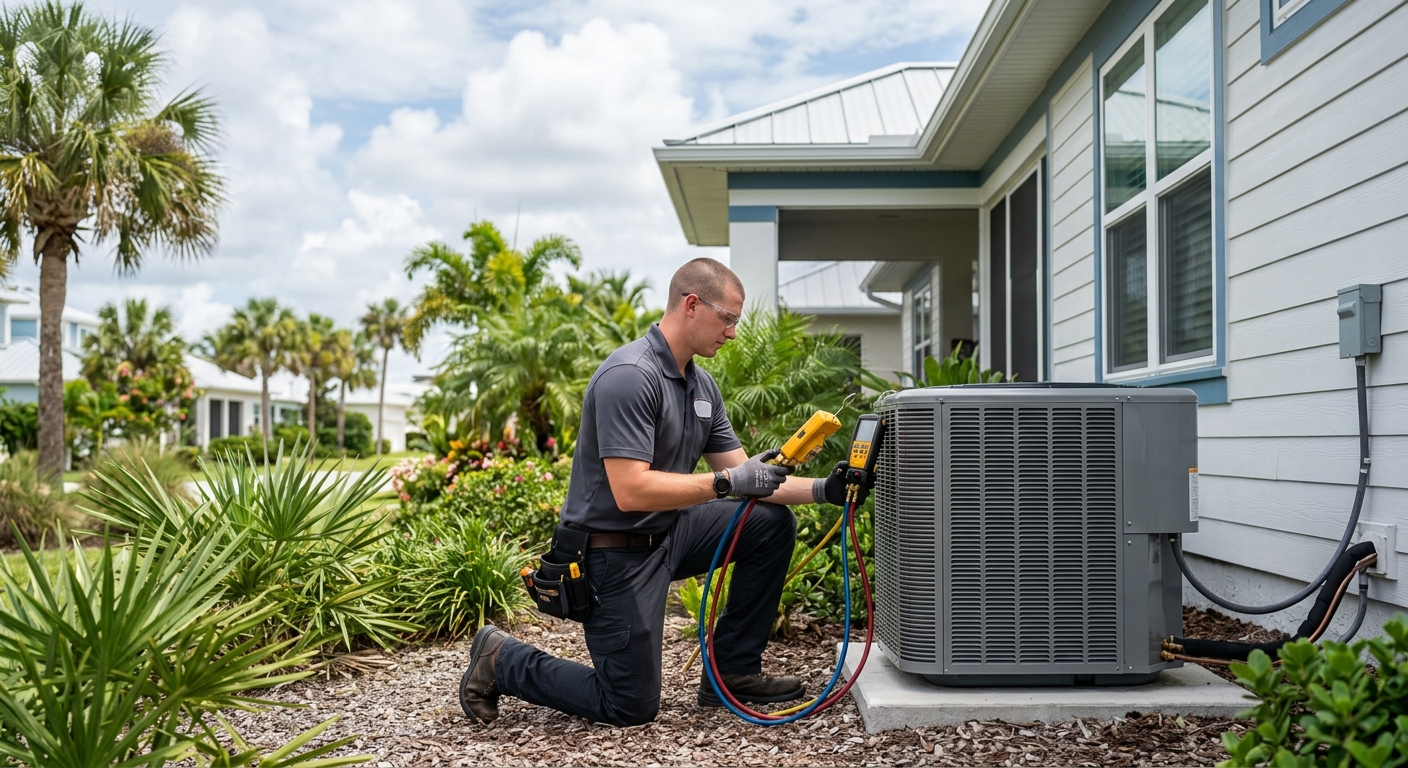
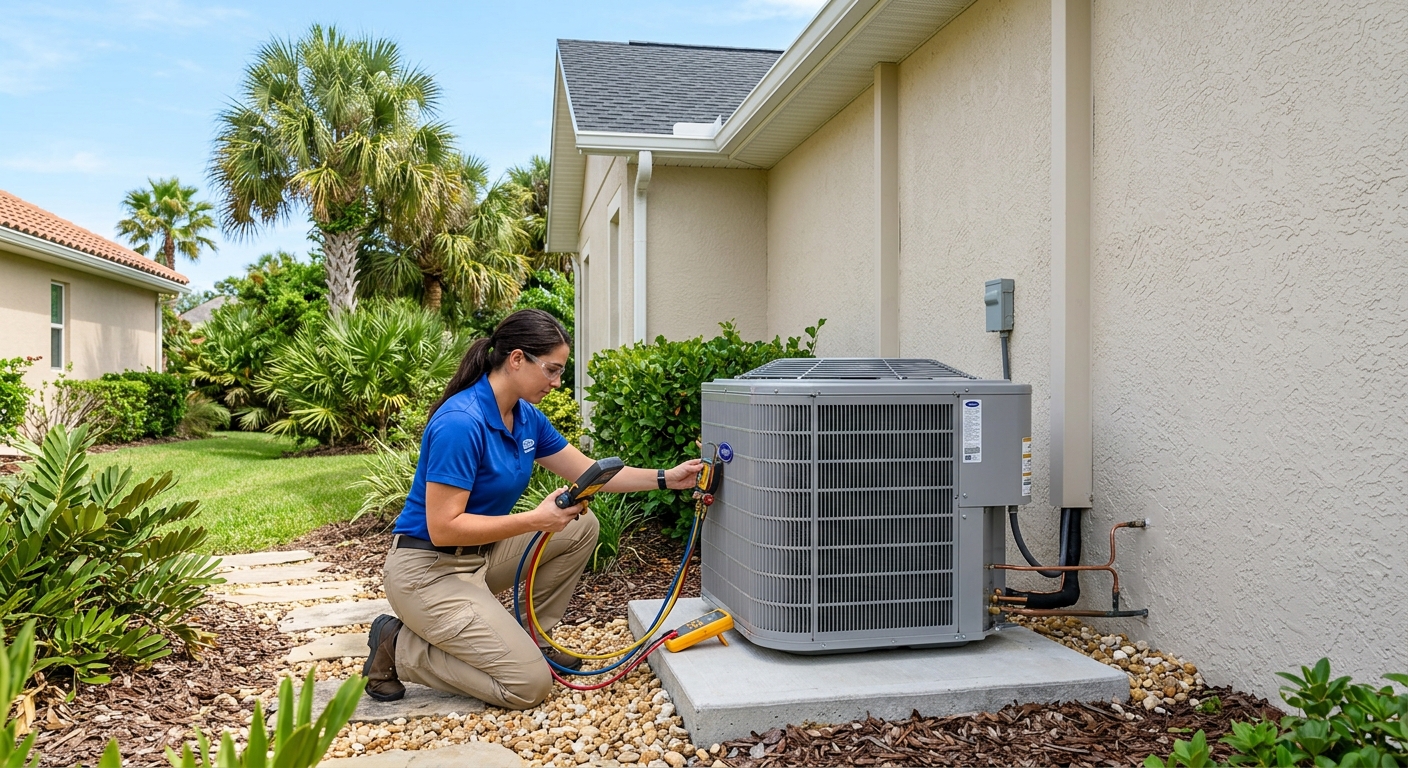
A professional should evaluate refrigerant performance, electrical components, blower operation, coil condition, drainage and system controls. Never open electrical panels or attempt to add refrigerant yourself.
How do salt air and storms affect Space Coast equipment?
Homes near the Indian River Lagoon, Atlantic coast or other salt-exposed areas may experience faster outdoor-coil and cabinet corrosion. Exposure varies by distance, wind direction, shelter and equipment location, so there is no single replacement timeline for every coastal property.
Storms can also introduce debris, standing water and power disturbances. After severe weather, visually check the outdoor unit from a safe distance. Call a professional if it shifted, flooded, has damaged wiring or makes abnormal sounds. Do not operate electrical equipment that may have been submerged.
How much should homeowners plan for repairs?
Repair costs are unpredictable, but the risk generally rises as equipment ages and components wear. Common service needs can involve capacitors, contactors, motors, drain systems, control boards, sensors, coils or refrigerant-related issues. The final price depends on the failed component, system design, accessibility, refrigerant type and warranty coverage.
A practical household budget should include an HVAC repair reserve, even while the system is under a parts warranty. Manufacturer warranties often have registration, maintenance, transfer and claim requirements, and they may not cover every labor, diagnostic, refrigerant or incidental expense. Read the actual written terms rather than assuming that the word warranty means every future service is free.
When is replacement more sensible than another repair?
Replacement deserves consideration when a system needs repeated repairs, has significant coil or compressor trouble, uses an older refrigerant that is increasingly costly to service, or no longer maintains acceptable temperature and humidity. Age alone should not dictate the decision.
Ask a technician for the repair price, the system's overall condition, other near-term risks and the expected benefits of replacement. Comparing those facts with a complete HVAC installation assessment is more useful than relying on a simple repair-cost percentage rule.
Is a heat pump more economical for a Brevard County home?
Many Central Florida homes use heat pumps because one system provides both cooling and electric heating. Since Brevard County generally has mild winters, a heat pump can often heat efficiently without relying entirely on electric resistance heat.
The best choice still depends on the home, existing system, comfort preferences and installation details. Homeowners comparing equipment can review the practical differences between a heat pump and an air conditioner for a Florida home before requesting proposals.
How can homeowners compare AC quotes fairly?
Ask every contractor to quote the same level of work and provide model-specific information. A useful proposal should make it possible to identify what is included, what is excluded and which conditions could change the final price.
- Confirm that sizing is supported by a load calculation rather than square footage alone.
- Compare efficiency ratings and matched indoor and outdoor equipment.
- Ask whether permits, disposal, electrical work and drain protection are included.
- Request findings about duct condition, airflow and insulation.
- Review manufacturer, labor and other warranty terms separately.
- Ask about maintenance requirements and filter specifications.
- Verify who will handle registration and what the homeowner must do.
- Compare estimated operating cost using consistent assumptions.
Calculate ownership cost with a simple framework: installed price plus estimated electricity, maintenance and repairs, minus any expected energy savings or applicable incentives. Because future prices and repair needs are uncertain, compare a reasonable low and high scenario rather than relying on one precise number.
When should you call an HVAC professional?
Schedule professional service when the system cannot reach the thermostat setting, cycles on and off unusually often, produces warm air, trips a breaker, leaks water, develops ice, emits a burning odor or begins making new mechanical noises. Turn the system off and seek prompt help if you see smoke, damaged wiring or water near energized equipment.
You should also consult a professional before purchasing equipment, renovating conditioned space, replacing windows throughout the home or making major insulation changes. These projects can alter the cooling load and affect the right equipment size.
How can Aquila help you understand the full ownership cost?
Aquila Air & Heating can evaluate your Brevard County home's cooling needs, existing equipment, airflow and installation conditions before presenting replacement options. The goal is to help you compare upfront price with efficiency, maintainability, warranty terms and long-term comfort rather than focusing on equipment price alone.
Aquila is Florida's First HVAC Company Offering a Lifetime Warranty. Coverage is governed by the written terms, eligibility requirements and owner responsibilities, so review the Lifetime Warranty information and ask questions about what applies to your proposed system.
Contact Aquila Air & Heating to request an in-home assessment and a clear installation proposal tailored to your Brevard County property.
What else do Florida homeowners ask about AC ownership costs?
How long should I keep an AC before replacing it?
There is no universal replacement age. Consider condition, repair history, comfort, energy performance, corrosion, refrigerant availability and the cost of the current repair. A well-performing older system may remain practical, while a younger system with major recurring failures may not.
Do new windows or insulation reduce the size of AC I need?
They can reduce heat gain, but the effect should be verified through a new load calculation. Do not assume the existing equipment capacity is still appropriate after major building-envelope improvements.
Are filters with higher ratings always better?
No. A filter must provide adequate filtration without creating excessive airflow resistance for the specific system. Ask a professional which filter type and size match your equipment, return design and household needs.
Does homeowners insurance pay for AC replacement?
Insurance may cover damage from a covered event, but it generally does not pay for ordinary wear, maintenance problems or age-related failure. Coverage depends on the policy and cause of loss, so contact your insurer before assuming a storm-related repair is covered.
Should I replace my AC before it fails completely?
Planned replacement can provide more time to compare equipment, financing, installation scope and warranty terms. It may be sensible when reliability is declining or a major repair is approaching, but a professional condition assessment should guide the decision.