R-410A vs R-454B: What the 2025 Refrigerant Change Means for Florida Homeowners
Understand the R-410A to R-454B transition, whether your current AC is affected and what Brevard County homeowners should consider before replacing a system.
The r-454b refrigerant change does not require Florida homeowners to replace a working R-410A air conditioner or heat pump. It mainly affects newly manufactured residential HVAC equipment, while existing R-410A systems can continue to be used, repaired and recharged with available R-410A.
What changed for residential HVAC systems in 2025?
Federal rules under the American Innovation and Manufacturing Act are reducing the use of hydrofluorocarbon refrigerants with higher global warming potential. Beginning January 1, 2025, manufacturers generally could no longer produce or import new residential and light-commercial air-conditioning and heat-pump equipment designed for refrigerants with a global warming potential above 700.
R-410A has a global warming potential of approximately 2,088 under the measurement system used for the federal transition. R-454B is approximately 466, placing it below the new threshold. Some manufacturers have selected R-454B for new systems, while others use R-32 or another approved refrigerant.
The rules included sell-through provisions for qualifying equipment manufactured before the deadline. As a result, homeowners may still encounter new R-410A equipment that was legally produced before 2025, but its installation eligibility depends on the equipment type, manufacturing date and applicable deadline. A qualified contractor should verify that a proposed system can legally be installed before presenting it as an option.
Do I have to replace my current R-410A air conditioner?
No. The 2025 transition is not a ban on owning or operating an R-410A system. If your equipment is cooling properly, you can continue maintaining it rather than replacing it solely because newer systems use a different refrigerant.
R-410A may still be produced, imported, reclaimed and used to service existing equipment as the broader HFC phasedown continues. Supply and pricing may change over time, but the transition does not make an existing system unusable overnight.
For Brevard County homeowners, replacement decisions should remain based on practical factors such as:
- The system's age and overall condition
- The frequency and cost of recent repairs
- Whether the refrigerant circuit has a confirmed leak
- Comfort and humidity control throughout the home
- Electricity use during long Florida cooling seasons
- The condition of the ductwork, electrical system and indoor air handler
- How long you expect to remain in the home
If replacement makes more financial sense than another major repair, ask for a proposal covering a complete, matched system. Aquila can evaluate the home and explain current options through its air-conditioning installation service.
Can R-454B be added to an R-410A system?
No. R-454B is not a drop-in replacement for R-410A. The refrigerants have different operating characteristics, safety classifications and equipment requirements. An R-410A system should only use the refrigerant and oil specified by its manufacturer.
Converting an existing R-410A unit by draining it and adding R-454B is not an appropriate retrofit. R-454B systems are engineered with compatible compressors, controls, service fittings and safety features. Depending on the equipment design and refrigerant charge, they may also include leak-detection and mitigation components.
If an R-410A system is low on refrigerant, the correct response is to locate the cause, discuss repair options and recharge it according to manufacturer specifications when appropriate. Refrigerant does not get consumed during normal operation, so a low charge usually indicates a leak or an incorrect previous service charge.
Is R-454B safe in a Florida home?
R-454B is classified as A2L: lower toxicity with mild flammability. That is different from highly flammable fuels such as propane. It does, however, require equipment, installation procedures and service tools designed for A2L refrigerants.
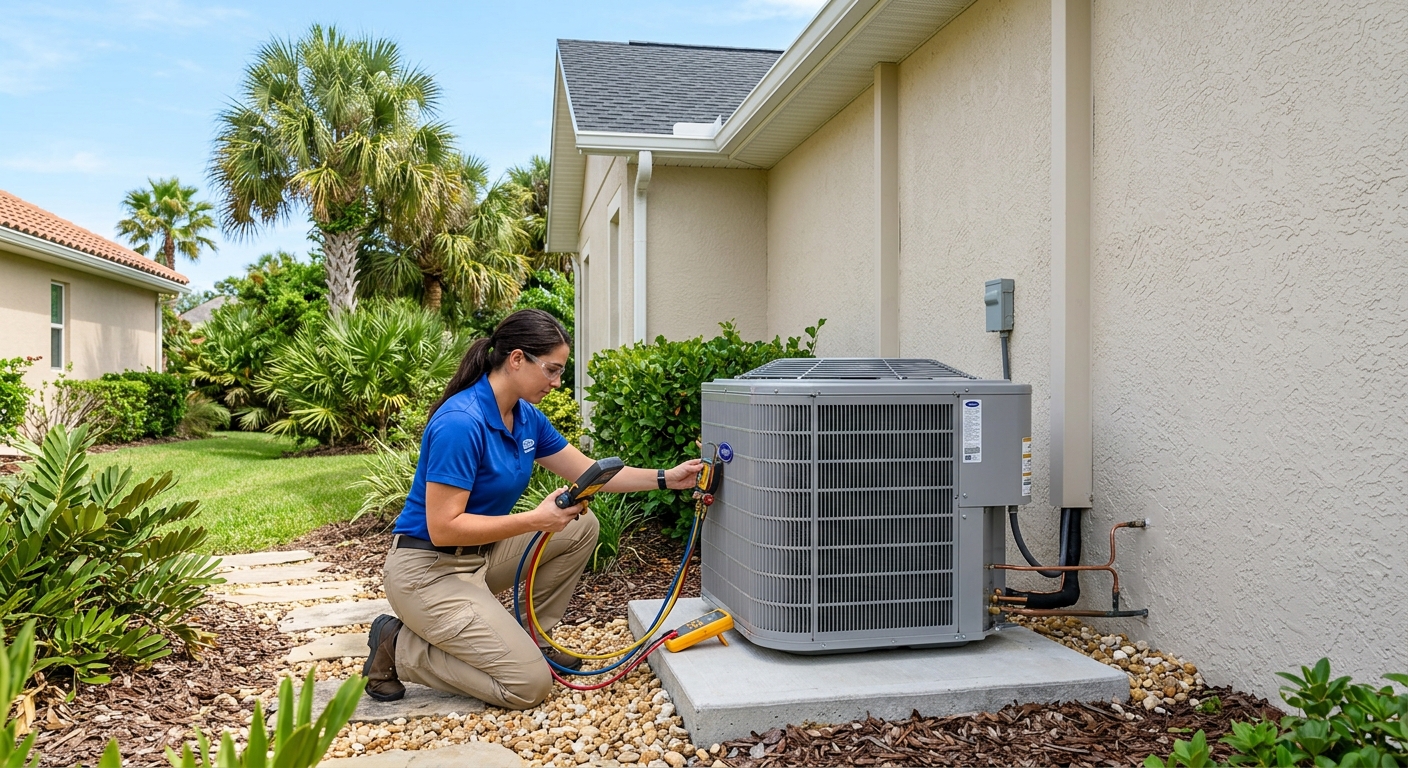
Homeowners should not open refrigerant lines, attempt a recharge or use an unqualified person to work on the sealed system. Proper work may involve approved recovery equipment, ventilation practices, ignition-source controls, accurate charge calculations and adherence to manufacturer instructions and local codes.
Brevard County permitting and inspection requirements can vary according to the property and jurisdiction. A professional installer should confirm code compliance, equipment clearances, condensate drainage, electrical capacity and any required safety features before installation.
Will an R-454B air conditioner lower my electric bill?
Not automatically. Refrigerant choice alone does not determine operating cost. Efficiency depends on the complete system's SEER2 rating, compressor and fan design, sizing, duct performance, thermostat settings, maintenance and installation quality.
A high-efficiency system can still perform poorly if it is oversized, paired with leaky ducts or charged incorrectly. In Brevard County's hot, humid climate, oversizing can also shorten cooling cycles and reduce moisture removal. That may leave a home feeling clammy even when the thermostat reaches its set temperature.
Before purchasing, request a load calculation rather than assuming the old unit's tonnage is correct. Changes such as new windows, insulation, additions or enclosed porches can alter the home's cooling load. Ask for the outdoor unit, indoor coil and air handler model numbers so you can confirm that they form a matched, rated combination.
Should I choose an R-454B air conditioner or heat pump?
Both air conditioners and heat pumps may use R-454B. An air conditioner provides cooling and is commonly paired with another heat source. A heat pump can cool the home and reverse operation to provide efficient heating during Brevard County's generally mild winters.
The better choice depends on the home's electrical setup, existing equipment, comfort preferences and expected heating use. Homeowners comparing the two can review Aquila's guide to heat pumps versus air conditioners in Florida before discussing specific models with an installer.
Refrigerant should be one part of the decision, not the entire decision. Equipment capacity, humidity performance, sound ratings, service access, replacement-part support and installation quality are often more important to everyday comfort.
What should Brevard County homeowners ask before buying?
Which refrigerant does the quoted system use?
Ask for the exact refrigerant and model numbers in writing. Do not rely on the cabinet's appearance or a general product-family name, because manufacturers may offer similar equipment configured for different refrigerants.
Is every component designed to work together?
The outdoor unit, indoor coil or air handler, metering device and controls should be compatible. Mixing components without manufacturer approval can affect capacity, efficiency, dehumidification, safety and warranty eligibility.
Has the contractor accounted for coastal conditions?
Salt air can accelerate corrosion near the Atlantic Ocean and Indian River Lagoon. Discuss equipment placement, manufacturer-approved coastal options and maintenance practices if your property experiences salt exposure. After storms, keep landscaping and windblown debris away from the outdoor coil, but do not use harsh chemicals or pressure washing on it.
Does the proposal address Florida-specific installation details?
A thorough proposal should consider condensate drainage, elevated drain protection where appropriate, secure mounting, electrical disconnects, surge protection options, duct leakage and service access. These details can be especially important during humid summers, heavy rain and tropical weather.
What warranty terms apply?
Ask which parts, labor and registration requirements apply, and request the written terms before making a decision. Aquila Air & Heating is Florida's First HVAC Company Offering a Lifetime Warranty; homeowners can review the company's Lifetime Warranty information to understand its stated terms and eligibility requirements.
Will R-410A become difficult or expensive to service?
R-410A is being phased down rather than instantly removed from the market. Existing systems create an ongoing service need, and reclaimed refrigerant can also support repairs. Future availability and pricing cannot be predicted with certainty because they may be affected by federal production allowances, demand, reclamation and distribution conditions.
A small repair on a sound R-410A system may still be sensible. Repeated leaks, a failed compressor or major indoor and outdoor component problems may shift the calculation toward replacement. Request separate repair and replacement estimates when the choice is not obvious, and consider expected remaining life rather than focusing only on today's invoice.
When should I call an HVAC professional?
Arrange professional service if the system runs without reaching the thermostat setting, develops ice on the refrigerant line, trips breakers, makes new mechanical noises or leaves unusual oily residue around refrigerant components. You should also call if indoor humidity rises noticeably, the drain repeatedly backs up or a technician says the system needs refrigerant without explaining why.
Turn the system off and seek prompt help if you smell burning, see damaged wiring or suspect physical damage after a storm. Do not handle refrigerant cylinders or cut into refrigerant tubing yourself.
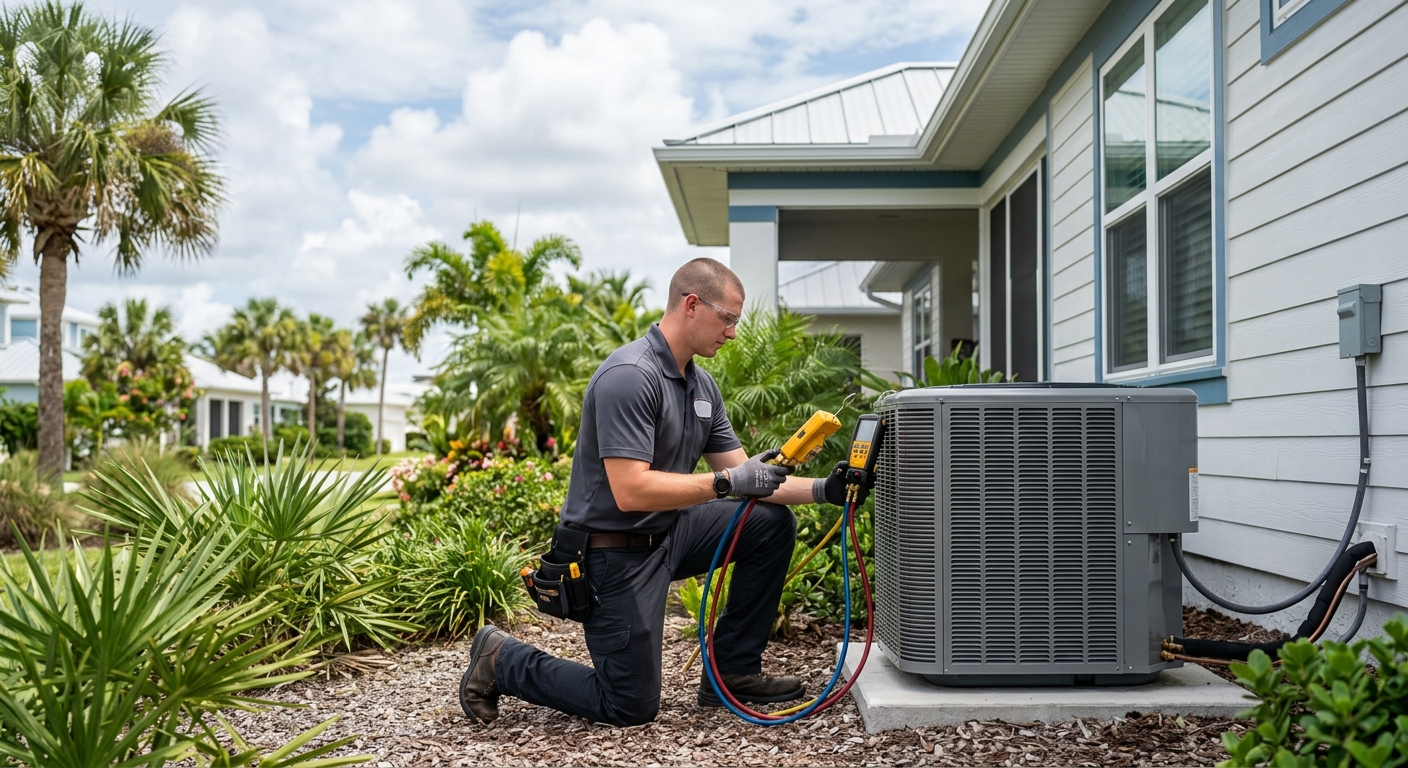
If you are planning a replacement, contact Aquila Air & Heating for a home-specific assessment and clear comparison of current equipment choices. Its HVAC installation team serves homeowners throughout Brevard County and can verify system compatibility, sizing, refrigerant type and installation requirements before work begins.
What is the bottom line on R-410A versus R-454B?
Keep maintaining a dependable R-410A system; there is no federal requirement to replace it merely because of the 2025 transition. When replacement becomes necessary, expect many current systems to use R-454B or another lower-global-warming-potential refrigerant.
Choose based on the complete system, installation quality, comfort performance and written terms—not refrigerant name alone. A properly sized and commissioned system is the best foundation for reliable cooling and humidity control on Florida's Space Coast.