Variable-Speed vs Single-Stage AC: Which Is Best for Florida Humidity?
Learn how variable-speed and single-stage AC systems handle Brevard County's heat and humidity, plus which option may fit your home and budget.
For most Brevard County homes, a variable-speed AC offers better humidity control because it can run longer at lower capacity instead of repeatedly turning on and off. A correctly sized single-stage system can still keep a home comfortable, but it generally cannot adjust as precisely to mild, humid conditions. The best choice depends on equipment sizing, ductwork, controls, budget, and the home's actual moisture load.
What is the difference between variable-speed and single-stage AC?
A single-stage air conditioner has one compressor output: full capacity. When the thermostat calls for cooling, the compressor runs at 100% until the target temperature is reached and then shuts off. This straightforward design usually has a lower upfront price and fewer operating modes to configure.
A variable-speed AC uses an inverter-driven compressor that can adjust its cooling output across a range of capacities. It may operate at a lower output for long periods and increase capacity when outdoor temperatures, sunlight, occupancy, or indoor heat gains rise. Longer, steadier operation can produce more consistent temperatures and remove moisture more continuously.
Do not confuse a variable-speed indoor blower with a variable-speed compressor. Some systems pair an adjustable blower with a single-stage outdoor unit. That combination may improve airflow management, but it does not provide the same capacity modulation as a fully variable-speed system. When comparing proposals for professional AC installation, ask contractors to identify both the compressor stages and blower type.
Why does compressor speed matter for Florida humidity?
An air conditioner removes humidity when warm indoor air passes over a cold evaporator coil and water vapor condenses on that coil. The condensate then drains outside. This process takes time, so longer cooling cycles usually support better moisture removal than a series of very short cycles.
Brevard County's climate creates a demanding combination of high humidity and a long cooling season. Homes can also face strong solar exposure, afternoon thunderstorms, moisture carried in through air leaks, and humid air entering through leaky return ducts. During spring and fall, a home may have a significant moisture load even when it does not need much sensible cooling.
A variable-speed system can respond to those lower-load conditions by operating at reduced capacity. Depending on the equipment and controls, it may also lower airflow during a dehumidification call so the coil can remove more moisture. However, variable speed is not an automatic cure for every humidity problem. Oversized equipment, duct leakage, clogged drains, poor airflow, building-envelope leaks, and incorrect control settings can undermine even premium equipment.
Can a single-stage AC control humidity effectively?
Yes, particularly when it is sized correctly and installed with properly designed ductwork. A single-stage system that runs for reasonable cycle lengths can remove substantial moisture. Problems often occur when a unit is oversized: it cools the air quickly, satisfies the thermostat, and shuts down before completing enough dehumidification.
Keeping the thermostat fan set to AUTO also matters. With the fan set to ON, the blower may continue moving air across a wet coil after the compressor stops, allowing some moisture to evaporate back into the home. Specific equipment may have different control strategies, so follow the manufacturer's setup recommendations.
Is variable-speed AC more comfortable?
Variable-speed systems generally provide steadier temperatures because they can match output more closely to the home's changing load. Lower, longer operation may reduce noticeable temperature swings, hot spots, and the rush of air associated with repeated full-capacity starts. Continuous air circulation during active cooling can also improve filtration when the filter and duct system are appropriate for the required airflow.
Sound is another potential advantage. A system operating at reduced capacity is often quieter than one repeatedly starting at full output, although actual noise depends on the model, equipment location, installation quality, and duct design.
A single-stage unit may still be a practical choice for a smaller home, rental property, seasonal residence, or budget-focused replacement. Comfort can be excellent if the equipment is matched to the house rather than selected by simply copying the capacity of the old unit.
Which system uses less electricity?
Variable-speed equipment often uses electricity more efficiently because it can avoid frequent starts and operate at lower capacity for much of the day. Yet compressor type alone does not determine energy use. Compare the efficiency rating of the complete matched system, not just one component, and remember that thermostat settings, duct leakage, insulation, window exposure, maintenance, and household habits affect real-world consumption.
Longer runtime does not necessarily mean higher energy use. A variable-speed compressor running steadily at low output may consume less electricity than a single-stage compressor cycling at full output. At the same time, a high-efficiency single-stage system could outperform an older or poorly installed variable-speed unit.
Heat pumps are also common on the Space Coast because the same system provides cooling and heating. Compressor staging affects humidity control during cooling operation in much the same way. Homeowners deciding between system types can review this guide to heat pumps versus air conditioners for Florida homes.
Is the higher upfront cost of variable speed worth it?
Variable-speed equipment usually costs more initially because it uses more advanced compressors, controls, and communicating components. Whether that premium is worthwhile depends on how long you plan to own the home, your sensitivity to humidity and temperature swings, electricity use, and the condition of the existing duct system.
Variable speed may be worth considering when:
- The house frequently feels clammy even when the thermostat reaches its setpoint.
- Rooms have noticeable temperature differences throughout the day.
- You expect to remain in the home long enough to value ongoing comfort and efficiency.
- Quiet operation is a priority.
- Your home experiences long cooling seasons and substantial part-load operation.
- You are prepared to pair the equipment with compatible controls and professional commissioning.
Single stage may be the better value when:
- Upfront cost is the main consideration.
- The existing system controls humidity well and has appropriate cycle lengths.
- The home has a modest cooling load and balanced ductwork.
- You prefer simpler equipment and do not need advanced comfort controls.
- You use the property only part of the year and can manage moisture through other appropriate measures.
Do not choose solely from equipment labels. Ask for estimates that show the complete system model numbers, efficiency rating, thermostat requirements, electrical work, drain modifications, duct repairs, and commissioning procedures.
How should an AC be sized for a Brevard County home?
A contractor should perform a room-by-room or whole-home cooling-load calculation rather than relying only on square footage or the size of the existing unit. A proper calculation considers insulation, window area and orientation, air leakage, roof characteristics, occupancy, appliances, and local outdoor design conditions.
Bigger is not automatically better. Oversizing can cause short cycles, uneven temperatures, unnecessary wear, and weak humidity removal. Undersizing can lead to excessive operation and difficulty maintaining the desired temperature during peak weather. Variable capacity offers flexibility, but it does not eliminate the need for accurate sizing.
Duct inspection is equally important. Return leaks in an attic or garage can pull humid, contaminated air into the system, while supply leaks waste cooled air outside the living space. Restricted ducts may also prevent new equipment from delivering its rated performance.
What should you ask before buying a variable-speed system?
- Is the outdoor compressor truly variable speed, or does only the indoor blower vary?
- Was a documented load calculation used to select capacity?
- Are the indoor unit, outdoor unit, and controls a certified matched combination?
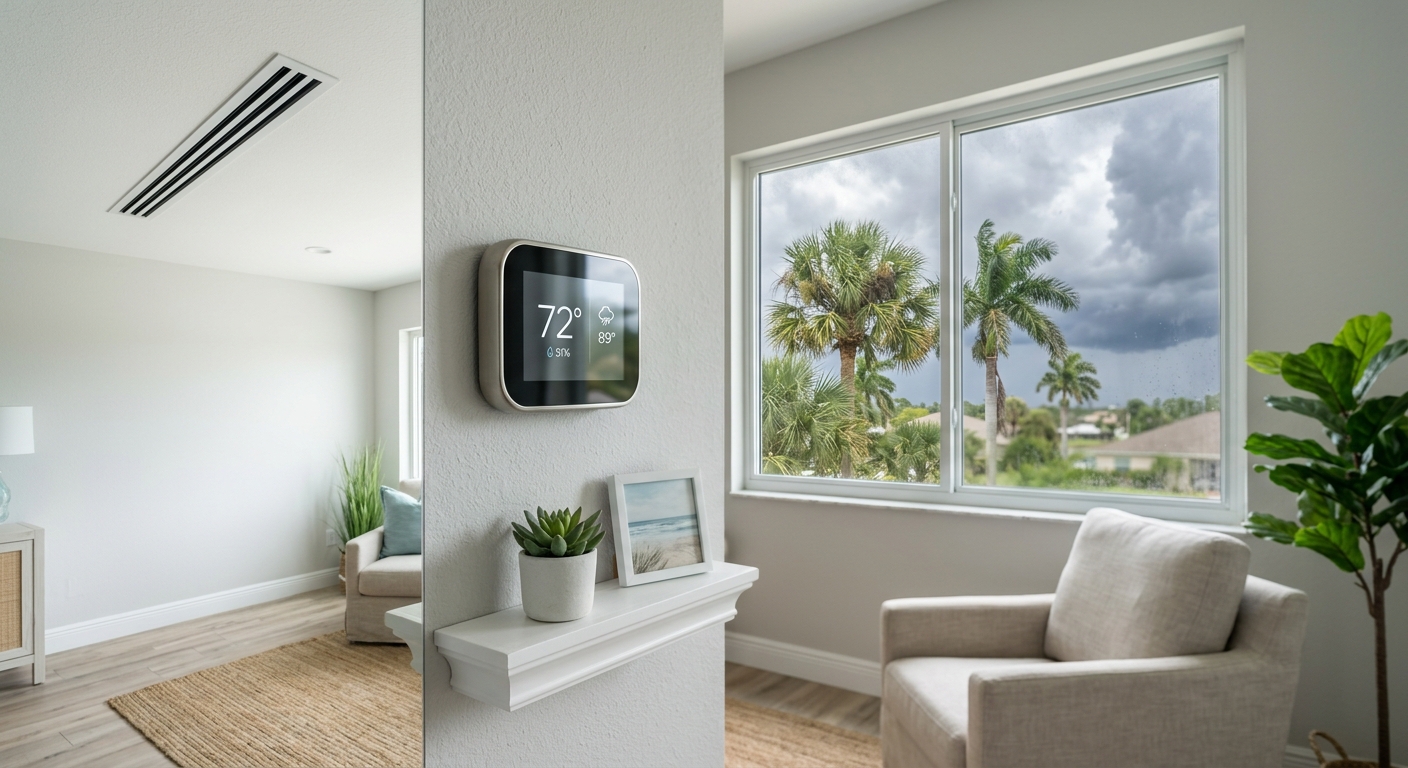
- Can the thermostat measure or respond to indoor relative humidity?
- Will the contractor test static pressure and verify airflow after installation?
- Does the duct system need sealing, resizing, or additional return capacity?
- What maintenance and electrical protection does the manufacturer recommend?
- What warranty registration, maintenance, transfer, and service terms apply?
Because the Space Coast experiences frequent thunderstorms and voltage disturbances, ask whether manufacturer-approved surge protection is appropriate for the selected inverter equipment. Coastal properties should also discuss salt exposure, equipment placement, and manufacturer-approved coil-care practices.
When should you call an HVAC professional about humidity?
Call a qualified HVAC technician if indoor humidity repeatedly stays near or above 60%, the home smells musty, windows or vents collect condensation, the AC runs in unusually short bursts, or the drain pan overflows. Water stains, visible microbial growth, ice on refrigerant lines, weak airflow, and unexplained increases in electricity use also warrant professional evaluation.
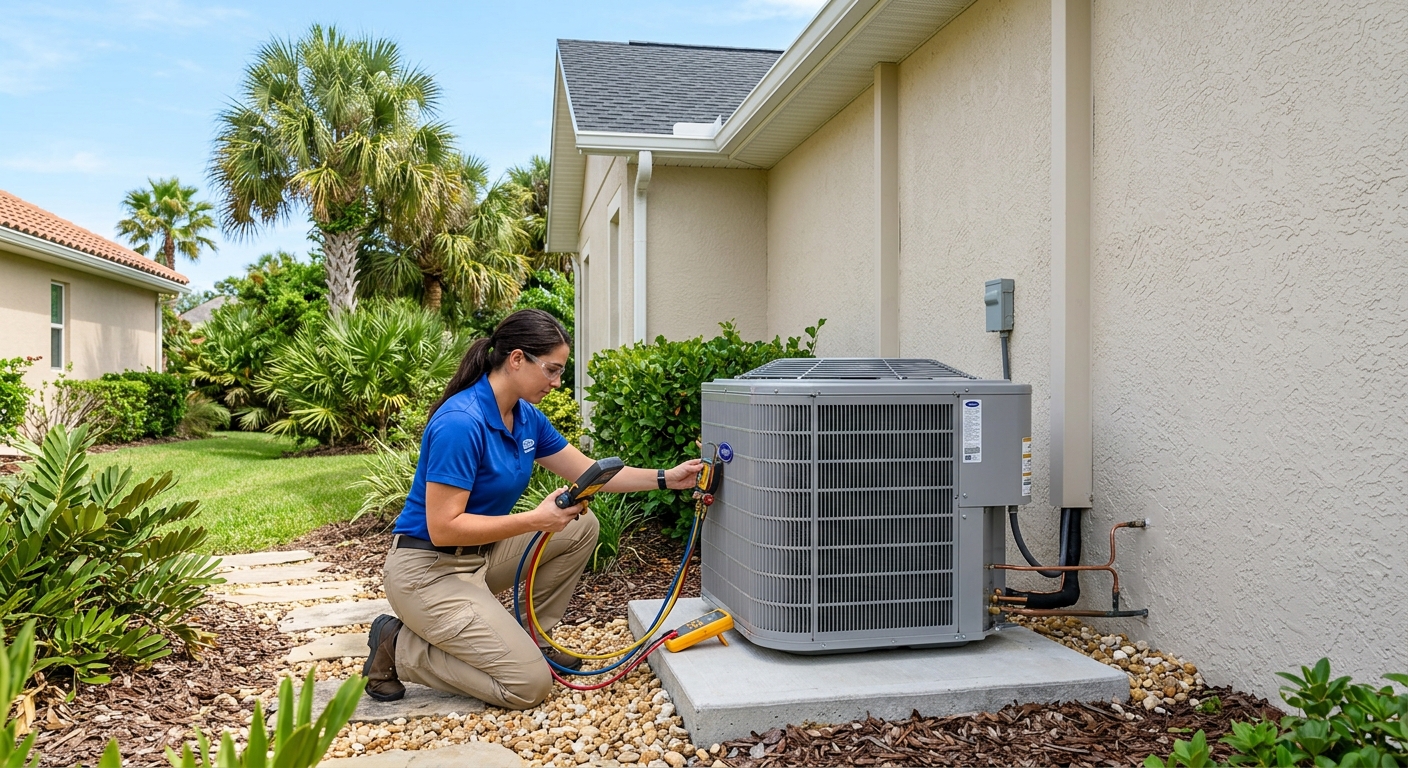
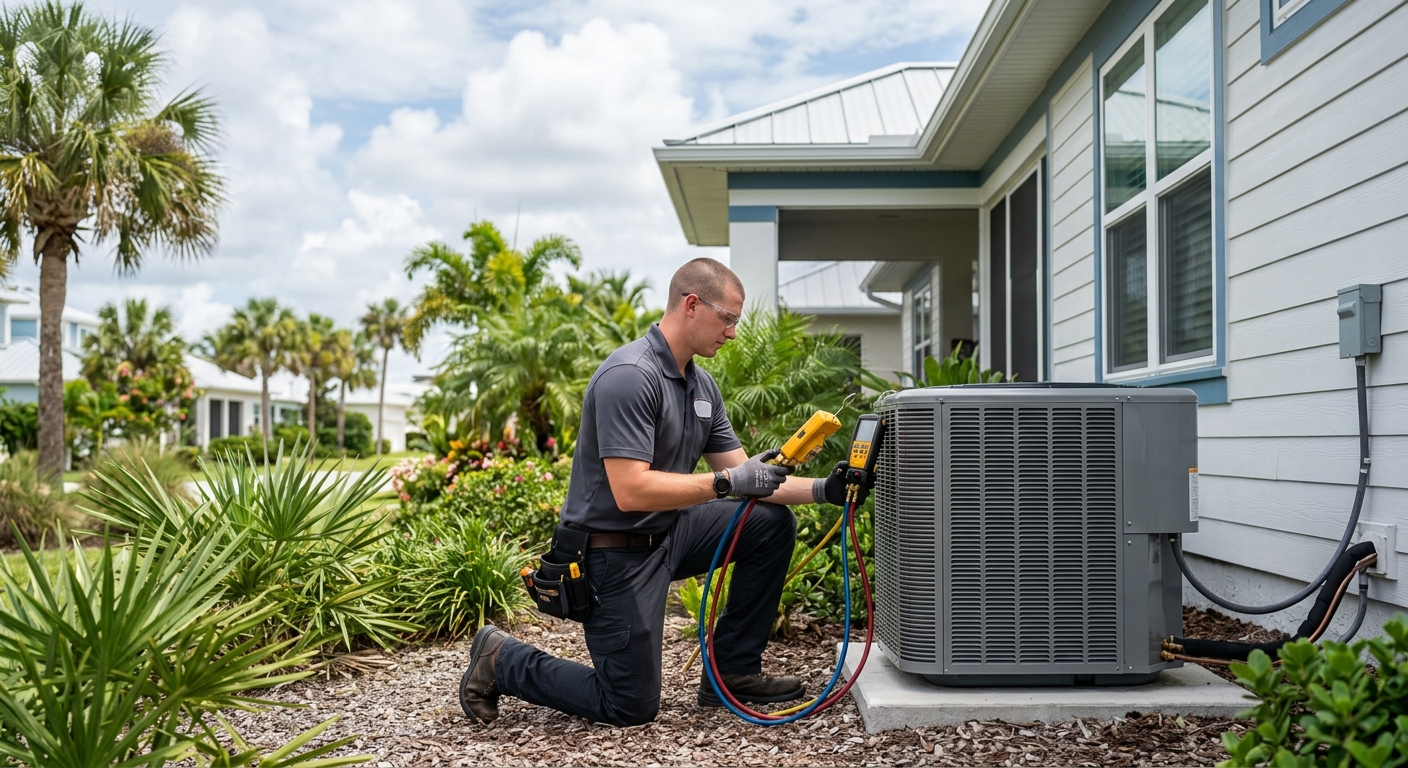
A technician can check refrigerant performance, coil condition, condensate drainage, blower settings, static pressure, duct leakage, equipment sizing, and thermostat configuration. If cooling demand is low while moisture remains high, a properly selected whole-home dehumidifier may be more appropriate than lowering the thermostat or oversizing the AC.
So, which AC is best for Brevard County humidity?
Variable speed is generally the stronger choice for homeowners prioritizing humidity control, quieter operation, and consistent comfort. Single stage remains a sound, budget-conscious option when it is accurately sized, installed with good ductwork, and allowed to run adequate cooling cycles. Installation quality and system design are more important than choosing the most expensive equipment.
Aquila Air & Heating can evaluate your home's load, ducts, moisture concerns, and budget before recommending equipment. Contact our family-run Brevard County team for an in-home assessment, and review the eligibility requirements and terms for Aquila's Lifetime Warranty when comparing replacement options.
Frequently asked questions
What indoor humidity level should I target in a Brevard County home?
Many homeowners are comfortable around 45% to 55% relative humidity, although comfort varies with temperature and personal preference. Consistent readings near or above 60% can increase condensation and moisture concerns. Use a reliable hygrometer and investigate persistent high readings rather than relying only on the thermostat display.
Will a variable-speed AC remove humidity without making the house too cold?
It can often remove moisture more effectively at lower cooling output, especially when paired with humidity-aware controls. Results still depend on system setup, airflow, load, and indoor conditions. In mild but very humid weather, a whole-home dehumidifier may be needed to control moisture without excessive cooling.
Does variable-speed AC run all day?
It may run for long periods at low capacity, which is normal and can improve comfort and moisture removal. Long runtime is not automatically a fault. A professional should evaluate the system if it cannot maintain temperature, operates only at high output, or produces unexpectedly high utility bills.
Can I replace a single-stage unit with variable speed without changing ducts?
Sometimes, but the ducts must be inspected first. The contractor should confirm airflow, static pressure, return capacity, filtration, and equipment compatibility. Existing duct restrictions or leaks may need correction to obtain the comfort and efficiency expected from the new system.
Will a larger variable-speed AC solve severe humidity problems?
No. An oversized variable-speed unit can still operate poorly, and excess capacity does not address duct leaks, moisture intrusion, drainage problems, or inadequate ventilation control. Accurate load calculations and diagnosis should come before selecting capacity.