HVAC Warranty in Florida: What Brevard County Homeowners Should Know
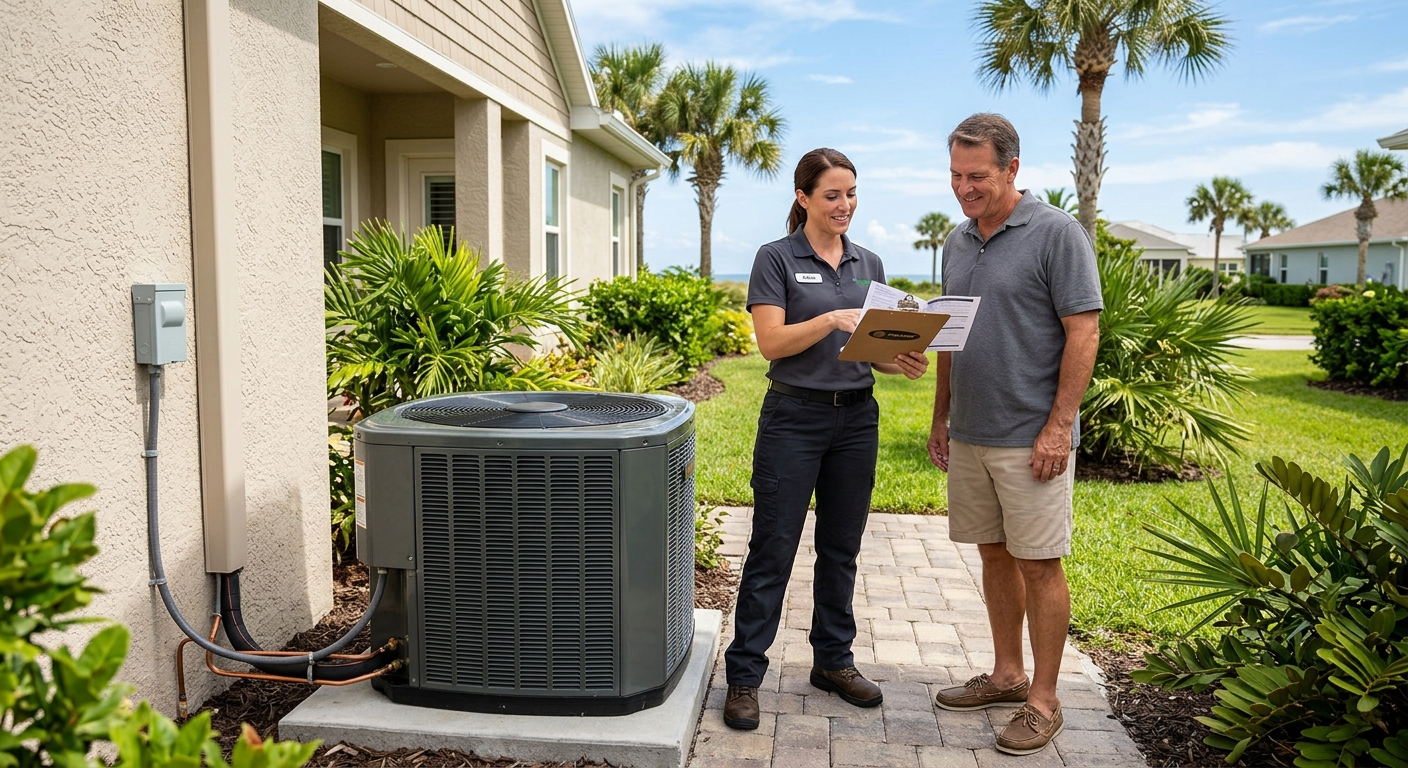
A practical Brevard County guide to HVAC warranty terms, registration, maintenance requirements, exclusions, labor coverage, and coastal concerns.
An HVAC warranty in Florida may help pay for eligible repairs, but coverage depends on the written terms, registration status, installation quality, maintenance history, and cause of failure. Brevard County homeowners should compare parts, labor, workmanship, transfer, and maintenance provisions before buying a system rather than relying only on the warranty's advertised duration. Always request the complete warranty documents and keep copies with your installation records.
What does an HVAC warranty usually cover in Florida?
Most residential HVAC purchases involve more than one type of warranty. Each comes from a different party and may have separate claim procedures, exclusions, and expiration dates.
Manufacturer parts warranty
A manufacturer warranty generally applies to eligible factory components that fail because of a covered defect during the stated term. Depending on the equipment and agreement, covered components might include a compressor, control board, fan motor, coil, or other original part.
Parts coverage does not automatically mean the entire repair is free. Diagnosis, labor, refrigerant, shipping, access work, permits, or replacement of related materials may be handled separately. The written warranty controls what is included.
Labor warranty
A labor warranty addresses some or all of the technician's labor for an eligible repair. It may come from the installing contractor or a separate program. Ask who administers it, how long it lasts, whether service-call or diagnostic charges apply, and whether the original contractor must perform the work.
Installation or workmanship warranty
A workmanship warranty concerns the contractor's installation rather than a factory defect. Examples could involve an eligible issue with an electrical connection, drain configuration, equipment setup, or another part of the installation. Terms vary by contractor, so homeowners should get this coverage in writing.
For a deeper breakdown of the terminology and questions to ask, read What Does a Lifetime HVAC Warranty Really Cover?.
Does a Lifetime Warranty mean every future HVAC expense is covered?
No. The phrase Lifetime Warranty does not have one universal scope across every HVAC provider or program. It could refer to particular components, labor, or another defined benefit, and it may remain valid only while stated eligibility requirements are met.
Before relying on any Lifetime Warranty, ask for clear written answers to these questions:
- Whose lifetime or ownership period defines the term?
- Which equipment, components, and services are included?
- Are labor, diagnostics, refrigerant, shipping, and permits covered?
- Is product registration required, and who completes it?
- What maintenance records must the homeowner retain?
- Does coverage transfer when the home is sold?
- Which events, environmental conditions, or types of damage are excluded?
- Who provides service if the original contractor is no longer available?
Aquila Air & Heating provides a written explanation of its program on the Lifetime Warranty page. Review the actual agreement for coverage details, homeowner responsibilities, exclusions, and claim procedures.
Why does Brevard County's climate matter to warranty decisions?
Air conditioners on the Space Coast operate through long cooling seasons with high heat and humidity. Frequent operation can expose weak electrical connections, drainage problems, restricted airflow, and installation errors sooner than in milder climates. A warranty cannot replace correct sizing, careful installation, and routine service.
Salt air and corrosion near the coast
Homes near Cocoa Beach, Cape Canaveral, Satellite Beach, Indialantic, Melbourne Beach, and other coastal communities may experience greater exposure to airborne salt. Corrosion can affect outdoor coils, cabinets, fasteners, and electrical components. Because environmental corrosion is treated differently among warranty agreements, coastal homeowners should ask specifically how the written terms address it.
A technician can also explain manufacturer-approved coil care and whether optional equipment features make sense for the property. Avoid harsh chemicals, pressure washing, or do-it-yourself coatings that could damage the unit or conflict with manufacturer instructions.
Storms, flooding, and power problems
Lightning, voltage fluctuations, wind-driven debris, storm surge, and flooding are not the same as a factory component defect. Damage from these events may fall outside an equipment warranty and could instead involve homeowners or flood insurance, depending on the policy and circumstances.
Ask an HVAC professional whether properly selected surge protection is appropriate for your indoor and outdoor equipment. After flooding or suspected electrical damage, keep the system off and call a qualified professional rather than attempting to restart it.
Condensate drainage and humidity
A Florida air conditioner can remove substantial moisture from indoor air. Algae, debris, poor drain routing, or a failed float switch may lead to shutdowns or water damage. Drain maintenance is often a homeowner or maintenance responsibility rather than a defective-part claim, although the answer depends on what failed and the warranty language.
Can missing registration reduce warranty coverage?
It can under some manufacturer programs. New equipment may need to be registered within a stated period to receive the available registered-owner terms. Requirements can vary by manufacturer, equipment, installation date, occupancy, and other factors.
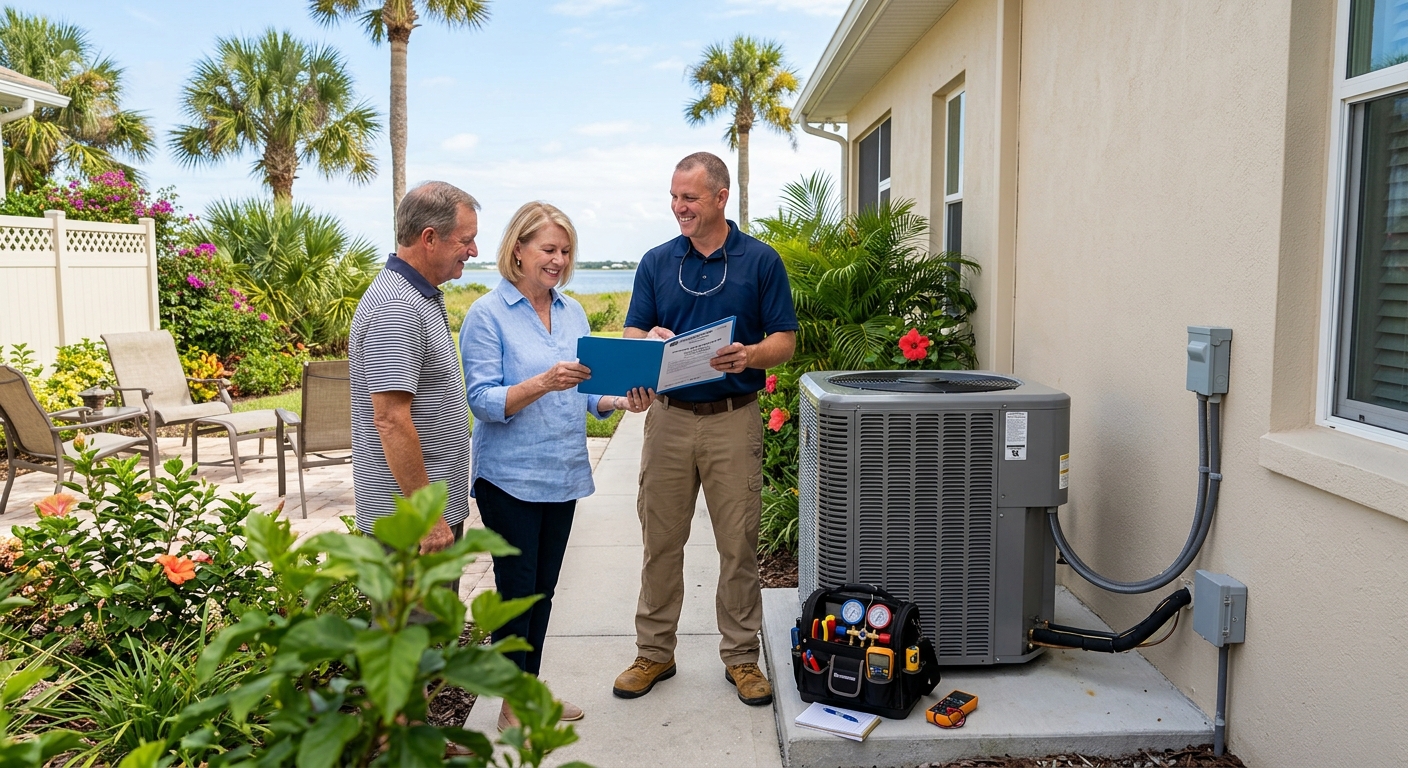
Do not assume registration was completed. Ask your installer for written confirmation showing the model numbers, serial numbers, installation date, property address, and registration status. Check every major matched component, including the outdoor unit, indoor air handler or furnace, and coil when applicable.
Can skipped maintenance affect an HVAC warranty claim?
Some warranties require maintenance consistent with manufacturer instructions and may request proof during a claim. Even when a repair is covered, damage caused by neglected filters, blocked airflow, dirty coils, clogged drains, pests, improper alterations, or unauthorized service may be treated differently from a covered defect.
Brevard County homeowners should keep a simple HVAC file containing:
- The sales proposal and final invoice
- Permit and inspection records when applicable
- Manufacturer registration confirmation
- Model and serial numbers for all components
- The full warranty agreement
- Maintenance invoices and technician reports
- Receipts and documentation from previous repairs
Change or clean the filter at the interval appropriate for the filter, household, and system. Homes with pets, renovation dust, high occupancy, or frequent equipment operation may need more frequent checks. Follow the equipment manufacturer's instructions and ask your contractor for a maintenance schedule suited to your home.
Is an HVAC warranty transferable when a Brevard home is sold?
Transferability varies. Some manufacturer or contractor warranties may transfer to a new owner, while others may shorten, require a form or fee, or end when the original owner sells the property. A Lifetime Warranty may also define the covered lifetime in relation to the original purchaser or another condition.
If you are buying a home, request the installation invoice, registration confirmation, maintenance history, and warranty documents before assuming coverage remains active. If you are selling, contact the manufacturer and contractor early enough to complete any required transfer process.
What should you compare before choosing a new HVAC system?
Warranty duration matters, but it should not outweigh system design and installation quality. An oversized or undersized system, poor airflow, incorrect refrigerant setup, or weak drainage design can create comfort and reliability problems that a warranty does not solve.
When evaluating an AC installation, compare the complete proposal rather than only the equipment brand or monthly payment. Ask each contractor to document:
- How system capacity was selected for the home
- Whether ductwork and available airflow were evaluated
- Which indoor and outdoor components form the matched system
- Who obtains required permits and coordinates inspections
- Manufacturer parts, labor, and workmanship terms
- Registration and maintenance responsibilities
- What common expenses remain the homeowner's responsibility
- How warranty service is requested after hours or during peak season
A trustworthy contractor should be willing to explain what is not covered as clearly as what is covered. Be cautious of verbal promises that do not appear in the agreement.
When should you call an HVAC professional?
Call a qualified HVAC contractor when the system repeatedly trips a breaker, stops cooling, freezes, leaks water, makes new mechanical noises, emits a burning odor, or shows signs of storm, salt, or electrical damage. Also call if indoor humidity remains unusually high, rooms have persistent airflow problems, or a warranty claim may be needed.
Turn the system off and seek prompt help if you see smoke, scorched wiring, substantial water near electrical components, or flood exposure. Do not open sealed refrigerant components or replace major parts yourself. Unauthorized repairs, incorrect parts, and undocumented work can create safety risks and complicate a warranty claim.
Before the appointment, note when the problem started, take photos of visible damage, and gather the model, serial number, warranty documents, and maintenance records. Avoid discarding a failed component until the servicing contractor confirms whether the manufacturer requires it for claim processing.
How can Aquila Air & Heating help?
Aquila Air & Heating is Florida's First HVAC Company Offering a Lifetime Warranty. That positioning does not replace the written terms, so homeowners should review the program documents and ask questions about eligibility, maintenance, exclusions, and service procedures before making a decision.
If you are replacing an aging system, comparing warranty options, or trying to understand a possible claim in Brevard County, contact Aquila Air & Heating. The team can evaluate your equipment and explain the applicable installation and warranty information so you can make an informed choice for your Space Coast home.