What Does a Lifetime HVAC Warranty Really Cover?
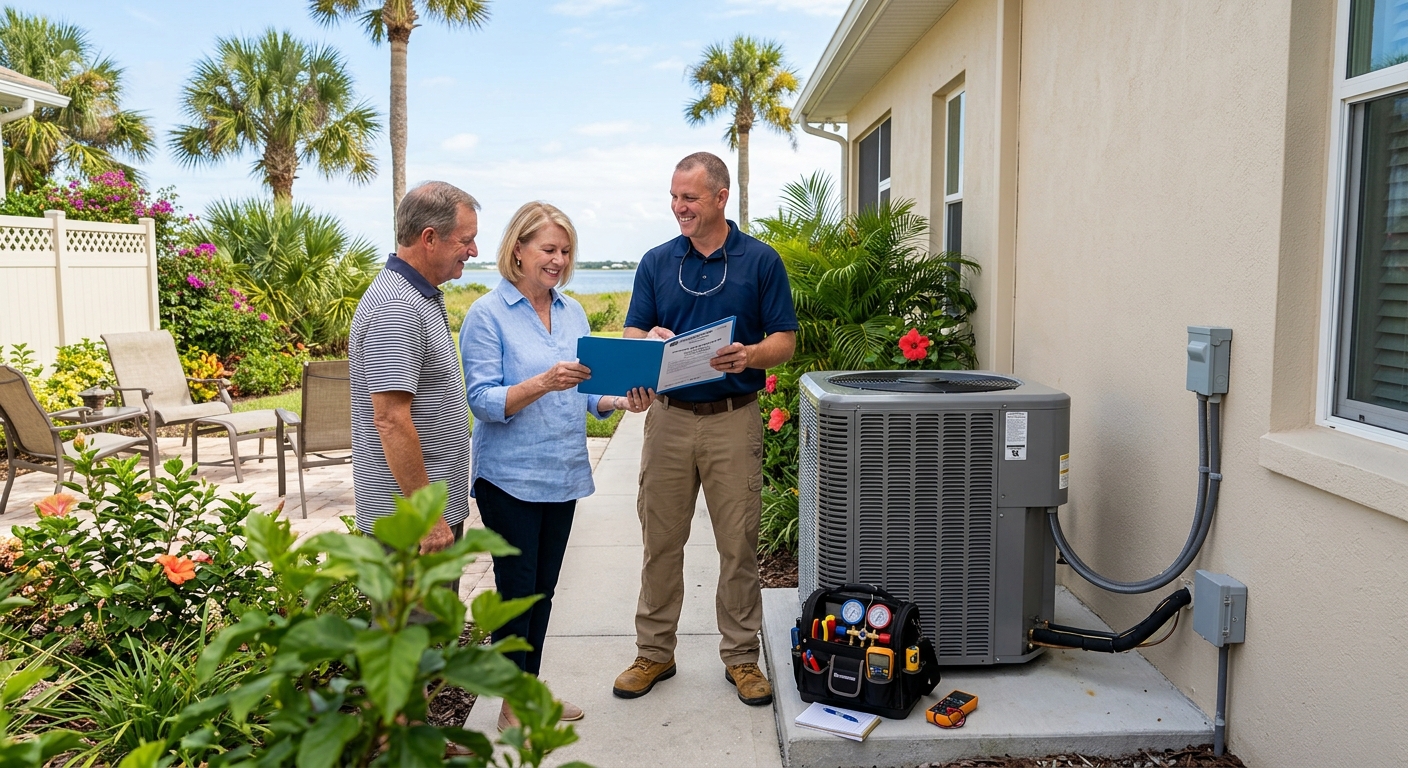
A practical guide to Lifetime HVAC Warranty coverage, including parts, labor, maintenance requirements, exclusions, and questions to ask your contractor.
Lifetime HVAC Warranty coverage depends entirely on the written terms: some programs cover specified replacement parts, while others may include qualifying labor or equipment replacement under defined conditions. “Lifetime” may refer to the original owner’s time in the home, the covered system’s service life, or another period described in the agreement, so homeowners should review the actual warranty rather than rely on the name alone. Registration, professional maintenance, ownership changes, and exclusions can all affect eligibility.
What does “lifetime” mean in an HVAC warranty?
There is no single definition that applies to every HVAC warranty. The word may describe how long particular components are protected, how long the original purchaser owns the home, or how long the installed equipment remains in service. It does not automatically mean every repair, expense, or cause of failure is covered forever.
Before choosing a new air conditioner or heat pump, ask the contractor to identify the exact event that ends coverage. The answer should be found in a written agreement, not only in an advertisement or verbal explanation. Important questions include whether the warranty remains active after the home is sold, whether a replacement unit receives new coverage, and whether there is a maximum system age.
Homeowners should also distinguish a contractor-backed warranty from a manufacturer warranty. A manufacturer generally provides coverage for qualifying factory parts under its own terms. A contractor may separately offer labor coverage, a service agreement, or another protection program. These documents can work together, but they are not interchangeable.
Which HVAC costs might be covered?
The strongest way to evaluate lifetime hvac warranty coverage is to divide a future repair invoice into separate categories. An HVAC service bill can include the replacement component, diagnostic work, technician labor, refrigerant, shipping, permits, access work, and materials. Coverage for one category does not necessarily pay for the others.
Are replacement parts included?
A warranty may cover eligible mechanical or electrical components that fail because of a covered defect. Examples could include a compressor, blower motor, condenser fan motor, control board, or other listed factory part. The agreement should state which parts qualify, who supplies them, and whether comparable parts may be used when the original model is no longer available.
Coverage should never be assumed for accessories installed outside the original system. Thermostats, indoor air quality devices, surge protectors, condensate pumps, zoning controls, ductwork, and line-set components may have separate warranty terms.
Does it pay for technician labor?
Parts and labor are often treated separately. A manufacturer may provide an approved replacement part while the homeowner remains responsible for diagnosis, removal of the failed component, installation, testing, and travel or service fees. A contractor-backed Lifetime Warranty may address some labor costs, but only the written terms can confirm what is included.
Ask whether labor coverage changes over time and whether the work must be performed by the original installing contractor. Also verify how coverage is handled if the contractor closes, the homeowner moves, or the equipment needs emergency service outside normal business hours.
Are refrigerant and diagnostic charges covered?
Refrigerant is a frequent source of confusion. Even when a failed coil or compressor qualifies for replacement, the refrigerant needed to complete the repair may be handled as a separate material cost. Leak searches, recovery, evacuation, nitrogen testing, filter-driers, and related supplies may also be separate.
Request a sample repair scenario before installation. For example, ask what you would pay if an indoor coil failed in year eight. A clear answer should account for the part, labor, refrigerant, diagnosis, and any processing fee.
What is commonly excluded from Lifetime HVAC Warranty coverage?
Warranties are generally intended to address specific equipment failures, not every condition that can damage an HVAC system. Exact exclusions differ, but homeowners should look for language concerning maintenance neglect, improper operation, installation by unauthorized parties, electrical problems, environmental damage, corrosion, pests, flooding, and alterations to the system.
Routine maintenance items are commonly the homeowner’s responsibility. Air filters, drain-line cleaning, coil cleaning, thermostat batteries, and seasonal tune-ups are normal ownership expenses rather than equipment defects. Duct repairs, insulation problems, clogged drains, and comfort issues caused by an undersized return or building-envelope problem may also fall outside equipment coverage.
Cosmetic changes, noise that does not affect operation, and efficiency loss caused by dirt or restricted airflow may be handled differently from a failed covered component. Read the definitions and exclusions so you understand the difference between a warrantable breakdown and a maintenance or property issue.
Why do Brevard County conditions matter?
Brevard County air conditioners operate through long cooling seasons, high humidity, heavy rain, thunderstorms, and salty coastal air. Homes near the Atlantic Ocean or Indian River Lagoon may experience more airborne salt exposure than inland properties. Outdoor components can also encounter wind-driven debris, irrigation overspray, insects, vegetation, and standing water.
These local conditions make several warranty questions especially important:
- Is corrosion covered, and how does the agreement define normal environmental exposure?
- What happens if a power surge, lightning event, flood, or named storm damages the system?
- Are coastal coatings or corrosion-resistant equipment options available?
- Does the outdoor unit need a specific clearance from landscaping, fencing, or irrigation?
- What maintenance records are required in Brevard County’s long cooling season?
Storm, flood, and surge damage may be addressed by homeowners insurance, flood insurance, an equipment protection device, or another policy rather than an HVAC warranty. Never assume which program applies. After a severe storm, keep the system off if it is flooded, visibly damaged, making electrical noises, or tripping breakers, and call a qualified professional.
Can maintenance requirements affect the warranty?
Yes. Many warranties require reasonable care, and some specify professional maintenance intervals or documentation. Keep dated invoices, inspection reports, model and serial numbers, installation records, registration confirmation, and receipts for qualifying service.
In Brevard County, preventive service is also practical beyond warranty compliance. A technician can check refrigerant performance, electrical connections, temperature change, blower operation, coil condition, and condensate drainage. Because local systems remove substantial moisture, a blocked drain or poorly performing system can lead to water damage and indoor humidity problems even when no covered part has failed.
Follow the maintenance schedule stated in your agreement. Do not assume that an annual visit, twice-yearly service, or homeowner-performed cleaning will satisfy every program. Ask who is authorized to perform maintenance and what proof must be retained.
Does coverage transfer when you sell your Brevard County home?
Transferability varies. Some warranties apply only to the original purchaser at the original installation address. Others may transfer after paperwork and a fee, or they may convert to a shorter term for the next owner.
If you may sell your home, request the transfer rules before signing an installation contract. A transferable warranty can be useful information for a future buyer, but it should be represented accurately. Keep the warranty certificate and service history with the home’s records so the next owner can verify coverage.
What should you ask before buying a new HVAC system?
A warranty is only one part of an HVAC purchase. Correct sizing, installation quality, duct condition, drainage design, electrical protection, accessibility, efficiency, and contractor support all influence long-term performance. When comparing proposals for AC Installation, ask each contractor to answer the same questions in writing:
- Who provides the warranty: the manufacturer, contractor, third party, or a combination?
- What does “lifetime” mean for this exact agreement?
- Which parts, labor tasks, materials, and fees are covered?
- What must be registered, by whom, and by what deadline?
- What maintenance is required, and what records must I keep?
- Which events, environmental conditions, and maintenance items are excluded?
- Is coverage transferable to a future homeowner?
- Who handles a claim, and what could I owe during a covered repair?
Ask for the full warranty document before making a deposit. If a salesperson cannot explain a term clearly, request clarification from the company in writing. Save the final version with your installation contract and verify that the model and serial numbers are correct after installation.
When should you call an HVAC professional?
Call a licensed HVAC professional when the system stops cooling, repeatedly trips a breaker, develops ice, leaks water, produces burning odors, makes new mechanical noises, or cannot control indoor humidity. Shut the system off and seek prompt help if you see smoke, damaged wiring, refrigerant-line damage, flood exposure, or storm-related impact.
Do not dismantle covered equipment or hire an unauthorized person before checking the warranty procedure. Unauthorized repairs or modifications may complicate a claim, and electrical and refrigerant work require proper training and equipment. You can safely check the thermostat setting, replace a dirty filter if instructed by the manufacturer, and confirm that the equipment has power, but repeated resets are not a repair.
How can Aquila Air & Heating help you compare coverage?
Aquila Air & Heating is Florida's First HVAC Company Offering a Lifetime Warranty. Our team can explain the applicable written terms, maintenance responsibilities, and installation options so Brevard County homeowners can make an informed decision without assuming that every HVAC expense is included.
Review the details of our Lifetime Warranty, then contact Aquila Air & Heating with questions about your home, current system, or replacement plans. We can evaluate the equipment and provide clear guidance on installation, service needs, and the warranty documents that apply to your project.