Mini-Splits for Florida Additions, Garages, and Lanais
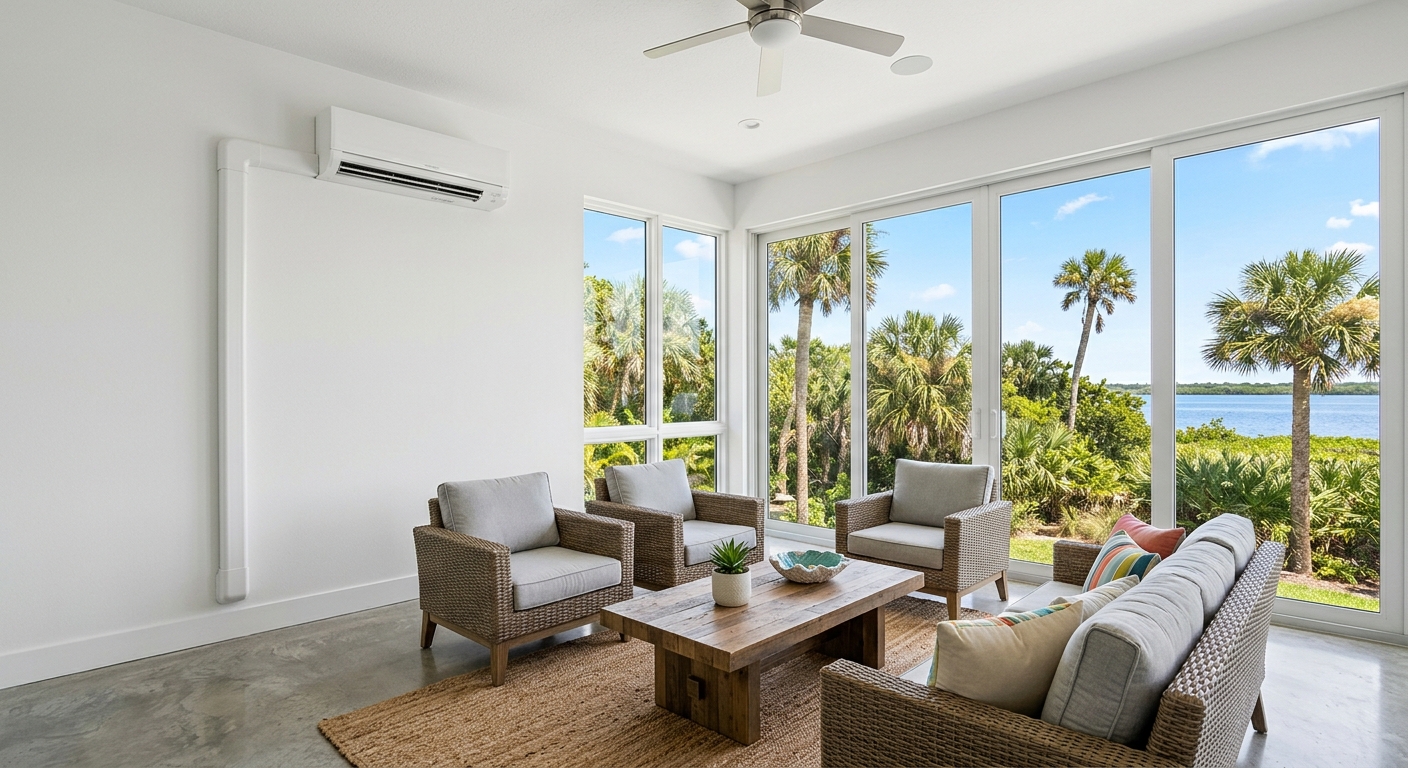
A practical Brevard County guide to choosing, sizing, and installing a mini-split in a home addition, garage, or enclosed lanai.
A mini-split can be an excellent way to cool and dehumidify a Florida addition, converted garage, or enclosed lanai without extending existing ductwork. For reliable comfort in Brevard County, the space must be enclosed and properly insulated, and the equipment should be sized for its actual heat and humidity load rather than selected by square footage alone. A professional evaluation can also confirm electrical, drainage, permitting, and outdoor-unit requirements.
Is a mini-split a good choice for a Florida home addition?
In many cases, yes. A ductless mini-split gives an addition its own temperature control and avoids asking the existing central air conditioner to handle space it was not designed to serve. This is especially useful when an addition is separated from the original duct system or when extending ducts would require substantial ceiling or wall work.
Most modern mini-splits use inverter-driven compressors that adjust capacity as conditions change. This allows the system to run steadily at lower output instead of repeatedly turning on and off, which can support more consistent temperatures and moisture removal. Many systems are heat pumps, so they can provide efficient heating during the Space Coast's cooler winter mornings as well.
Before choosing ductless equipment, have an HVAC contractor compare it with other AC installation options. Extending or replacing a central system may make more sense when an addition connects openly to the main house or when the existing equipment is already near the end of its service life.
Will a mini-split work in a Brevard County garage?
A mini-split can make a garage more usable as a workshop, gym, hobby room, or conditioned storage area. However, Florida garages often have high cooling loads because of uninsulated doors, hot attic spaces, west-facing walls, air leakage, and heat retained by vehicles.
What should be improved before cooling a garage?
- Insulate the garage door, exterior walls, and ceiling where practical.
- Weather-seal the overhead door and exterior entry doors.
- Reduce direct afternoon sun with appropriate shading or window treatments.
- Confirm that the wall between the garage and house retains required fire separation.
- Decide whether the garage will be cooled continuously or only while occupied.
These improvements can reduce equipment size, operating cost, and runtime. They also help prevent the garage from rapidly reheating every time the compressor cycles down.
A mini-split does not make a garage suitable for sleeping or automatically convert it into legal living space. Structural, electrical, fire-safety, egress, and zoning requirements may apply to a formal conversion. Vehicle exhaust and chemical fumes also require proper ventilation and safe storage practices; an air conditioner does not provide fresh-air ventilation or remove all contaminants.
Can a mini-split cool a Florida lanai?
A mini-split is practical only when the lanai is fully enclosed with walls, doors, and windows designed to separate indoor air from outdoor humidity. It cannot efficiently condition an open or screen-only lanai because cooled air escapes while hot, moist outdoor air continuously enters.
Even enclosed lanais can be challenging. Large areas of glass admit significant solar heat, particularly on south- and west-facing exposures. Older windows, uninsulated roofs, concrete floors, and leaky sliding doors can further increase the load. Improving the enclosure before installation often produces better comfort than simply choosing a larger unit.
Condensation is another concern. If glass, metal frames, ducts, or other surfaces become colder than the surrounding air's dew point, moisture can form. Correct sizing, controlled airflow, air sealing, and sensible temperature settings help reduce that risk.
How should a mini-split for a Florida addition be sized?
If you are researching “mini split Florida addition” sizing, avoid relying on a simple number of BTUs per square foot. That shortcut does not account for Brevard County's humidity, window orientation, ceiling height, insulation, roof exposure, air leakage, occupancy, or heat-producing equipment.
An HVAC professional should perform a room-by-room load calculation using recognized methods such as ACCA Manual J. The calculation should reflect how the space will actually be used and whether doors to the main house will normally remain open or closed.
Oversizing is not a harmless safety margin. A unit that reaches the thermostat setting too quickly may run short cycles and remove less moisture, leaving the room cool but clammy. Undersizing can cause continuous high-output operation, poor comfort on hot afternoons, and difficulty recovering after a garage door or lanai door is opened.
Should you choose a single-zone or multi-zone mini-split?
A single-zone system connects one indoor unit to one outdoor unit. It is usually the simplest arrangement for one addition, garage, or enclosed lanai and allows the equipment to be selected specifically for that room.
A multi-zone system connects several indoor units to one outdoor unit. It can reduce the number of outdoor units around the property, but all zones share the outdoor system's available capacity. The design must account for simultaneous loads, minimum operating capacity, refrigerant-line limits, and how each room will be used.
Do not assume multi-zone is automatically more efficient or less expensive. Compare installed cost, expected operation, service access, redundancy, and aesthetics. A contractor who performs heat pump installation can explain which configuration fits the home's layout and comfort priorities.
What does a proper mini-split installation involve?
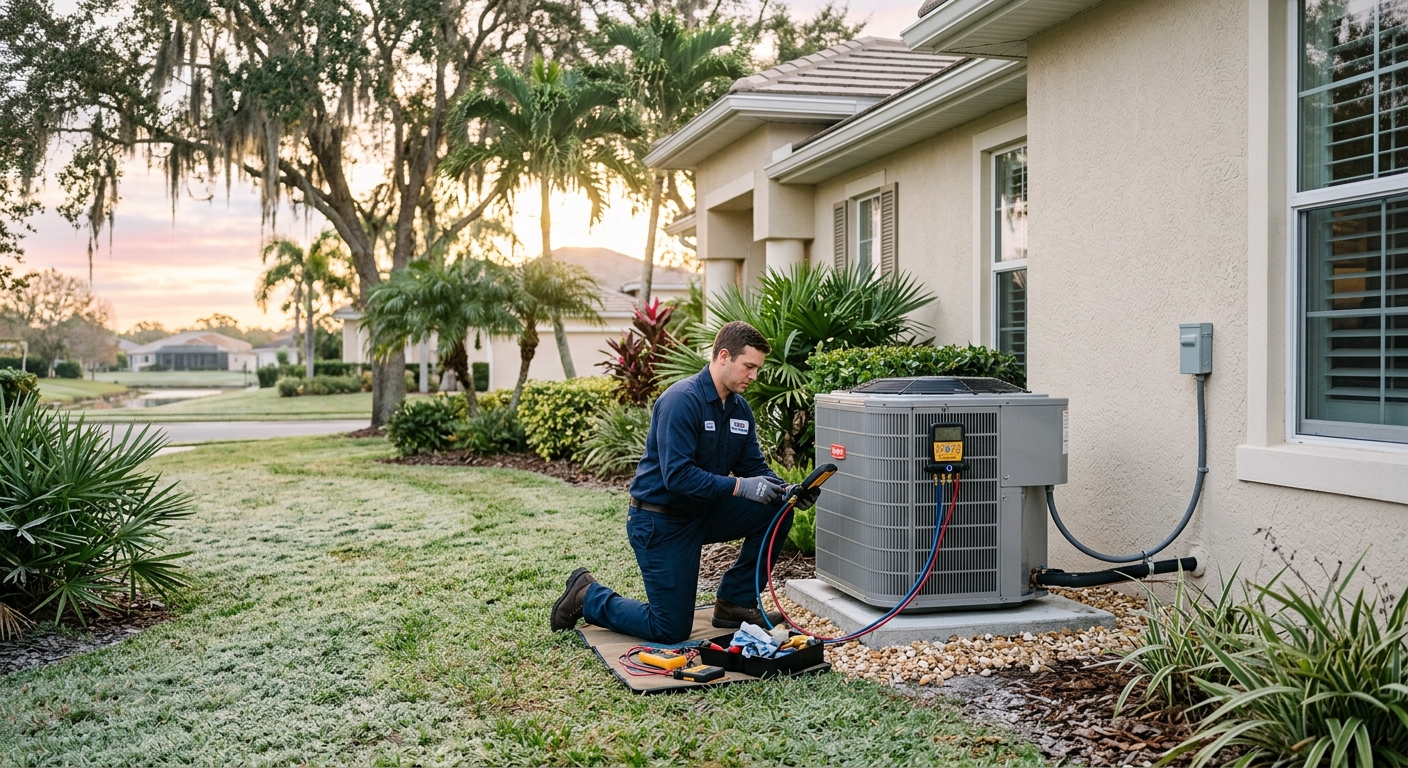
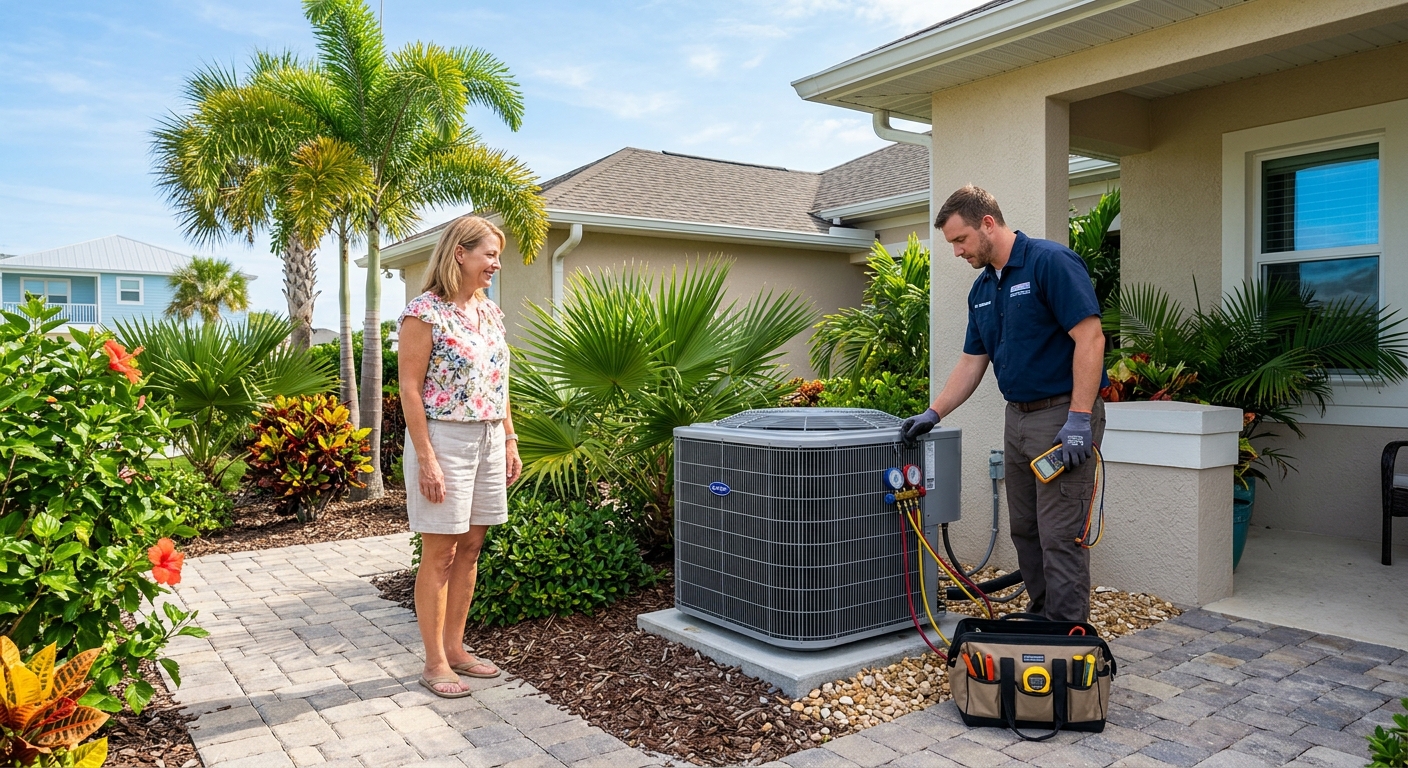
Mini-split installation includes more than mounting an indoor head and connecting it to an outdoor condenser. The installer must choose locations that provide good air distribution, service access, secure mounting, and an acceptable route for refrigerant lines, electrical wiring, and condensate drainage.
- The indoor unit should not blow directly onto a bed, desk, workout station, or frequently occupied chair.
- The outdoor unit needs manufacturer-specified airflow clearances and a stable mounting surface.
- Wall penetrations should be sealed against rain, pests, and humid outdoor air.
- Refrigerant lines must be correctly sized, insulated, pressure-tested, evacuated, and charged according to manufacturer requirements.
- Condensate should drain to an approved location without staining walls, creating slippery walkways, or causing water intrusion.
- Electrical work must follow equipment specifications and applicable codes, including required disconnects and overcurrent protection.
Permits and inspections may be required depending on the project and local jurisdiction. Properties near the coast may also need outdoor-unit mounting and fasteners appropriate for wind exposure and corrosive salt air. In flood-prone locations, equipment elevation requirements should be reviewed before installation.
How do Florida humidity and salt air affect mini-splits?
Humidity control depends on correct sizing, steady operation, clean filters, and unobstructed condensate drainage. Setting the thermostat extremely low is not a substitute for correcting air leaks or improving insulation. If the space remains clammy, have a professional check runtime, airflow, capacity, enclosure leakage, and whether supplemental dehumidification is appropriate.
Condensate lines should be inspected regularly because algae and debris can contribute to backups in Florida's warm climate. Homeowners should clean reusable filters according to the manufacturer's instructions, keep vegetation away from the outdoor unit, and arrange periodic professional maintenance.
Along Brevard County's barrier islands and other salt-exposed areas, corrosion can shorten equipment life. Ask about manufacturer-approved coastal protection, placement that avoids direct sprinkler spray, and maintenance practices suited to the property. Do not apply unapproved coatings or harsh chemicals to coils.
When should you call an HVAC professional?
Call a qualified HVAC contractor before buying equipment if the room has extensive glass, weak insulation, moisture problems, an electrical panel near capacity, or plans for multiple indoor zones. Professional help is also appropriate when a garage is being converted to living space, the outdoor unit may be in a flood or high-wind area, or there is no clear gravity-drain route for condensate.
Get an evaluation if an existing mini-split leaks water, develops ice, repeatedly trips a breaker, makes unusual noises, produces odors, or no longer controls temperature and humidity. Turn the system off and seek prompt help for burning smells, visible electrical damage, or active water intrusion.
What should Brevard County homeowners ask before choosing a system?
- Was the capacity selected using a documented load calculation?
- What insulation or air-sealing work should be completed first?
- Will the unit manage the room's expected latent, or moisture, load?
- Where will condensate drain, and how can the line be serviced?
- Does the electrical panel have suitable capacity?
- Who will handle permits and required inspections?
- How will coastal corrosion, wind exposure, or flood risk affect placement?
- What maintenance and warranty conditions apply to this model?
When comparing a mini-split with replacement of a central system, Aquila's guide to new AC costs in Florida explains major pricing factors. The best choice depends on the number of rooms, existing equipment condition, ductwork, electrical needs, and long-term plans for the home.
Get a mini-split evaluation from Aquila Air & Heating
Aquila Air & Heating can evaluate additions, garages, and enclosed lanais throughout Brevard County and recommend an appropriately sized installation based on the space, building conditions, and intended use. Contact our family-run team to discuss your project, permitting needs, equipment options, and installation estimate.
Homeowners can also review Aquila's Lifetime Warranty information and ask whether a proposed system is eligible. Coverage, registration, maintenance, and other terms should always be reviewed before purchase.