How to Protect Your AC During a Florida Hurricane
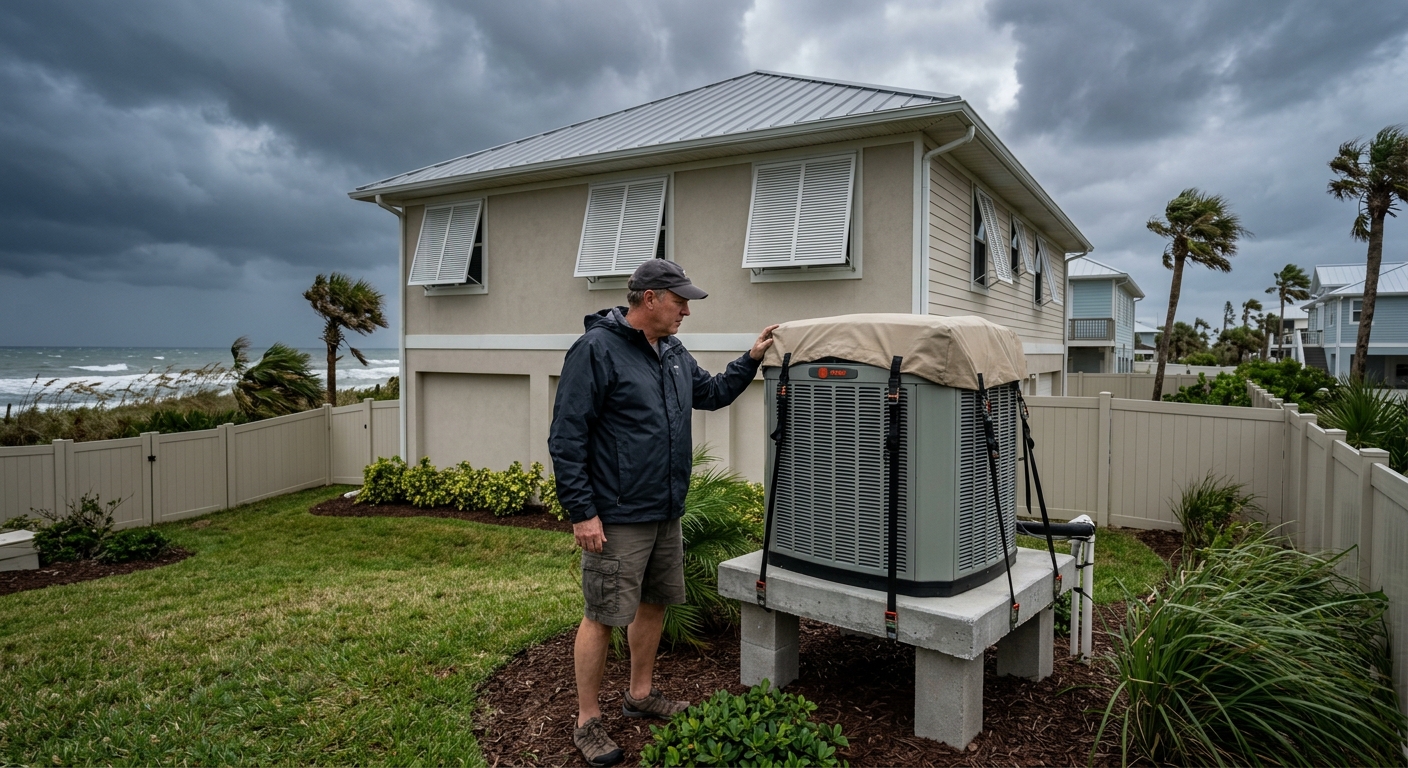
Protect your Brevard County AC from hurricane winds, flooding, power surges, salt exposure, and unsafe restarts with this practical homeowner checklist.
To protect AC during hurricane conditions, prepare the outdoor unit before winds arrive, shut the system down when conditions become dangerous, and never restart equipment that may be flooded or damaged. After the storm, inspect the unit from a safe distance and arrange professional service if you see debris, displaced equipment, damaged wiring, refrigerant-line problems, or signs of water intrusion.
What hurricane hazards can damage an air conditioner?
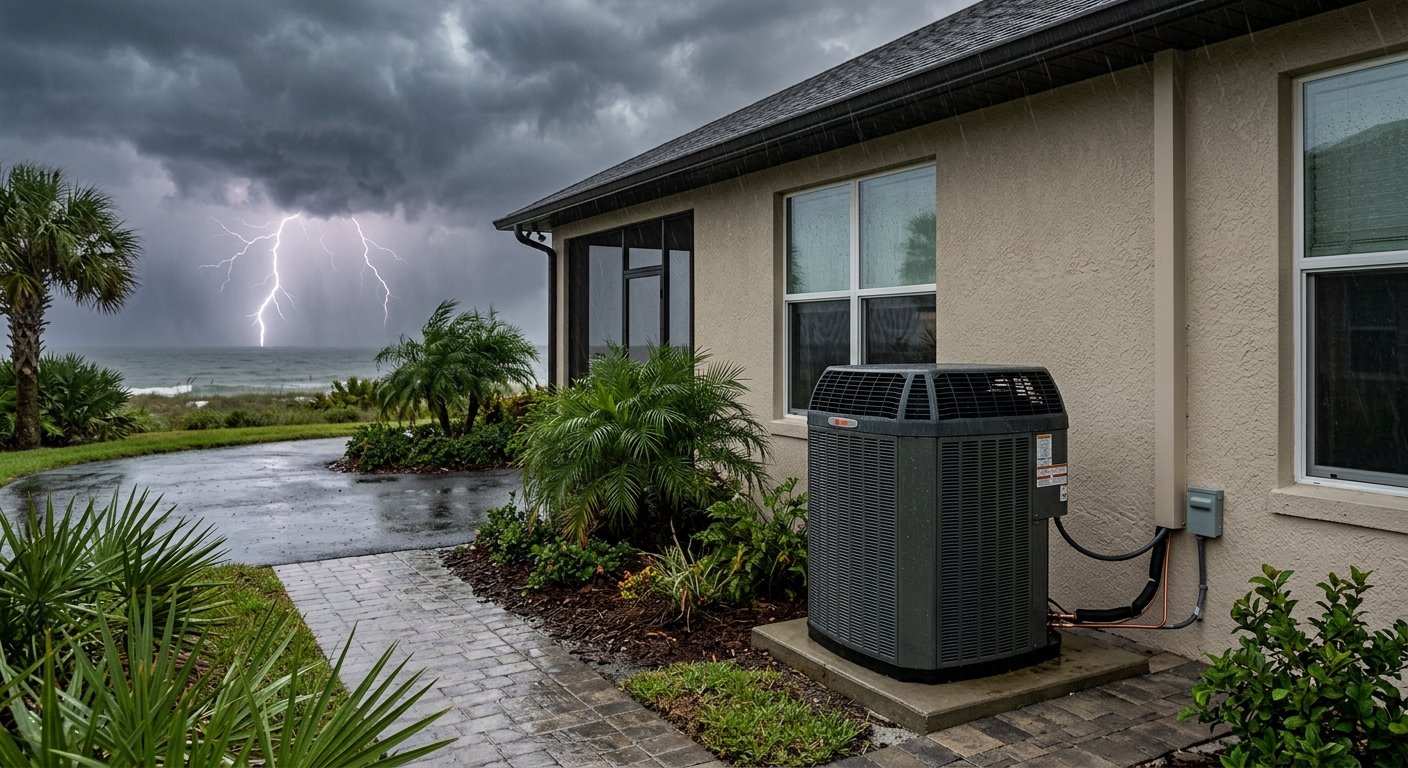
Outdoor air-conditioning equipment is designed to tolerate normal Florida rain, but a hurricane creates additional hazards. Windborne branches, roofing material, fence panels, sand, salt spray, flooding, lightning, and unstable utility power can all affect an HVAC system.
Brevard County homeowners face different risks depending on location. Properties near the Indian River Lagoon, Banana River, Atlantic coastline, or low-lying drainage areas may be more exposed to storm surge, standing water, and salt. Inland homes can still experience falling limbs, tornadoes, flooding, and repeated power interruptions.
The outdoor condenser is not the only concern. Attic ductwork, electrical disconnects, drain lines, thermostats, air handlers, and heat pumps may also be affected. Protecting the entire system requires preparation before the weather deteriorates and patience before restarting it afterward.
How should I prepare my AC before a hurricane?
Clear loose objects and yard debris
Move patio furniture, grills, planters, toys, garden tools, and other loose objects indoors. Trim weak branches when there is enough time to do so safely, but do not perform tree work once tropical-storm-force winds are approaching. Remove leaves and lightweight debris from around the condenser while maintaining the airflow clearance recommended by the equipment manufacturer.
Do not place furniture, plywood, garbage cans, or heavy objects against the unit. They can damage the cabinet, restrict airflow, or become projectiles themselves.
Check that the outdoor unit is secure
The condenser should sit level on a stable pad and be secured according to applicable installation requirements. If the unit rocks, has missing fasteners, or appears poorly attached to its pad or stand, schedule an HVAC inspection well before the storm. Do not drill into the cabinet or refrigerant lines in an attempt to create a homemade tie-down system.
Elevated equipment deserves special attention in flood-prone areas. A licensed contractor can assess whether the platform, brackets, fasteners, electrical connections, and service access are appropriate. Elevating equipment is a planned installation project, not a last-minute hurricane task.
Protect against electrical surges
Lightning and utility switching can send voltage spikes through a home. A professionally installed HVAC surge protective device can reduce the risk of some electrical damage, while whole-home surge protection can provide another layer of defense. No surge protector can guarantee protection from every lightning event, and it does not make flooded equipment safe to operate.
Replace weak thermostat batteries if your model uses them, and know which labeled breaker and outdoor disconnect serve the system. Avoid opening electrical panels outdoors during rain or dangerous wind.
Document the system before the storm
Take clear photos of the condenser, air handler, thermostat, equipment labels, pad, nearby structures, and visible refrigerant lines. Record model and serial numbers and store the images with insurance records. Photos cannot prevent damage, but they may help document the equipment's pre-storm condition.
Should I cover my outside AC unit during a hurricane?
Do not wrap the condenser in a tarp or plastic while it is operating. A full cover blocks airflow and can trap heat, while loose material may tear free in high winds. Even when the system is off, an improvised cover can hold moisture against metal components or become a projectile.
If you use a protective product, it should be specifically designed for the equipment and severe-weather application, installed according to its instructions, and removed before the system is restarted. A rigid, properly anchored debris shield may be appropriate in some situations, but poorly secured plywood can cause more harm than it prevents. Consult an HVAC professional if you are unsure how a shield may affect the unit, service clearances, or airflow.
When should I turn off my AC before the storm?
While conditions are still mild and utility power is stable, many homeowners continue using air conditioning to keep the house comfortable. Before dangerous winds arrive, before evacuating, or when local authorities or the electric utility advise shutting down equipment, turn the thermostat to off. If it is safe and you know the correct circuit, switch off the dedicated HVAC breaker as well.
Turning the system off can help prevent it from trying to restart during repeated outages or severe voltage fluctuations. It also prevents the outdoor fan from operating while debris is blowing around the condenser. Never go outside to reach a disconnect once winds, lightning, or flooding make doing so unsafe.
Home and personal safety come first. Follow evacuation orders from Brevard County emergency officials, especially on barrier islands, in manufactured homes, and in storm-surge zones. Do not delay evacuation to work on HVAC equipment.
Can I run my AC from a portable generator?
Central air conditioners have substantial starting and operating electrical loads. A portable generator should never be connected directly to household wiring through an improvised cord or a household outlet. This can create electrocution, fire, equipment-damage, and utility-worker hazards.
Only operate HVAC equipment from a generator if a qualified electrician has confirmed that the generator, transfer equipment, wiring, grounding, and load capacity are appropriate. Keep generators outdoors and well away from doors, windows, garages, and air intakes because carbon monoxide can be fatal. Never operate one inside a home, garage, shed, or screened enclosure.
What should I inspect after the hurricane?
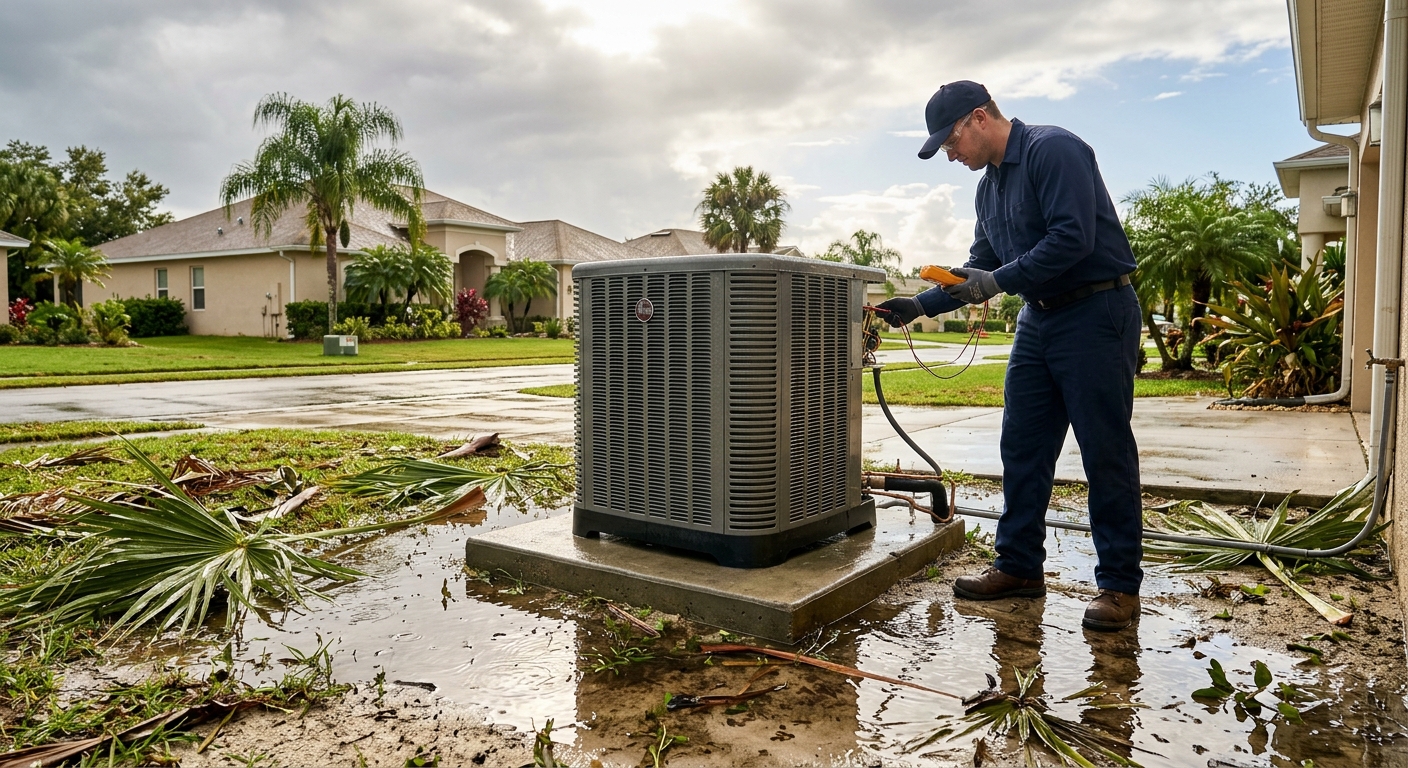
Wait until officials say conditions are safe. Before restoring HVAC power, examine the system without opening equipment panels or touching wiring. If you find damage, leave the system off and contact Aquila Air & Heating for professional AC repair in Brevard County.
Look for these warning signs:
- Standing water around the condenser, air handler, electrical disconnect, or ductwork
- A condenser that shifted, tilted, separated from its pad, or was struck by debris
- Bent fan guards, crushed panels, or a fan blade that appears obstructed
- Loose, exposed, scorched, or submerged electrical wiring
- Kinked refrigerant lines, damaged insulation, oily residue, or unusual hissing
- Branches, roofing fragments, sand, or vegetation inside the cabinet
- Wet insulation, collapsed ducts, sagging ductwork, or water stains near ceiling vents
- Burning odors, loud buzzing, grinding, repeated clicking, or a breaker that trips
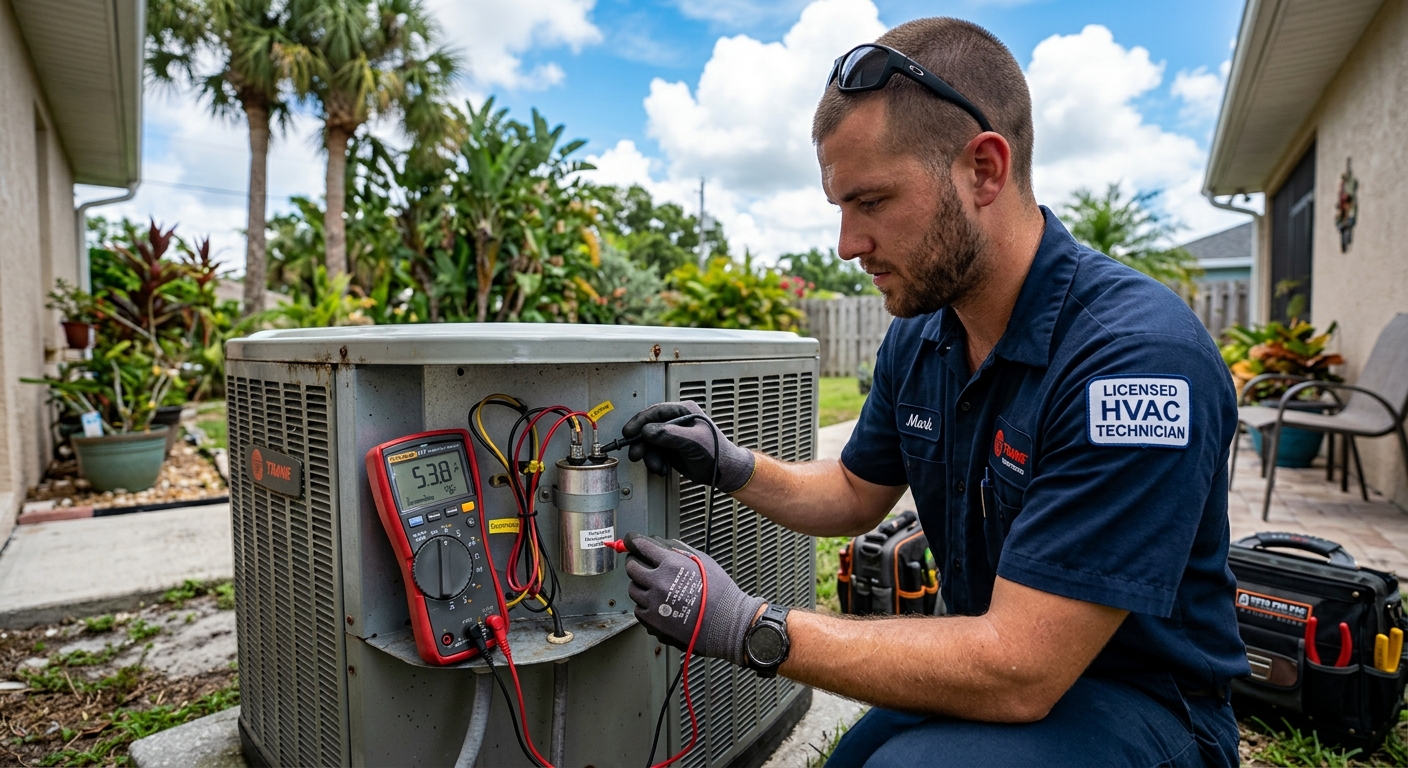
Do not reach into the condenser or remove its access panels. Capacitors and electrical components may remain hazardous even when utility power appears to be off. Refrigerant-line damage also requires trained service and should not be bent back into place by hand.
What if the AC was exposed to floodwater?
Do not energize an air conditioner, heat pump, air handler, or electrical component that was submerged or may contain floodwater. Mud, salt, sewage, and conductive residue can remain inside after surfaces look dry. Restoring power without an inspection can create shock, fire, and equipment-damage risks.
Keep the breaker off and arrange an evaluation by qualified HVAC and electrical professionals. Depending on the water level and affected components, inspection may involve electrical controls, motors, insulation, refrigerant-system parts, ductwork, and indoor air quality concerns. Photograph the water line and damage before cleanup if it is safe to do so.
How do I safely restart the system after the storm?
If the equipment remained dry, appears undamaged, and utility power is stable, remove any approved storm shield or cover before turning it on. Confirm that supply and return vents are unobstructed, set the thermostat to off, restore the HVAC breaker, and then follow the manufacturer's normal startup procedure. Some systems include a built-in restart delay, so the outdoor unit may not start immediately.
Observe the system without standing over it or opening panels. Shut it down if you hear unusual noises, smell burning, see sparking, notice ice forming, or find that it is blowing warm air. Storm-related airflow, electrical, or refrigerant problems may require diagnosis rather than repeated thermostat adjustments.
If the system fails after normal business hours and heat or indoor conditions create an urgent concern, Aquila offers emergency AC repair. Do not repeatedly reset a tripping breaker; one reset may confirm a problem, but continued resets can worsen damage or create a safety risk.
Can hurricanes damage ductwork inside the house?
Yes. Roof leaks and wind-driven rain can soak attic insulation and flexible ducts. High wind can also disturb poorly supported duct runs, while water intrusion may damage seals around boots and plenums. Wet or disconnected ducts can reduce airflow, waste cooled air, and introduce humid attic air into the system.
After the storm, check accessible ceilings and vent areas for stains, dripping water, sagging materials, musty odors, or weak airflow. Do not crawl through a wet attic or step on hidden ceiling surfaces. If you suspect storm damage, professional duct inspection and repair can identify disconnected, crushed, or water-damaged sections.
How can I protect the system from salt after a coastal storm?
Salt residue can accelerate corrosion on metal cabinets and condenser coils, particularly near Brevard's beaches and waterways. Once power is safely disconnected and the area is free of electrical hazards, follow the manufacturer's cleaning guidance. Some equipment permits a gentle freshwater rinse of exterior coil surfaces, but pressure washers and harsh household chemicals can bend fins or damage protective coatings.
If the condenser received heavy salt spray, was covered by windblown sand, or contains debris behind the cabinet, schedule professional cleaning. Coastal maintenance should focus on removing deposits without forcing contaminants deeper into the coil or damaging electrical parts.
What should be on my hurricane AC checklist?
- Schedule maintenance before hurricane season rather than immediately before landfall
- Clear loose objects and debris from the condenser area
- Confirm that the unit and pad are stable
- Identify the thermostat, HVAC breakers, and disconnect
- Photograph equipment and save model and serial numbers
- Use only properly designed and secured protective products
- Turn the system off before hazardous conditions or evacuation
- Never approach equipment during lightning, flooding, or high winds
- Inspect for water, debris, electrical damage, and displacement before restarting
- Keep flooded or visibly damaged equipment off until professionally evaluated
When should I call an HVAC professional?
Call a professional if the condenser moved, floodwater reached any HVAC component, electrical parts became wet, refrigerant lines appear damaged, the breaker trips, airflow changed, or the system makes new noises. You should also request service if cooling performance declined after the storm even when no exterior damage is obvious.
Aquila Air & Heating is a family-run company serving homeowners across Brevard County and the Space Coast. Contact our team for a post-storm HVAC inspection or repair before operating equipment that may be unsafe or damaged.