AC Maintenance Checklist for Florida’s Summer Season
A practical Florida AC maintenance checklist covering filters, drain lines, outdoor units, thermostats, humidity, storm preparation, and professional service.
This AC maintenance checklist for Florida helps homeowners prepare for heavy summer cooling demands by focusing on airflow, drainage, outdoor equipment, thermostat settings, and professional inspection. In Brevard County, complete the main checklist before peak summer heat, inspect key items monthly, and address unusual noises, weak airflow, water leaks, or poor humidity control promptly.
Florida air conditioners work under demanding conditions. Long cooling cycles, high humidity, thunderstorms, airborne debris, and salt exposure near the coast can all contribute to wear. A consistent maintenance routine can reduce avoidable breakdown risks and help your system cool and dehumidify more effectively.
What should be on a Florida summer AC maintenance checklist?
A useful checklist should cover tasks homeowners can perform safely as well as components that require professional tools and training. Start with these steps before the hottest part of the year:
- Inspect the air filter and replace it if dirty.
- Confirm that supply and return vents are open and unobstructed.
- Check the indoor unit and drain pan for visible water.
- Look for signs that the condensate drain is restricted.
- Remove leaves, weeds, and loose debris from around the outdoor unit.
- Inspect the outdoor cabinet for corrosion or physical damage.
- Test the thermostat and replace its batteries if applicable.
- Listen for new rattling, grinding, buzzing, or hissing sounds.
- Check whether rooms are cooling evenly.
- Schedule professional service if the system has not been inspected recently.
Do not remove electrical panels, handle refrigerant components, or reach into moving equipment. Turn the system off before performing basic cleaning near the indoor or outdoor unit, and call a technician whenever a task exceeds routine visual inspection.
How often should I check my AC filter during a Brevard County summer?
Inspect the filter about once a month during periods of frequent cooling. Replacement frequency depends on the filter type, household occupancy, pets, remodeling dust, and manufacturer instructions. A thin one-inch filter may require replacement more often than a deeper media filter, but appearance and airflow matter more than an arbitrary calendar date.
Replace the filter when it is visibly loaded with dust or when the manufacturer’s recommended interval arrives. Waiting until a filter is completely clogged restricts airflow, which can reduce comfort and contribute to coil icing or unnecessary system strain. Review this guide on how often to change an air filter for additional factors that affect replacement timing.
Use the filter size and efficiency range recommended for your equipment. A filter with a higher rating is not automatically better if the system is not designed for the added resistance. If filters collapse, become unusually dirty within a few weeks, or are difficult to fit correctly, ask an HVAC professional to inspect the return setup.
How do I check the condensate drain safely?
Your air conditioner removes moisture from indoor air, and that water normally exits through a condensate drain. Florida’s long cooling season means the drainage system handles substantial moisture. Algae, biological buildup, sediment, or debris can restrict the line and cause water to back up around the indoor unit.
Look for standing water in the drain pan, moisture around the air handler, ceiling stains near an attic unit, or water near the drain termination outside. Some systems include a float switch that shuts off cooling when water rises. If the thermostat is on but the system unexpectedly stops, a drainage problem may be one possible cause.
Homeowners can keep the visible area around the drain outlet clear and may use a wet/dry vacuum at the exterior termination if they can identify it confidently. Follow the equipment installer’s or manufacturer’s maintenance directions before adding any cleaning product. Never mix drain chemicals, and do not bypass a float switch. Persistent clogs, indoor leaks, or an inaccessible attic air handler should be handled by a professional.
What outdoor AC maintenance is important near Florida’s coast?
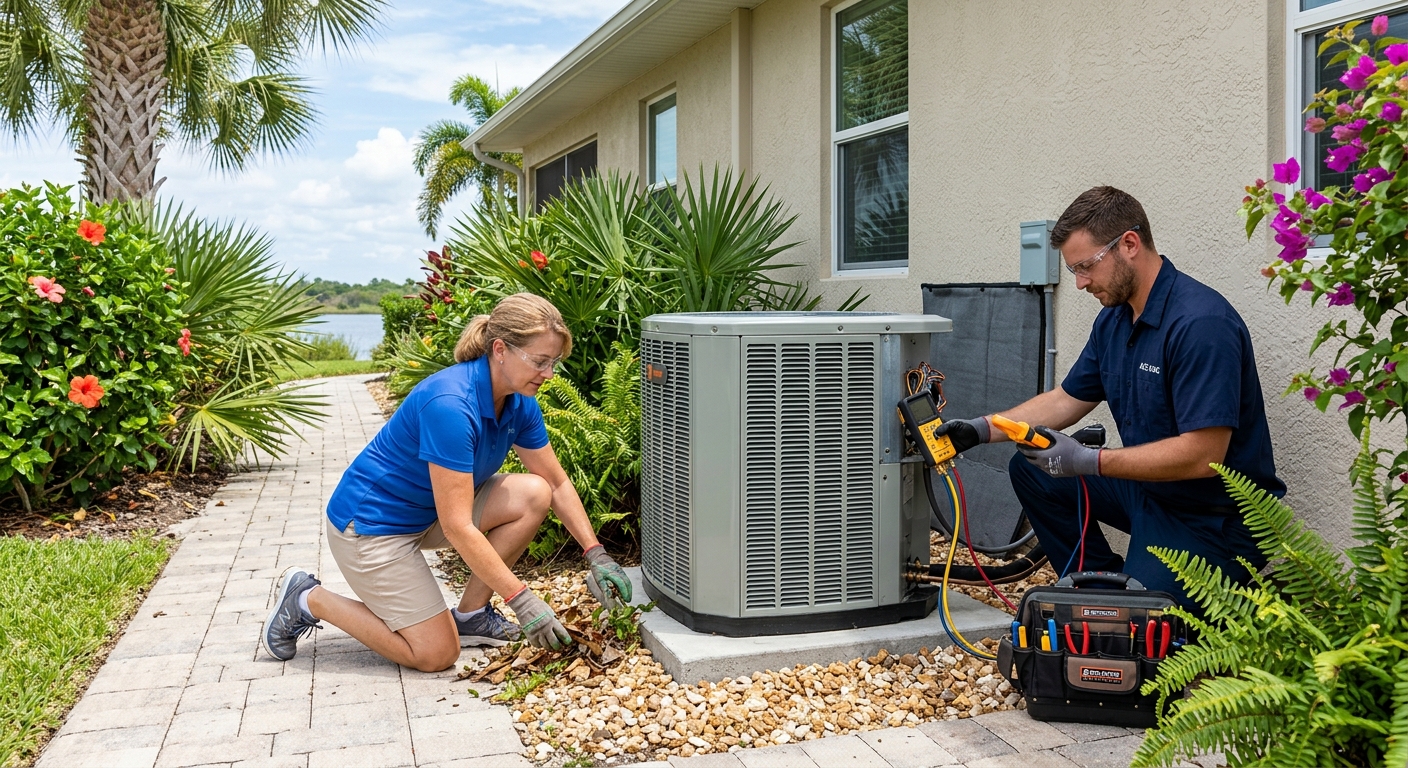
The outdoor unit needs open airflow to release heat. Trim vegetation back so it does not crowd the cabinet, and remove loose leaves, mulch, grass clippings, or windblown debris from the surrounding area. Keep landscaping from directing irrigation water onto the equipment.
After shutting off power according to the manufacturer’s instructions, you can visually inspect the coil surface. If it has a light layer of loose debris, gentle rinsing may be appropriate when allowed by the manufacturer. Do not use a pressure washer, stiff brush, or harsh household chemical because coil fins are easy to bend and protective finishes can be damaged.
Homes on Brevard’s barrier islands, in beachside communities, and near the Indian River Lagoon may experience greater salt exposure. Look for advancing rust, deteriorated fasteners, damaged coil surfaces, or corroded electrical enclosures, but leave internal inspection and treatment to an HVAC technician. Manufacturer-approved cleaning methods are especially important for coated coils.
Which vents and airflow problems should I look for?
Walk through the home while the system is operating and compare airflow between rooms. Make sure supply registers are open and not blocked by rugs, curtains, boxes, or furniture. Return grilles also need clear space because the system must pull air back to the air handler.
A closed bedroom door can affect airflow when the room lacks an adequate return path. Warning signs include doors that move when the system starts, rooms that stay warmer than the rest of the home, whistling grilles, and weak airflow from multiple vents. Avoid closing several supply vents in an attempt to redirect cooling; this can change system pressure and may create new comfort problems.
Visible dust on a grille can be wiped away, but heavy buildup inside ducts, damaged duct insulation, or condensation on vents deserves professional evaluation. In a humid Florida attic, disconnected or poorly sealed ductwork can waste conditioned air and draw hot, damp air into the system.
What thermostat settings help during hot, humid weather?
Choose a comfortable, consistent setting rather than repeatedly making large changes. Raising the temperature modestly when the home is unoccupied can reduce runtime, but extreme setbacks may leave the system working for a long period to recover during the hottest afternoon hours.
Confirm that the thermostat is set to cooling and that the fan setting is appropriate for the equipment. In many standard systems, the auto fan setting is preferable during humid weather because a continuously running fan can return moisture left on the indoor coil to the air after a cooling cycle. Variable-speed and communicating systems may operate differently, so follow the manufacturer’s guidance.
If indoor humidity remains above approximately 60 percent for extended periods, feels clammy, or causes condensation on surfaces, have the system evaluated. Oversized equipment, drainage trouble, duct leakage, control settings, or equipment performance can all affect humidity removal.
What does a professional AC tune-up include?
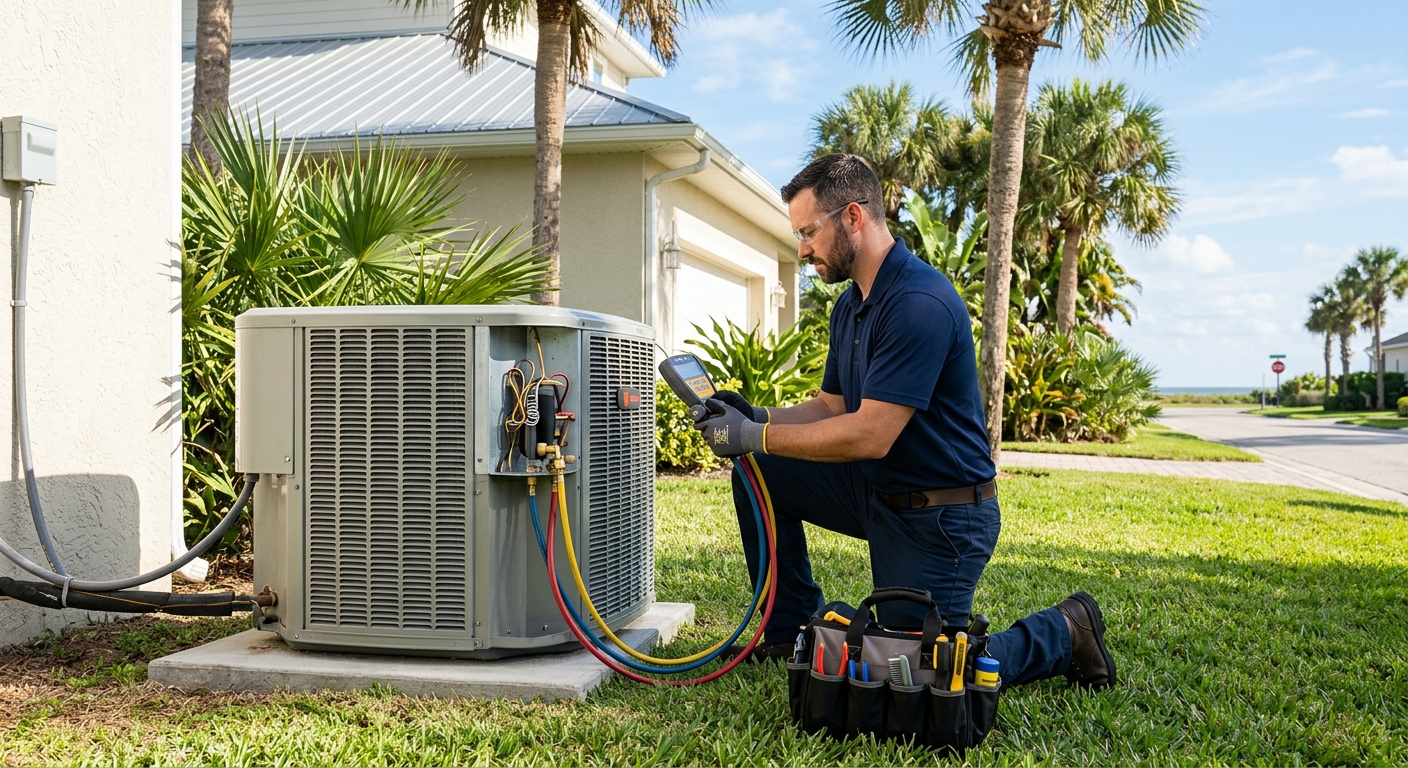
A professional visit goes beyond what can be checked safely from outside the equipment. The exact procedure depends on system type and accessibility, but a thorough service commonly includes:
- Inspecting and cleaning accessible coil surfaces as needed.
- Checking the condensate drain, pan, and safety controls.
- Testing electrical connections, capacitors, contactors, and operating components.
- Measuring system temperatures and airflow-related performance.
- Inspecting refrigerant lines and looking for evidence of leaks.
- Checking blower components and accessible duct connections.
- Verifying thermostat operation and system startup and shutdown.
- Documenting concerns that may require repair or monitoring.
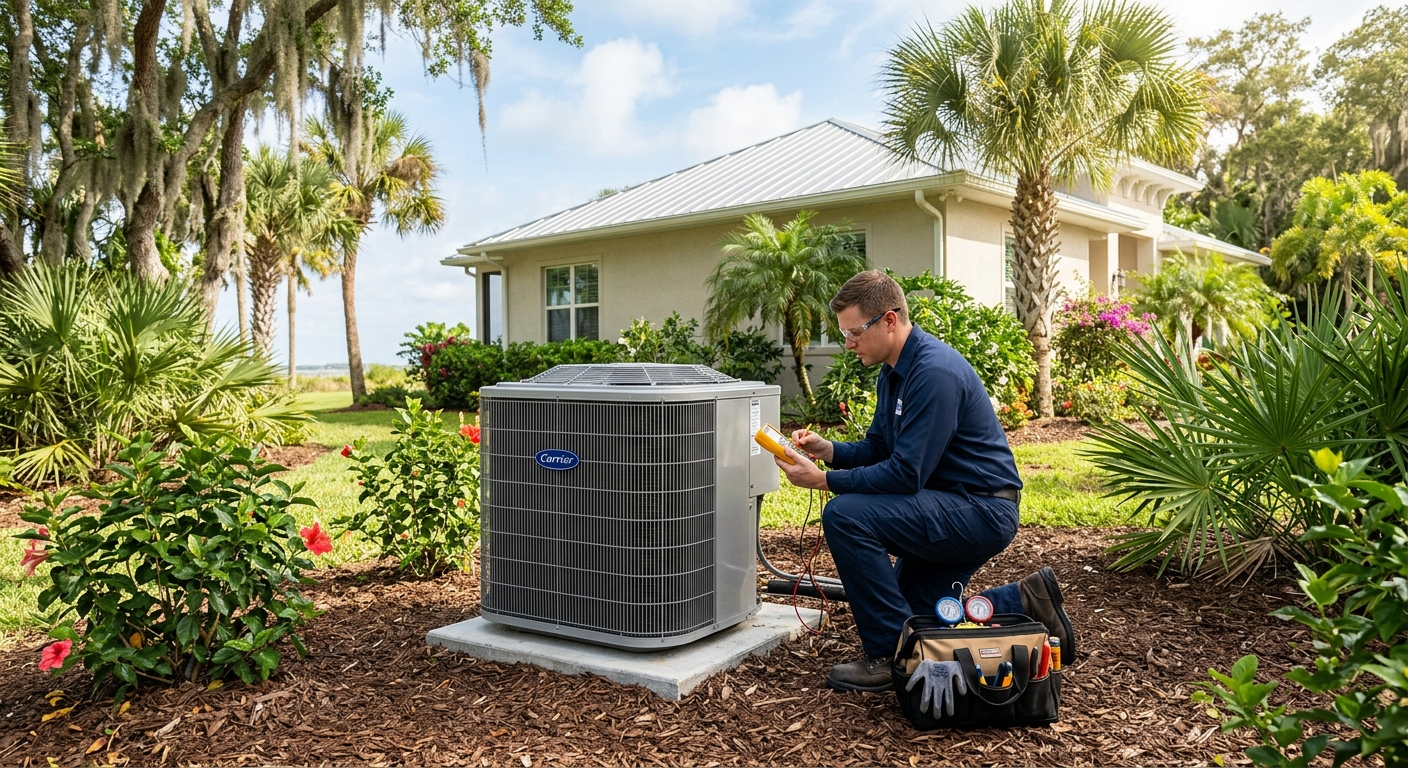
Refrigerant is not a fuel that gets used up during normal operation. If a system is low, the technician should investigate the cause rather than treating repeated refills as routine maintenance. Homeowners preparing for the cooling season can schedule professional AC maintenance in Brevard County before appointment demand rises during peak heat.
When should I call an HVAC professional instead of troubleshooting?
Turn the system off and request service if you see water near electrical components, smell burning, hear grinding or repeated electrical buzzing, or notice ice on the refrigerant line or indoor coil. Ice is not a sign that the unit is producing extra cooling; it can indicate restricted airflow, a blower problem, or a refrigeration issue.
You should also call for help when:
- The breaker trips repeatedly.
- The system runs but does not lower the indoor temperature.
- Airflow is weak throughout the home.
- The outdoor unit does not start when cooling is requested.
- The system frequently starts and stops in short cycles.
- A drain clog or water leak returns after basic clearing.
- Cooling bills rise sharply without a clear change in weather or usage.
- Some rooms become significantly hotter or more humid than others.
Do not repeatedly reset a breaker or continue operating equipment that smells hot or makes severe mechanical noises. Switching the system off can help prevent additional damage while you wait for diagnosis.
Should I inspect my AC after a Brevard County thunderstorm?
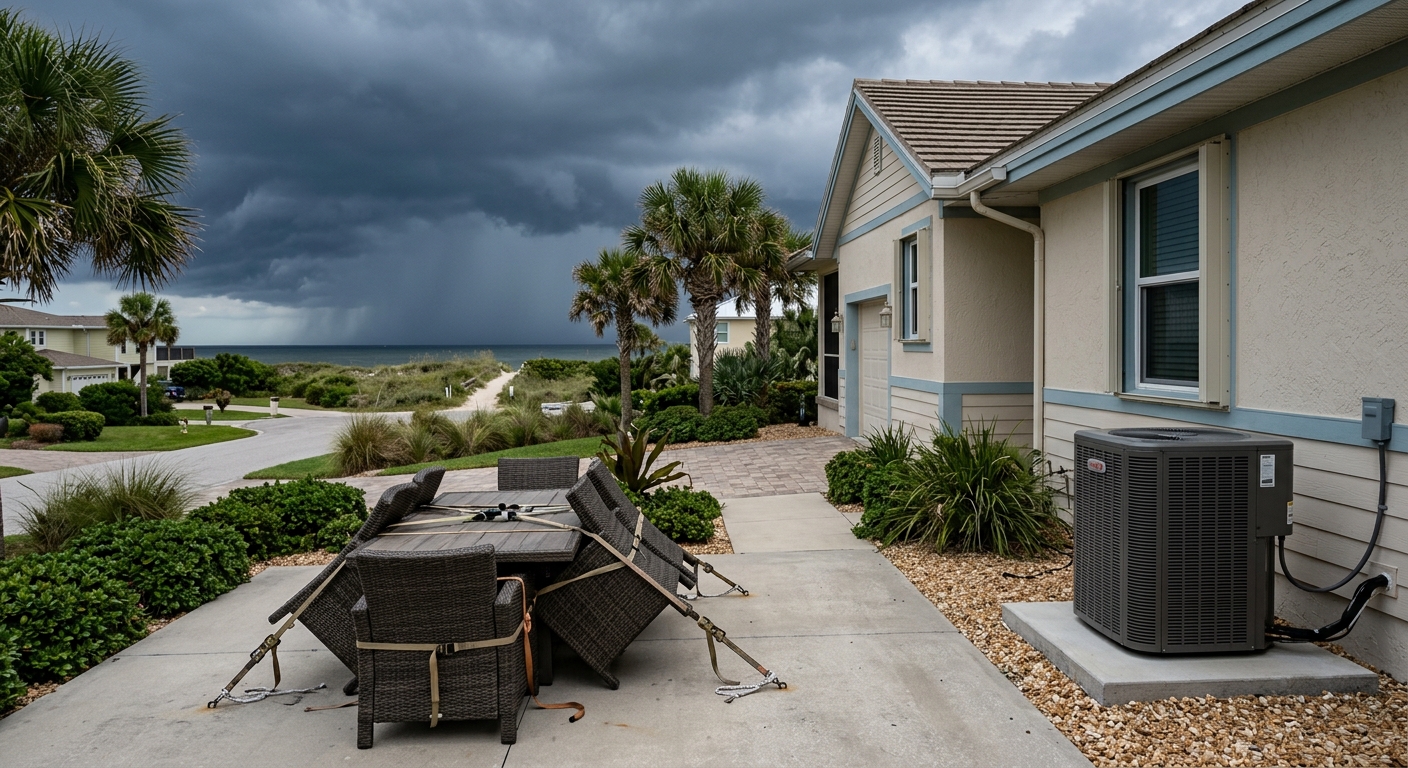
After severe weather, check the outdoor unit from a safe distance for branches, flooding, shifted panels, or obvious impact damage. Do not approach equipment standing in water, and do not restart a damaged unit. If a power surge occurred and the system no longer operates normally, have the electrical components inspected.
Keep storm debris from piling around the condenser, but wait until weather conditions are safe before cleaning. If a tropical storm or hurricane causes structural, flood, or electrical damage, HVAC inspection should be coordinated with the appropriate electrical and building repairs.
How can I make summer maintenance easier to remember?
Create a recurring monthly reminder to inspect the filter, drain area, vents, and outdoor unit. Record filter sizes and replacement dates near the air handler or in a phone note. Keep the outdoor unit accessible so vegetation and debris can be managed without delay.
Homeowners who prefer scheduled reminders and recurring professional inspections can consider an HVAC maintenance plan. Before enrolling, review the included services, visit frequency, exclusions, and equipment eligibility so you understand what the plan provides.
Schedule AC maintenance in Brevard County
A checklist can handle routine observations, but it cannot replace testing by a trained technician. If your system is due for seasonal service or showing signs of airflow, drainage, cooling, or humidity trouble, contact Aquila Air & Heating. Our family-run team serves homeowners across Brevard County and can inspect your equipment, explain any findings, and recommend practical next steps before Florida’s summer heat places even greater demand on the system.