Should You Cover Your AC Unit During a Florida Storm?
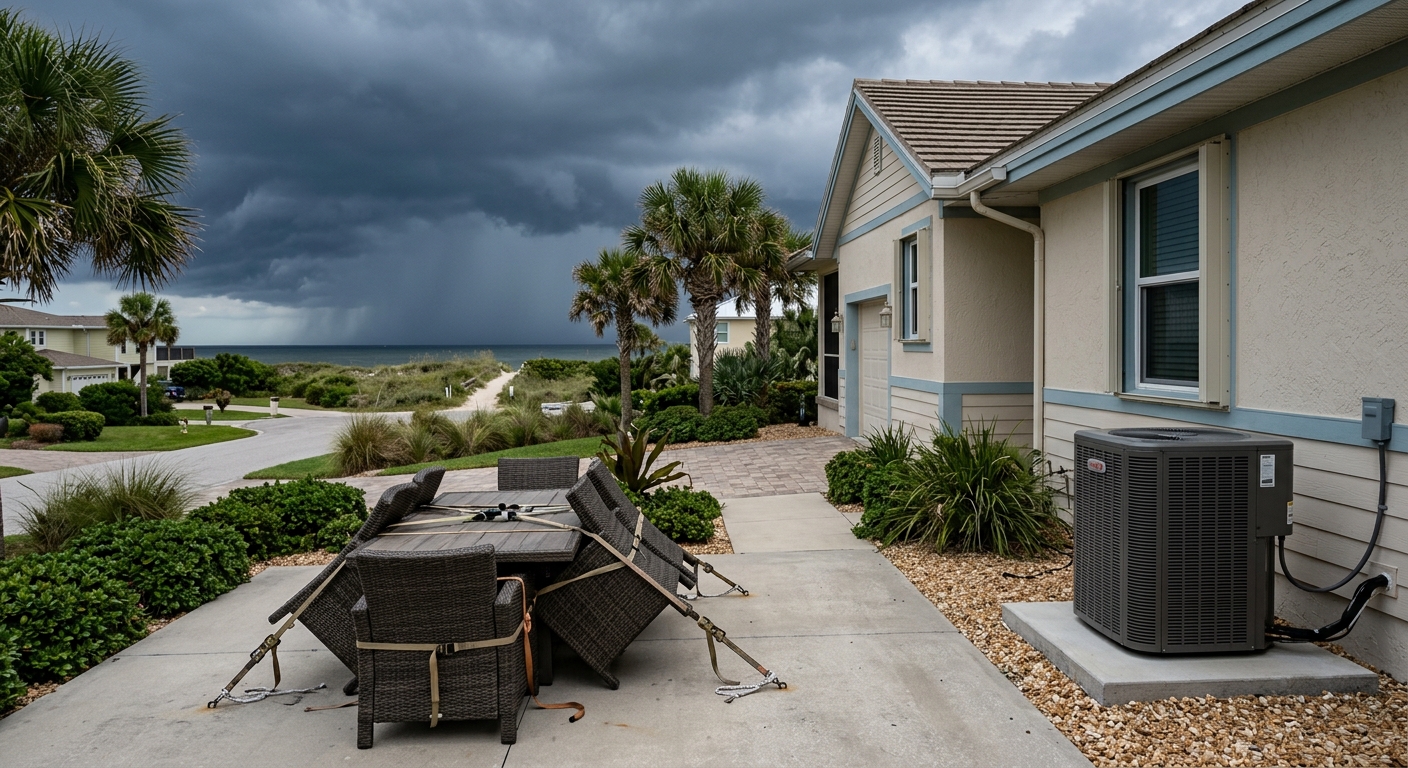
Covering an outdoor AC unit during a Florida storm may trap moisture, restrict airflow, or create flying debris. Learn safer ways to protect your system.
In most cases, you should not cover your outdoor AC unit during a Florida storm. Central air-conditioning condensers are designed to withstand rain, while a tarp or loose cover can restrict airflow, trap moisture, damage components, or become airborne in strong winds.
The safer approach is to remove nearby debris before the weather deteriorates, follow local emergency guidance, and leave the unit uncovered. If flooding, impact damage, or electrical trouble occurs, keep the system off and have it professionally inspected before restarting it.
Why should you not cover an AC unit during a storm?
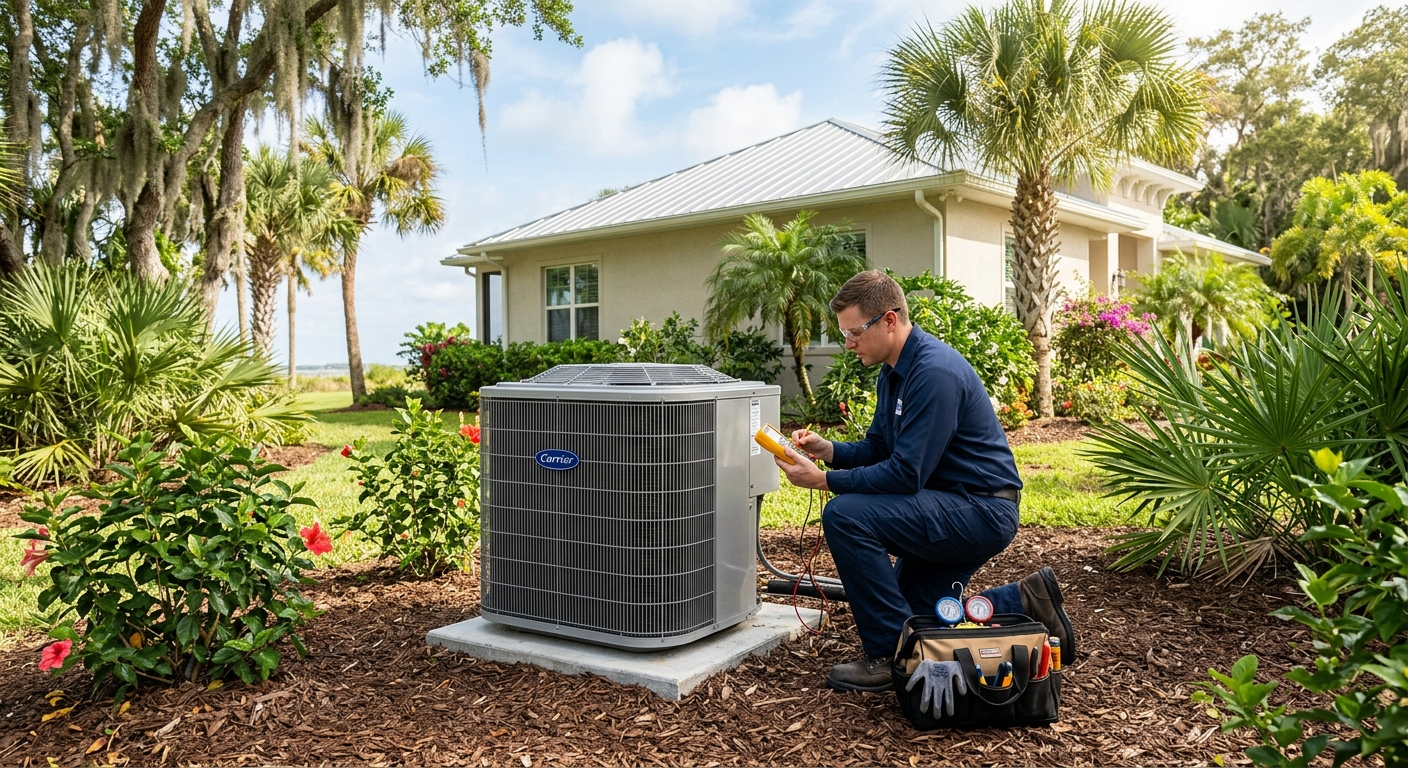
The outdoor portion of a central air-conditioning system is commonly called the condenser or condensing unit. Its cabinet, fan grille, coil, electrical compartment, and drainage openings are intended for outdoor installation. Ordinary rain, including the heavy rain common during Brevard County thunderstorms, does not normally require a protective cover.
Covering the condenser may create problems that would not otherwise occur:
- A plastic tarp can hold moisture against the cabinet and encourage corrosion.
- A cover may block the airflow needed if the air conditioner turns on.
- Wind can tear a cover loose and turn it, its cords, or its fasteners into flying debris.
- Tight coverings may bend coil fins or put pressure on refrigerant lines.
- Straps and bungee cords can rub against wiring, panels, or sharp cabinet edges.
- A covered unit may be accidentally operated, potentially causing overheating or compressor damage.
This is especially important in Florida because many households use air conditioning throughout most of the year. Unlike an outdoor unit in a cold climate that may remain unused for an entire winter, a Space Coast condenser may need to run before or soon after a storm passes.
Can an AC condenser safely get wet?
Yes. A properly installed outdoor condenser is built to be exposed to normal rainfall and humidity. Water falling from above is different from floodwater rising into the cabinet, however. Floodwater can reach motors, electrical controls, wiring, insulation, and other components that should not be energized while wet or contaminated.
Wind-driven salt spray is another concern in coastal areas of Brevard County. A cover is not a reliable defense against salt air, and enclosing a damp unit may make corrosion worse. Routine inspection, appropriate coil cleaning, and manufacturer-compatible corrosion protection are more useful long-term measures. Aggressive pressure washing should be avoided because it can flatten delicate coil fins or force water into electrical areas.
What should you do before a tropical storm or hurricane?
Prepare the area while conditions are still calm. Do not go outside to work around HVAC equipment once winds, lightning, or flooding begin.
Remove objects that could strike the unit
Move patio furniture, toys, planters, garden tools, grills, temporary signs, and loose branches away from the condenser. Secure trash cans and other outdoor items according to local storm guidance. Windborne objects generally pose a greater threat to an outdoor AC unit than rain itself.
Check the area around the condenser
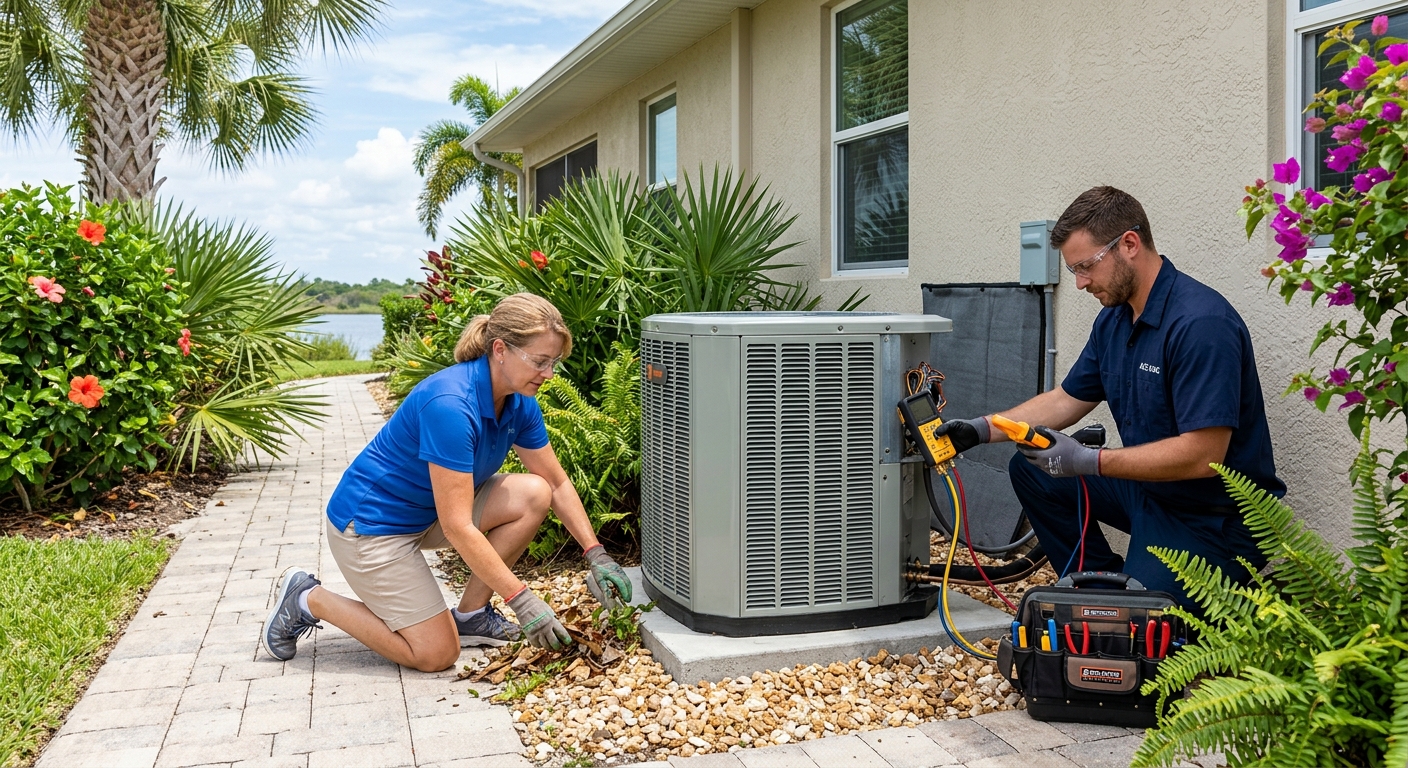
Vegetation should not crowd the coil or fan discharge. Trim nearby plants without cutting refrigerant tubing, control wiring, or electrical conduit. Clear leaves from around the base, but do not dismantle panels or reach inside the cabinet.
Also look at drainage around the equipment. The unit should not sit in a low spot where runoff collects, although homeowners should not attempt last-minute elevation or structural modifications. If the condenser regularly stands in water, ask an HVAC professional whether the installation and equipment height are appropriate for the property.
Schedule maintenance before storm season
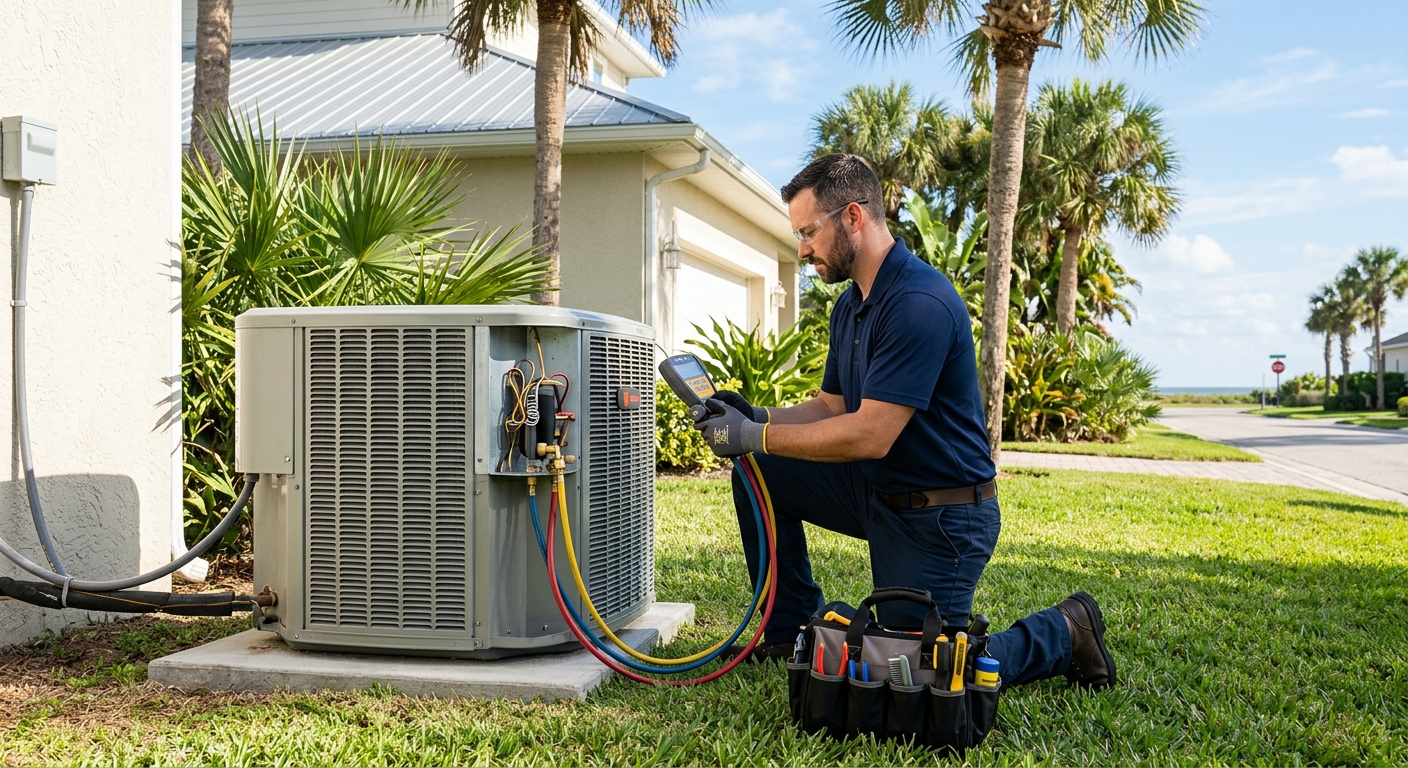
A professional AC maintenance service can identify loose panels, deteriorated electrical components, clogged drainage, corrosion, and other issues before severe weather arrives. Maintenance cannot make equipment hurricane-proof, but correcting existing problems can reduce avoidable failures.
Homeowners who want recurring seasonal service can also consider an HVAC maintenance plan rather than waiting until a named storm is approaching and appointment availability is limited.
Ask whether the unit is properly secured
Outdoor equipment should be installed on an appropriate support and secured as required by applicable codes, manufacturer instructions, and site conditions. Do not drill into the cabinet or improvise hurricane straps yourself. Incorrect fasteners can puncture the coil, damage wiring, create vibration, or compromise the equipment.
If the unit appears loose, tilted, or separated from its pad, arrange an inspection well before the storm. Questions involving the equipment support, structural attachment, or local code requirements may also require a properly qualified contractor.
Should you turn off the air conditioner before a hurricane?
There is no single shutoff rule for every storm and every property. Follow evacuation instructions, utility guidance, equipment manufacturer directions, and advice from qualified local professionals. Never go outdoors during dangerous conditions to operate a disconnect.
Some homeowners choose to cool the house before severe conditions arrive and then turn the system off at the thermostat if power interruptions, flooding, or damaging debris are expected. Switching the thermostat to off prevents a normal cooling call, but it does not necessarily de-energize every part of the system.
If authorities or a qualified professional advise shutting off power to HVAC equipment, use only controls you can access safely and understand. Do not open electrical panels, touch wet equipment, or work at an outdoor disconnect in rain, standing water, or lightning. Whole-home or HVAC surge protection may reduce certain electrical risks, but no device can guarantee protection from every lightning strike or utility event.
Would plywood or a hard cover protect the condenser?
An improvised hard cover can create its own hazards. A board placed loosely on top may blow away, while screws or straps can damage the cabinet and internal parts. Any rigid storm protection must be engineered for the specific equipment and installed without blocking required airflow or interfering with service clearances.
If a manufacturer offers an approved hail guard, wind screen, or other accessory for your model, ask an HVAC professional whether it is suitable for Brevard County conditions. Never operate the air conditioner with plywood, a tarp, or an unapproved cover over it. Any temporary protection must be removed only when outdoor conditions are safe.
What should you inspect after the storm?
Wait until officials say it is safe to go outside. Before turning on the air conditioner, visually inspect the equipment from a safe distance. Look for:
- Standing water or evidence that floodwater reached the unit
- Branches, roofing material, or other debris lodged in the fan grille
- A shifted, leaning, or overturned condenser
- Dented panels or severely flattened coil fins
- Loose conduit, exposed wiring, or a damaged disconnect box
- Bent or separated refrigerant lines
- Burning odors, scorch marks, buzzing, or repeated breaker trips
Small leaves resting on the cabinet can be removed after power is safely off and the weather has cleared, but do not reach through the fan grille or remove service panels. Never touch equipment standing in water.
Check the indoor system as well. Water intrusion into an air handler, ductwork, or electrical controls also requires professional evaluation. A storm does not automatically mean the return-air filter needs replacement, but it should be checked if the system operated during dusty cleanup or if the filter is already due. Aquila's guide explains how often to change an air filter under normal and higher-dust conditions.
When should you call an HVAC professional?
Keep the system off and request service if the condenser was submerged, struck by debris, moved from its base, or visibly damaged. Professional help is also appropriate when the system will not start normally, makes new grinding or buzzing sounds, smells like overheated wiring, cools poorly, or repeatedly trips a breaker.
Flooded HVAC equipment should not be treated as dry simply because its exterior no longer looks wet. Water may leave sediment, salt, biological contaminants, and hidden electrical damage inside. Depending on the depth and type of flooding, individual parts or the equipment itself may need further evaluation or replacement.
Do not repeatedly reset a tripped breaker or attempt to straighten a condenser, reconnect wiring, repair refrigerant lines, or remove storm debris from internal components. These tasks can involve high voltage, stored electrical energy, sharp metal, rotating parts, and pressurized refrigerant.
What is the best storm protection for a Brevard County AC system?
The most effective preparation is usually straightforward: maintain the system, keep the surrounding area clear, secure loose outdoor items, correct known drainage problems, and address questionable equipment anchoring before hurricane season. A last-minute tarp is not a substitute for those steps.
Brevard County properties can face intense thunderstorms, tropical systems, wind-driven coastal rain, lightning, power disturbances, and localized flooding. The right response therefore depends on the home's location, elevation, equipment placement, and storm conditions. If you are unsure whether your condenser is secure or safe to restart, contact Aquila Air & Heating for a professional inspection. Our local team can assess storm-related HVAC concerns and explain practical next steps without asking you to take risks around wet or damaged equipment.