How Often Should You Service Your AC in Florida?
Most Florida homes benefit from professional AC service twice a year. Learn how Brevard County's heat, humidity, salt air, and long cooling season affect maintenance.
For homeowners asking how often service AC Florida systems, the practical answer is twice a year, usually once in spring and again in fall. At minimum, schedule professional service annually, but Brevard County's long cooling season, high humidity, salt exposure, and frequent storms make semiannual maintenance a sensible choice for most homes. Filters and visible outdoor equipment should also be checked between professional visits.
Why do Florida air conditioners need service so often?
Air conditioners in many parts of the country sit idle for much of the year. In Brevard County, cooling systems may run during every season, with the heaviest workload stretching from late spring through early fall. Long operating hours contribute to dirt buildup, wear on electrical components, clogged condensate drains, and declining airflow.
Humidity creates another challenge. Your AC does more than lower the indoor temperature; it also removes moisture from the air. Drain lines and pans therefore handle significant amounts of condensation, creating conditions where slime and other buildup can cause a blockage. A clogged drain may shut down a system equipped with a float switch or allow water to overflow if the protective device fails.
Location also matters. Homes near Cocoa Beach, Satellite Beach, Indian Harbour Beach, Melbourne Beach, and other coastal areas may experience more salt-related corrosion than inland properties. Equipment near sandy lots, construction, trees, or lawn clippings can also collect debris quickly. Regular professional AC maintenance helps identify these local problems before the system is working at maximum capacity on a hot afternoon.
Is once-a-year AC service enough in Florida?
One annual visit is better than skipping maintenance, and it may be adequate for a lightly used system if the manufacturer and HVAC contractor recommend that schedule. However, twice-yearly service is generally more appropriate for Florida homes because the equipment runs so frequently.
A spring appointment prepares the system for peak cooling demand. A fall appointment provides an opportunity to address wear from summer, check heating operation, and inspect the system after months of heavy use. This is especially useful for heat pumps because the same outdoor equipment provides both cooling and heating.
You may benefit from more frequent inspections if any of the following apply:
- Your system is older or has a history of breakdowns.
- You live close to the ocean or another source of salt exposure.
- Your household includes pets, smokers, or occupants with respiratory sensitivities.
- The home is undergoing construction or renovation that produces dust.
- The AC runs nearly continuously or struggles to control humidity.
- The property is a vacation home or rental that may not receive regular visual checks.
Always review the maintenance instructions for your specific equipment. Some manufacturers require documented professional maintenance as part of their warranty terms, so keep invoices and service records.
When is the best time to schedule AC maintenance?
For the first visit, schedule service between late winter and mid-spring, before Brevard County reaches its hottest and most humid weather. This gives you time to correct worn parts, drainage problems, or airflow restrictions before the system faces peak demand.
The second visit can take place in early fall after the most demanding cooling months. If you have a heat pump, the technician can also verify that it changes modes and heats correctly before the occasional Space Coast cold front arrives.
You do not have to wait for these exact seasons. If your system is overdue, arrange service now rather than postponing it until the next ideal window. A recurring HVAC maintenance plan can make it easier to stay on schedule and retain service records.
What should a professional AC service visit include?
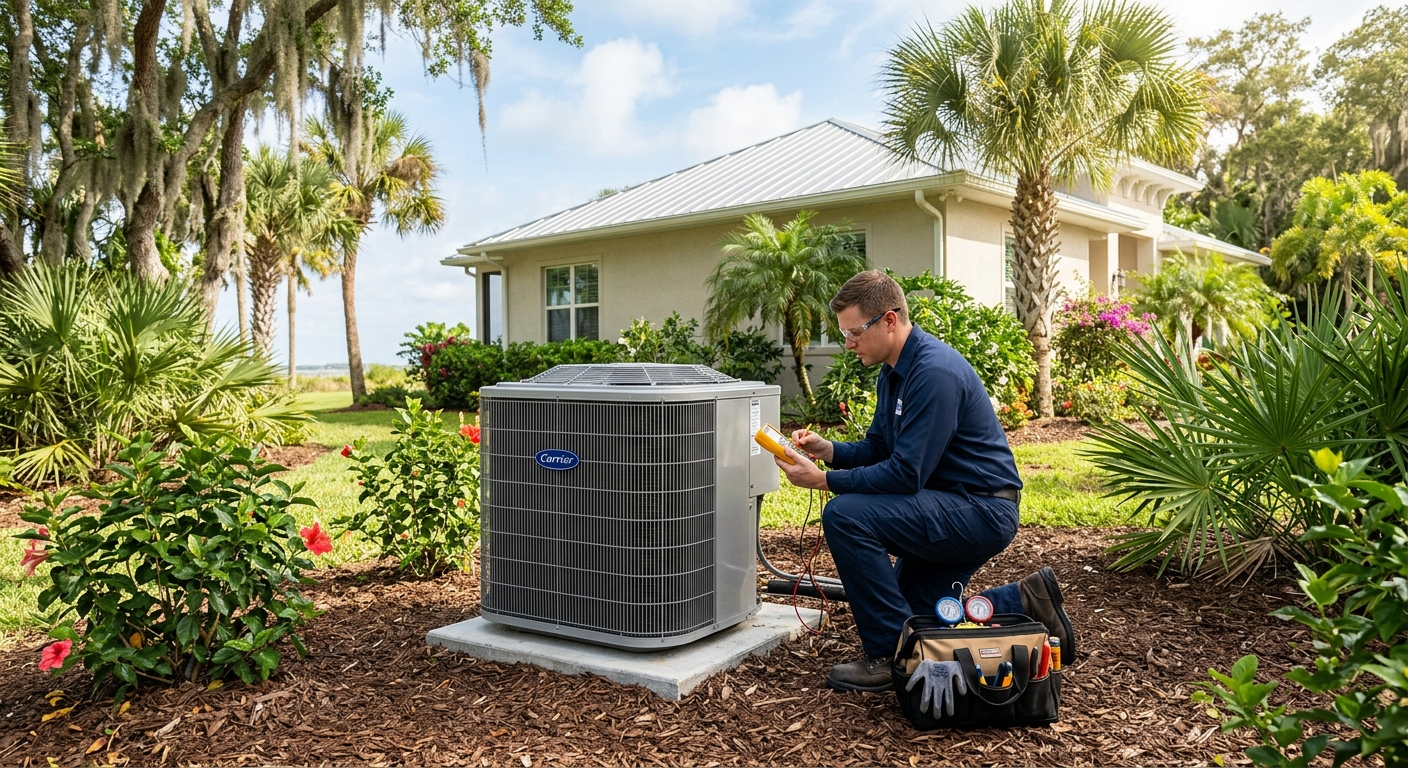
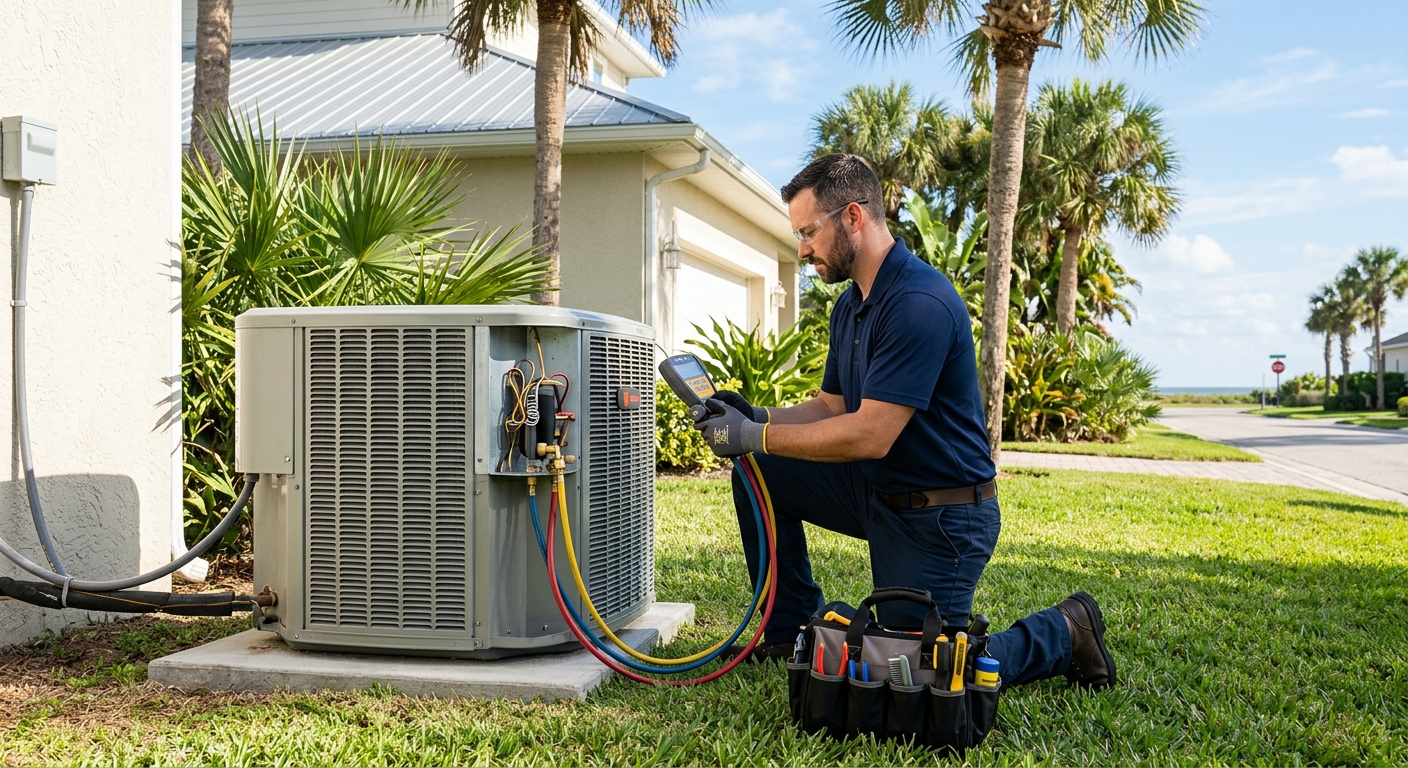
A proper maintenance appointment involves more than replacing a filter and glancing at the thermostat. The exact procedure depends on the equipment, but a trained technician should evaluate system performance and inspect components that homeowners cannot safely or accurately test themselves.
Typical service tasks include:
- Checking thermostat settings and basic system operation.
- Inspecting electrical connections, capacitors, contactors, and accessible wiring.
- Examining the indoor and outdoor coils for dirt, damage, or corrosion.
- Checking the blower assembly and evaluating airflow.
- Inspecting the condensate pan, drain line, and float switch.
- Looking for signs of refrigerant or oil leakage and measuring performance when appropriate.
- Checking temperature change across the system and identifying abnormal operation.
- Inspecting accessible duct connections and equipment panels.
- Testing heating operation and safety controls when the system includes heat.
Refrigerant should not need routine topping off. An air conditioner is a closed system, so a low charge can indicate a leak or another problem that should be diagnosed rather than repeatedly refilled. Ask the technician to explain any recommended repair and the measurements or observations supporting it.
What AC maintenance can homeowners do between visits?
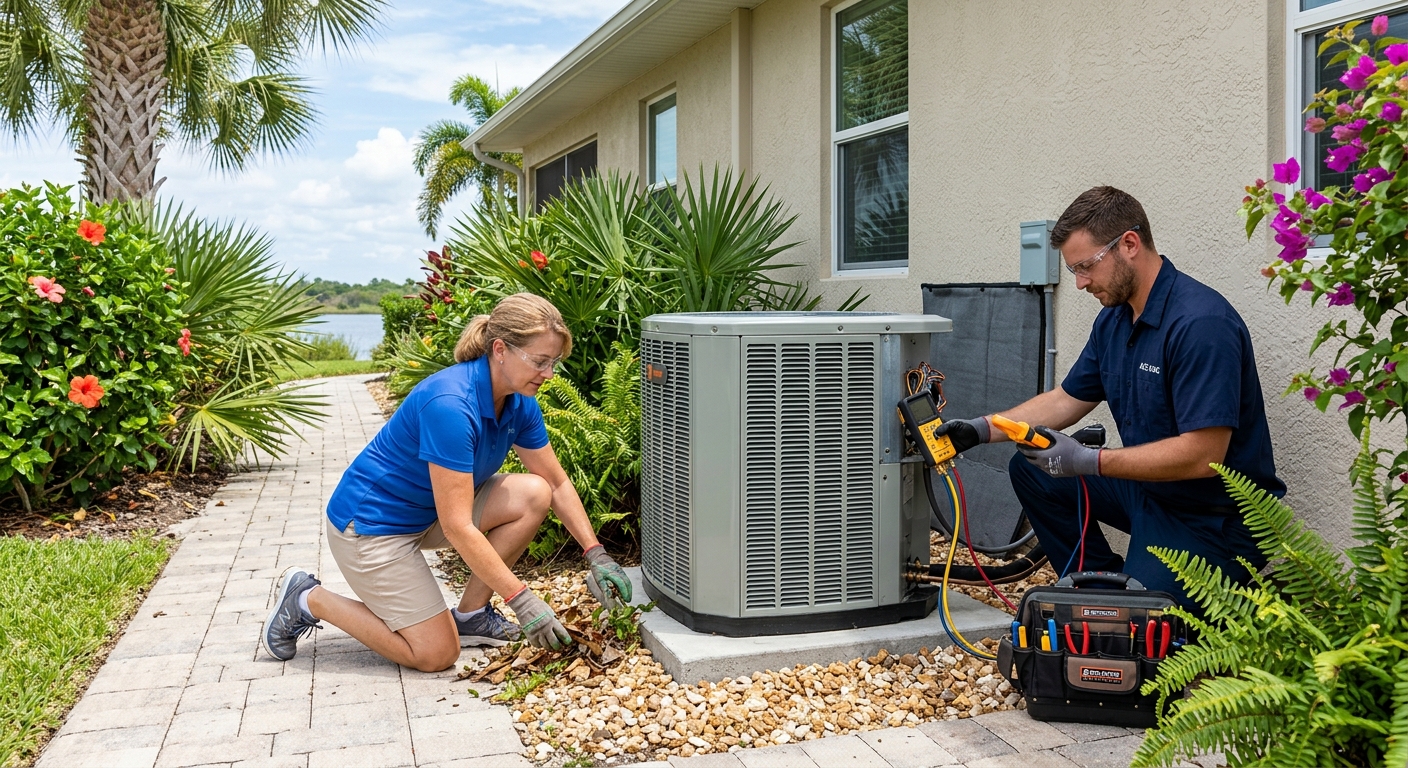
Homeowner care does not replace professional service, but a few simple habits can reduce avoidable problems. Start by checking the air filter every month, particularly during summer. Replacement timing depends on the filter, system, pets, occupancy, and indoor conditions; our guide explains how often to change an air filter in more detail.
You should also:
- Keep leaves, palm fronds, mulch, and other debris away from the outdoor unit.
- Make sure supply and return vents are open and not blocked by furniture or rugs.
- Watch for water near the indoor air handler or around a ceiling-mounted unit.
- Listen for new buzzing, grinding, rattling, or repeated starting and stopping.
- Monitor whether rooms feel unusually humid or unevenly cooled.
- Check the outdoor unit visually after severe weather without opening its panels.
- Follow the manufacturer's instructions for any homeowner drain-line care.
Turn off power before working near moving or electrical equipment, and do not remove service panels. Avoid pressure-washing the outdoor coil because excessive force can bend delicate fins or drive water into electrical components. If the unit needs internal cleaning, contact a qualified technician.
Does a coastal Brevard County home need extra maintenance?
A beachside home does not necessarily require a completely different schedule, but it does deserve closer attention. Wind can carry salt and sand onto outdoor equipment, accelerating corrosion and restricting the coil. The rate varies with distance from the ocean, prevailing winds, equipment placement, and protective features.
Ask your technician to inspect the cabinet, coil, fasteners, electrical compartment, and refrigerant lines for corrosion. If deterioration is progressing quickly, the contractor can recommend an inspection frequency and cleaning approach appropriate for the equipment. Do not apply household chemicals or unapproved coatings to the coil, as they may damage materials or conflict with manufacturer instructions.
Should you schedule service after a hurricane or severe storm?
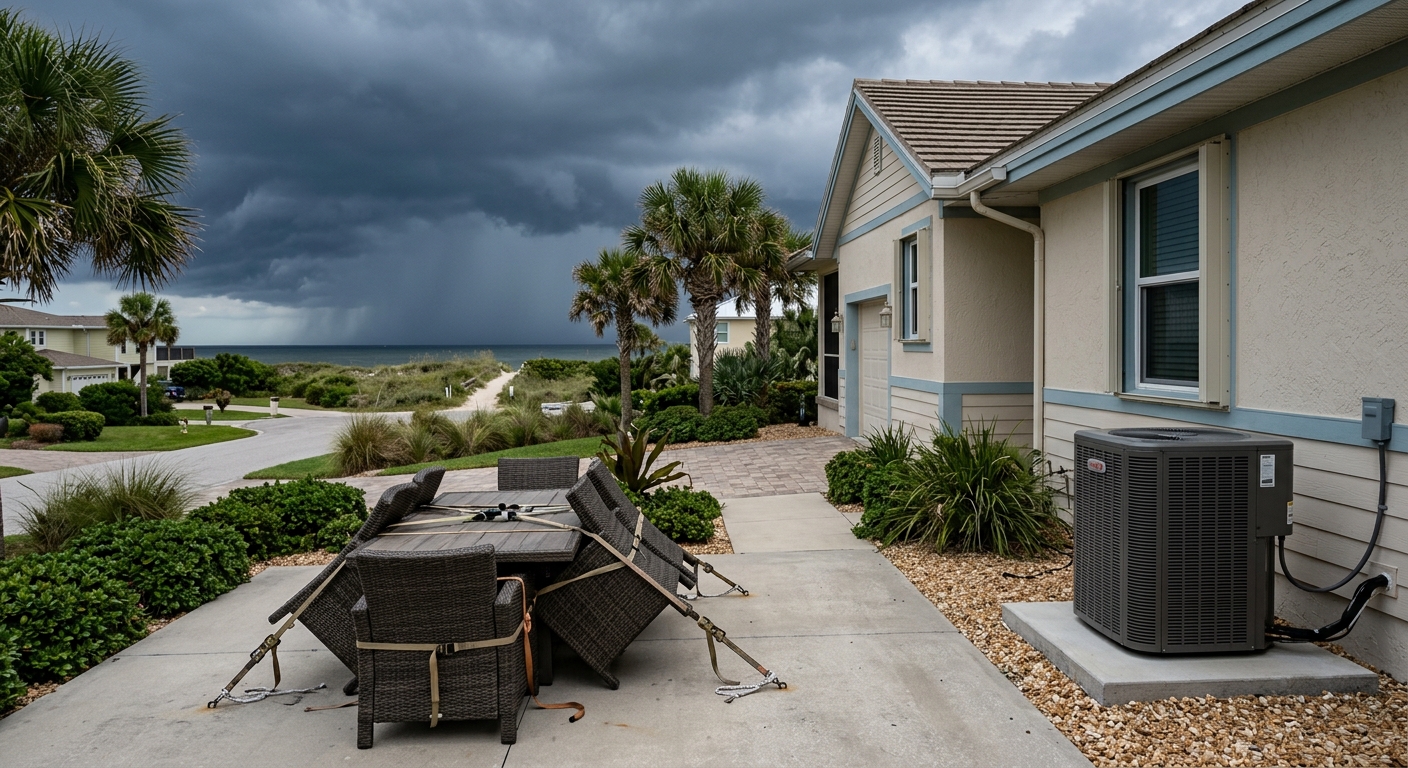
A routine tune-up is not automatically necessary after every thunderstorm. However, professional inspection is appropriate if the outdoor unit was exposed to flooding, impact damage, heavy debris, or a suspected lightning or power-surge event. Do not operate equipment that has been submerged or visibly damaged.
After conditions are safe, look from a distance for shifted equipment, bent panels, damaged wiring, vegetation, or unusual sounds. If the breaker trips repeatedly, leave the system off and call a professional rather than continuing to reset it. A technician can determine whether the issue involves the AC, electrical supply, or surge-related damage.
When should you call an HVAC professional instead of waiting for maintenance?
Maintenance is preventive; it is not a substitute for timely repair. Contact an HVAC professional when you notice weak airflow, warm air from the vents, frequent cycling, ice on the indoor coil or refrigerant lines, unexplained increases in energy use, persistent high indoor humidity, or water around the air handler.
Shut the system off and seek prompt help if you smell burning, see smoke, hear severe mechanical noises, or experience repeated breaker trips. Water leaking near ceilings, electrical components, or finished surfaces also deserves immediate attention.
Aquila Air & Heating is a family-run company serving homeowners throughout Brevard County and the Space Coast. If your system is due for its seasonal visit or has started showing warning signs, contact our team to arrange HVAC maintenance based on your equipment, location, and operating history.