Spring AC Prep: Getting Ready for a Florida Summer
Use this practical spring AC checklist to prepare your Brevard County home for Florida heat, humidity, storms, and long cooling cycles.
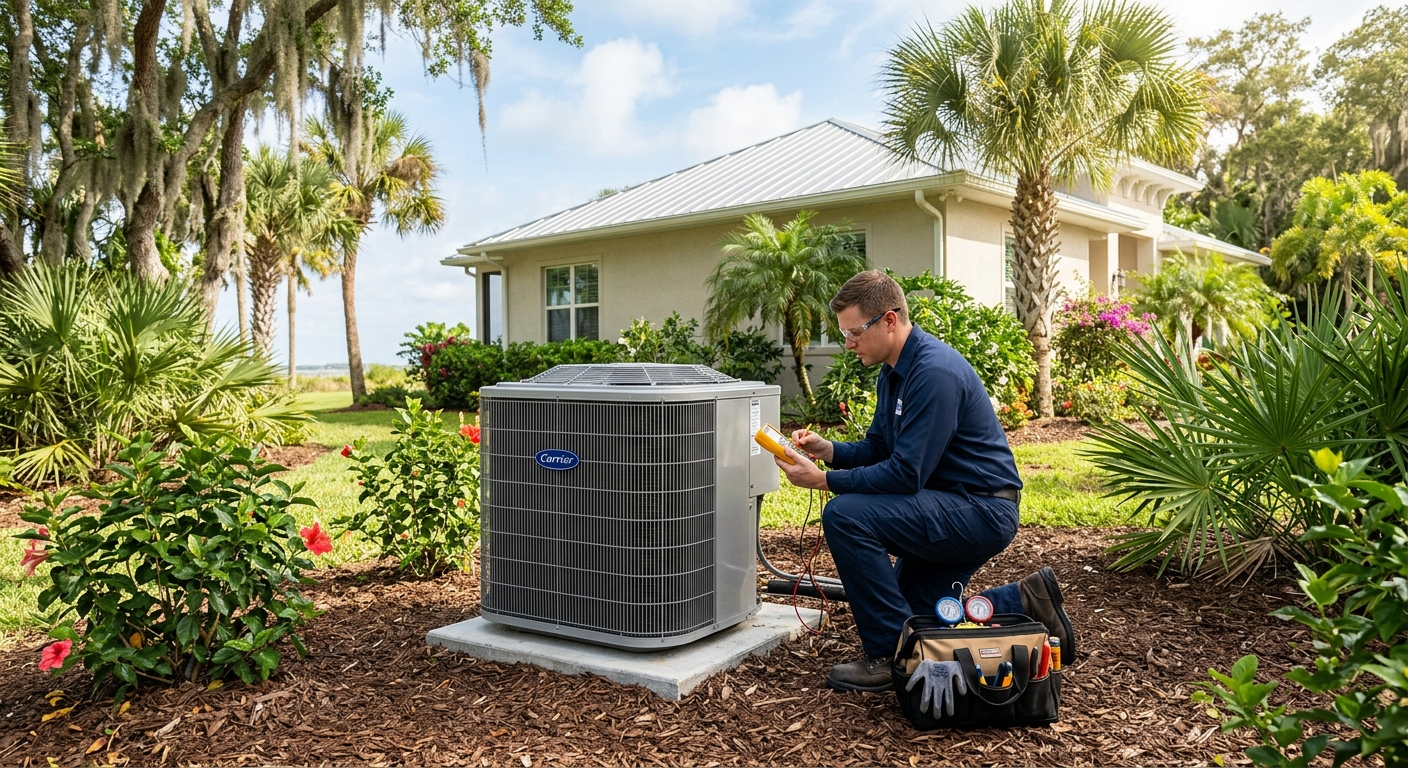
The best spring AC prep Florida homeowners can do is replace the air filter, clear debris from the outdoor unit, inspect the condensate drain, and test the system before daily temperatures climb. In Brevard County, schedule professional maintenance in early spring so there is time to address airflow, drainage, electrical, or refrigeration problems before prolonged summer cooling cycles begin. Early preparation cannot prevent every breakdown, but it can reveal developing issues before the hottest weather arrives.
When should Brevard County homeowners prepare their AC for summer?
March and April are generally good months to prepare an air conditioner for summer on the Space Coast. Florida cooling systems may run during every season, but spring usually provides an opportunity to inspect the equipment before the combination of high temperatures, intense sun, and persistent humidity places heavier demands on it.
Do not wait for the first exceptionally hot weekend if the system has been making unusual sounds, leaving the home humid, or taking longer to reach the thermostat setting. Arranging professional AC maintenance before peak cooling season gives a technician time to evaluate the system under operating conditions and recommend repairs when necessary.
Homes near the Indian River Lagoon, Atlantic coast, or other salt-air environments may need closer visual monitoring. Airborne salt can accelerate corrosion on outdoor cabinets, fasteners, coil surfaces, and electrical components. Properties surrounded by oaks, palms, or pines may also accumulate leaves, pollen, seed pods, and other debris around the condenser.
What should be on a Florida spring AC checklist?
Replace or inspect the air filter
A dirty filter restricts airflow and can contribute to longer cooling cycles, uneven temperatures, coil icing, and increased energy use. Check the filter even if it has not reached the replacement interval printed on the package. Homes with pets, remodeling dust, frequent door traffic, or occupants with respiratory sensitivities may need more frequent checks.
Use the filter size and efficiency level appropriate for the equipment. A higher MERV rating is not automatically better if the system was not designed for the additional airflow resistance. If you are unsure about timing or filter selection, review this guide to how often you should change your air filter and ask an HVAC professional what your system can support.
Clear the area around the outdoor unit
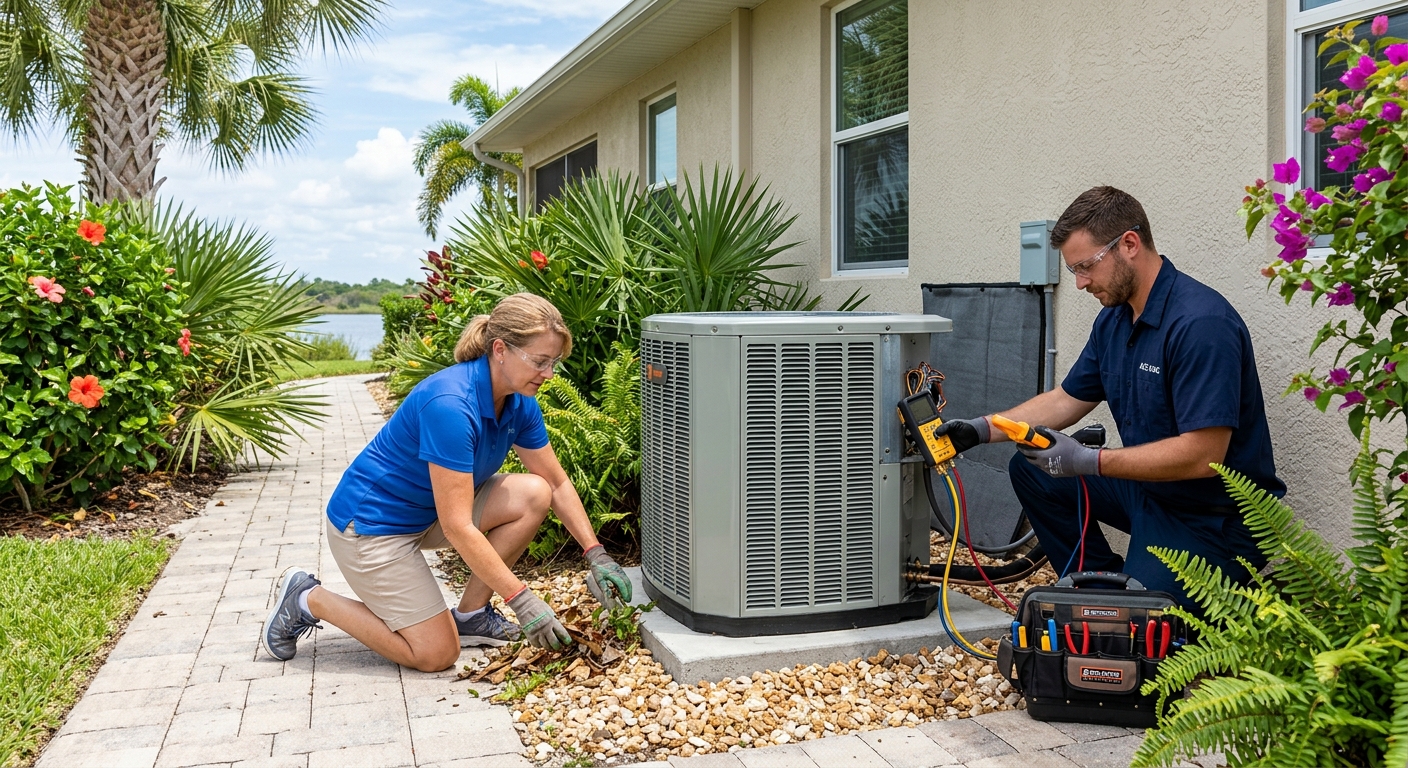
Turn off the system before working near the outdoor equipment. Remove loose leaves, grass clippings, weeds, and branches that could interfere with airflow. Maintain the clearance specified by the manufacturer; approximately two feet around the sides is a common general guideline, but the equipment instructions should take priority.
Trim landscaping so it does not grow into the coil or block service access. Do not cover the condenser with shrubs for appearance, and do not place objects on top of it. If the manufacturer permits routine rinsing, use a gentle stream of water after disconnecting power. Never use a pressure washer because it can bend delicate coil fins and damage components. Leave panel removal, chemical coil cleaning, and fin repair to a technician.
Look for condensate drainage problems
Florida air conditioners remove substantial moisture from indoor air, and that water must drain properly. Algae, biological buildup, sediment, or a poorly sloped drain can cause water to back up. Depending on the installation, a clogged line may trigger a safety switch that shuts the system down, or it may allow water to damage ceilings, flooring, or the air handler area.
Look for standing water near the indoor unit, a full auxiliary drain pan, water stains, musty odors, or dripping where it should not occur. Confirm that the outdoor drain termination is not buried under mulch or obstructed by vegetation. Avoid pouring bleach, drain opener, or another chemical into the line unless the equipment manufacturer or your HVAC professional specifically recommends it. Drain materials and system configurations vary.
Test the thermostat and cooling operation
On a warm day, set the thermostat several degrees below the indoor temperature and allow the system to operate for about 15 minutes. Confirm that cool air reaches the rooms, the outdoor unit runs normally, and the thermostat does not lose power or display an error. Avoid repeatedly changing settings or rapidly switching the system off and on.
Check thermostat batteries if your model uses them, verify the correct cooling mode, and review programmed schedules. If you use a smart thermostat, make sure it remains connected and that vacation, geofencing, or energy-saving settings will not unintentionally allow uncomfortable temperatures or excessive indoor humidity.
Open vents and check return-air pathways
Walk through the home and make sure supply registers are open and not covered by rugs, curtains, or furniture. Keep return grilles unobstructed as well. Closing multiple vents usually does not save energy and can disrupt system airflow or increase duct pressure.
Compare rooms for obvious airflow differences. One weak register may point to a closed damper, disconnected duct, crushed flexible duct, or blockage. Widespread weak airflow can have several causes, including a dirty filter, dirty coil, blower problem, duct leakage, or ice formation. These conditions require proper diagnosis rather than simply lowering the thermostat.
What does a professional spring AC tune-up include?
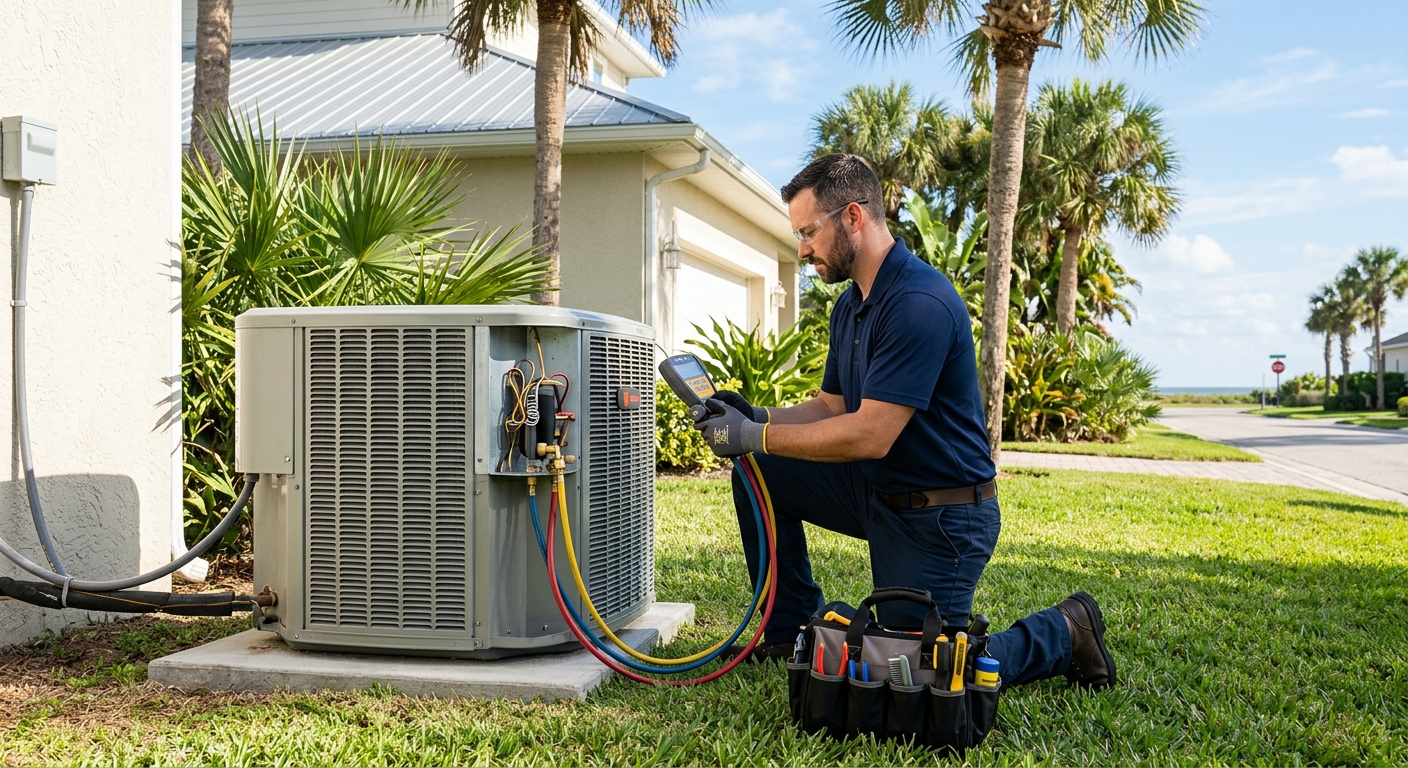
The exact work depends on the system type, condition, accessibility, and maintenance agreement. A thorough visit may include inspecting indoor and outdoor coils, testing electrical connections and components, checking blower operation, confirming thermostat performance, evaluating temperature and airflow, clearing or testing condensate drainage, and looking for unusual noise, vibration, corrosion, or oil residue.
A technician may also evaluate refrigerant performance when readings or symptoms indicate a possible issue. Refrigerant is not a fuel that an air conditioner normally consumes. If a system is low, the underlying cause may be a leak or another diagnostic issue, so adding refrigerant without determining why it is low is not a complete solution.
Capacitors and other electrical components can retain dangerous voltage even after power is disconnected. Refrigerant work also requires specialized tools and appropriate credentials. Homeowners should not remove electrical panels, handle refrigerant, bypass safety switches, or attempt live-voltage testing.
Why is Florida humidity part of AC preparation?
An air conditioner must manage both temperature and moisture. Indoor relative humidity that regularly exceeds about 60% can make the home feel warmer and may encourage condensation or microbial growth on suitable surfaces. A properly operating system generally needs adequate runtime and airflow to remove moisture effectively.
If the thermostat reaches its temperature setting but the home remains clammy, do not assume the solution is a lower setpoint. Dirty coils, incorrect airflow, duct leakage, equipment sizing, thermostat configuration, or short cycling can affect moisture removal. Portable humidity sensors can help identify a pattern, but an HVAC evaluation is appropriate when high humidity persists.
Keep exterior doors and windows closed while cooling, use bathroom exhaust fans during showers, operate kitchen exhaust when cooking, and address plumbing or building-envelope moisture sources. During long absences, avoid turning the AC completely off. Use a reasonable temperature and humidity strategy appropriate for the home, pets, belongings, and equipment.
How should coastal weather and storms affect AC prep?
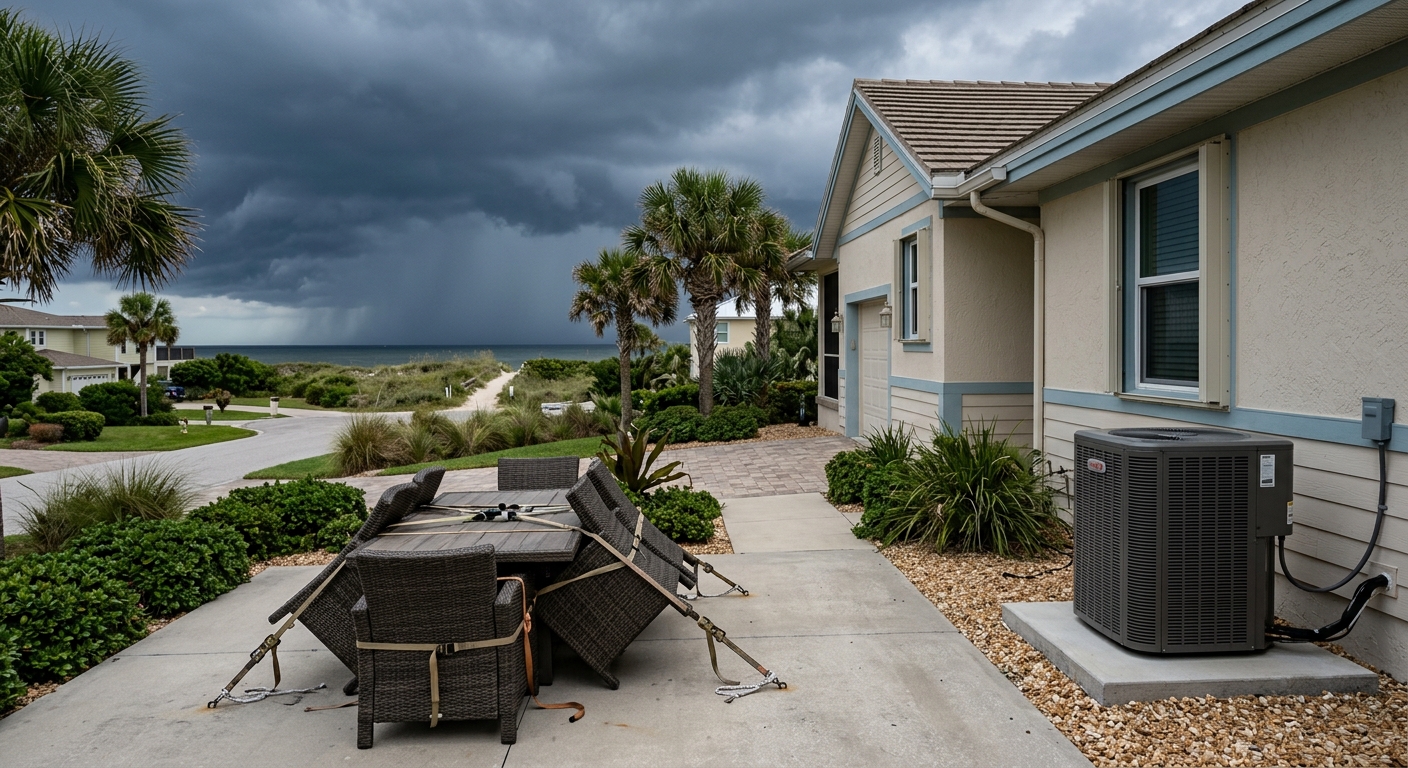
Brevard County systems face heavy rain, wind-driven debris, lightning, power interruptions, and coastal exposure. Before storm season, make sure the outdoor unit is secure on its base and that loose yard items cannot strike it. Do not wrap or cover an operating condenser because blocked airflow can cause serious damage.
Ask a qualified professional whether properly installed HVAC surge protection is appropriate for your equipment. After a power interruption, allow several minutes before restarting the system to reduce the chance of rapid cycling. If the outdoor unit or electrical components have been exposed to floodwater, leave the equipment off and arrange an inspection before energizing it.
Surface corrosion should be monitored, especially near the coast, but homeowners should not apply household coatings or harsh chemicals to coils. Products that are incompatible with the equipment may reduce heat transfer, trap contaminants, or affect manufacturer requirements.
Which AC warning signs require a professional?
Call an HVAC professional promptly if you notice any of the following:
- The system runs but produces warm or only slightly cool air.
- Ice appears on refrigerant lines, the indoor coil area, or the outdoor unit.
- The breaker trips again after a single reset or will not remain on.
- There is water around the air handler, ceiling staining, or an overflowing drain pan.
- The equipment starts and stops repeatedly or runs almost continuously without reaching the setting.
- You hear grinding, buzzing, hissing, rattling, or other new sounds.
- You notice a burning odor, melted wiring smell, or visible smoke.
- Indoor humidity remains high despite normal cooling operation.
- Energy use rises sharply without a clear change in weather or thermostat habits.
Turn the system off if there is smoke, a burning electrical odor, significant water leakage near electrical equipment, or severe mechanical noise. Do not continue resetting a tripped breaker. Repeated tripping indicates a problem that should be diagnosed safely.
How can homeowners reduce summer strain on an AC system?
Maintenance works best alongside sensible heat-control habits. Use blinds or shades on windows receiving strong afternoon sun, seal obvious air leaks around doors and windows, and run ceiling fans in occupied rooms. Fans improve comfort but do not lower room temperature, so switch them off when the room is empty.
Avoid extreme thermostat setbacks followed by large temperature reductions during the hottest part of the day. The ideal schedule depends on the house, insulation, equipment, occupancy, and electricity plan. Consistent settings often provide better humidity control than frequent large adjustments.
Keep dryer vents clear, limit indoor heat-producing activities during peak afternoon hours when practical, and have damaged ductwork evaluated. If remembering seasonal service is difficult, an HVAC maintenance plan can provide a more consistent inspection schedule; review the actual plan terms to understand included services.
Ready to prepare your Brevard County AC?
A spring inspection is most useful before small symptoms become urgent problems during sustained summer heat. Aquila Air & Heating is a family-run company serving homeowners across Brevard County and the Space Coast. Contact the team to schedule spring AC maintenance, investigate a cooling or humidity concern, or discuss the condition of an aging system.