What Inverter AC Technology Means for Florida Energy Bills
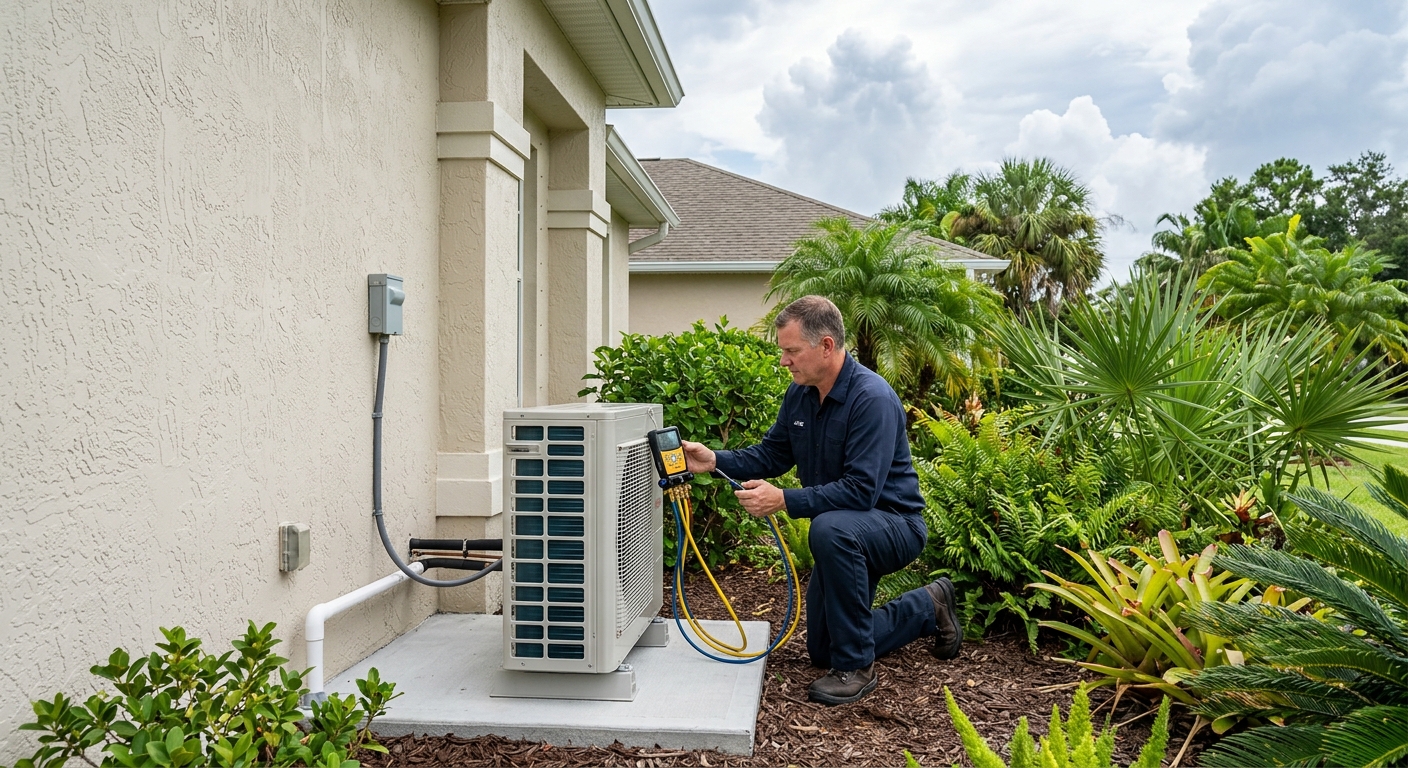
Inverter AC systems adjust compressor output to match a home’s cooling needs, potentially reducing energy use while improving Florida humidity control.
Inverter AC technology allows an air conditioner to adjust its cooling output instead of repeatedly running at full capacity and shutting off. In Brevard County’s long cooling season, that can reduce electricity use, maintain steadier temperatures and improve indoor humidity control, although actual savings depend on equipment efficiency, sizing, ductwork and household habits.
How does inverter AC technology work?
A conventional single-stage air conditioner generally has two compressor states: on at full output or off. Once the thermostat calls for cooling, the system runs at full capacity until it reaches the set temperature, then stops and waits for the next cooling cycle.
An inverter-driven compressor can operate across a range of speeds. Its electronic controls adjust compressor output as the home’s cooling load changes. The system may run at a high output after the thermostat setting is lowered or during a hot afternoon, then operate at a lower output to maintain the temperature.
This does not mean the AC runs without using electricity. It means the system can avoid some of the energy and temperature swings associated with frequent starts and stops. When properly selected and installed, lower-output operation can be especially useful during Florida’s mornings, evenings and humid shoulder-season weather.
The phrase “inverter AC technology Florida” often appears alongside terms such as variable-capacity, variable-speed and modulating. These terms are related but not always interchangeable. An inverter usually controls the compressor, while a variable-speed air handler refers to the indoor blower motor. A complete matched system may use both technologies.
Can an inverter AC lower a Florida electric bill?
It can, but no responsible contractor can promise a specific savings percentage without evaluating the home and its current system. An older, low-efficiency unit replaced with a properly sized high-efficiency inverter system may produce a meaningful reduction in cooling consumption. Replacing a relatively new and efficient system may result in a smaller difference.
Several factors determine the outcome:
- The efficiency and condition of the existing AC system
- The new equipment’s SEER2 rating and performance at partial load
- Whether the system is correctly sized using a cooling-load calculation
- Duct leakage, insulation levels, window exposure and air infiltration
- Thermostat settings, occupancy and indoor heat-producing activities
- Utility rates, fixed account charges and seasonal billing adjustments
Inverter equipment often provides its greatest efficiency advantage during partial-load operation. That matters on the Space Coast because an AC system may run for much of the year without needing its maximum rated output every minute. However, a high-efficiency rating cannot compensate for badly leaking ducts or an installation that does not follow manufacturer requirements.
Before selecting equipment, a professional AC installation evaluation should consider the home’s cooling load, electrical requirements, duct capacity and equipment compatibility rather than relying only on the size of the old unit.
Why does longer, lower-speed operation help with humidity?
Florida comfort depends on both temperature and moisture. An oversized single-stage system may cool a house quickly and shut off before removing enough indoor humidity. The thermostat can display the desired temperature while the rooms still feel clammy.
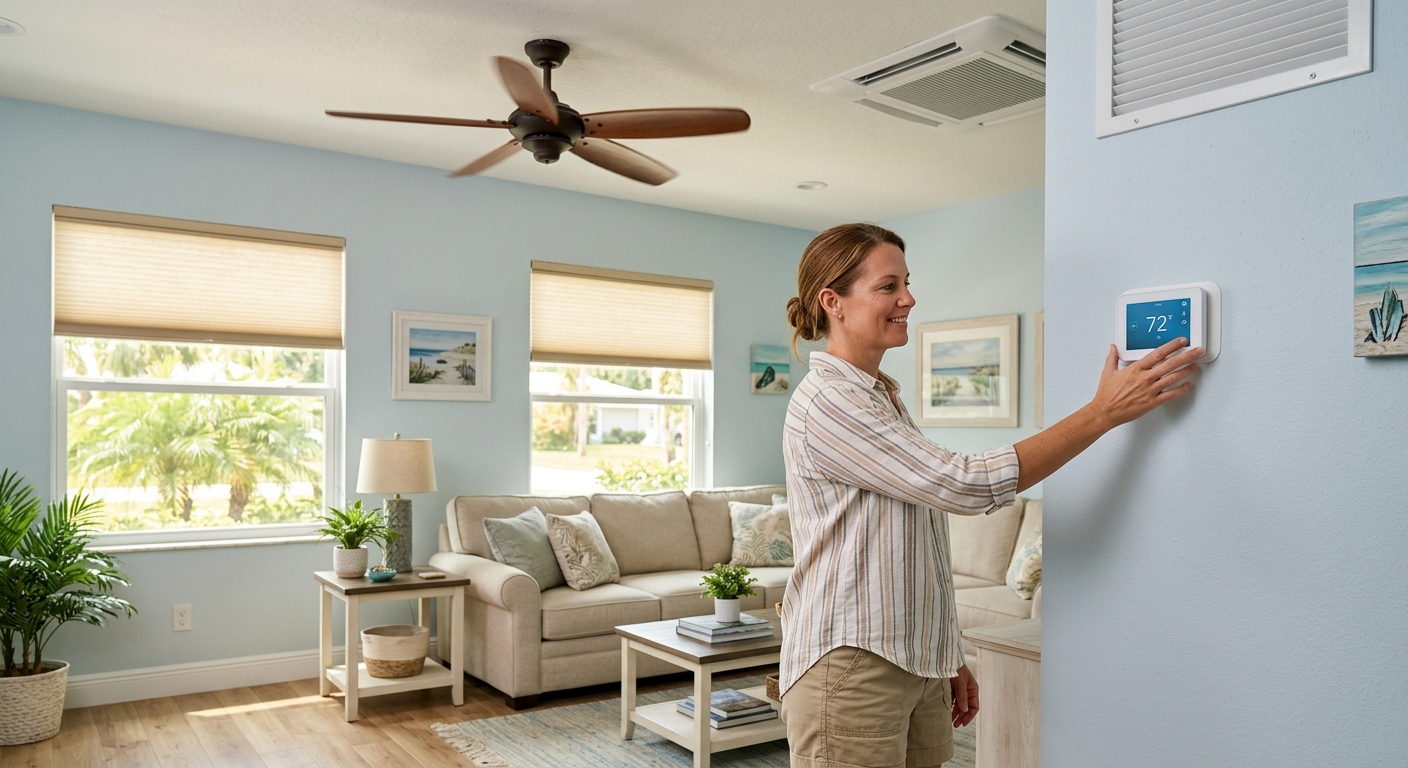
An inverter system can often operate for longer cycles at a lower output, giving warm indoor air more time to pass over the cold evaporator coil. Moisture condenses on the coil and drains away. This can help maintain more consistent humidity and may make a moderate thermostat setting feel more comfortable.
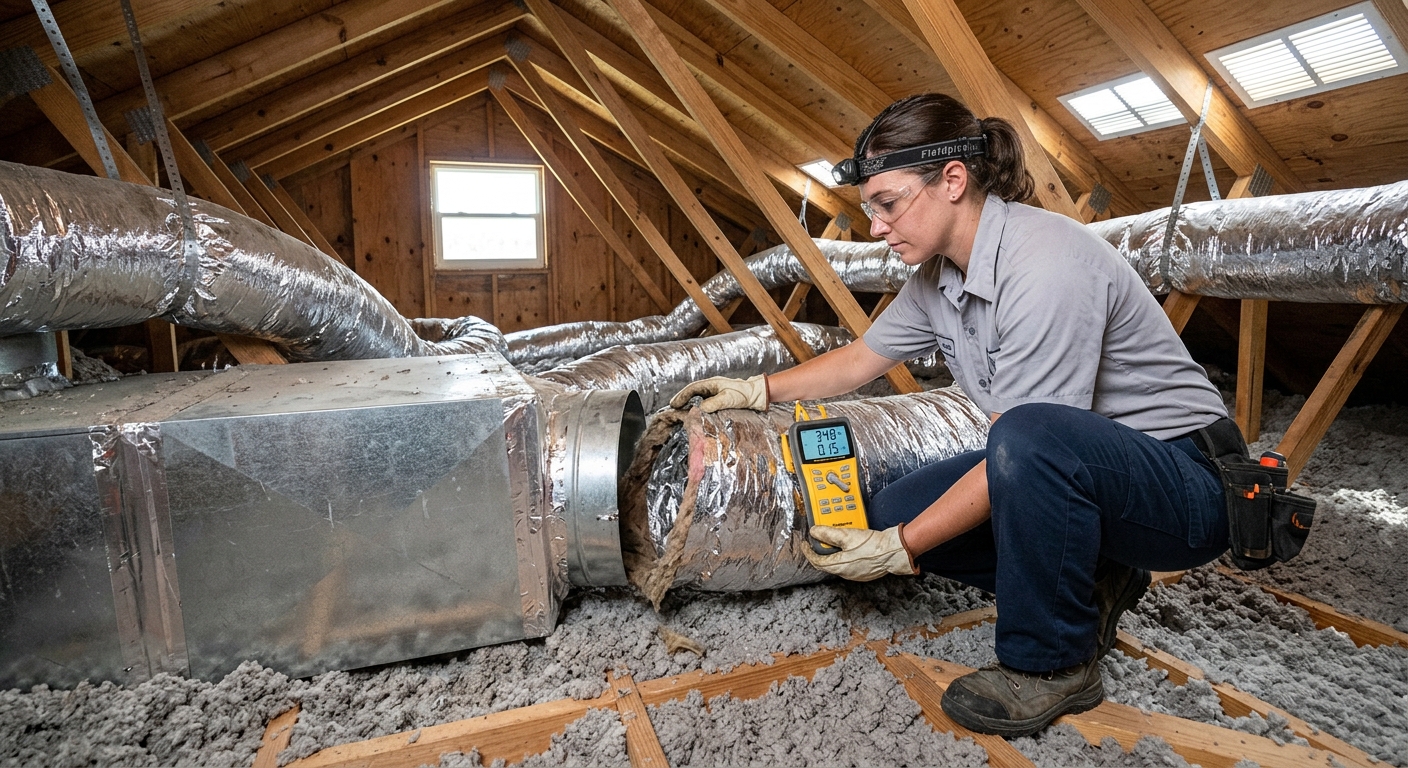
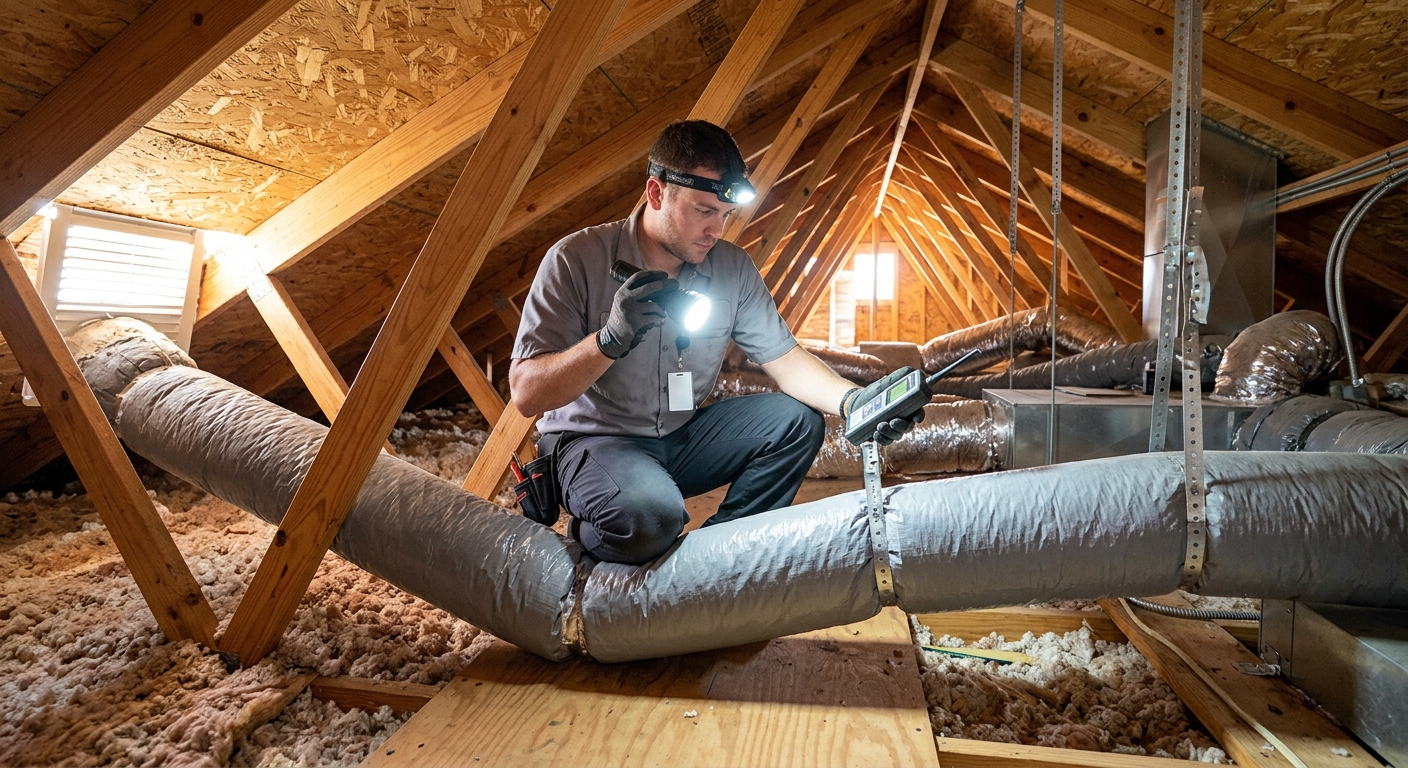
Inverter technology is not an automatic cure for every moisture problem. Oversized equipment, incorrect airflow, clogged drains, building-envelope leaks and unsealed ducts can still lead to high humidity. Homes with ducts in a hot attic may also lose conditioned air and pull humid air into the system. Aquila’s guide to duct leaks and energy loss in Florida homes explains why those losses affect both comfort and operating cost.
Is an inverter AC worth the higher upfront cost in Brevard County?
The answer depends on how long you expect to remain in the home, how heavily you use air conditioning and what problems you want the replacement to solve. Inverter equipment usually costs more upfront because of its compressor, control boards, sensors and communicating components.
It may be a strong fit when:
- The AC runs heavily for much of the year
- Rooms frequently feel too warm, too cold or humid
- Quiet operation and steadier airflow are priorities
- The existing system is old, inefficient or due for replacement
- The home has been evaluated for duct and insulation problems
- The household expects to stay long enough to benefit from lower operating costs
A simpler single-stage or two-stage system may still be appropriate for a smaller budget, a seasonal property or a home with modest cooling demand. The useful comparison is not inverter versus non-inverter in isolation. Homeowners should compare installed price, expected energy use, comfort features, repair access, parts availability and warranty terms.
If an existing unit is approaching the end of its practical service life, a professional AC replacement assessment can compare matched systems without assuming the most expensive option is automatically the best one.
What should homeowners compare before buying?
Load calculation and equipment sizing
Ask whether the contractor will calculate the home’s cooling load rather than simply replacing the old unit with the same tonnage. Renovations, new windows, insulation improvements and additions can change the load. Correct sizing supports efficiency, moisture removal and equipment life.
SEER2 and real operating conditions
SEER2 is a seasonal efficiency metric that helps compare systems under standardized test conditions. It is useful, but it is not a prediction of a specific Brevard County electric bill. Installation quality, thermostat settings and duct losses still matter.
Matched indoor and outdoor components
The outdoor unit, air handler or furnace, metering device, thermostat and controls should be approved as a matched combination. Mixing incompatible components can reduce performance and may affect warranty eligibility.
Electrical and surge considerations
Inverter systems rely on sophisticated electronics. Ask the contractor to inspect the electrical circuit and discuss HVAC-rated surge protection, especially in an area that experiences frequent thunderstorms and utility disturbances. Surge protection reduces risk but cannot prevent every type of electrical damage.
Coastal exposure
Homes near the Indian River, Banana River or Atlantic coast may face increased salt and moisture exposure. Equipment placement, coil protection options and regular rinsing or maintenance may help reduce corrosion. Follow the manufacturer’s cleaning instructions rather than using harsh chemicals or high-pressure water.
Warranty and service support
Compare registration requirements, labor terms, covered components and maintenance obligations in writing. Aquila Air & Heating also provides information about its Lifetime Warranty; eligibility and coverage should always be confirmed for the specific installation.
How can you get the best performance from an inverter system?
Even advanced equipment needs basic care. Use the correct filter size, replace or clean it as recommended, keep supply and return vents open, and set the thermostat fan to AUTO unless a professional recommends otherwise. Avoid large daily thermostat setbacks that force the system to make abrupt temperature changes.
Professional AC maintenance should include more than a quick visual check. The technician may need to inspect refrigerant performance, airflow, drain operation, electrical connections, coil condition, controls and fault history. Maintenance frequency should follow the manufacturer’s guidance and account for local conditions such as salt exposure, pets and extended run time.
Homeowners can also track results by comparing monthly kilowatt-hour use rather than bill totals alone. Utility rates and fees can change, so electricity consumption offers a clearer before-and-after comparison. Compare similar weather periods and note major changes in occupancy or thermostat settings.
When should you call an HVAC professional?
Call a qualified technician if an inverter system stops cooling, displays recurring error codes, trips a breaker, develops ice, leaks water or produces unusual electrical or mechanical sounds. Persistent indoor humidity above the household’s normal range also deserves investigation, particularly if you notice condensation or musty odors.
Inverter equipment can operate quietly and for long periods, so continuous low-speed operation is not necessarily a malfunction. However, a system that cannot reach the thermostat setting, runs only at maximum output or cycles rapidly may have an airflow, sensor, refrigerant, control or sizing problem. Because inverter cabinets contain high-voltage components that can retain a charge, internal diagnosis should be left to trained professionals.
Get a system recommendation based on your Brevard County home
Inverter AC technology can offer lower energy use, steadier temperatures and better moisture control, but the equipment must match the house and be installed correctly. Aquila Air & Heating can evaluate your current system, ductwork, comfort concerns and budget, then explain the practical differences among single-stage, two-stage and inverter options.
Contact Aquila Air & Heating to schedule an in-home assessment anywhere in our Brevard County service area. You will receive guidance based on your home’s actual needs—not a one-size-fits-all efficiency claim.