Signs Your Florida Home Has Leaky or Undersized Ducts
Uneven temperatures, high cooling bills, weak airflow, excess dust, and noisy vents may indicate leaky or undersized ductwork in your Florida home.
Common signs of leaky ducts include uneven room temperatures, weak airflow, rising cooling costs, excess dust, musty odors, and an air conditioner that runs longer than expected. Undersized ducts can cause similar comfort problems but are more likely to produce loud airflow, whistling grilles, high static pressure, and consistently weak delivery throughout part of the home. In Brevard County, ducts located in hot, humid attics can make either problem especially costly and uncomfortable.
What are the most common signs of leaky ducts?
A duct leak allows conditioned air to escape before it reaches your rooms or lets hot, humid, dusty air enter the duct system. Because much of the ductwork in Brevard County homes runs through attics, garages, or other unconditioned spaces, even a leak that is out of sight can noticeably affect comfort.
Watch for these common warning signs:
- One or more rooms stay warmer than the thermostat setting.
- Airflow is weak at certain supply vents.
- Your air conditioner runs for long cycles without making the home comfortable.
- Cooling costs increase without a clear change in weather, thermostat settings, or household use.
- Dust returns quickly after cleaning or appears around supply grilles.
- You notice musty, attic-like, or insulation odors while the system is running.
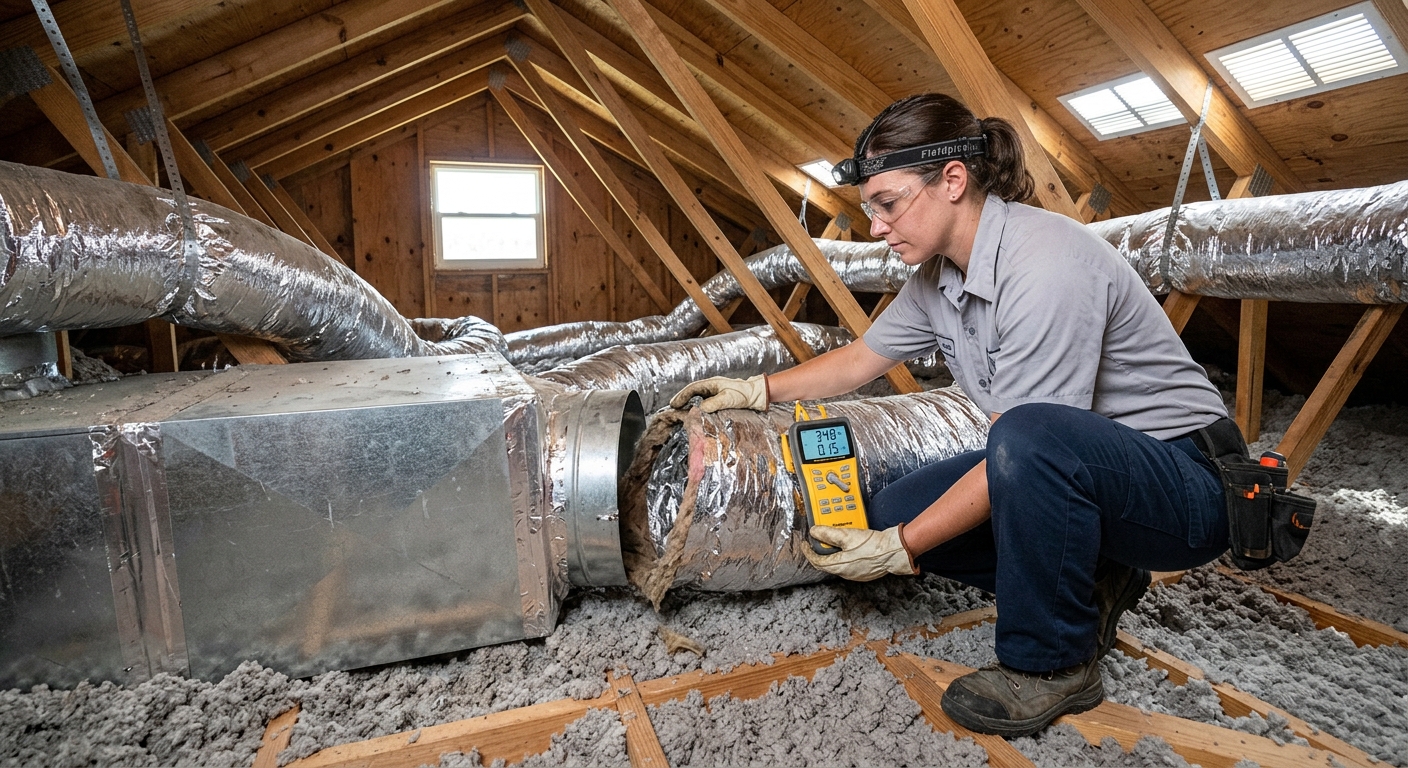
- Flexible ducts are visibly torn, crushed, disconnected, or sagging.
- There are hot or humid areas near ceiling registers.
- Doors move or interior pressure changes when the HVAC blower starts.
These symptoms do not prove that a duct is leaking, but several occurring together justify a professional inspection. Aquila Air & Heating can evaluate accessible ductwork and recommend appropriate duct repair for damaged or leaking sections.
How can you tell if ducts are undersized?
Undersized ductwork cannot move the amount of air the HVAC system needs without creating excessive resistance. The issue may affect the main trunk, individual branch ducts, return ducts, grilles, or a combination of components.
Possible signs of undersized ducts include:
- Loud rushing air from multiple vents.
- Whistling at return grilles or gaps around the filter cabinet.
- Supply vents that feel forceful but do not deliver enough total air to cool the room.
- A return grille that is unusually noisy or appears to pull strongly on the filter.
- Rooms that have never cooled properly, even when the equipment is operating normally.
- Airflow problems that began after a larger HVAC system was connected to the existing ducts.
- Repeated blower, coil-freezing, or comfort problems without an obvious equipment failure.
Duct size cannot be judged reliably by looking at a single vent. A technician should consider equipment airflow requirements, trunk and branch dimensions, duct length, fittings, grille capacity, and measured static pressure. A poorly routed duct can also behave as if it is too small because sharp bends, kinks, and compression increase resistance.
Why are duct problems common in Brevard County homes?
Space Coast duct systems operate in demanding conditions. Attics in communities such as Melbourne, Palm Bay, Rockledge, Cocoa, Titusville, and Satellite Beach can become extremely hot. When cooled air leaks into that space, the lost cooling does not help the occupied rooms. When return-side leaks pull attic air inward, the system may also draw in heat, humidity, insulation particles, and odors.
Florida humidity adds another concern. Cool duct surfaces can develop condensation when they contact warm, moisture-heavy air, especially if insulation is damaged or air sealing is poor. Persistent moisture may stain ceilings, dampen insulation, or contribute to microbial growth on nearby materials. A water mark near a vent should therefore be investigated rather than assumed to be a roof leak.
Older duct materials can deteriorate over time, while renovation work, pest activity, storage in an attic, or repeated service access can damage flexible ducts. Connections at plenums, boots, and air handlers may also loosen. For more background, review how duct leaks contribute to energy loss in Florida homes.
Could the problem be something other than the ducts?
Yes. Dirty filters, blocked return grilles, closed supply vents, blower problems, dirty evaporator coils, refrigerant issues, poor insulation, solar heat gain, and incorrectly sized equipment can create similar symptoms. A room with large west-facing windows may be warmer because its cooling load is higher, not because its duct leaks.
Start with a few safe checks:
- Replace a dirty filter with the correct type and size recommended for the system.
- Make sure furniture, rugs, curtains, and boxes are not blocking supply or return grilles.
- Confirm that supply registers are open.
- Compare airflow between rooms while the system is running.
- Look for accessible ducts that are disconnected, flattened, sharply bent, or visibly damaged.
- Note whether the problem affects one room, one side of the house, or the entire home.
Do not enter a hot attic unless it is safe and you have appropriate access. Florida attics can reach hazardous temperatures, and stepping between ceiling joists can cause serious injury or property damage. Do not cut duct insulation or disconnect components to investigate.
How does a professional test for duct leakage or poor sizing?
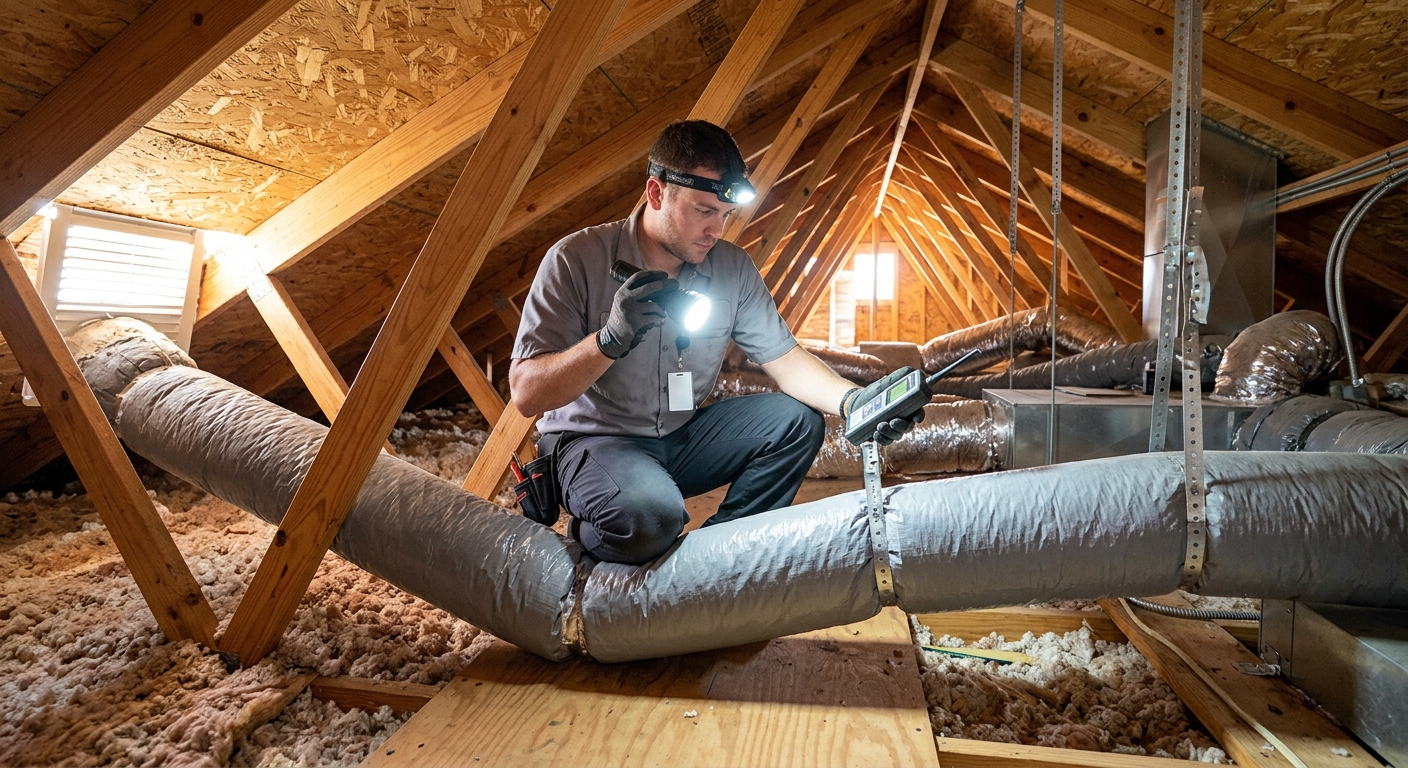
A professional evaluation should go beyond feeling for air at the vents. Depending on the symptoms and accessibility, an HVAC technician may inspect duct connections, look for damaged insulation, measure temperature differences, check airflow, and test static pressure across the system.
Static pressure shows how much resistance the blower encounters. High readings can point toward restrictive filters, coils, undersized returns, small supply ducts, closed dampers, or poorly configured fittings. Room-by-room airflow measurements can help identify branches that are restricted, disconnected, or not sized for the space they serve.
Specialized duct leakage testing may also be appropriate. The duct system is pressurized or depressurized with calibrated equipment so leakage can be measured rather than guessed. Smoke tools or other diagnostic methods may then help locate specific leaks. Test results should be interpreted alongside the HVAC system's specifications and the home's layout.
Should leaky ducts be sealed, repaired, or replaced?
The right solution depends on the duct material, location, condition, design, and extent of damage. A loose connection or isolated tear may be repairable. Proper repairs commonly involve reconnecting and mechanically securing the duct, sealing approved joints with duct mastic or an appropriate UL-rated product, and restoring insulation where needed.
Ordinary cloth-backed duct tape is not a dependable long-term repair for HVAC ducts, particularly in a hot attic. It can dry out and release from dusty or flexible surfaces. Painting sealant over a badly crushed, deteriorated, or incorrectly sized duct also will not correct the underlying airflow problem.
Duct replacement may be more practical when the system has widespread deterioration, substantial contamination that cannot be addressed appropriately, major sizing errors, repeated failures, or a layout that restricts airflow. Replacement should be designed around the equipment and the cooling needs of the home rather than simply copying every existing duct dimension.
Can leaky ducts increase indoor humidity?
They can contribute to humidity problems, especially when return leaks draw warm, damp attic or garage air into the system. Supply leaks can also reduce the amount of conditioned air reaching the living space, causing longer operation and uneven comfort. However, high indoor humidity may also involve equipment sizing, thermostat settings, building air leaks, drainage issues, or an air conditioner that is not operating correctly.
If humidity remains high, windows feel damp, or the home develops persistent musty odors, have the complete system evaluated. Duct sealing alone may not solve a moisture problem with multiple causes.
When should you call an HVAC professional?
Schedule an inspection when comfort or airflow problems continue after checking the filter and grilles, when energy use changes unexpectedly, or when you see a disconnected or damaged duct. You should also call if condensation appears around vents, attic odors enter the home, or the system frequently freezes or shuts down.
If the air conditioner is blowing warm air, making unusual mechanical noises, leaking significant water, or failing to cool the entire home, the equipment may need professional AC repair in addition to a duct evaluation. Turn the system off and seek prompt help if you smell burning, see smoke, or notice an electrical hazard.
How can Brevard County homeowners prevent future duct problems?
Include visible ductwork in routine HVAC maintenance and address small defects before they spread. Keep attic access paths clear, avoid placing stored items on flexible ducts, and make sure contractors working in the attic do not crush or disconnect them. Replace filters on an appropriate schedule and avoid closing numerous supply registers in an attempt to save energy, since that can increase system pressure.
After additions or major remodeling, ask whether the existing HVAC and duct system can serve the changed floor plan. New rooms, relocated walls, and converted garages can alter cooling loads and airflow needs. A room-by-room load calculation and duct design review are more dependable than adding a larger vent without evaluating the complete system.
Get clear answers about your home's airflow
The signs of leaky ducts often overlap with equipment, insulation, and humidity problems, so accurate diagnosis matters. Aquila Air & Heating serves homeowners across Brevard County and can inspect your duct system, measure airflow conditions, and explain whether targeted repair, redesign, or replacement makes sense.
Contact our family-run team to schedule an evaluation. You can also ask about Aquila's Lifetime Warranty, including current eligibility, coverage, and terms, when discussing qualifying HVAC options.
Frequently asked questions
Can one room have a duct leak while the rest of the house feels normal?
Yes. A separated branch duct, torn flex duct, leaking boot, or crushed run can reduce airflow to one room while other areas remain comfortable. Room-specific solar exposure and insulation problems can cause the same symptom, so testing helps identify the actual source.
Will closing vents help air reach a room with weak airflow?
Usually not. Closing several vents can raise duct pressure and may increase leakage, noise, or stress on the blower. The safer approach is to identify whether the weak room has a damaged branch, a balancing issue, an undersized duct, or a higher cooling load.
Why is there dust around my ceiling vents?
Dust near a vent may come from household air moving across the grille, a gap between the boot and ceiling, or duct leakage that draws particles from an attic. Dust alone does not confirm a leaking duct, but rapid buildup combined with odors or airflow problems should be inspected.
Can new air-conditioning equipment use old ductwork?
Sometimes, but the existing ducts should be checked for condition, leakage, and airflow capacity. A replacement system with different airflow requirements may not perform correctly if attached to undersized or deteriorated ducts.
How often should Florida ductwork be inspected?
There is no single interval that fits every home. Have ducts checked when buying an older home, replacing HVAC equipment, completing attic work, or noticing new airflow, moisture, odor, or energy-use problems. Accessible components can also be reviewed during routine system maintenance.