Should You Replace or Repair Your Ductwork in an Older Florida Home?
Should aging ducts be sealed, repaired, or replaced? Use these Florida-specific signs to make a practical decision for your Brevard County home.
Whether you should repair or replace ductwork depends on its age, material, physical condition, leakage, insulation, and design. Localized damage can often be repaired, but widespread deterioration, poor sizing, recurring condensation, or badly damaged insulation usually makes replacement the better long-term choice.
In an older Brevard County home, the answer should come from an inspection rather than age alone. Florida heat, attic temperatures, humidity, pests, and years of previous alterations can all affect how well a duct system performs.
How do you decide whether to repair or replace ductwork?
Begin by determining whether the problem is isolated or affects the entire system. One disconnected branch, damaged boot, or accessible seam may be straightforward to repair. Leakage at numerous joints, crushed flex duct, deteriorated duct board, or an undersized layout points toward more extensive work.
The condition of the air-conditioning equipment also matters. A new system connected to restrictive or leaky ducts may still deliver uneven temperatures and high energy use. Before investing in either option, ask for an evaluation of the complete ductwork system, including supply runs, returns, plenums, boots, insulation, and airflow.
Useful decision factors include:
- The approximate age and material of the ducts
- Whether the damage is confined to one or two accessible locations
- The amount of measured air leakage
- The condition of exterior insulation and vapor barriers
- Whether rooms receive the correct amount of airflow
- Evidence of condensation, pests, contamination, or previous patchwork
- Whether the layout is properly sized for the current HVAC system
When is duct repair usually enough?
Repair is often reasonable when most of the system remains structurally sound and the defects can be clearly identified. Examples include a loose connection, a torn section of flex duct, leakage around a register boot, or an unsealed plenum joint.
Professional duct repair may involve reconnecting sections, replacing a short damaged run, mechanically fastening joints, applying approved mastic, repairing insulation, or sealing gaps around boots. The materials and method should be compatible with the existing duct type.
Signs that a targeted repair may solve the problem
- One room recently developed weak airflow
- Damage is associated with nearby attic or renovation work
- A single branch is visibly kinked, torn, or disconnected
- The ducts are relatively sound outside the damaged area
- Testing identifies a small number of major leakage points
- The system previously delivered balanced comfort
Sealing should not mean covering every visible problem with general-purpose tape. Cloth-backed duct tape can dry out and fail in a hot attic. Depending on the connection, professionals typically use mechanical fasteners, UL-listed sealing products, mastic, or approved foil tape.
When is replacing old ductwork the better choice?
Replacement becomes more practical when deterioration is widespread or the original design prevents proper airflow. Continually paying to patch fragile ducts can cost more over time without correcting comfort or efficiency problems.
Consider duct replacement when an inspection finds:
- Multiple collapsed, crushed, disconnected, or severely sagging runs
- Brittle flex duct or damaged inner liners in several locations
- Extensive deterioration of fiberglass duct board
- Wet, compressed, missing, or contaminated insulation
- Recurring condensation caused by failed vapor barriers or installation defects
- Supply or return ducts that are too small for required airflow
- Major room additions that were connected without proper redesign
- Persistent comfort problems despite sound HVAC equipment
- Repairs covering so much of the system that replacement offers better value
Replacement also creates an opportunity to correct poor routing. Shorter, properly supported runs with smooth transitions generally move air more effectively than long, sharply bent, or compressed ducts. A contractor should design the new layout around airflow requirements rather than simply copying defects in the old system.
Why are older Brevard County ducts vulnerable?
Many older homes across Melbourne, Palm Bay, Rockledge, Cocoa, Titusville, and nearby Space Coast communities have ducts routed through vented attics. Summer attic temperatures can be extreme, while humid outdoor air can enter through soffits, roof vents, access openings, and building leaks.
If cold supply air travels through poorly insulated ducts, heat flows into the air before it reaches the room. Damage to the exterior vapor barrier can also allow moisture to condense on a cold duct surface. Persistent moisture may stain ceilings, wet insulation, damage nearby materials, or support microbial growth.
Older houses may also have duct systems modified during equipment changes, additions, garage conversions, or remodeling. Extra branches and improvised transitions can reduce airflow even if they do not leak. Brevard County homeowners should also watch for rodent damage and accidental crushing caused by technicians or homeowners moving through tight attics.
What should a professional duct inspection include?
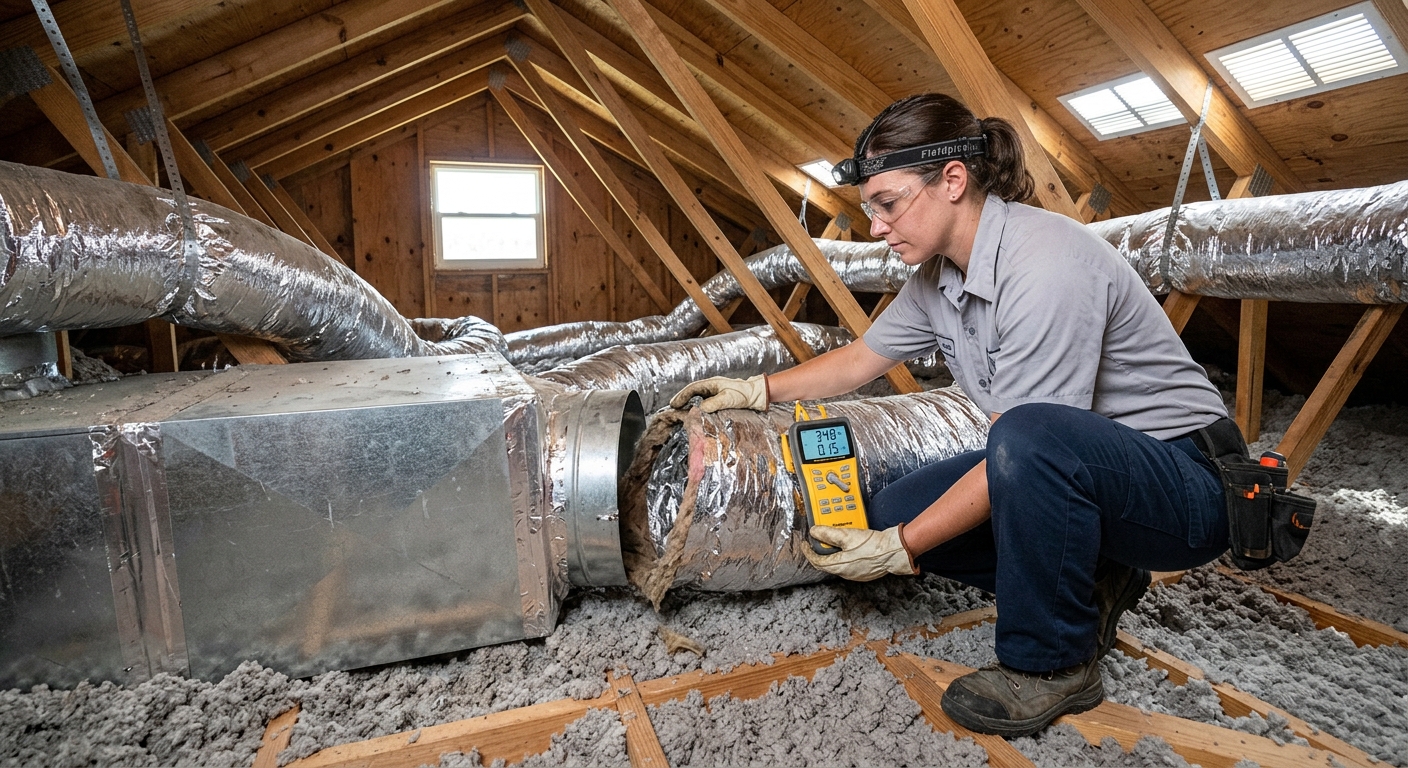
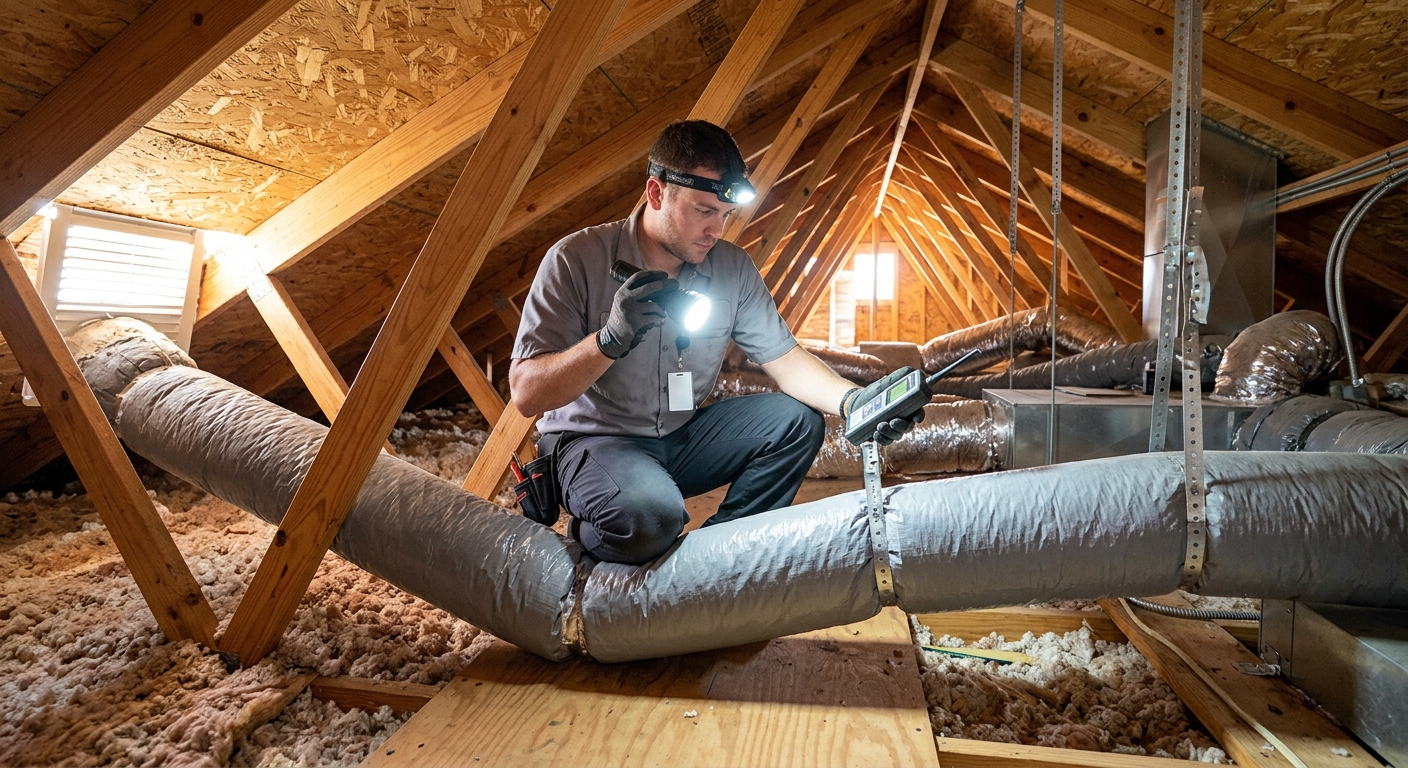
A useful inspection looks beyond visible holes. The technician should determine whether the ducts are delivering and returning the airflow the HVAC system needs.
Depending on the home and symptoms, the evaluation may include:
- A visual inspection of accessible ducts, plenums, boots, and insulation
- Checking flex duct support, bends, compression, and sagging
- Looking for disconnected runs and unsealed return-air pathways
- Measuring static pressure or airflow when appropriate
- Leakage testing if results will affect the repair decision
- Examining condensation patterns and likely moisture sources
- Comparing duct capacity with equipment requirements and room loads
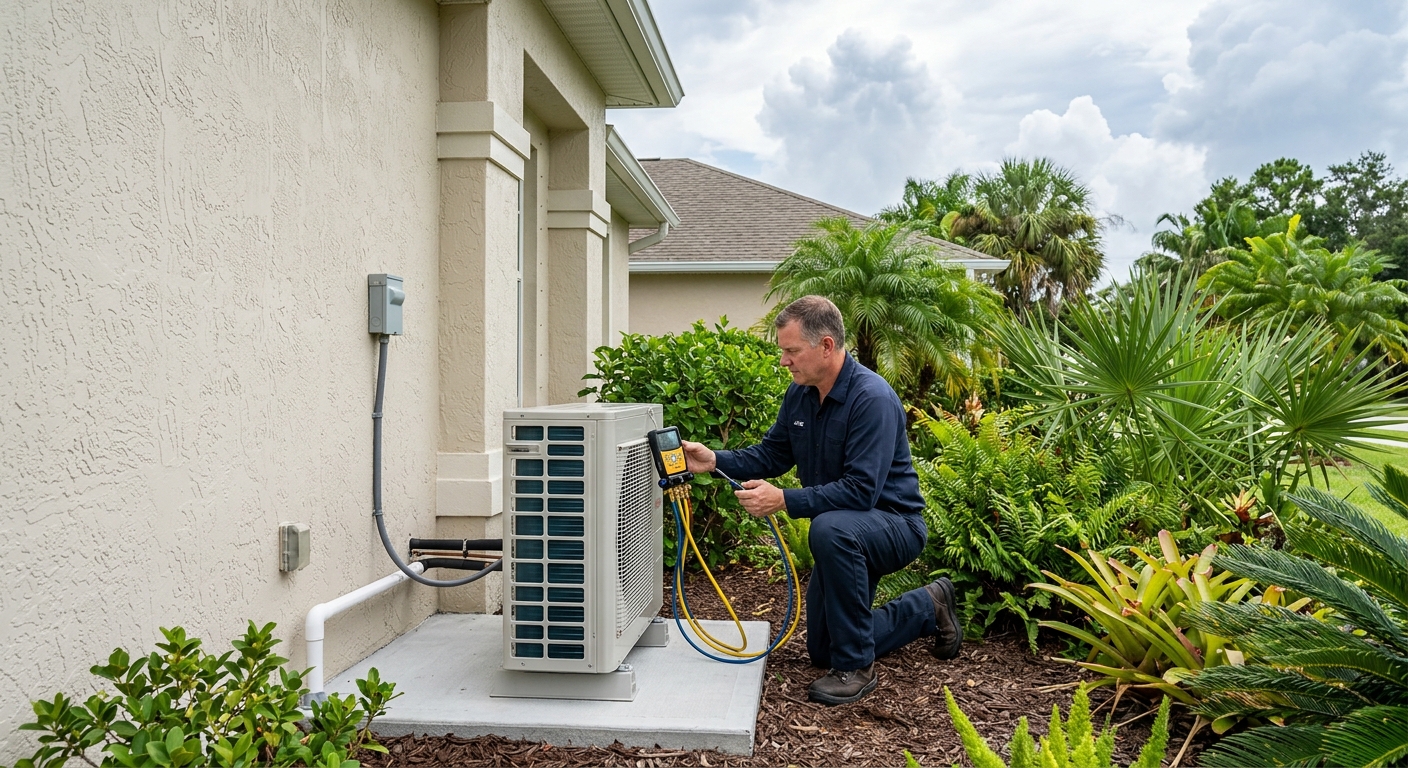
A cooling complaint should not automatically be blamed on ducts. Dirty coils, blower problems, clogged filters, refrigerant issues, thermostat faults, and equipment sizing can create similar symptoms. If the source is unclear, an AC system diagnosis can separate equipment problems from duct distribution problems.
Will duct repair or replacement lower energy bills?
It can, especially when conditioned air is escaping into an attic or the system is struggling against restrictive ducts. Sealing leaks and improving airflow may reduce runtime, but the actual savings vary with the home, thermostat settings, equipment condition, insulation, and severity of the original defects.
Duct leakage can also pull hot, humid attic air into return pathways. That increases the sensible and moisture load on the air conditioner. For a closer look at this issue, review how duct leaks contribute to energy loss in Florida homes.
Be cautious of anyone promising a specific percentage of savings without inspecting or testing the system. A sound recommendation should connect proposed work to documented leakage, damage, airflow, or design problems.
Can you inspect or repair ducts yourself?
Homeowners can check accessible registers for loose screws, visible gaps, unusual dust patterns, or weak airflow. You can also look from a safe attic access point for disconnected ducts, but entering a tight Florida attic presents fall, heat-stress, electrical, and ceiling-damage risks.
Do not disturb unknown duct wrap, insulation, or tape in an older home. Some historic building materials may contain asbestos and require testing by a qualified professional. You should also avoid applying sealants inside ducts unless the product and application are specifically appropriate for that use.
When should you call an HVAC professional?
Schedule an inspection if several rooms are difficult to cool, energy use rises without an obvious explanation, ducts sweat, ceilings develop moisture stains, or you hear sections moving when the blower starts. Prompt service is also warranted for disconnected ducts, animal damage, persistent odors, or visible contamination.
If you are comparing estimates, ask each contractor to explain which defects require attention, whether repair will restore expected airflow, and why replacement is or is not recommended. The proposal should identify the materials, insulation, sealing approach, supports, transitions, and any balancing work included. Ask whether permits or inspections apply to the planned scope at your Brevard County property.
What is the practical next step?
Do not replace an entire duct system solely because it is old, and do not keep patching ducts that are failing throughout the home. The best choice is the least extensive solution that reliably corrects leakage, airflow, insulation, moisture, and design problems.
Aquila Air & Heating can inspect your Brevard County duct system, explain the findings, and help you compare targeted repair with replacement. Contact the Aquila team to schedule an evaluation before comfort problems or attic moisture cause more extensive damage.