Is an HVAC Maintenance Plan Worth It in Brevard County?
A practical guide to HVAC maintenance plans, including costs, benefits, warning signs, and considerations for Brevard County's coastal climate.
For many Brevard County homeowners, an HVAC maintenance plan is worth it when it provides regular professional service, useful scheduling benefits, and a total annual cost that compares favorably with paying for tune-ups separately. Is an HVAC maintenance plan worth it for every household? No—its value depends on the equipment, plan terms, household needs, and whether you will actually use the included visits and benefits.
The right way to decide is to compare the written plan with your system's maintenance needs rather than choosing based only on a monthly price. Start by reviewing what the provider's HVAC maintenance plan includes, excludes, and requires from you.
Why does Brevard County's climate affect the value of a maintenance plan?
Air conditioners in Brevard County typically operate through a long cooling season. Many heat pumps also run during much of the year because the same equipment provides cooling and heating. That workload can make routine inspection and cleaning more valuable than it would be in a mild climate where an air conditioner runs only a few months annually.
Humidity is another local factor. An air conditioner removes moisture as it cools, producing condensate that must drain away correctly. Organic buildup, debris, or an improperly draining line can contribute to clogs and water around the indoor unit. A maintenance visit gives a technician an opportunity to inspect accessible drainage components and identify signs of trouble before water damage occurs.
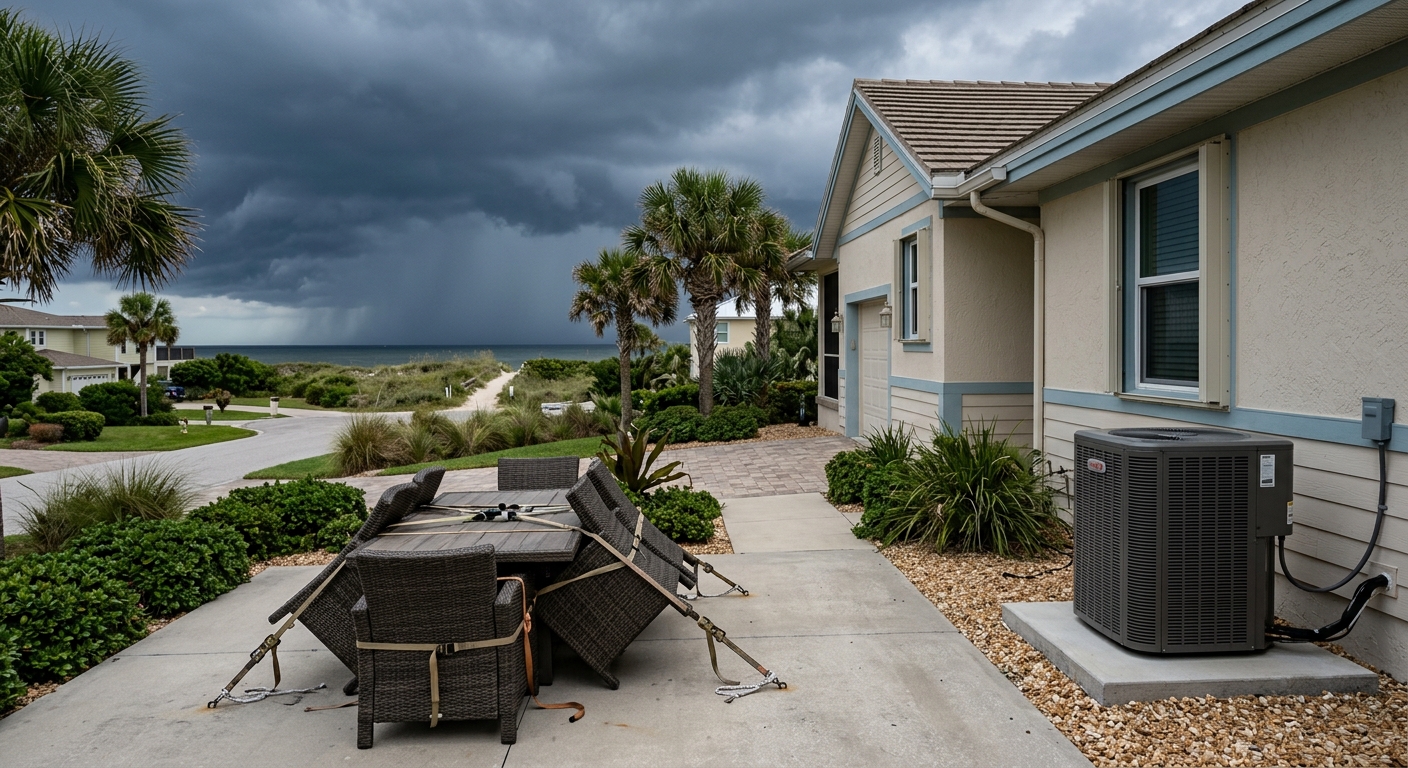
Coastal conditions can also affect outdoor equipment. Homes near the Atlantic Ocean, Banana River, Indian River Lagoon, or other salt-exposed areas may experience faster corrosion than inland properties. Exposure varies considerably by distance, wind direction, barriers, and equipment location, so being in Brevard County does not automatically mean severe salt damage. However, regular visual inspections can help identify corrosion, damaged coatings, or deteriorating connections that deserve attention.
What should an HVAC maintenance plan include?
Plans vary by contractor, so do not assume that every membership includes the same tasks. A useful plan should clearly state the number of visits, the equipment covered, the inspection checklist, scheduling terms, and any benefits beyond maintenance.
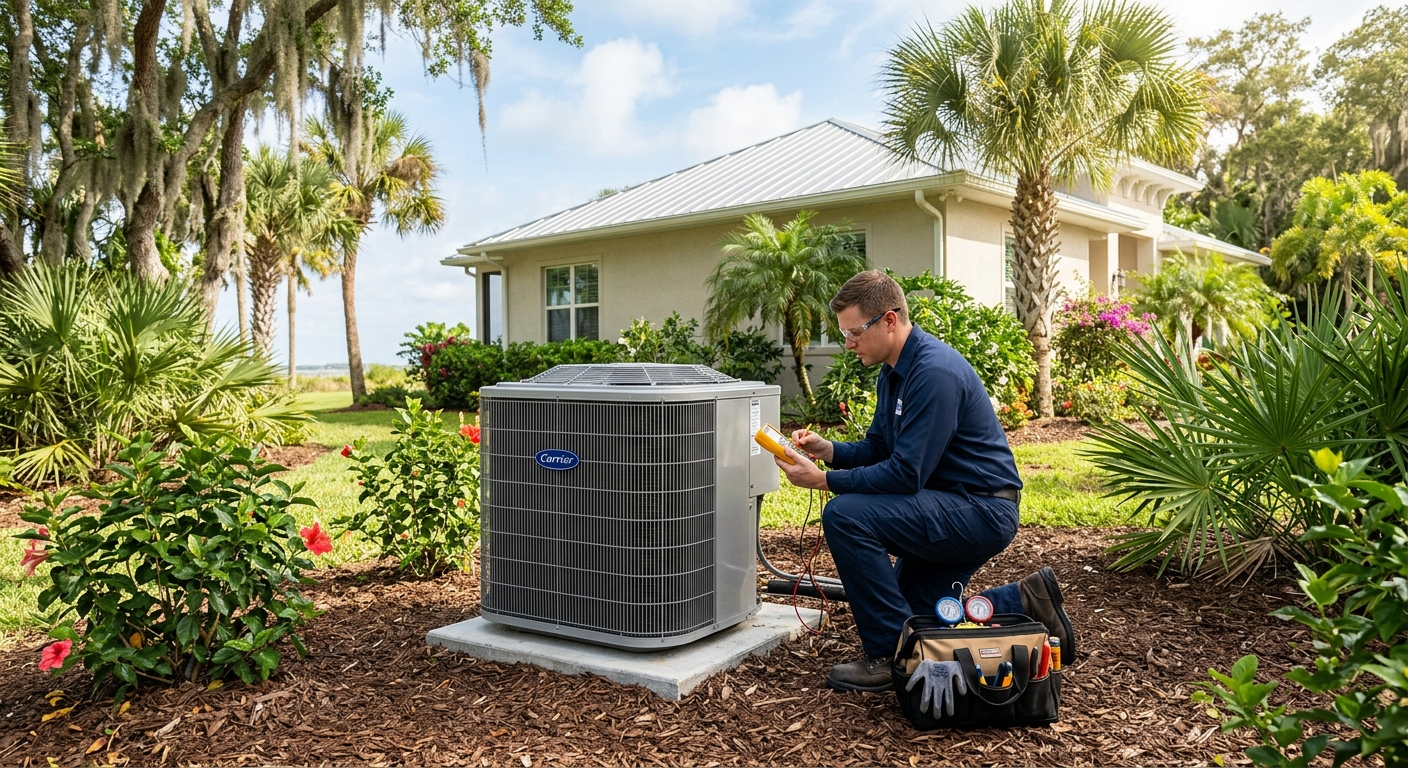
A professional visit may include tasks such as:
- Inspecting the air handler, outdoor unit, thermostat, and accessible duct connections
- Checking electrical components and tightening connections when appropriate
- Inspecting the condensate drain and drain pan
- Evaluating airflow and the condition of the air filter
- Cleaning accessible components included in the service agreement
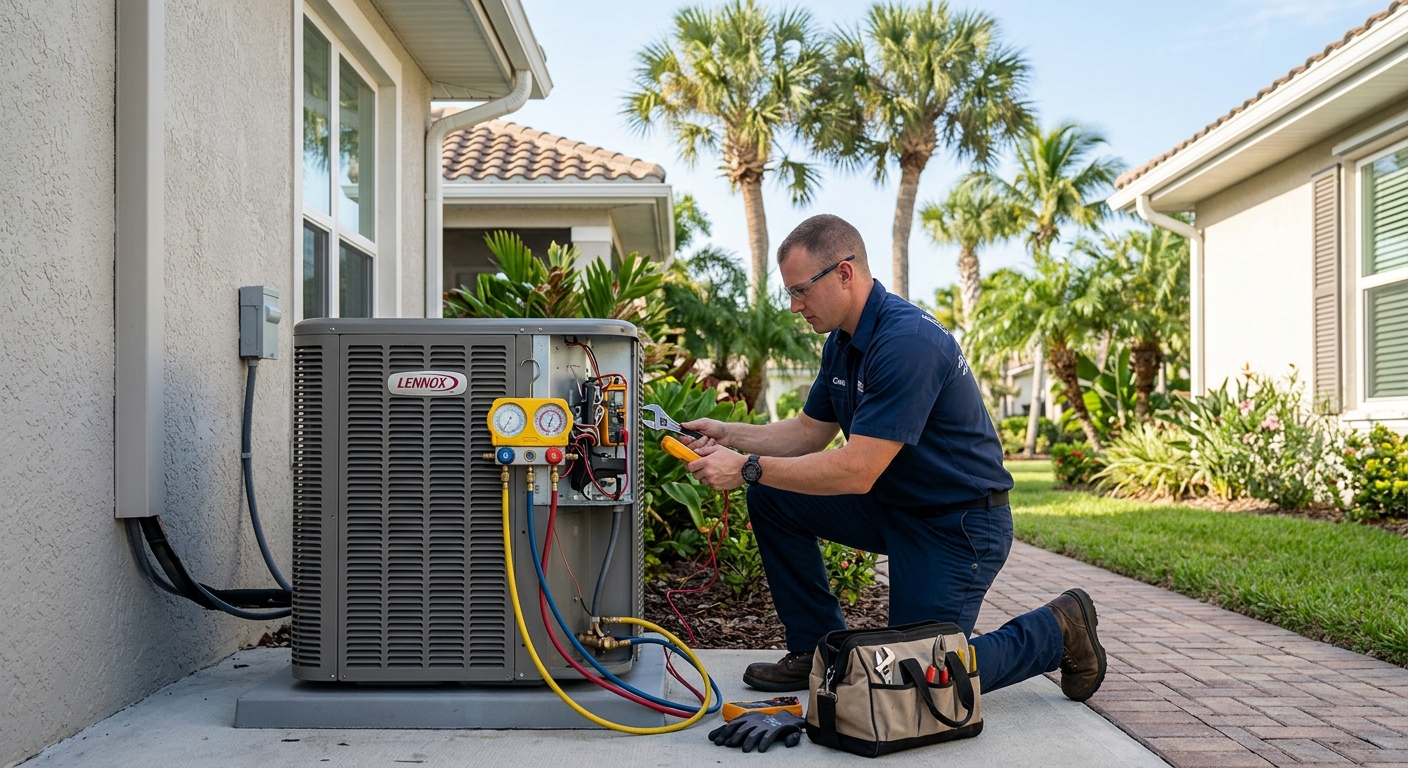
- Checking operating temperatures, pressures, and system performance as appropriate
- Looking for unusual noise, vibration, corrosion, or signs of wear
- Documenting findings and identifying repairs that are recommended but not included
Ask for the actual checklist before enrolling. Phrases such as “complete tune-up” or “system check” are not specific enough to compare two plans accurately.
Is a maintenance plan the same as a repair agreement or warranty?
No. Routine maintenance, repair coverage, and warranties are different things. A maintenance plan commonly includes scheduled inspections and may offer benefits such as preferred scheduling or repair discounts, but those benefits depend on the written agreement. It should not be assumed to cover parts, labor, refrigerant, after-hours service, drain repairs, or system replacement unless those items are expressly listed.
Manufacturer warranties also have their own terms. Some manufacturers require records showing that equipment was properly maintained, but requirements vary. Keep invoices, inspection reports, model and serial numbers, and receipts for any repair work.
When is an HVAC maintenance plan worth it?
A plan is more likely to provide practical value when you have a central air conditioner or heat pump that runs heavily, prefer predictable scheduling, or are unlikely to remember maintenance without reminders. It may also be useful for seasonal residents who want a consistent service history and a local company familiar with the equipment.
Consider a plan more seriously if:
- Your cooling system runs for much of the year
- Your home is exposed to salty coastal air or persistent humidity
- The system has had recurring drain, airflow, or electrical issues
- You want scheduled reminders instead of arranging each visit separately
- The plan's included visits cost about the same as or less than comparable individual tune-ups
- Priority scheduling or listed discounts would be useful to your household
- You want written maintenance records for your equipment
Maintenance cannot guarantee that a system will never fail. Components can still wear out, power events can damage equipment, and hidden problems may develop between visits. The realistic benefit is earlier identification of some issues, support for efficient operation, and a reduced chance that neglected maintenance contributes to a breakdown.
When might paying per visit make more sense?
A plan may not be the best option if the agreement costs substantially more than comparable standalone maintenance and its additional benefits have little value to you. Paying per visit can also make sense if you are about to replace the equipment, plan to move soon, or already receive maintenance through another valid agreement.
Be cautious if a plan renews automatically without clear notice, has a long cancellation commitment, or offers benefits that are difficult to use. A very low advertised price may exclude cleaning, diagnostic work, multiple systems, or other services you expected to receive.
Homeowners with two air-conditioning systems should confirm whether the quoted price covers both. The same applies to detached spaces, mini-splits, pool heat pumps, dehumidifiers, and other equipment. Most plans define covered equipment narrowly.
How can you compare a plan with pay-as-you-go maintenance?
Begin with simple annual math. Add the membership fees and any required visit charges, then compare that total with the cost of purchasing the same number and type of tune-ups separately. Do not assign value to a discount unless you are reasonably likely to use it.
Next, compare service rather than price alone:
- How many visits are included each year?
- Does the plan cover cooling and heat-pump heating operation?
- Are drain-line service and coil cleaning included, limited, or separately priced?
- Are air filters included, and if so, which sizes and types?
- What does priority service mean during busy weather?
- Do discounts apply to parts, labor, diagnostic charges, or only selected repairs?
- Are after-hours or emergency visits excluded?
- Does the agreement renew automatically?
- Can it be transferred or canceled if the home is sold?
- Will you receive a written report after each visit?
Also consider service quality. A detailed visit by a qualified technician is more useful than a brief appointment focused mainly on selling upgrades. The company should be willing to explain findings, distinguish urgent problems from optional improvements, and provide repair estimates before additional work begins.
How often should HVAC maintenance be scheduled in Brevard County?
Many Brevard County homes benefit from professional service twice a year because cooling equipment runs for long periods and heat pumps perform both heating and cooling duties. A spring visit can prepare the system for peak cooling demand, while a fall appointment can check heat-pump operation and identify issues that developed over summer. Equipment type, age, manufacturer instructions, indoor conditions, and operating hours may justify a different schedule.
If twice-yearly service is not appropriate for your system or budget, annual professional maintenance is still preferable to ignoring the equipment. Review the manufacturer's instructions and discuss the home's actual conditions with an HVAC professional rather than relying on a universal schedule.
What maintenance can a homeowner safely handle?
Homeowners play an important role between professional appointments. The most useful routine task is checking the air filter. Replacement frequency depends on filter type, system use, pets, renovation dust, indoor air conditions, and manufacturer instructions; this guide explains how often to change an air filter based on those factors.
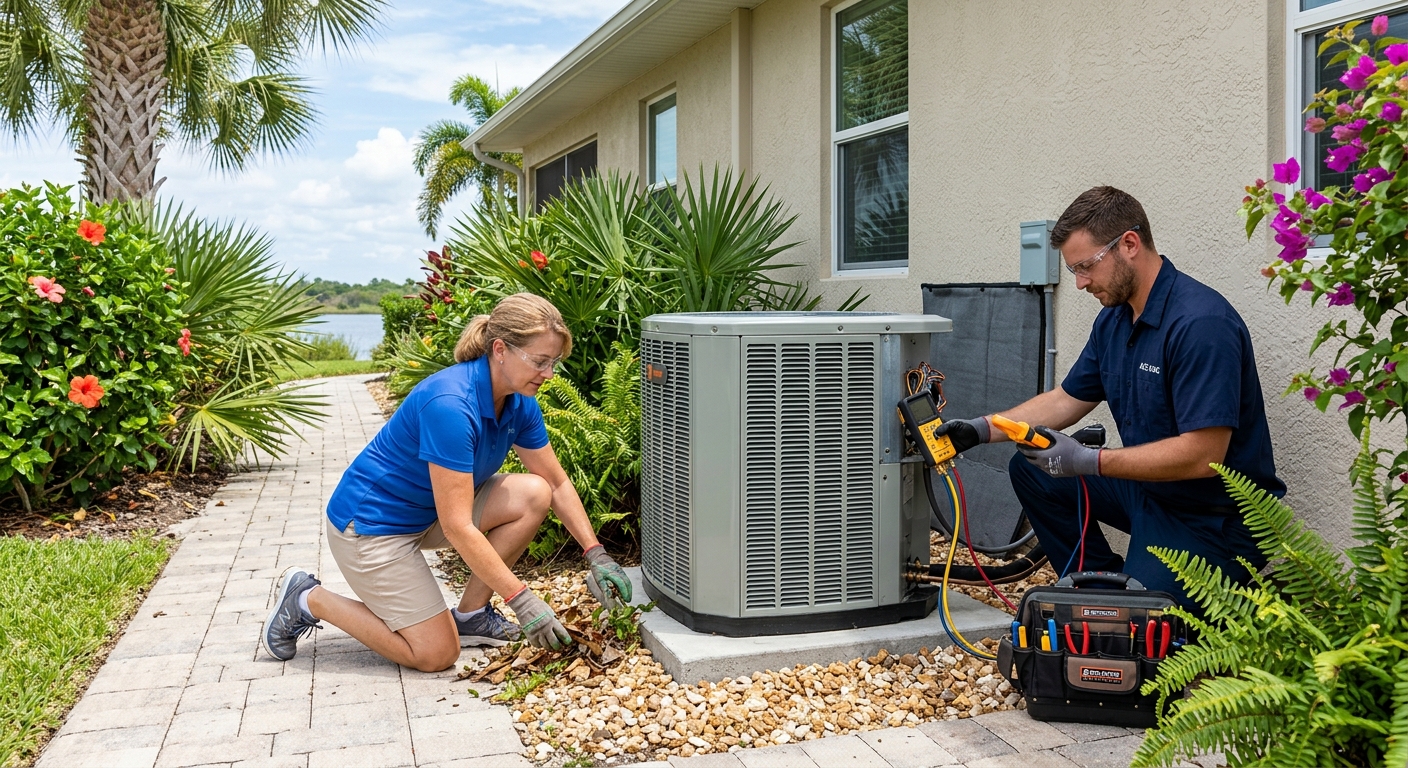
You can also keep supply and return vents unobstructed, watch for water around the air handler, and remove leaves or loose debris from around the outdoor unit. Maintain the clearance specified by the equipment manufacturer. If you clean exterior debris, shut off power as directed for the equipment, avoid high-pressure water, and do not bend the coil fins.
Do not open electrical compartments, handle capacitors, add refrigerant, or dismantle sealed components. Refrigerant and electrical diagnostics require appropriate training and tools. Avoid pouring chemicals into a condensate line unless the equipment instructions or your HVAC professional specifically recommends the product and method.
When should you call an HVAC professional instead of waiting?
A maintenance appointment is intended for routine care, not urgent troubleshooting. Contact a qualified technician promptly if the system stops cooling, repeatedly trips a breaker, produces a burning smell, leaks water, makes a new grinding or buzzing noise, or develops ice on the refrigerant line or indoor coil area.
Turn the system off if continued operation could cause damage, particularly when you see substantial water, smell overheating electrical components, or hear severe mechanical noise. Do not keep resetting a breaker. A breaker that trips again may indicate an electrical or equipment fault that needs diagnosis.
Other reasons to schedule service include rising indoor humidity, weak airflow, uneven temperatures, unusually long run times, or energy use that increases without an obvious weather or household explanation. These symptoms do not identify a specific failure by themselves, but they warrant investigation.
How do you choose the right maintenance plan?
Choose based on transparent terms, technician quality, and the work performed—not only promotional extras. Ask for a written agreement and sample maintenance checklist. Confirm licensing and insurance, read recent local reviews critically, and find out how the company handles repair authorization.
A reputable provider should be comfortable explaining exclusions. It should not promise that maintenance will eliminate every breakdown or automatically reduce every utility bill. Proper air-conditioning maintenance can support reliable, efficient operation, but results also depend on system condition, installation quality, ductwork, thermostat settings, insulation, and weather.
If you want help evaluating your equipment and maintenance options, contact Aquila Air & Heating. Our family-run team serves Brevard County and can explain available plan terms, inspect your system, and recommend a practical maintenance schedule based on your home and equipment rather than a one-size-fits-all approach.