How Salt Air Damages Your AC on the Space Coast (and How to Protect It)
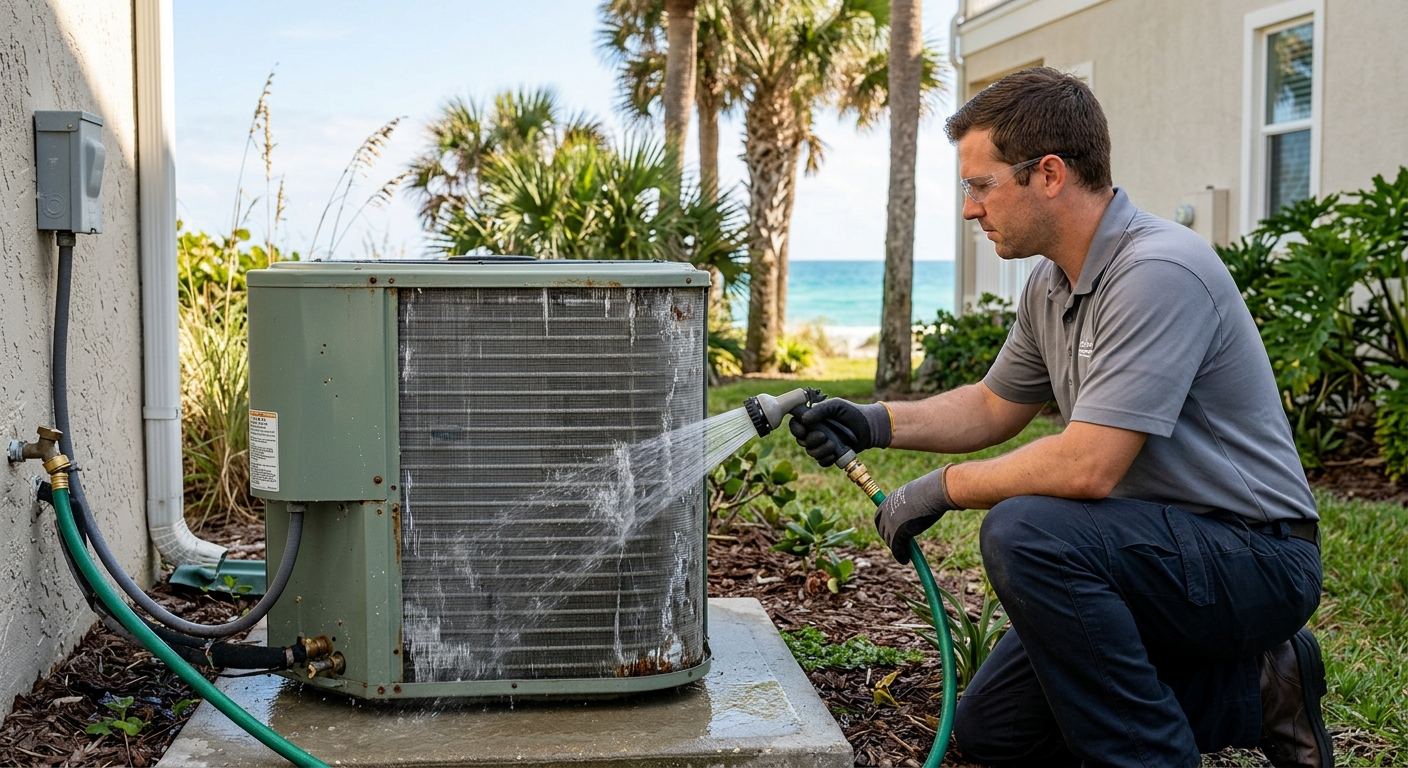
Salt carried inland from the Atlantic and Indian River Lagoon can corrode outdoor AC equipment. Learn how Space Coast homeowners can reduce the damage.
Salt air AC damage occurs when airborne salt settles on an outdoor unit and accelerates corrosion of its coil, cabinet, fasteners, and electrical components. Brevard County homeowners can reduce the risk with gentle fresh-water rinsing, clear airflow, regular inspections, and professional AC maintenance. These steps cannot eliminate coastal exposure, but they can help equipment operate reliably and reveal corrosion before it causes a larger failure.
Why does salt air damage outdoor AC equipment?
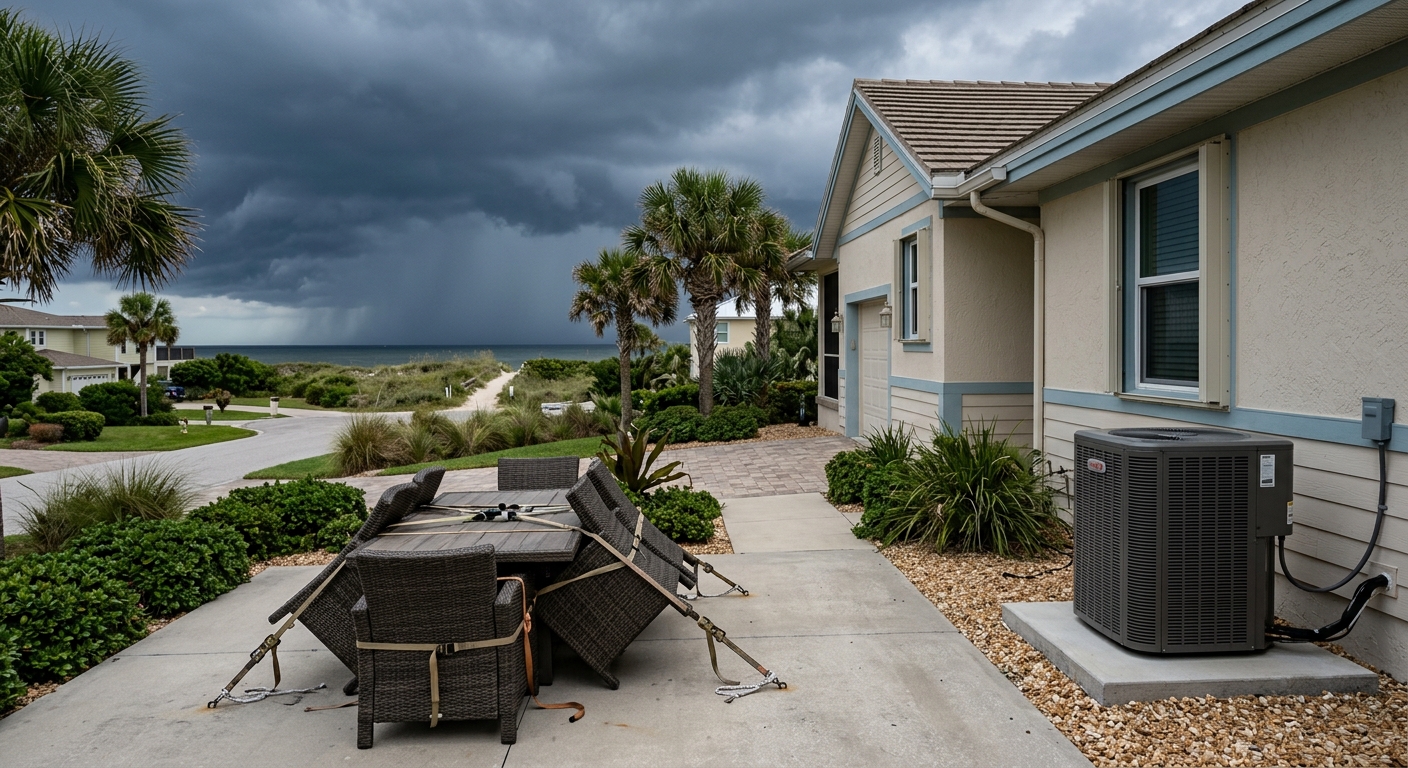
Ocean spray creates tiny salt particles that can travel beyond the beachfront, especially during strong onshore winds and storms. Once deposited on an outdoor condenser or heat pump, salt attracts moisture from humid Florida air and creates conditions that encourage electrochemical corrosion.
The outdoor coil is particularly vulnerable because it contains thin metal fins designed to transfer heat efficiently. Corrosion can weaken these fins, reduce surface area, restrict airflow, and eventually contribute to refrigerant leaks. Salt can also attack steel cabinets, fan guards, screws, brackets, electrical terminals, and other exposed components.
Brevard County's long cooling season makes the problem more consequential. An air conditioner runs frequently through hot, humid weather, while a heat pump may also use the outdoor unit during cooler months. Corrosion and dirt on the coil can make heat transfer more difficult, potentially increasing operating time and strain on the system.
Are only beachfront homes at risk?
Homes directly facing the Atlantic generally receive the most concentrated salt exposure, but salt air AC damage is not confined to oceanfront properties. Exposure varies with distance from the water, prevailing winds, vegetation, nearby buildings, storms, and whether the equipment is sheltered or fully exposed.
Properties near the Indian River Lagoon, Banana River, canals, and other brackish waterways can also experience corrosive conditions. Communities such as Cocoa Beach, Satellite Beach, Indian Harbour Beach, Indialantic, Melbourne Beach, Cape Canaveral, and beachside Melbourne often face obvious exposure, but equipment farther inland can still collect salt after windy weather.
There is no single distance at which salt suddenly stops affecting an AC system. The condition of the unit is more useful than a mileage rule. White or green residue, rusting hardware, crumbling fins, peeling paint, and repeated electrical issues indicate that the local environment may be affecting the equipment.
Which AC parts are most likely to corrode?
Outdoor coil fins and tubing
The condenser coil releases heat collected inside the home. Its closely spaced aluminum fins are thin and exposed to outdoor air, making them susceptible to salt deposits and corrosion. Bent, oxidized, or deteriorated fins reduce effective heat-transfer area. Severe corrosion can affect tubing and lead to refrigerant loss.
Cabinet panels, base pans, and fasteners
Protective paint and coatings slow corrosion, but scratches, cut edges, seams, and standing-water areas may deteriorate first. Rusted screws and panels can make future service harder and may allow vibration or structural damage.
Electrical connections and controls
Salt and moisture can corrode terminals, contactors, wiring connections, and control components. Electrical corrosion may cause intermittent operation, overheating, or failure. Because the cabinet contains high-voltage components and capacitors that can retain a charge, homeowners should not open electrical compartments.
Fan motor and moving components
A corroded fan guard, motor housing, or mounting hardware can create noise, vibration, or reliability problems. A struggling fan may also reduce airflow through the outdoor coil and contribute to high operating pressures.
What are the warning signs of salt air AC damage?
Inspect the exterior from a safe distance every month or after major coastal storms. Warning signs include:
- White, chalky, green, or crusty deposits on metal surfaces
- Rust around screws, seams, cabinet edges, or the base pan
- Coil fins that look brittle, pitted, flattened, or missing
- Peeling, bubbling, or flaking cabinet paint
- A fan that sounds rough, rattles, or struggles to start
- Longer cooling cycles or difficulty maintaining the thermostat setting
- Unexplained increases in electricity use
- Oily residue on or near the coil, which can be a sign of a refrigerant leak
- Repeated breaker trips or intermittent outdoor-unit operation
Some of these symptoms have causes unrelated to salt. A trained technician can determine whether the issue is corrosion, debris, a failing component, low refrigerant, restricted airflow, or another mechanical problem.
How should you rinse an outdoor AC unit near the coast?
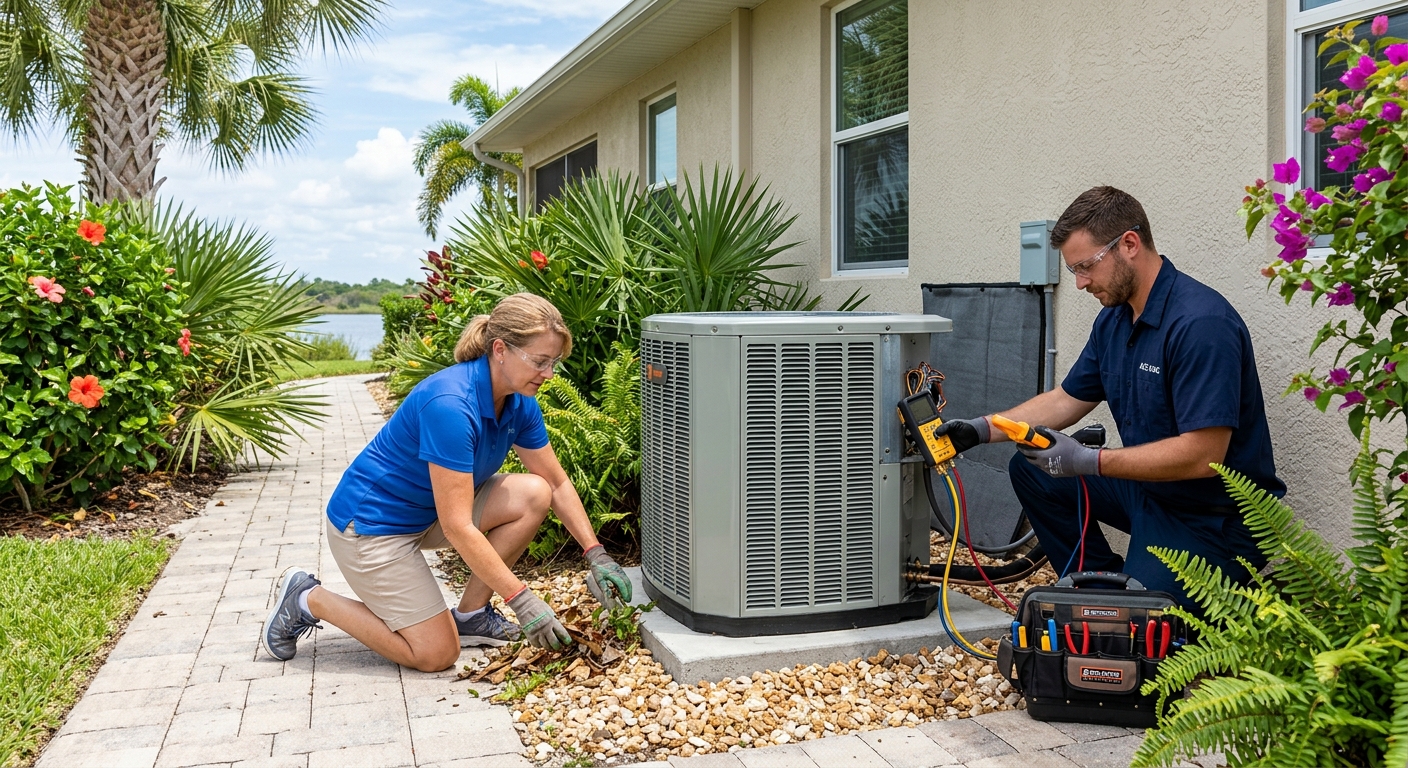
If the equipment manufacturer permits homeowner rinsing, periodic fresh-water rinsing can remove salt before deposits become heavily embedded. Turn the system off at the thermostat and follow the manufacturer's safety and care instructions. Use a garden hose with a gentle stream to rinse accessible exterior coil surfaces from top to bottom.
Do not use a pressure washer. High pressure can fold delicate coil fins, drive water into electrical areas, strip protective coatings, and create an electrical or performance problem. Avoid opening panels, reaching through the fan guard, or spraying directly into controls and wiring.
Do not apply household cleaners, bleach, acids, alkaline degreasers, or unapproved coil chemicals. The wrong product can corrode metal, damage a factory-applied coating, affect heat transfer, or conflict with manufacturer requirements. If deposits do not release with a gentle rinse, leave deeper cleaning to an HVAC professional.
Rinsing frequency depends on the property's exposure and the equipment manufacturer's guidance. An oceanfront unit may collect residue faster than one shielded by buildings several miles inland. Check the unit regularly and ask a local technician to recommend a schedule based on what is actually accumulating.
What else can protect an AC system from coastal corrosion?
Keep airflow paths open
Remove leaves, mulch, weeds, and loose debris from around the outdoor unit. Follow the manufacturer's clearance requirements rather than surrounding the condenser with a tight fence or dense shrubs. A barrier that blocks airflow may reduce performance even if it shields the unit from wind.
Address irrigation and drainage problems
Sprinklers should not spray the condenser. Irrigation water may leave mineral deposits, and constant wetting can worsen corrosion. Keep the pad stable and ensure water does not pool around the base after heavy Space Coast rain.
Schedule corrosion-focused inspections
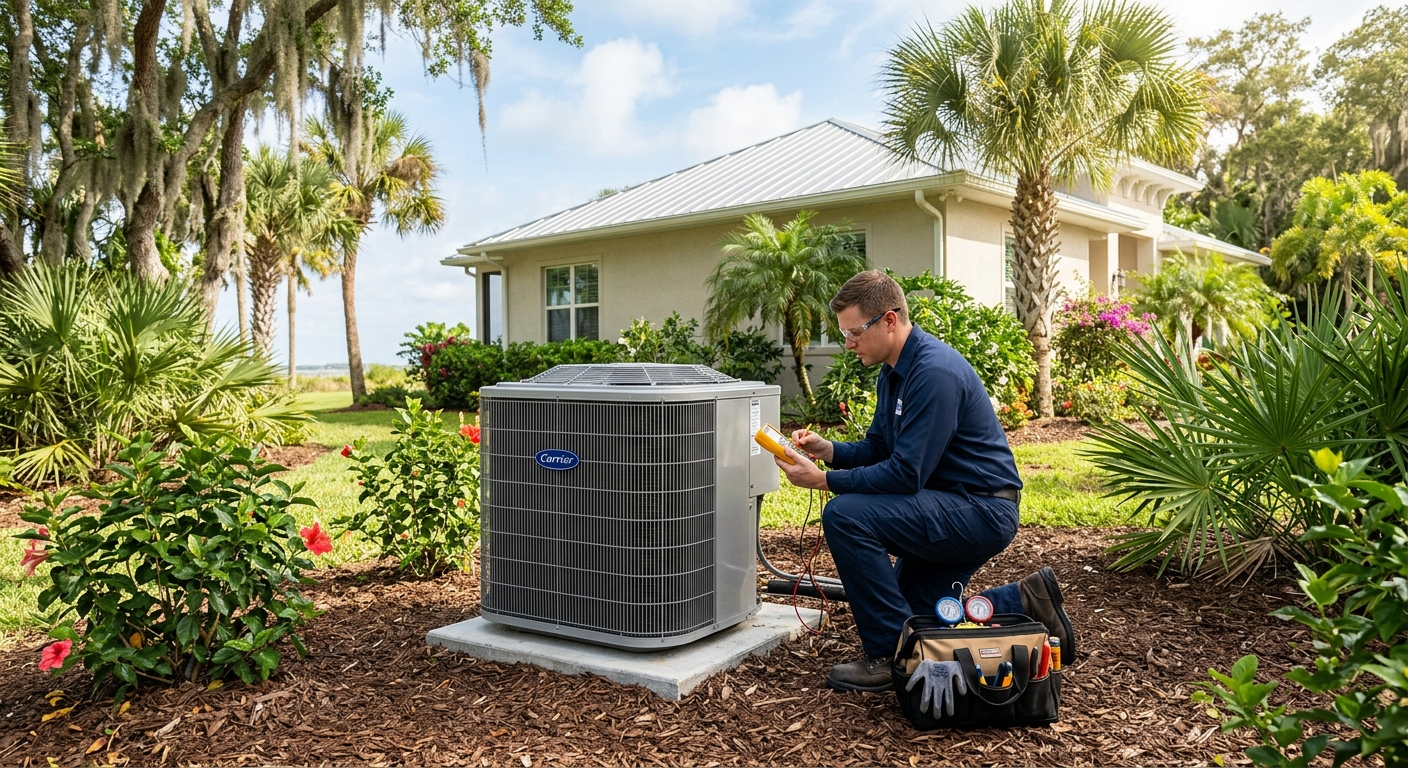
At a maintenance visit, a technician can inspect coil condition, electrical connections, fan operation, refrigerant performance, temperature change, drainage, and other safety or efficiency factors. Coastal homes with visible buildup or severe exposure may benefit from inspections more often than a lightly exposed inland property. The appropriate interval depends on equipment condition, age, operating hours, and manufacturer recommendations.
Choose coastal features when replacing equipment
If replacement becomes necessary, ask about factory-applied coil protection, corrosion-resistant fasteners, cabinet construction, and models approved by the manufacturer for coastal environments. Equipment selection should also account for sizing, efficiency, dehumidification, installation quality, and serviceability. A properly planned AC installation is more valuable than relying on a corrosion label alone.
Do not paint a coil or apply an aftermarket coating without written manufacturer approval. A coating that is too thick, incompatible, or poorly applied can interfere with heat transfer and may affect warranty terms.
Does changing the indoor air filter prevent salt corrosion?
No. The indoor filter protects the air handler and indoor coil by capturing particles moving through the return-air system. It does not filter the outdoor air passing through the condenser coil, so it cannot prevent salt from settling on outdoor equipment.
Filter replacement still matters because restricted indoor airflow can reduce comfort and strain the system. Homeowners should follow the filter manufacturer's and HVAC system's recommendations, adjusting for pets, occupancy, construction dust, and filter type. See Aquila's guide to how often to change an air filter for additional guidance.
When should you call an HVAC professional?
Call for service if corrosion is spreading, the coil fins are deteriorating, the cabinet is becoming structurally weak, or the system is no longer cooling normally. Shut the system off and request prompt help if you notice burning odors, sparking, repeated breaker trips, severe fan noise, or ice on the refrigerant lines.
Oily residue, hissing, or declining cooling performance can indicate a refrigerant leak. Refrigerant circuits require trained handling and should not be patched or recharged without locating the underlying problem. Aquila's AC repair service can diagnose whether corrosion has damaged a repairable component or whether broader deterioration is present.
Replacement may be worth discussing when coil or cabinet corrosion is extensive, leaks recur, major parts are unavailable, or repair costs are high relative to the equipment's age and condition. Get a complete diagnosis rather than replacing a system based only on surface rust.
Can maintenance completely prevent coastal AC corrosion?
No maintenance plan can make exposed metal immune to Brevard County's salt, humidity, heat, and storms. Preventive care is intended to slow buildup, preserve airflow, catch electrical deterioration, and identify leaks or structural damage earlier. Results depend on exposure, equipment materials, installation, care history, and weather.
Review the equipment manufacturer's cleaning instructions and warranty terms before using any chemical or coating. Product warranties vary, and corrosion or environmental damage may be treated differently from a covered component defect.
Get local help protecting your Space Coast AC
Aquila Air & Heating understands the operating conditions found across Brevard County, from oceanfront communities to mainland neighborhoods affected by humid coastal air. Contact our family-run team to schedule an inspection or build a maintenance plan around your property's actual salt exposure.
Aquila is Florida's First HVAC Company Offering a Lifetime Warranty. Eligibility, covered equipment, maintenance obligations, exclusions, and other terms should always be reviewed before purchase; learn more about Aquila's Lifetime Warranty program and ask our team which options apply to your project.