What's Included in a Professional AC Tune-Up?
Learn what technicians inspect, clean, test, and document during a professional AC tune-up—and how Florida’s climate affects maintenance needs.
A professional AC tune-up typically includes inspecting, cleaning, testing, and adjusting the system to support safe, efficient operation. The technician should check airflow, electrical components, refrigerant performance, coils, the condensate drain, thermostat operation, and the condition of both indoor and outdoor equipment.
If you are researching “ac tune up what's included,” remember that checklists vary by contractor and system type. Ask for a written scope before scheduling so you know which services are included and whether repairs, filters, or cleaning beyond routine maintenance cost extra.
What should be included in a professional AC tune-up?
A thorough appointment is more than a quick visual inspection. Aquila Air & Heating’s professional AC maintenance service focuses on the components and operating conditions that affect cooling, humidity control, energy use, reliability, and safety.
A typical tune-up should cover the following areas, although the exact procedures depend on whether you have a split system, heat pump, packaged unit, or ductless equipment.
Thermostat inspection and operating test
The technician should confirm that the thermostat starts and stops the system correctly, review its settings, and compare the displayed temperature with actual conditions when appropriate. They may also inspect thermostat wiring and evaluate whether its location is exposed to heat, sunlight, or other conditions that could produce misleading readings.
Air filter and airflow checks
A dirty filter can reduce airflow, increase operating strain, and contribute to coil icing. The technician should inspect the filter, confirm its size and installation direction, and replace or recommend replacing it when necessary. Filter replacement may or may not be included in the tune-up price, especially if the system uses a specialty filter.
Airflow evaluation may also include checking return and supply temperatures, visible duct connections near the equipment, blower operation, and signs of blocked registers or an overly restrictive filter. Homeowners can use Aquila’s guide to how often an air filter should be changed as a starting point, but homes with pets, renovations, allergies, or heavy system use may need more frequent checks.
Indoor coil and blower inspection
The evaporator coil absorbs heat and removes moisture from indoor air. A technician should inspect accessible portions of the coil for dust, biological buildup, corrosion, or ice. The blower assembly should also be evaluated for dirt, vibration, wear, and proper operation.
Routine inspection is commonly part of a tune-up, but deep evaporator-coil or blower-wheel cleaning may be a separate service because it can require equipment disassembly. A reputable company should explain the condition, show you the concern when practical, and provide an estimate before performing additional work.
Outdoor condenser inspection and cleaning
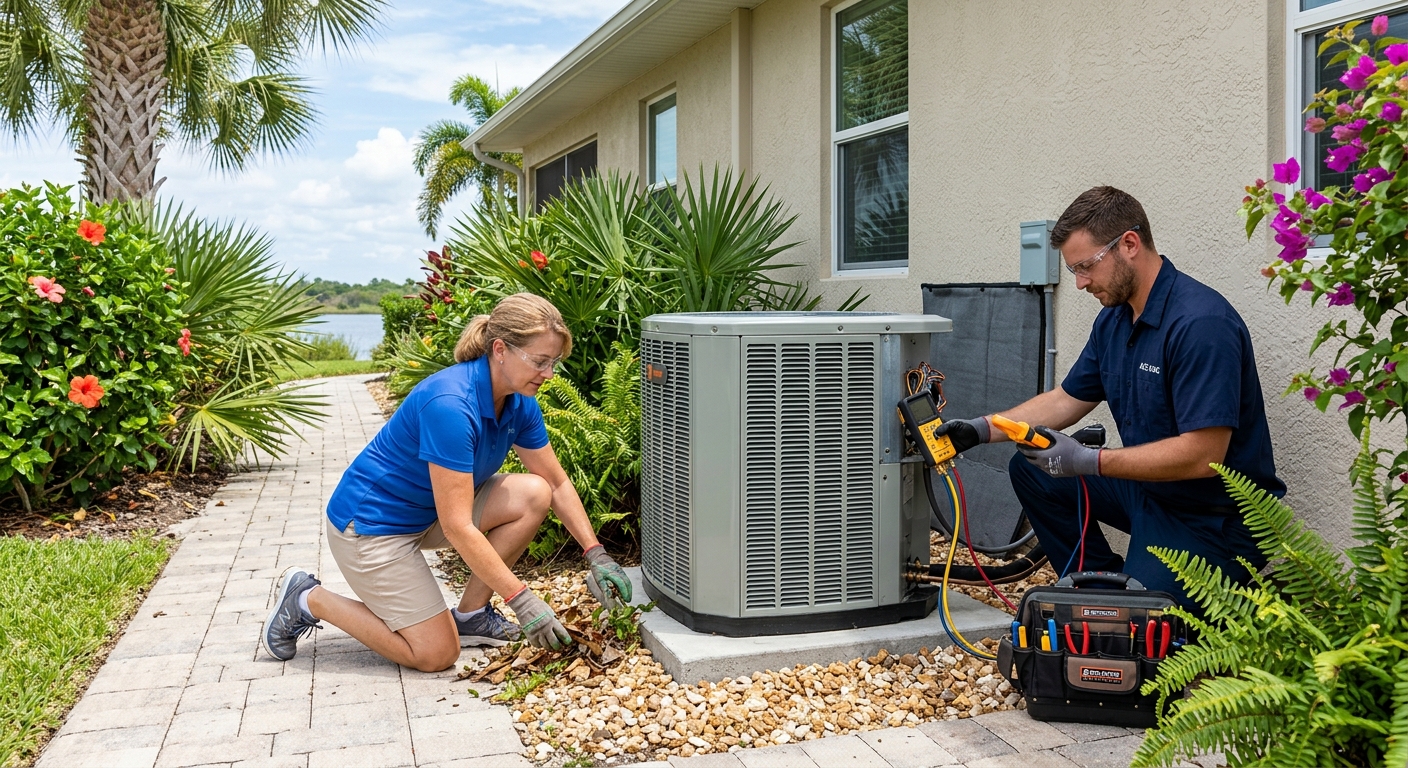
The outdoor unit releases heat collected inside the home. Maintenance generally includes checking the condenser coil for grass, leaves, dirt, and other debris, then cleaning it using a method appropriate for the equipment. The technician should also inspect the cabinet, fan blade, fan motor, wiring, service valves, and equipment pad.
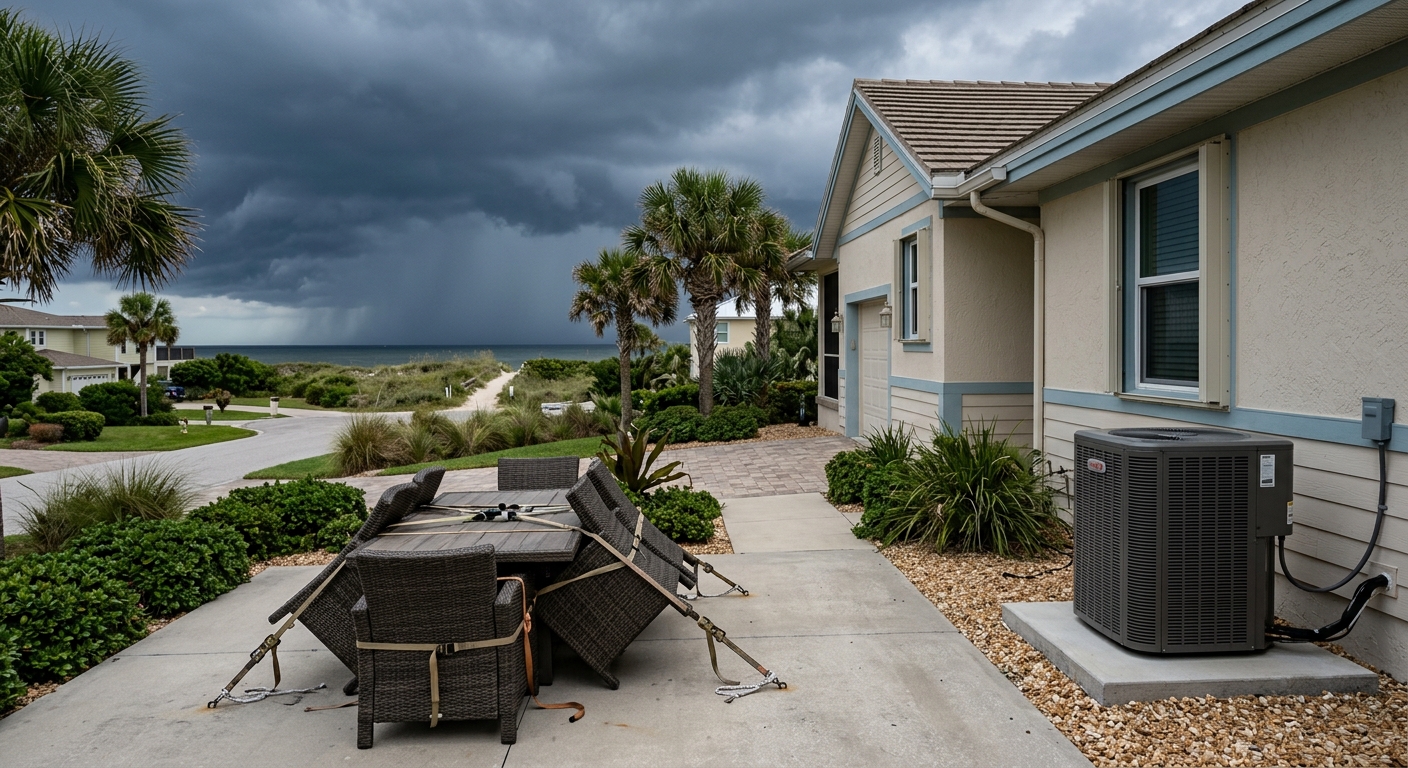
This step is especially important in Brevard County. Long cooling seasons expose outdoor units to extensive run time, while coastal salt, windblown sand, lawn clippings, and storm debris can accelerate buildup or corrosion. Coil fins are delicate, so aggressive pressure washing can bend them and reduce airflow.
Condensate drain and moisture-control checks
Florida air conditioners remove substantial moisture from indoor air. That moisture drains through a pan and condensate line, where algae, sludge, or debris can eventually create a blockage. A professional tune-up should include inspecting the accessible drain components, checking for leaks or standing water, and clearing or flushing the line when that task is part of the stated service.
The technician may also test a condensate safety switch if the system has one. This device is intended to shut the equipment down when water backs up, helping reduce the risk of overflow. Even with a safety switch, homeowners should respond promptly to water around the air handler, ceiling stains, musty odors, or an unexplained system shutdown.
Electrical and safety inspection
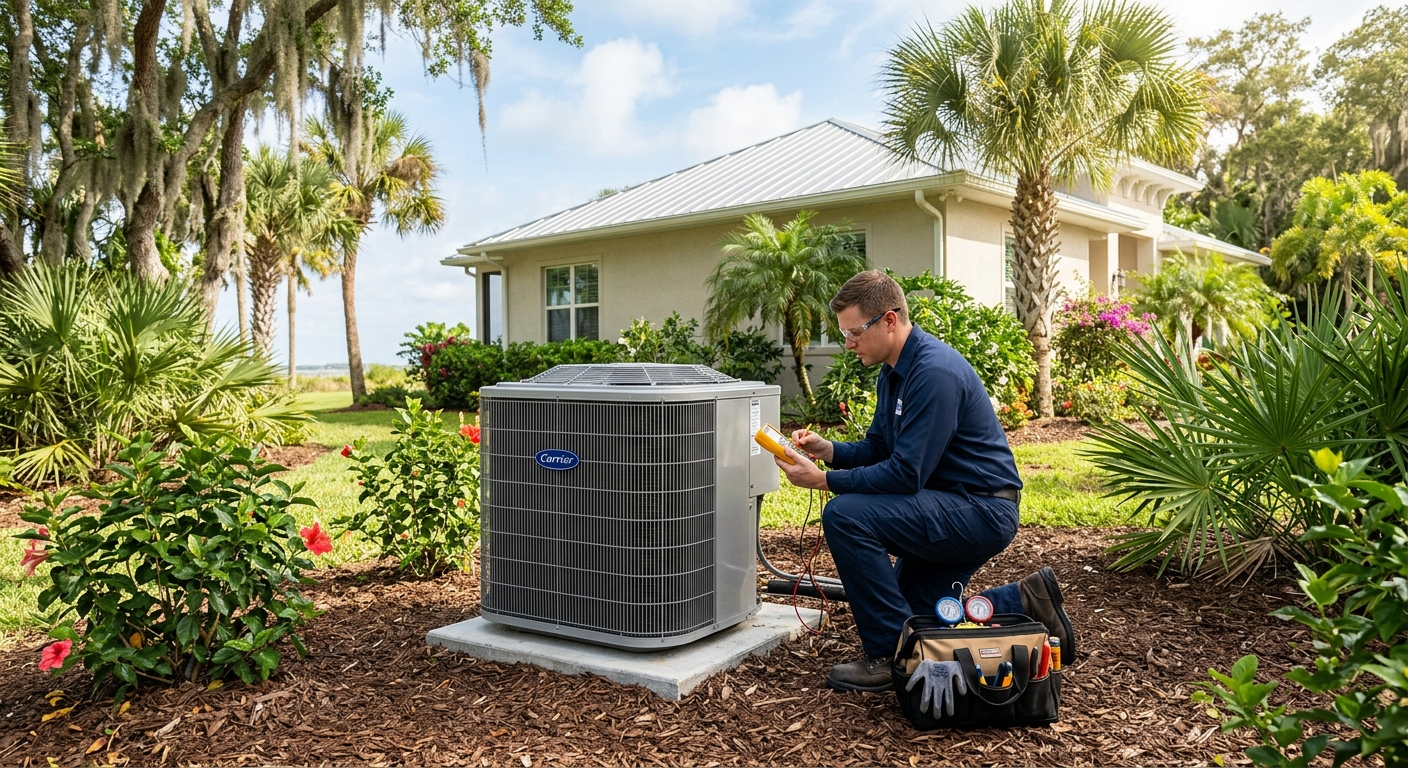
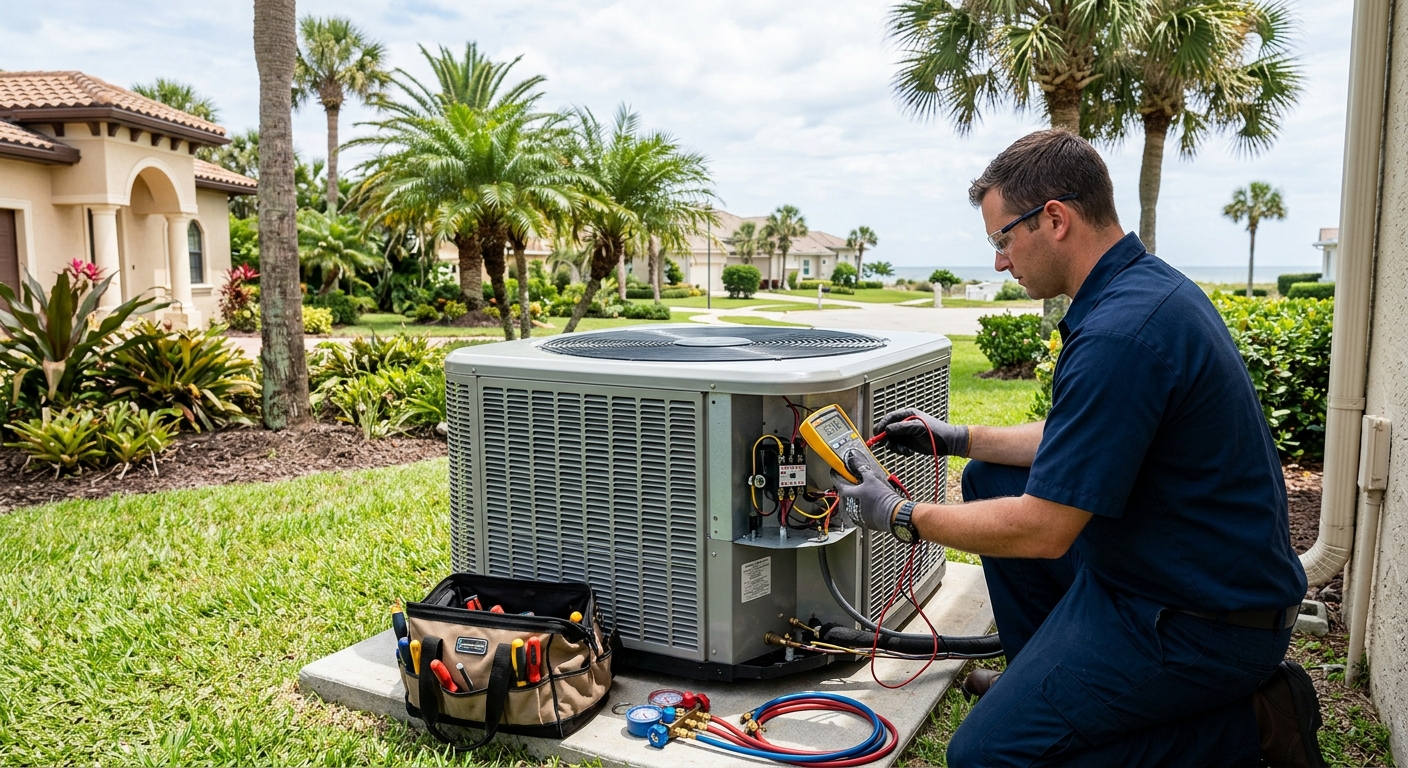
Air conditioners contain high-voltage components that should be evaluated by a trained professional. With power properly isolated, the technician may inspect electrical connections, contactors, relays, disconnects, wiring, and capacitors. Electrical measurements can help identify components operating outside their expected specifications.
Loose connections, damaged wires, swollen capacitors, overheating, or pitted contactors can lead to intermittent operation or equipment failure. Tightening, testing, and documenting accessible electrical components is normal maintenance; replacing a failed or weakened part is generally a repair requiring your approval.
Refrigerant and cooling-performance evaluation
A tune-up should assess whether the system is cooling as expected. Depending on equipment condition and manufacturer procedures, the technician may measure indoor and outdoor temperatures, temperature change across the coil, refrigerant pressures, line temperatures, superheat, or subcooling.
Refrigerant is not consumed like fuel. If a system is low, there may be a leak, a previous charging error, or another issue affecting the readings. Adding refrigerant without determining why it is low is not routine preventive maintenance, and leak detection, repair, evacuation, or refrigerant replacement normally involves additional work.
Motors, moving parts, and system controls
The technician should listen for unusual sounds and inspect accessible motors, bearings, fan components, and mounting hardware. Lubrication is appropriate only for components designed to be lubricated; many modern motors have permanently sealed bearings.
A complete operating test should verify that the system starts, runs, and shuts down normally. On a heat pump, the service scope may also include heating operation, the reversing valve, defrost controls, and auxiliary heat, depending on the season and selected service.
What is usually not included in a standard tune-up?
A maintenance visit is intended to inspect and service operational equipment, not conceal existing failures. Unless specifically listed in the quoted scope, a standard tune-up may not include:
- Replacement parts such as capacitors, motors, contactors, thermostats, or drain switches
- Refrigerant, leak detection, or refrigerant-system repairs
- Deep cleaning that requires removing the evaporator coil or blower assembly
- Duct cleaning, duct sealing, or extensive duct repairs
- Mold assessment or remediation
- Repairs to drain lines outside the immediate HVAC system
- Correction of code, electrical-panel, or structural problems
A maintenance technician may discover one of these needs during the inspection. You should receive an explanation of the finding, recommended options, and pricing before optional repair work begins.
How long does an AC tune-up take?
Many residential tune-ups take roughly 60 to 90 minutes for one system, but the actual time depends on accessibility, equipment type, system condition, and the maintenance scope. Multiple systems, heavily soiled equipment, difficult attic access, or a problem requiring diagnosis will take longer.
An unusually short visit is not automatically inadequate, but a technician needs enough time to inspect both indoor and outdoor components, take relevant readings, address routine cleaning tasks, and explain the results. Aquila’s HVAC tune-up service overview can help you understand what to expect before the appointment.
How often should Brevard County homeowners schedule a tune-up?
Most Brevard County homes benefit from professional HVAC maintenance at least once a year. Because local air conditioners and heat pumps operate through long periods of heat and humidity, some households choose service twice a year—often before the primary cooling season and again before cooler weather or peak heating use.
Twice-yearly attention may be particularly useful for older systems, heat pumps used year-round, coastal properties exposed to salty air, homes with pets, and households where equipment runs almost continuously. The equipment manufacturer’s instructions and any applicable warranty terms should guide the final schedule. Homeowners who prefer recurring reminders can review available HVAC maintenance plan options.
What can I safely do between professional visits?
Homeowners can handle several low-risk maintenance tasks without opening equipment cabinets:
- Inspect the air filter monthly and replace it when dirty.
- Keep supply registers and return grilles open and unobstructed.
- Remove leaves and loose debris from around the outdoor unit while the system is off.
- Maintain reasonable clearance around the condenser for airflow and service access.
- Watch for drain leaks, ceiling stains, ice, unusual odors, or new noises.
- Use thermostat schedules that match the household rather than repeatedly making extreme temperature changes.
Do not remove electrical panels, handle capacitors, touch exposed wiring, open the refrigerant circuit, or use harsh chemicals on coils. Turn the system off and call a professional if you see sparking, smell burning insulation, find significant water leakage, or notice ice forming on refrigerant lines or the indoor coil.
When does an AC need repair instead of a tune-up?
Schedule diagnostic service rather than a routine tune-up when the system will not start, repeatedly trips a breaker, blows warm air, makes loud grinding or buzzing sounds, leaks significant water, freezes, or cannot maintain a reasonable indoor temperature. A sudden increase in electric use, short cycling, weak airflow, or persistent indoor humidity can also indicate a fault that needs diagnosis.
Maintenance can uncover developing concerns and reduce problems associated with dirt or neglected components, but it cannot restore every worn or failed part. It also cannot guarantee that an older system will not break down later.
What should I ask after the tune-up?
Ask the technician to summarize system condition, measurements, completed tasks, and any concerns. Useful questions include whether the drain was flowing properly, whether coils and blower components were clean, how the electrical components tested, whether the system achieved an appropriate temperature change, and which recommendations are urgent versus optional.
Keep the service report with your equipment records. Documentation can help track changing readings, recurring drain problems, corrosion, and repair history over time.
Schedule an AC tune-up in Brevard County
If your system is due for maintenance, Aquila Air & Heating can inspect its condition, perform the agreed tune-up tasks, and explain any findings without treating every observation as an emergency. Contact our family-run Space Coast team to schedule service and ask what is included for your specific air conditioner or heat pump.
Frequently asked questions about AC tune-ups
Does an AC tune-up include refrigerant?
Usually not. A technician may evaluate refrigerant performance, but refrigerant should not need routine topping off. If the charge is low, additional diagnosis is appropriate because a leak, prior charging issue, or another system problem may be involved.
Does a tune-up include replacing the air filter?
It depends on the contractor and filter type. Many technicians inspect standard filters, but replacement filters may be billed separately or supplied by the homeowner. Confirm this when scheduling, particularly if your system uses a media cabinet or specialty size.
Will a tune-up fix high indoor humidity?
Maintenance may correct contributing issues such as restricted airflow, a dirty coil, or a clogged drain, but humidity can also result from equipment sizing, duct leakage, building infiltration, thermostat settings, or mechanical problems. Persistent humidity requires a broader evaluation.
Can I tune up my own air conditioner?
You can replace filters, keep registers clear, and remove loose debris around the outdoor unit. Electrical testing, internal cleaning, refrigerant evaluation, and cabinet access should be left to qualified HVAC professionals because of high voltage, pressurized refrigerant, and delicate components.
Should I schedule maintenance if my AC seems to work normally?
Yes. Maintenance is most useful before a loss of cooling because a technician can clean routine buildup, verify operation, document system condition, and identify visible concerns. It does not prevent every breakdown, but normal operation is not proof that all components are clean or testing properly.